Notes / Bangkok
Best Early Years Schools in Bangkok
Bangkok's early years market, from through-school nurseries at Patana, Shrewsbury, NIST and ISB to standalone Montessori and EYFS preschools on Sukhumvit.
The brief
- Through-school early years at Bangkok Patana, Shrewsbury, Harrow, NIST, ISB, Bangkok Prep and Brighton carries the bulk of the market. Most start at age 2.
- The dominant frameworks are the English EYFS at the British schools, the IB Primary Years Programme at NIST, KIS and Magic Years, and an American play-based model at ISB.
- Standalone Montessori and preschool options cluster in Sukhumvit and Watthana, led by Magic Years, ELC, ABC Pathways and John Wyatt Montessori.
- Fees at age 3 run from around THB 200,000 at a standalone kindergarten to over THB 700,000 at the top through-schools. The jump from Reception to Year 1 is sharp at every British school.
- Nursery is the widest entry point at the top schools. Year 1 and Year 3 intakes are thinner and harder.
Almost every credible early years option sits along Sukhumvit and its tributaries, from On Nut up to Phra Khanong and out to Bang Na, or across the river at Nichada Thani where ISB anchors a separate cluster. The market splits between through-schools that run their own Foundation Stage or Pre-K as the entry rung of a 16-year programme, and standalone nurseries registered as early-childhood centres under a separate Thai Ministry of Education framework.
The top tier, through-school early years
Bangkok Patana School
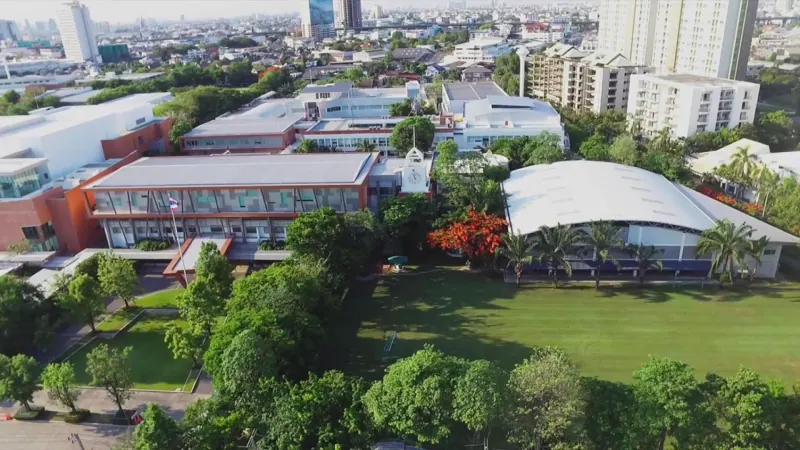
Bangkok Patana takes children from age 2 into a Foundation Stage run as a school within the school, on the Sukhumvit 105 campus. The framework is EYFS, delivered by a large UK-trained team in purpose-built classrooms, with extensive outdoor learning space and a forest school area used from Nursery up. The school is not-for-profit and has been on this campus since 1957. Entry from age 2. Top-year fee THB 975,000.
Shrewsbury International School Bangkok
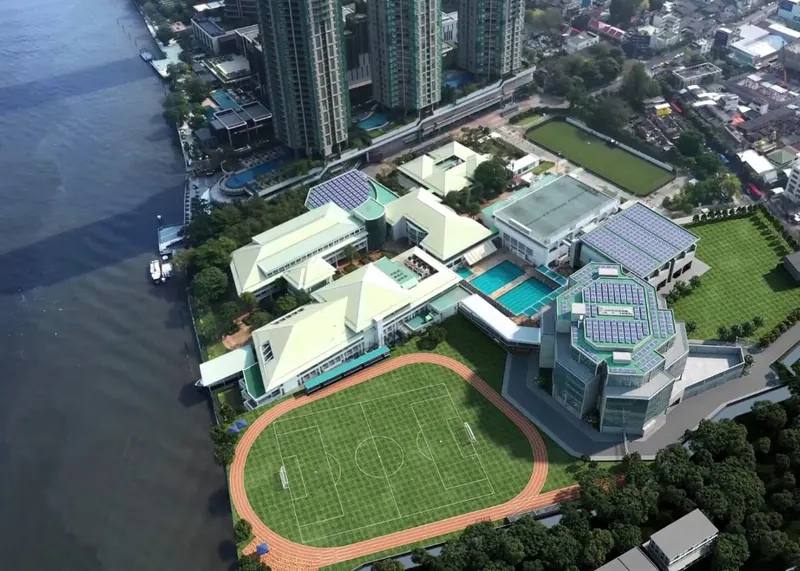
Shrewsbury runs EYFS from age 2 at the City Campus near Rama 9 and at the Riverside campus on the Chao Phraya. Both sites operate purpose-built early years facilities with their own playgrounds and water-play areas. The Foundation Stage is one of the more academically anchored in Bangkok, with structured literacy and numeracy introduced earlier in Reception than at some EYFS peers. Entry from age 2. Top-year fee THB 1,208,400.
Harrow International School Bangkok
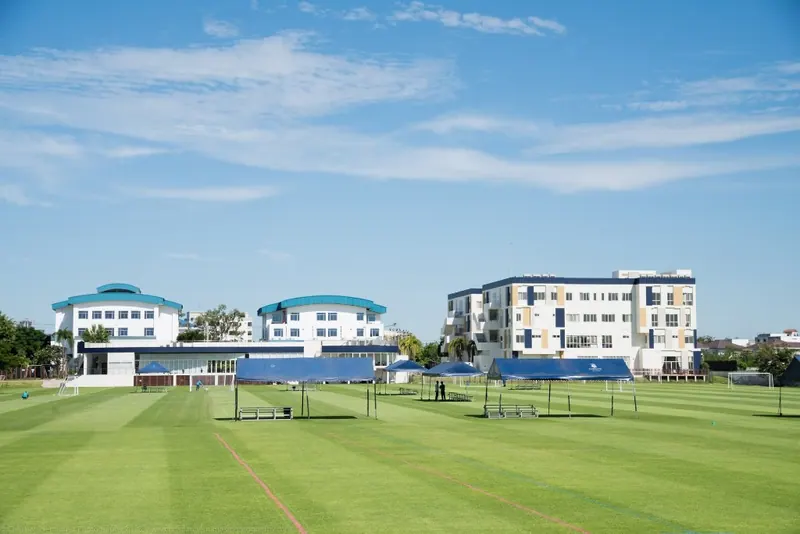
Harrow Bangkok starts Pre-Prep at age 2 on the Don Mueang campus, with EYFS delivered by UK-trained staff in a dedicated Pre-Prep building. Harrow runs boarding from Year 6 onward, which colours the school culture even where boarding is years away. EY fees sit at the lower end of the Harrow tape; the jump comes from Year 3. Entry from age 2. Top-year fee THB 1,037,100.
NIST International School
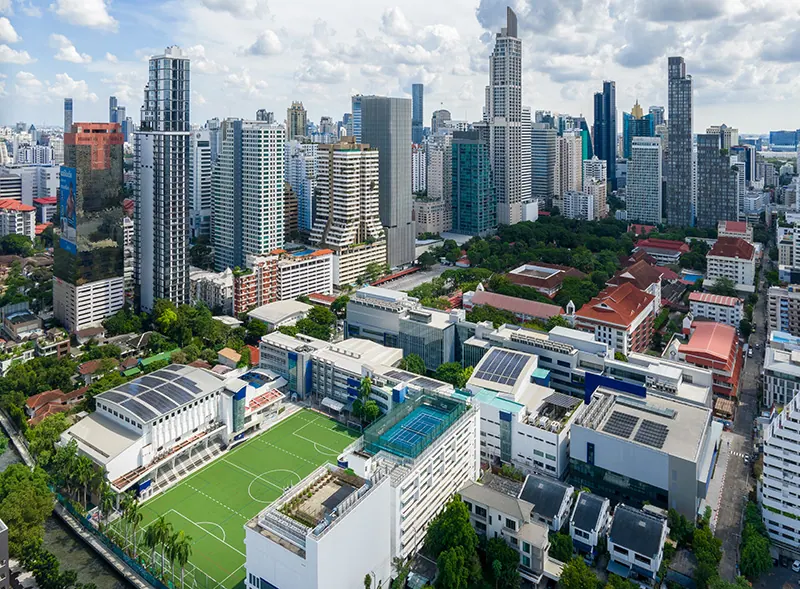
NIST runs the IB Primary Years Programme from age 3 in Pre-Primary, on the Sukhumvit 15 campus. PYP at NIST is inquiry-led and transdisciplinary from the start, with literacy and numeracy taught inside the inquiry units rather than as separate timetable blocks. NIST is not-for-profit and one of two full continuum IB World Schools in Bangkok. Pre-Primary is the widest entry door, intake into Grade 1 and above is constrained. Entry from age 3. Top-year fee THB 1,094,500.
International School Bangkok
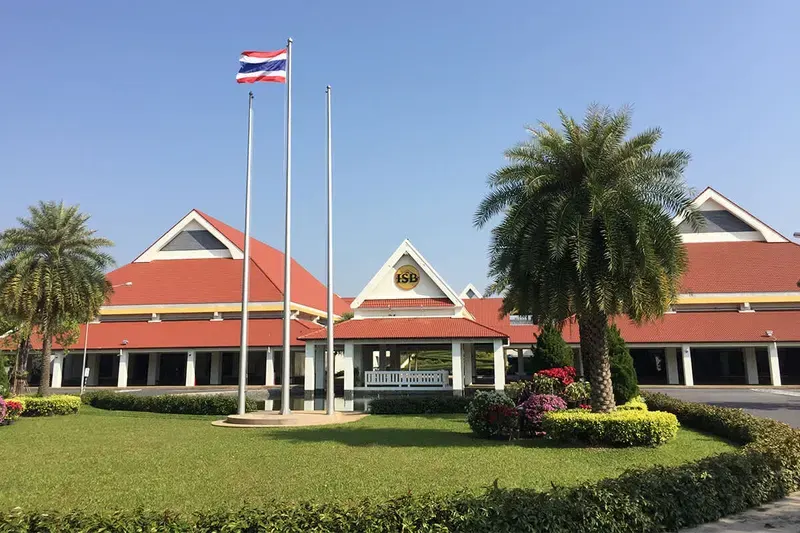
ISB starts at age 3 in the Early Learning Centre on the Nichada Thani campus, across the river in Pakkret. The programme is American play-based, Reggio-informed in the youngest year and tightening into a structured Pre-Kindergarten by age 4. The ELC has its own building, playground and arrival routine. A large share of families live inside Nichada Thani itself, and the early years cohort tends to walk or bike to school. Entry from age 3. Top-year fee THB 1,162,000.
Bangkok Prep
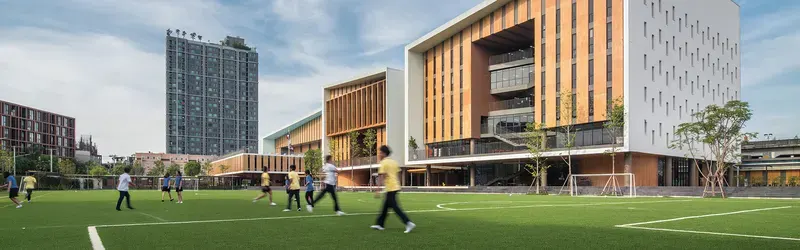
Bangkok Prep takes children from age 2 into EYFS on the Sukhumvit 77 primary campus. One of the few credible British through-school options on Sukhumvit proper, convenient for families between Thong Lor and On Nut. Fees sit a step below Patana, Shrewsbury and Harrow; the EYFS framework and UK-trained staffing are the same model. Entry from age 2. Top-year fee THB 821,100.
Brighton College Bangkok
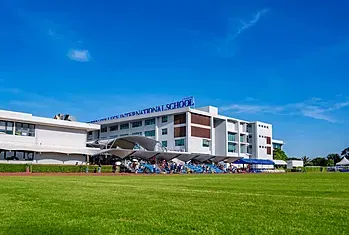
Brighton runs two Bangkok campuses, the original at Krungthep Kreetha and the newer Vibhavadi campus in Chatuchak. Both take children from age 2 in EYFS. The Krungthep Kreetha campus opened in 2020 and Vibhavadi in 2024, so the early years cohort is still building toward mature size. Staffing is recognisably aligned with the Brighton UK model, with a structured literacy programme from Reception. Entry from age 2. Top-year fee THB 1,021,800.
Best standalone nurseries and preschools
These schools either stop at age 6 or run a small primary alongside the early years. They suit families who want a softer first setting, a smaller cohort, or a Montessori or Reggio-anchored approach, and they are viable bridges into a through-school at Year 1.
Magic Years International School runs IB PYP from early years through Year 9, on a small Nonthaburi campus. Adult-to-child ratios are tighter than at the larger through-schools and the inquiry-led approach is delivered by PYP-trained staff. Founded 1990.
ELC Family of International Schools takes children from age 1 on its Sukhumvit campus, continuing to age 11. It is CIS and WASC accredited, an unusual depth of accreditation for a small primary, and the early years rooms run an international, play-based model that draws from EYFS and PYP without being formally either.
ABC Pathways International Kindergarten runs an EYFS-anchored kindergarten in Watthana for ages 3 to 6, with a bilingual English-Mandarin overlay. A popular option for families who want early Mandarin exposure without committing to a full Chinese-curriculum school.
John Wyatt Montessori runs an AMI-accredited Montessori programme in Chatuchak from age 3, with the Casa dei Bambini as the entry point. AMI accreditation is the international Montessori standard set by the Association Montessori Internationale and is a meaningful filter, since several Bangkok schools call themselves Montessori without holding it.
Best EYFS-anchored
For families who want the English Early Years Foundation Stage, delivered by UK-trained staff, in a school that will continue the English National Curriculum into Year 1 and beyond:
- Bangkok Patana for the largest and longest-running EYFS provision in the city.
- Shrewsbury for an academically anchored EYFS, with a City and Riverside option.
- Harrow for a dedicated Pre-Prep building and a long, stable EY team.
- Bangkok Prep for an EYFS a step below in fee, central on Sukhumvit.
- Brighton for newer campuses with UK-aligned early years staffing.
- ABC Pathways for an EYFS-anchored standalone with a Mandarin overlay.
EYFS is the same statutory framework across all of them. The differences sit in adult-to-child ratios, outdoor space, the calibre of the EY leader, and whether the school treats Reception as the bottom of a primary academic ladder or as the top of a distinct early years phase.
Best IB PYP-anchored
For families who want the IB Primary Years Programme from the start, an inquiry-led approach with no external exams in primary:
- NIST for a full continuum IB World School with a long PYP track record.
- KIS International School in Huai Khwang, for PYP from age 3 in a smaller, not-for-profit setting.
- Magic Years for a small PYP school with tight ratios.
PYP reads well when the school has the staff to design genuine inquiry for very young children, and reads thin when it does not.
At a glance
| School | Curriculum | Ages | Fees range (THB, 000) | Notes |
|---|---|---|---|---|
| Bangkok Patana | British, IB | 2–18 | 495–975 | Sukhumvit 105; not-for-profit |
| Shrewsbury | British | 2–18 | 670–1,208 | Rama 9; second Riverside campus |
| Harrow | British | 2–18 | 137–1,037 | Don Mueang; boarding from Y6 |
| NIST | IB | 3–18 | 628–1,095 | Sukhumvit 15; full IB continuum |
| ISB | American, IB | 3–18 | 640–1,162 | Nichada Thani; ELC building |
| Bangkok Prep | British | 2–18 | 295–821 | On Nut; central Sukhumvit |
| Brighton | British | 2–18 | 590–1,022 | East Bangkok; newer EY cohort |
| KIS | IB | 3–19 | 440–945 | Huai Khwang; PYP from age 3 |
| Magic Years | IB PYP | 1–9 | n/a | Nonthaburi; small PYP school |
| ELC | International | 1–11 | n/a | Sukhumvit; CIS and WASC accredited |
| ABC Pathways | EYFS + Mandarin | 3–6 | n/a | Watthana; bilingual EY |
| John Wyatt Montessori | Montessori | 3–18 | n/a | Chatuchak; AMI-accredited |
Fees are 2026 ranges from school publications. The lower figure is the EY rate; the upper is the senior year. Cells left blank where the school does not publish fees, verify with admissions.
The frameworks behind nursery and Reception
Early years covers nursery, kindergarten and Reception, broadly ages 2 to 5. In England this is the Early Years Foundation Stage, a statutory framework with three prime areas (communication and language, physical development, personal social and emotional development) and four specific areas (literacy, mathematics, understanding the world, expressive arts and design). EYFS is play-based by design; the Early Learning Goals at the end of Reception are its exit point.
The IB Primary Years Programme runs from age 3 to 12 and frames the early years inside a broader primary inquiry. No statutory goals, no external exams. PYP early years lives or dies on the staff's ability to design genuine inquiry units for very young children.
The American play-based model used at ISB borrows from Reggio Emilia in the youngest year and tightens into a structured Pre-K by age 4. Less codified than EYFS or PYP, more dependent on the individual school.
Montessori is a pedagogy, not a curriculum framework. AMI-accredited Montessori schools use a specific set of materials, a mixed-age classroom (3 to 6 in the Casa), and a self-directed work cycle. Non-AMI Montessori varies widely.
Thai-registered early-childhood centres operate under a separate Ministry of Education framework from full international schools, and several standalone kindergartens above are registered under that route.
How to choose between them
The early years decision locks in a school pathway more often than not. Most families who start at a through-school nursery stay through primary, and many stay through secondary. Moving between Bangkok international schools at Year 1 or Year 3 is socially expensive: new application fees, waiting lists, new uniform, new bus, new peer group. The early years choice is a ten-year decision in disguise.
Places are easier at nursery than later. Nursery and Reception are the widest entry points at the top schools. Year 1 and Year 3 intakes are thinner and competitive. Families who apply at nursery age find the door more open than families who try to enter at 6 or 8.
The framework should match the child. A child who needs structure, repetition and named lessons will respond differently in an EYFS Reception than in a PYP inquiry classroom. EYFS and American Pre-K introduce phonics and number work earlier; PYP and Montessori stay genuinely play-based for longer.
Visit a classroom in session, not the marketing suite. A twenty-minute walk through a working early years room with the children present tells more than any brochure. Count the adults. Look at the outdoor space. Listen to the noise floor.
Related reading
- Best international schools in Bangkok, the city pillar.
- Best British schools in Bangkok.
- Best IB schools in Bangkok.
- English National Curriculum and Key Stages, what EYFS leads into.
- How to choose an international school.
FAQs
At what age can my child start at a Bangkok international school? The earliest entry is age 2, at Bangkok Patana, Shrewsbury, Harrow, Bangkok Prep and Brighton. NIST, ISB, KIS and Magic Years take children from age 3. Standalone settings such as ELC and Magic Years go down to age 1 in toddler programmes.
Is the EYFS in Bangkok the same as in the UK? Yes, structurally. The seven areas of learning, the Early Learning Goals at the end of Reception and the play-based pedagogy are the same framework. The differences sit in implementation, climate (much more outdoor learning year-round) and the proportion of UK-trained staff.
Will my child cope without any English? Children aged 2 to 5 acquire language through immersion faster than adults expect. Most Bangkok international schools have run early years programmes with non-English-speaking children for decades. Conversational English typically develops within a term or two; EAL support in the early years tends to be in-class rather than withdrawal-based.
How early do I need to apply? For the top through-schools, 12 to 18 months before the preferred start date is the realistic window. Some schools accept applications from birth. Patana and ISB carry the longest queues; Shrewsbury Riverside, Bangkok Prep and Brighton tend to have more flexibility.
Does the early years fee predict the senior fee? No. The jump from Reception to Year 1 is sharp at every British school in Bangkok, often 20 to 40 percent, and the jump from Year 6 to Year 7 is sharper still. Choose the school for the next decade, not the cheapest nursery.
Sources: School publications and fee schedules at the websites of each school named; ISG school profile pages at /cities/bangkok/; UK Department for Education EYFS statutory framework; International Baccalaureate Organization PYP documentation; Association Montessori Internationale accreditation register; Thai Ministry of Education early-childhood centre registration.