Notes / Tokyo
Best Early Years Schools in Tokyo
Tokyo's strongest early years programmes: ASIJ ELC, BST, Aoba, Sacred Heart, Seisen and the best stand-alone Montessori and bilingual preschools.
The brief
- ASIJ Early Learning Center in Roppongi is the anchor of the city's premium early years tier, feeding into the Chofu campus at K-12.
- The British School in Tokyo runs EYFS from age 3 at Azabudai, with the deepest UK-trained early years bench in the city.
- Aoba-Japan opens at age 2 and is the only IB PYP through-school in central Tokyo accepting two-year-olds.
- Sacred Heart and Seisen offer convent-rooted early years for girls and boys from age 3, with small cohorts and long waiting lists.
- The Montessori School of Tokyo in Minami-Azabu is the city's most established AMI Montessori, ages 2 to 15.
Tokyo's early years market splits along one line: foreign-curriculum international schools under the Gakkō Kyōiku Hō framework, and the much larger world of Japanese MEXT-regulated yochien and hoikuen. This brief covers the former.
The premium tier is small. ASIJ's ELC, BST, Sacred Heart, Seisen, Aoba, KIST, TIS and CIS Japan all run early years inside a through-school. Fees at age 3 sit in a tight band: JPY 2.5 million to 3.3 million a year, before facilities levies, lunches and transport.
The stand-alone end is busier. The Montessori School of Tokyo, Joy Garden, KPIS, Clarence and Apple Learning sit outside the through-school world and feed children into the international primaries from age 5 or 6.
The top tier, through-school early years
American School in Japan (ASIJ)
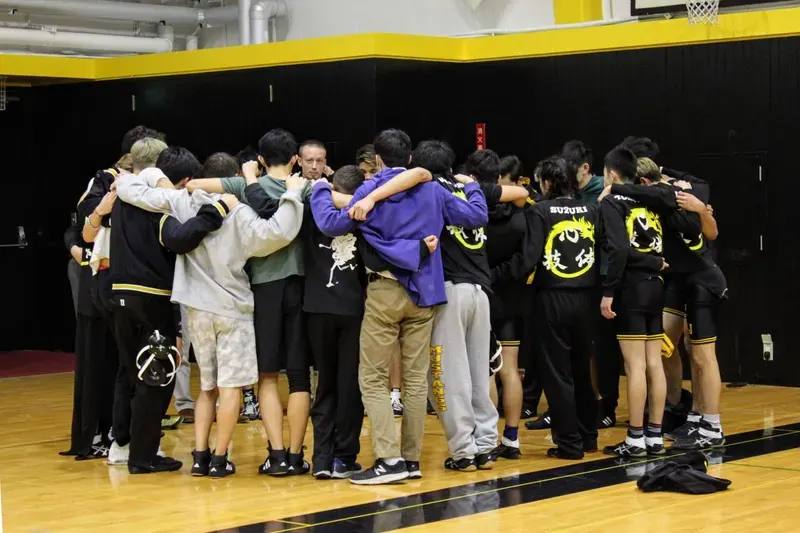
ASIJ runs the Early Learning Center (ELC) at Roppongi, a dedicated central-Tokyo campus for ages 3 to 5, then transitions children to the main Chofu campus for Kindergarten and the rest of K-12. The ELC is the most coveted early years place in the city. Fees run around JPY 3.2 million to 3.8 million, the highest in Tokyo. Teaching is American but play-based and inquiry-led. ASIJ is WASC-accredited and has been operating in Japan since 1902.
The British School in Tokyo (BST)
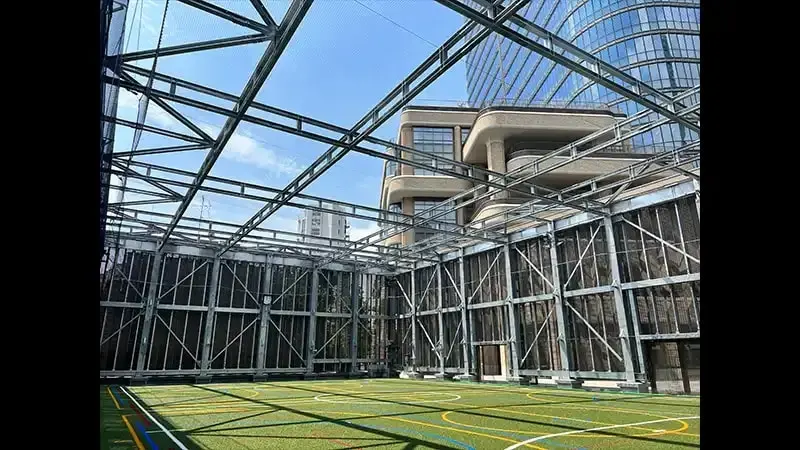
BST moved into its Azabudai Hills campus in 2023 and runs the Early Years Foundation Stage from age 3 through Reception. Fees sit around JPY 2.9 million to 3.0 million. The early years team is UK-trained and EYFS-specialist, with the seven areas of learning structured around classroom and outdoor zones. CIS-accredited, COBIS Patron Member. Around 1,400 pupils across the whole school. EY places fill quickly, particularly the Reception year that feeds the British primary.
Aoba-Japan International School

Aoba is the only major IB through-school in central Tokyo that accepts children at age 2. The early years sit on the Hikarigaoka campus in Nerima and follow the IB Primary Years Programme. Fees from age 2 run around JPY 1.9 million to 2.7 million. CIS and NEASC-accredited, runs all four IB programmes. For families who want the IB pathway from the earliest possible entry, Aoba is the only option in central Tokyo.
International School of the Sacred Heart

Sacred Heart runs early years from age 3 at its Hiroo campus. The school is girls-only from Grade 1, but the Kindergarten programme is co-educational for ages 3 to 5. Fees sit around JPY 2.8 million to 3.1 million. CIS and WASC-accredited, operating since 1908 as part of the international Sacred Heart network. Small cohorts and long Kindergarten waiting lists.
Seisen International School
Seisen, in Setagaya/Yoga, also runs from age 3 and is the other historic Catholic girls' through-school in Tokyo. The Kindergarten is co-educational; from Grade 1 the school becomes girls-only. Fees sit around JPY 2.3 million to 2.5 million. CIS and NEASC-accredited, runs the full IB programme including PYP from Kindergarten. The school dates to 1949.
Tokyo International School (TIS)
TIS sits in Minato/Takanawa with around 360 pupils across the whole school. The IB PYP starts at age 4 (Kindergarten 1), so families wanting age-3 entry should look elsewhere. Fees sit around JPY 3.0 million to 3.3 million. CIS and NEASC-accredited.
K. International School Tokyo (KIST)
KIST is in Koto / Kiyosumi-Shirakawa and runs the IB PYP from age 3. Early years fees run around JPY 3.0 million to 3.2 million. CIS-accredited, runs PYP and DP. Founded 1997. Attracts families looking for the IB continuum without the size of Aoba.
Canadian International School Japan
CIS Japan in Shinagawa/Osaki runs an Ontario-influenced programme with IB PYP in the primary years. Early years entry from age 3, fees around JPY 2.5 million to 3.2 million. WASC-accredited. The early years culture is closer in tone to Canadian public early years than to British EYFS or American Kindergarten models.
Best stand-alone international preschools
These schools do not feed automatically into a through-school. Families typically use them to age 5 or 6 and then apply into the through-schools for primary.
- The Montessori School of Tokyo (MST). Minami-Azabu, ages 2 to 15, AMI Montessori. Founded 2003. The default Montessori choice for international families from toddler stage through elementary.
- Joy Garden International Preschool. Minato, bilingual Japanese-English. The better-known stand-alone for families wanting serious Japanese exposure alongside English instruction. No primary phase.
- Komazawa Park International School (KPIS). Stand-alone preschool and elementary in Setagaya, ages 2 onwards. Smaller, less marketed, strong parent-community character.
- Clarence International School. British-style preschool for 18 months to 5 years across multiple Tokyo sites. English-medium, EYFS-influenced.
- Apple Learning International School. AMI Montessori for ages 2 to 6 with bilingual elements. Fees around JPY 900,000 to 1.2 million, a workable Montessori option below the through-school price band.
Best Montessori and Reggio
The clearest AMI-aligned schools are The Montessori School of Tokyo (ages 2 to 15), Apple Learning (ages 2 to 6) and Chuo International School in Chuo Ward (age 3 to 12).
Reggio Emilia-influenced provision is thinner. Several preschools name-check Reggio without a Reggio-trained team. The closest to genuine Reggio practice sits in the project work at TIS and Aoba within the IB PYP framework. The pure Reggio model is rare in Tokyo.
Best IB PYP and EYFS-anchored early years
- IB PYP from age 2: Aoba-Japan (Hikarigaoka)
- IB PYP from age 3: K. International School Tokyo, Seisen
- IB PYP from age 4: Tokyo International School
- EYFS from age 3: The British School in Tokyo
- American play-based from age 3: ASIJ Early Learning Center
- French IB-bilingual from age 1: EIFJ Tokyo
EYFS at scale in Tokyo means BST. No other major through-school in central Tokyo runs the full EYFS framework as its anchor model in the early years.
At a glance
| School | Curriculum | Ages | Fees range | Notes |
|---|---|---|---|---|
| American School in Japan | American, AP | 3 to 18 | JPY 3,237,000 to 3,783,000 | ELC at Roppongi; main campus Chofu |
| The British School in Tokyo | British, IB | 3 to 18 | JPY 2,920,000 to 3,030,000 | EYFS from age 3; Azabudai Hills |
| Aoba-Japan International School | IB | 2 to 18 | JPY 1,908,000 to 2,650,000 | PYP from age 2; Hikarigaoka |
| International School of the Sacred Heart | AP, IPC | 3 to 18 | JPY 2,780,000 to 3,100,000 | Co-ed Kindergarten, girls from Grade 1 |
| Seisen International School | IB | 3 to 18 | JPY 2,300,000 to 2,470,000 | Co-ed Kindergarten, girls from Grade 1 |
| Tokyo International School | IB | 4 to 18 | JPY 3,000,000 to 3,300,000 | PYP from age 4 |
| K. International School Tokyo | IB | 3 to 18 | JPY 3,050,000 to 3,220,000 | PYP from age 3; Koto |
| Canadian International School Japan | Canadian, IB, AP | 3 to 18 | JPY 2,450,000 to 3,150,000 | PYP in primary; Shinagawa |
| The Montessori School of Tokyo | Montessori (AMI) | 2 to 15 | Verify with school | Stand-alone; Minami-Azabu |
| Apple Learning International School | Montessori (AMI) | 2 to 6 | JPY 900,000 to 1,176,000 | Stand-alone preschool |
| Clarence International School | British-style preschool | 18 months to 5 years | Verify with school | Stand-alone preschool |
Fees correct as of mid-2026 publication. Verify current figures with each school. Local consumption tax and facilities levies may apply on top.
The age labels and routes
Early years runs from roughly age 2 to age 5 or 6, depending on the school. After that, children move into Grade 1 / Year 1 / Elementary 1.
Foreign-curriculum international schools operate under the Gakkō Kyōiku Hō (School Education Act) Article 134, classified as kakushu gakkō (miscellaneous educational institutions). They sit outside the Japanese national education system. ASIJ, BST, Sacred Heart, Seisen, Aoba, TIS, KIST and CIS Japan are all here. Their early years are governed by the school's curriculum framework (EYFS, IB PYP, American Kindergarten) and the international accreditor (CIS, WASC, NEASC, COBIS).
Japanese kindergartens (yochien) are MEXT-regulated, age 3 to 6, and follow national kindergarten guidelines. Hoikuen (nursery / daycare) are regulated by MHLW, take children from infancy, designed around working parents. Both are Japanese-medium and local-stream. MEXT-registered bilingual yochien sit in between but are functionally Japanese-stream with English enrichment.
How to choose between them
Through-school or stand-alone. Through-schools (ASIJ, BST, Aoba, Sacred Heart, Seisen, TIS, KIST, CIS Japan) sign you up for the full pathway from age 3 to 18. Stand-alones (MST, Joy Garden, KPIS, Clarence, Apple Learning) give you flexibility but require a second admissions process for primary.
Curriculum framework. EYFS at BST is the most structured British model in the city. ASIJ's ELC is American-register, inquiry-led, play-based. The IB PYP at Aoba, KIST, Seisen and TIS is concept-driven and transdisciplinary. The differences translate into daily classroom experience: outdoor play, structured instruction, child-led inquiry, how literacy is introduced.
Entry age. Age 2: Aoba, MST, KPIS, Joy Garden, Apple Learning, Clarence (from 18 months). Age 3: ASIJ ELC, BST, Sacred Heart, Seisen, KIST, CIS Japan, Chuo. Age 4: TIS. Schools that don't take three-year-olds often have the highest demand at four and five, because that's where the through-school feed kicks in.
Related reading
- Best international schools in Tokyo, the city pillar.
- English National Curriculum and Key Stages, what EYFS and Reception are.
- How to choose an international school, the decision frame.
FAQs
When should we apply for early years in Tokyo? Twelve to eighteen months ahead is normal at the premium through-schools. ASIJ ELC, BST and Sacred Heart all run waiting lists at age 3 entry. Aoba and KIST are typically more accessible at short notice. Stand-alones have shorter lead times.
Can my child start mid-year? The major through-schools run August to June. Mid-year entry is possible if a place opens, but most early years entry is geared to August. EIFJ Tokyo and other French-system schools run September to July. Yochien run April to March.
Does my child need Japanese? No. All the schools listed teach in English. Some, like Joy Garden, Aoba and KIST, offer structured Japanese as a second language from the early years. Bilingual exposure is the bonus; English is the working language.
Do early years places feed into primary? At ASIJ, BST, Aoba, Sacred Heart, Seisen, KIST, TIS and CIS Japan, an early years place typically feeds into primary, subject to the school's own progression criteria. Stand-alone preschools require a fresh application for primary.
Why isn't Yokohama International School on this list? YIS sits in Yokohama, not Tokyo. It runs a strong PYP from age 3 and is on the list for families based in Yokohama or southern Kanagawa, but it isn't a Tokyo school.
Is a Japanese yochien an alternative? Yochien are MEXT-regulated and Japanese-medium. For Japanese-speaking children, or families committed to Japanese-language immersion, they are a strong option and significantly cheaper. They are not interchangeable with the English-medium international early years schools listed here.
Sources: school websites and fee schedules for ASIJ, BST, Aoba-Japan, Sacred Heart, Seisen, TIS, KIST, CIS Japan, MST, Apple Learning and Clarence; CIS, NEASC, WASC and COBIS member registries; MEXT and the Japanese School Education Act for the regulatory framework around foreign-curriculum schools and yochien.