Notes / Jakarta
Jakarta Education Intelligence Report: 2026
Original analysis of Jakarta's international schools market: enrolment trends, fee movements, new developments, and what they mean for families making school decisions in 2026.

TL;DR
- Jakarta's international school market is growing, driven by rising Indonesian demand, not just expat numbers. Indonesian families now form the majority of the student body at several premium schools
- The premium tier (JIS, BSJ, ISJ, AIS) is stable and fully enrolled at key entry points. Waiting lists at Nursery, Year 1 and Year 7 show no sign of easing
- ISJ's senior campus (opening 2028) is the single most significant development in the Jakarta market. It will create a third premium British-aligned secondary option alongside BSJ and JIS
- Fee inflation continues at 3–7% annually in IDR terms. The gap between premium and mid-tier is widening in absolute dollar terms
- The mid-tier market (NAS, ACG, NJIS, Binus Simprug) offers credible alternatives but with less depth in university counselling and co-curricular programming
- The IB Diploma dominates the upper secondary market. Seven Jakarta schools now offer IB DP, the broadest choice the city has ever had
Market Overview
Jakarta has approximately 180 schools operating under the SPK (Satuan Pendidikan Kerjasama) framework, the Indonesian government's licensing system for schools delivering international or dual-language curricula. This number has grown steadily over the past decade and continues to rise.
The growth is being driven primarily by Indonesian families, not expats. The traditional model, international schools serving a predominantly expatriate community, has shifted. At several Jakarta schools, Indonesian nationals now form the majority of the student body. This reflects rising Indonesian wealth, growing demand for English-medium education, and the increasing recognition that international qualifications (IB Diploma, Cambridge IGCSE, AP) provide a direct pathway to global universities.
The SPK framework, reformed under Indonesia's Merdeka Belajar education policy, allows Indonesian nationals to attend international schools while requiring schools to incorporate elements of Indonesian curriculum and culture. This regulatory structure has enabled rather than constrained growth, schools can serve both expat and Indonesian families under a single licence.
The global context is relevant. ISC Research data shows that Asia accounts for 58% of the world's international schools. Southeast Asia is one of the fastest-growing sub-regions. Jakarta sits at the centre of this growth, with a market that is maturing in quality while expanding in breadth.
The Premium Tier in 2026
The four schools that consistently define the premium tier, JIS, BSJ, ISJ and AIS, are all in stable positions. None is struggling for enrolment. All four have waiting lists at their most competitive entry points.
JIS - Jakarta Intercultural School
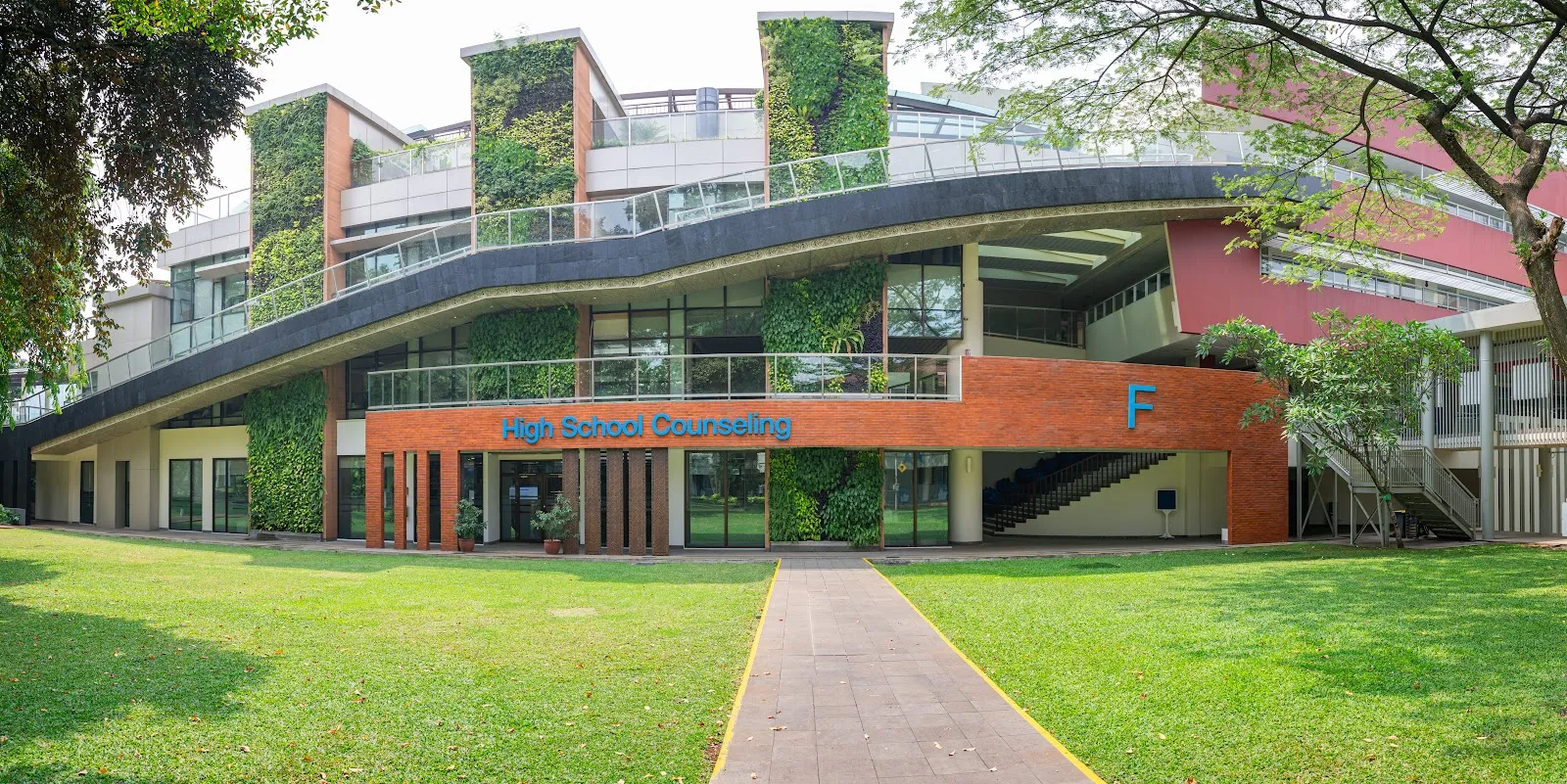
JIS remains the largest and most expensive international school in Jakarta. With approximately 2,500 students across a single 32-hectare campus in Cilandak, JIS operates at a scale unmatched by any other school in the city. Fees range from $17,341 (Early Years half-day) to $35,916 (High School).
JIS's unique selling point remains the dual AP/IB Diploma pathway, no other school in Jakarta offers both. This flexibility gives families, particularly those targeting US universities, a broader set of options in Grades 11–12 than any other school provides. University destination data shows 54% of JIS graduates heading to US universities, with placements at Harvard, Stanford, MIT and Columbia among recent cohorts.
JIS's WASC and CIS accreditation, combined with its American-international transcript system, make it the natural choice for American families and families targeting the US university system. It is also the school with the broadest co-curricular programme, competitive academic teams, sport at a high level, and arts programmes that draw on the scale of a large student body.
BSJ - British School Jakarta
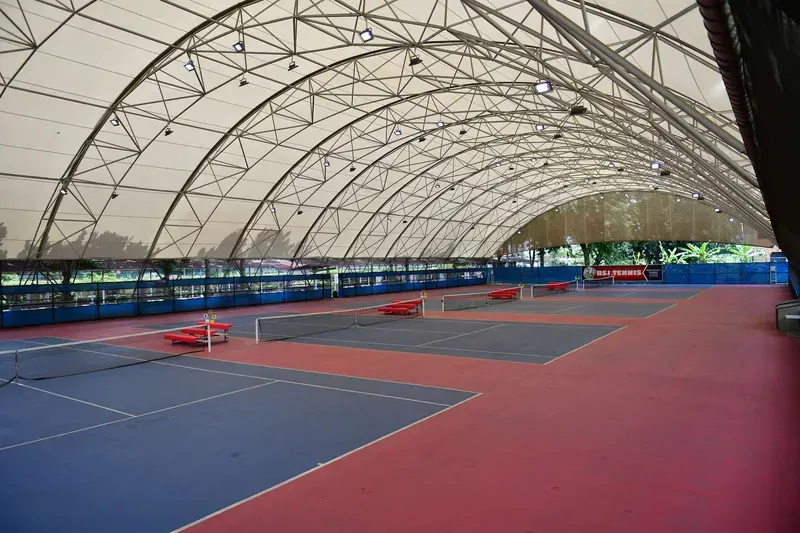
BSJ is the strongest British school in Jakarta and the school with the most transparent academic data. Published IB Diploma averages, 35 points in 2024, 34.7 in 2025, place BSJ well above the global IB average of approximately 30 points. The 97% pass rate (2024) and 17% scoring 40+ (2025) are strong by any international benchmark.
BSJ's Cambridge IGCSE to IB Diploma pathway is well established and produces the profile that UK university admissions offices expect. Graduates are placed at Oxford, Cambridge, Imperial, UCL and LSE, with strong connections across the Russell Group.
Fees range from $8,919 (ages 2–3) to $32,910 (Sixth Form). BSJ's early years pricing is competitive, cheaper than ISJ, ACG and NAS at age 3. The significant fee step comes at Year 1 ($24,083), where tuition more than doubles from K2 ($11,713).
ISJ - The Independent School of Jakarta
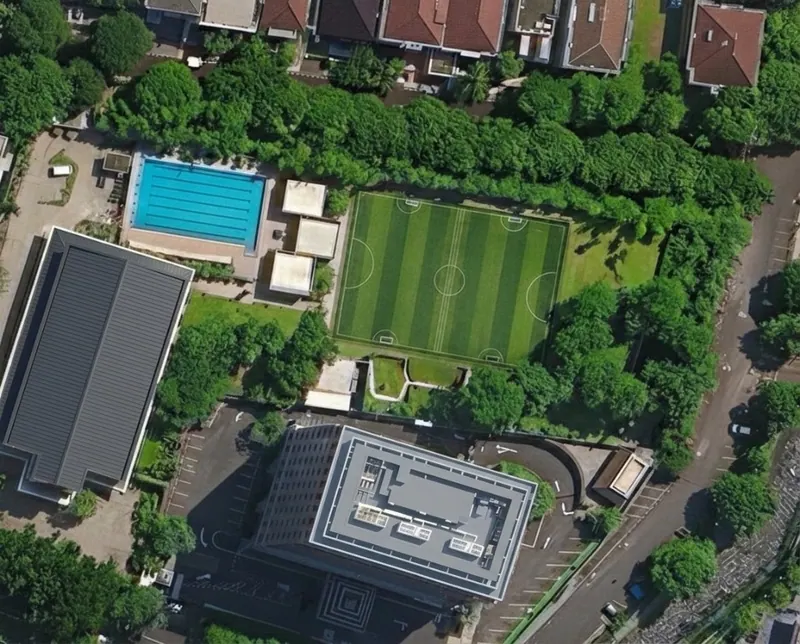
ISJ is the newest addition to Jakarta's premium tier, having opened in 2021. The school runs from Pre-Nursery (age 2) onwards, with secondary year groups rolling out one at a time and a dedicated senior campus opening in 2028 that takes pupils through to A-Levels.
ISJ has positioned itself as a British independent school, smaller year groups, a deliberate focus on individual attention, and a school culture drawn from the UK independent school tradition. The school is targeting an optimal enrolment of approximately 500 pupils, making it significantly smaller than JIS (2,500) or BSJ (1,400).
Fees range from $8,827 (Pre-Nursery) to $28,809 (Years 7–8). The secondary campus will bring ISJ into direct competition with BSJ at the IGCSE/A Level stage, the first time BSJ has faced a direct British competitor in Jakarta's premium bracket.
AIS - Australian Independent School
AIS occupies a distinctive position as the only school in Jakarta with Australian curriculum heritage, transitioning to IB Diploma for Years 11–12. The school's calendar-year academic cycle (January–December) aligns with Australian and some Asian university intakes rather than the Northern Hemisphere August–June pattern.
Fees range from $5,975 (Preschool 3, three days) to $26,308 (Years 11–12 IB DP). AIS's early years pricing is the lowest in the premium tier, making it an accessible entry point for families testing the international school market.
AIS has strong connections to Australian Go8 universities and is the natural choice for Australian families or families targeting the Australian university system. The school's learning support programme is well regarded, and pastoral care is a frequently cited strength.
The Mid-Tier in 2026
The mid-tier schools, NAS, ACG, NJIS, Binus Simprug, SPH Kemang Village, ACS Jakarta, NZ School Jakarta, serve a different market from the premium four. They offer recognised international qualifications at lower fee points, with trade-offs in scale, co-curricular breadth, and university counselling infrastructure.
NAS (Nord Anglia School Jakarta) is part of the Nord Anglia Education group, the world's largest premium international schools operator. Fees range from $6,911 to $20,874. NAS currently runs to Year 7 only, which limits its appeal for families planning a full school career. The school's global brand and network (Juilliard, MIT collaborations) are marketing strengths, but the Jakarta campus is still maturing.
ACG Jakarta offers the IB continuum (PYP, MYP, DP) and charges $9,873–$24,673. ACG provides a credible IB pathway through to the Diploma. Published outcome data is limited, which makes independent assessment difficult.
Binus Simprug has the strongest published academic record in the mid-tier: IB Diploma average 34 points, 95% pass rate, with perfect 45/45 scores in three consecutive years. At its fee level (partial data available, verify higher-grade fees directly), Binus Simprug represents strong value for families who want proven IB outcomes without premium-tier pricing. The student body is majority Indonesian, which gives the school a distinctive cultural character.
SPH Kemang Village runs a Cambridge-to-IB pathway (Cambridge through Grade 10, IB Diploma Grades 11–12) with WASC and ACSI accreditation. Fees range from $11,797 to $26,061. SPH's Christian ethos is a defining characteristic, families should visit and confirm the school's religious dimension aligns with their expectations.
ACS Jakarta charges $15,607–$19,244 and offers IGCSE to IB Diploma without an early years programme (entry from Grade 1). ACS's fee level makes it one of the most affordable routes to an IB Diploma in Jakarta.
NZ School Jakarta at $4,202–$17,223 is the lowest-cost school in our verified data set. It runs from Pre-School through Grade 12, offering a New Zealand-influenced curriculum. For families on a constrained budget who still want an English-medium school with international credentials, NZ School Jakarta is worth investigating.
Fee Analysis
The 2025–26 fee data reveals a market that is stratifying.
Premium tier secondary fees: JIS $35,916, BSJ $32,910, AIS $26,308. The gap between JIS and BSJ ($3,006) is smaller than the gap between BSJ and AIS ($6,602). The premium pair is pulling away.
Mid-tier secondary fees: SPH $26,061, ACG $24,673, ACS $19,244, NZSJ $17,223. The mid-tier has its own internal range, SPH and ACG sit close to the premium tier on price, while ACS and NZSJ sit significantly below.
The widening gap. If premium-tier fees grow at 5% annually and mid-tier fees grow at 3%, the dollar gap between tiers widens every year, even though the percentage gap remains stable. A family choosing between JIS ($35,916) and ACS ($19,244) today faces a $16,672 difference. In five years, at those growth rates, the gap will be approximately $20,000. Over a 13-year school career, the cumulative difference between the most and least expensive schools in our data set exceeds $200,000 per child.
Where money goes. Teacher compensation accounts for 55–70% of a typical international school's expenditure. The premium schools pay higher salaries, which attracts more experienced teachers from a global applicant pool. This is the most direct link between fees and quality, and the primary reason higher-fee schools tend to deliver stronger academic outcomes.
For the full fee breakdown, see our 2026 Fee Report.
Curriculum Trends
IB Diploma dominance. Seven Jakarta international schools now offer the IB Diploma at upper secondary level: JIS, BSJ, AIS, ACG, NJIS, Binus Simprug and ACS Jakarta (plus GMIS and SPH). The IB Diploma is the most widely available international exit qualification in Jakarta, and the one that carries the broadest university recognition globally.
AP remains a JIS differentiator. JIS is the only school in Jakarta offering AP courses. For families specifically targeting the US university system, this is a significant point of differentiation. AP courses allow students to earn college credit before university, a financial and academic advantage in the US system.
Cambridge IGCSE as a preparation stage. BSJ, ISJ (rolling out now, full senior campus 2028) and SPH use Cambridge IGCSEs as the qualification at ages 14–16, feeding into IB Diploma or A Levels at ages 16–18. This two-stage British model, IGCSE then DP, is well understood by UK universities and provides structured preparation for the rigour of the Diploma.
A-Levels will return to Jakarta. ISJ's senior campus opens in 2028 with A-Levels, the first premium school in Jakarta to offer them. A Levels provide the depth-over-breadth alternative to the IB Diploma, and some gifted students and subject specialists may prefer this pathway. A Levels are currently available at some smaller Jakarta schools but not at the premium tier.
Admissions Pressure
The pressure points in Jakarta's admissions market remain consistent: Nursery (ages 2–4), Year 1 (age 5–6) and Year 7 (age 11–12) are the three entry points where demand exceeds supply at premium schools.
Nursery is the tightest. JIS Early Years 1, BSJ K1, and ISJ Nursery all operate at or near capacity. Lead times of 12–18 months are standard. Families who intend to secure a place at a premium school should begin the application process before the child turns 2.
Year 7 is competitive at BSJ specifically, where families target the school for its IGCSE pathway. JIS has more capacity at middle school level (Grades 6–8), making it somewhat easier to enter at this point.
Upper years are the easiest entry points across all schools. Corporate turnover creates regular openings at Years 9–12, and premium schools typically have places available at these levels for families arriving at short notice.
The mid-tier is accessible. NAS, ACG and NJIS are rarely oversubscribed at any entry point. Families who need a confirmed place quickly, short-notice relocations, mid-year arrivals, will find availability at these schools when premium schools are full.
For the detailed breakdown, see our guide to the hardest year groups.
New Developments to Watch
ISJ Senior Campus (2028). This is the single most significant development in Jakarta's international school market. ISJ will extend from Year 8 to A Levels, creating a full Pre-Nursery to Year 13 British school in direct competition with BSJ. The secondary campus will be in Pondok Indah, closer to the core expat residential area than BSJ's Bintaro location. ISJ's location advantage, the quality of its faculty, and its commitment to a distinctly British independent school identity position it well. BSJ has increasingly moved toward an international-style faculty and curriculum, strong in its own right, but less recognisably British than it once was. If ISJ delivers at the secondary level what it has built at primary, it is on track to become the most sought-after British option in Jakarta.
NAS growth. NAS currently runs to Year 7. As a Nord Anglia school, it is expected to extend upward eventually. When it does, NAS will enter the secondary market with the IB Diploma, adding another option in the $20,000–$25,000 fee range.
Indonesian demand growth. The most important trend in this market is not a single school development, it is the sustained increase in Indonesian families choosing international schools. This demand supports premium pricing, funds school expansion, and changes the character of the student body. Schools that were once 80% expatriate are now 50% or more Indonesian. This trend will continue.
Regulatory environment. The SPK framework is stable. The Indonesian government has shown no indication of restricting international school growth. The Merdeka Belajar reforms have been enabling rather than constraining. Schools that comply with SPK requirements, incorporating Indonesian language and cultural elements, operate without regulatory friction.
Regional Context
Jakarta's premium school fees are competitive with Singapore and KL.
JIS at $35,916 is comparable to Tanglin Trust in Singapore (~$35,000) and below Singapore American School (~$42,000). BSJ at $32,910 is in the same bracket as ISKL in KL (~$33,000). Jakarta's total cost of family life, housing, domestic help, transport, is significantly lower than Singapore's, which means the all-in cost of a Jakarta posting with school fees is often lower than the equivalent in Singapore.
KL undercuts both Jakarta and Singapore on school fees, particularly in the mid-tier. Families paying their own fees (not on a corporate package) will find more options at lower price points in KL than in Jakarta.
For the full comparison, see our Jakarta vs Singapore vs KL guide.
Outlook
Jakarta's international school market in 2026 is mature at the premium end and still developing in the middle. The premium tier, JIS, BSJ, ISJ, AIS, is stable, well-funded, and fully enrolled. The mid-tier offers increasingly credible alternatives, with Binus Simprug's IB results providing evidence that strong outcomes are not exclusive to the premium bracket.
The key development over the next three years is ISJ's secondary extension. If successful, it will create genuine choice at the premium level for British-curriculum families, something Jakarta has not had before. The ripple effects on BSJ's market position, fee competition, and teacher recruitment will be significant.
For families making decisions now, the fundamentals have not changed: choose the school that fits your child's needs, your university aspirations, and your budget. The premium schools deliver a level of infrastructure, teaching quality and university counselling that the mid-tier does not yet match. But the mid-tier, at half to two-thirds the cost, is improving, and for families who use the savings wisely, it can be the smarter financial decision.
Ready to explore?
FAQs
How many international schools are there in Jakarta? Approximately 180 schools operate under the SPK framework. Of these, roughly 10–15 are credible options for families seeking a full international curriculum with recognised exit qualifications (IB, AP, IGCSE, A Levels). The rest are smaller institutions, bilingual schools, or schools serving specific communities.
Is the market oversupplied? At the premium level, no, demand exceeds supply at key entry points. At the mid-tier, there is more capacity and some schools compete actively for enrolment. The market is not saturated, but it is stratified: premium schools have pricing power, mid-tier schools compete on value and availability.
Will fees keep rising? Almost certainly. The structural drivers, global teacher salary competition, currency movements, facility investment, and sustained demand, show no sign of reversing. Budget for annual increases of 3–7% in IDR terms at the premium tier and 2–4% at the mid-tier.
What is the biggest risk for families in this market? Complacency on admissions timing. The families who struggle most are those who assume a place will be available when they need it. At premium schools, the key entry points fill 12–18 months in advance. Start early.
This report draws on published 2025–26 fee schedules (verified February 2026), ISC Research global market data (2024), published IB results from BSJ and Binus Simprug, and ISG editorial research. Exchange rate: IDR 16,826 = $1 USD. We work hard to make every figure, date and description on this page accurate. We don't always get it right. If you spot an error, a fee that's changed, a fact that's out of date, something we've got wrong, please tell us. Use the feedback button above or email us directly. We'll check it and update the article.