Notes / Singapore
Best Schools for SEN and Learning Support in Singapore
SEN and learning support in Singapore international schools. Where specialist provision sits, where mainstream LS is real, where the field thins.

The brief
- The one inclusion-led mainstream school is Dover Court in Queenstown. Nord Anglia, non-selective, three pathways including BTEC and ASDAN-adapted routes alongside IGCSE to IB Diploma.
- Two specialist schools sit outside the mainstream: The Winstedt School in Kallang (1:4 ratio, integrated OT and SLT, ~200 students) and Integrated International School in the CBD (clinical psychologist founded, ~100 students, therapeutically supported).
- Mainstream schools with meaningful learning support for mild to moderate needs: Tanglin Trust (teachers in the field name the LS department by reputation), Stamford American, Dulwich College Singapore, UWCSEA Dover and East.
- UWCSEA's own line: learning support is better suited to mild or moderate needs than to children needing intensive one-to-one provision. The caveat applies, less explicitly, to most of the Big Three.
- Outside Dover Court, Winstedt, and IIS, specialist SEN provision in Singapore is therapy-based, not school-based. Higher-need profiles typically use a specialist centre alongside or instead of a mainstream school.
Finding the right school for a child with additional learning needs is stressful anywhere. In Singapore the international sector is regulated, expensive, and competitive; the Big Three of Singapore American School, UWCSEA, and Tanglin Trust attract families who want the strongest mainstream environment in the city, and several have built proper learning support departments. None is a special school.
The specialist provision sits in three schools. Dover Court is the only large mainstream international school in Singapore built around inclusion. Winstedt and IIS are smaller therapeutic settings designed for children who learn differently from the start. Outside those three schools, Singapore's SEN provision is private therapy: OTs, SLTs, and educational psychologists, often running alongside mainstream school attendance. International schools sit outside the MOE's domestic SPED system; provision in the international sector is what the school chooses to fund, not what regulation requires.
How to read a school's inclusion claim
Almost every Singapore international school will say, on a tour, that it is inclusive. The word does work for everyone. Three concrete tests separate marketing from substance.
Selectivity at admission. A school that screens applicants on cognitive or academic ability and then calls itself inclusive is describing aspiration. Dover Court is explicitly non-selective; Winstedt and IIS are specialist-by-design. Tanglin, Dulwich, NLCS, UWCSEA, and SAS all run selective admissions and shape their intake; inclusion sits within a chosen academic band.
Pathway choice at secondary. A school offering only the IB Diploma has one academic exit and limited flexibility for a profile that does not suit a six-subject HL/SL package. Dover Court runs IB Diploma, BTEC, and ASDAN-adapted routes in parallel; Tanglin runs A-Level and IB DP in parallel. Most other schools are IB-only.
Specialist staff on site, not on a panel. Serious provision lists a named SENCO, a learning support team, and often an in-house educational psychologist, SLT, or OT. Winstedt integrates therapists into the school day. Schools routing everything through external consultants are coordinating support, not running it.
Dover Court: the inclusion-led mainstream school

Queenstown, on a 12-acre green campus near Dover MRT. Ages 3 to 18. Nord Anglia Education operated, with non-selective admissions as a stated policy. Around 2,050 pupils across 60-plus nationalities; senior fees in the SGD 45,000-51,000 band.
Dover Court runs three secondary pathways in parallel. Pathway 1 is the standard IGCSE-to-IB Diploma route; the 2025 IB Diploma cohort posted an average of 36 and a 100% pass rate. Pathway 2 is a vocational BTEC track from Year 9. Pathway 3 is an ASDAN-accredited adapted curriculum for students whose needs sit outside the academic exam pathway. Published staffing ratios are 1:9 for Pathway 2 and 1:8 for Pathway 3.
Public commentary is positive on the inclusion model and pastoral practice, with parents framing the pathways as genuine rather than cosmetic. Criticism targets Nord Anglia ownership rather than the classroom. IB results sit in a credible mid-table band, below Tanglin and Dulwich, well above the global mean. Dover Court is the school in Singapore designed around mainstream inclusion at scale.
The specialist schools
The Winstedt School
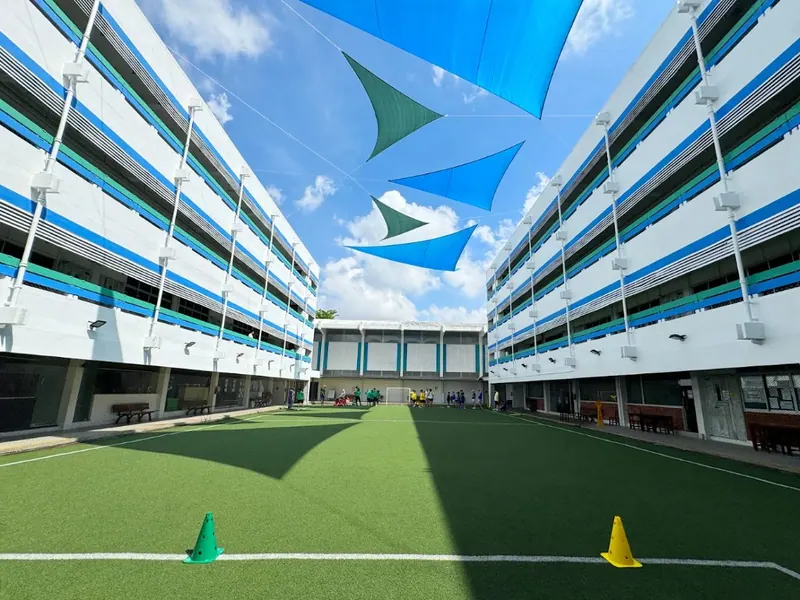
Kallang. Ages 4 to 18. Founded 2008 by a third-generation Singaporean educator. Around 200 students, with a stated 1:4 educator-to-student ratio, 30-plus nationalities, and an in-house Therapy and Pastoral Care team running occupational therapy and speech and language therapy alongside teaching. Fees in the SGD 38,000-45,000 band.
Winstedt is designed for students who learn differently. Secondary students sit IGCSE in core subjects and finish on a WASC-accredited High School Diploma; the model is exam-light by design and therapy-integrated. The primary years run eXplore pathways integrating OT, SLT, and social-emotional learning. Parent commentary is positive but small in volume, centring on the specialist model and small classes. Staff commentary is more mixed: teachers praise the inclusion mission and student work while flagging leadership churn, stretched resources, and burnout. Facilities sit on a former MOE campus and are described as functional rather than purpose-built. Winstedt's case rests on its profile, not its scale; the 1:4 ratio is the floor on which the rest sits.
Integrated International School
Capital Square Two, central business district. Ages 4 to 16. Founded 2009 by clinical psychologist Dr Vanessa von Auer. Under 100 students. British curriculum through IGCSE; multi-sensory, therapeutically supported environment. Fees in the SGD 32,000-35,000 band.
IIS is the smaller of Singapore's two specialist schools and the more clinically grounded. The founder is a registered clinical psychologist; the school sits inside an established clinical practice ecosystem in the CBD. Families typically arrive at IIS after a clinical assessment has shifted the conversation away from a mainstream school. It fits a child whose academic and emotional profile needs a small, therapeutic, exam-supported setting and who would otherwise be in 1:1 home schooling or out of school.
Mainstream schools with serious learning support
These are the schools where learning support is real for mild to moderate needs but where the school is built around mainstream academic delivery, not inclusion. Selectivity at admission shapes who gets in. Once in, the support is genuine.
Tanglin Trust School
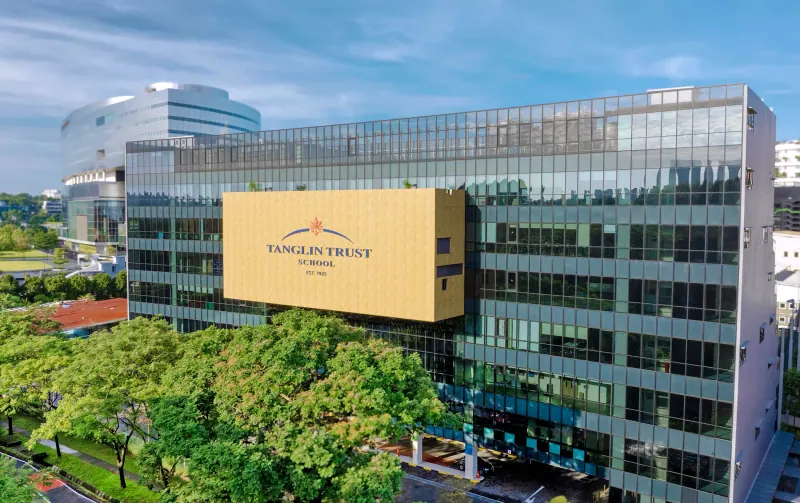
Portsdown. Ages 3 to 18. Founded 1925, the oldest British school in Southeast Asia. Around 2,850 pupils. 2025 results: IB Diploma average 39.6, A-Level *63% A\-A**. Senior fees around SGD 41,500.
Of the Big Three, Tanglin is the school whose learning support department teachers in the field name by reputation. Independent commentary repeatedly cites the LS team as exceptional and as a reason to consider the school for a specific child profile. The pastoral structure is described as warm despite scale, with around 70% of parents in published satisfaction data reporting their child has a strong sense of belonging. Admission is competitive and the waitlist long; the school moved from a chronological waitlist to a holistic applicant pool.
Stamford American International School
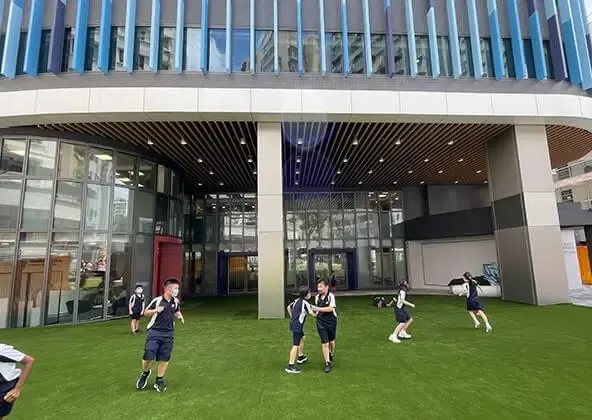
Woodleigh and the Early Learning Village in Nanyang. Ages 2 to 18. IB and AP offered in parallel. Around 3,000 students across 79+ nationalities. Cognita operated. Senior fees around SGD 54,000.
Recurring positives in independent commentary are approachable leadership, supportive teachers, and pathway flexibility, with parents framing the school as one that adapts to the student rather than the other way around. SAIS sits in Singapore's second tier in teacher commentary, below the non-profit Big Three; its 2025 IB Diploma average of 34.4 is above the global mean but well below Tanglin and Dulwich. For families weighing IB and AP without the selectivity ceiling of the non-profit top tier, SAIS is the strongest mainstream-with-LS option in the for-profit band.
Dulwich College Singapore
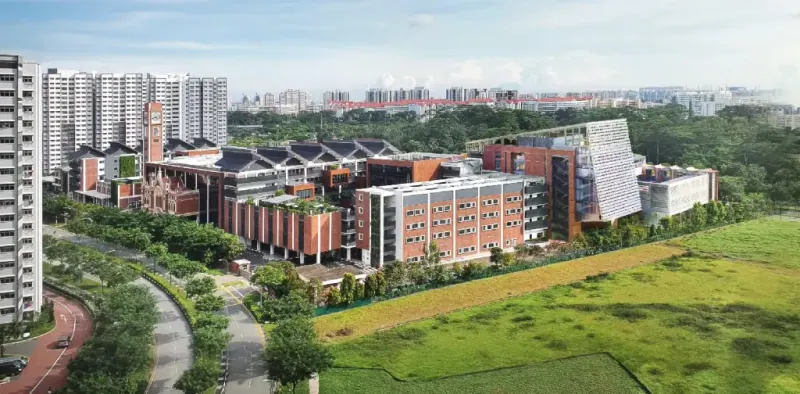
Bukit Batok. Ages 2 to 18. Founded 2014. CIS, WASC, BSO, COBIS all fully accredited. Around 2,700 pupils. Senior fees around SGD 56,000.
Dulwich runs the standard British-school learning-support model: a published inclusion policy, a learning-support team, mainstream delivery with intervention where needed. The 2025 IB Diploma average of 37.0 is at the top of the cohort and the accreditation stack is the strongest in the city. Public commentary is mixed: a parent survey snapshot at 3.2 out of 5 across 86 reviews and recurring teacher comment on workload and pace. The workload signal is a fit question for a child who needs a calmer academic register.
UWCSEA Dover and East
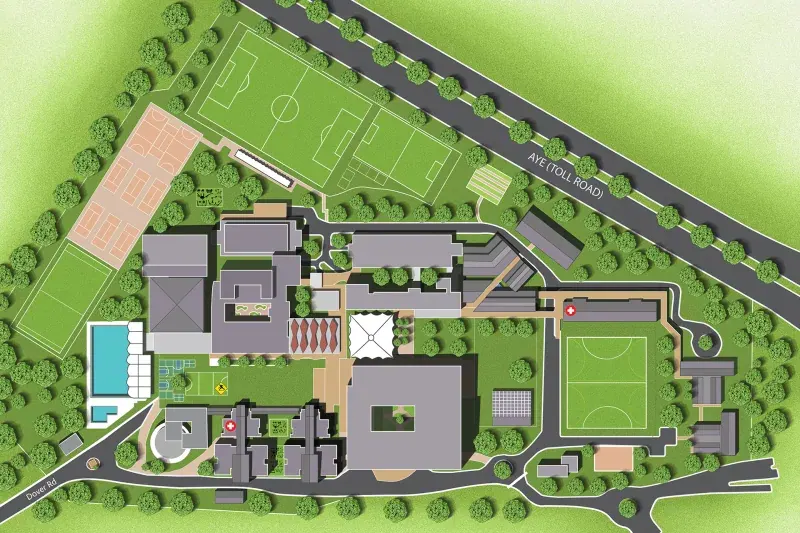
Dover (the original 1971 campus, relocating to Tengah by 2032) and Tampines (the 2008 East campus). Around 6,000 students between them, IB-only at sixth form, with boarding facilities at both campuses and a roughly 2-to-3:1 applicant-to-offer ratio. Senior fees around SGD 37,000-40,000 before development levy.
Independent commentary on learning support at UWCSEA is honest about the ceiling: the school suits self-motivated students who can handle an independent learning style, and learning support sits closer to mild or moderate provision than to intensive 1:1 work. Diversity, IB results around 36 average, and the residential community are the standout positives; expedition, activity, and development-levy costs push the total well above headline fees.
Singapore American School

Woodlands, on a 36-acre campus. Ages 3 to 18. American curriculum with the world's largest AP programme outside the US. Around 4,100 students across 72 nationalities. Senior fees around SGD 39,400.
SAS runs a well-resourced counselling and student support function and a structured learning-support model inside its US-curriculum framework. Parent commentary points to the breadth of AP, the strength of the high-school programme, and the depth of college counselling, with consistent caveats on scale, wealth concentration in the parent body, and academic pressure. SAS is not built around inclusion; it is built around top-tier American academic delivery to an affluent community.
At a glance
| School | Type | Selectivity | Pathways | Notes |
|---|---|---|---|---|
| Dover Court | Mainstream, inclusion-led | Non-selective | IB DP, BTEC, ASDAN-adapted | The single inclusion-built mainstream school |
| The Winstedt School | Specialist | Profile-based | IGCSE + WASC diploma | 1:4 ratio, integrated OT and SLT |
| Integrated International School | Specialist | Profile-based | British, IGCSE | Clinical psychologist founded, ~100 students |
| Tanglin Trust | Mainstream, strong LS | Selective | A-Level + IB DP | LS named by teachers as exceptional |
| Stamford American | Mainstream, strong LS | Moderately selective | IB DP + AP | Individualised pathways a recurring positive |
| Dulwich College | Mainstream, standard LS | Selective | IB DP | Strong results; workload a fit question |
| UWCSEA Dover and East | Mainstream, standard LS | Selective, mission-aligned | IB DP | LS for mild to moderate; intensive 1:1 a gap |
| Singapore American | Mainstream, standard LS | Selective | American + AP | Counselling depth; scale and pressure caveats |
What to watch for
The named SENCO or LS lead. A school that can introduce the specific person who would build a child's learning plan, with the LS lead in the conversation early, signals a department with real authority. A school routing everything through admissions until enrolment is a red flag.
Specialist staff employed, not consulted. A school with in-house educational psychologist, OT, and SLT is running provision. A school that "partners with external practitioners" is coordinating it. The difference matters for continuity and for cost: external sessions sit on top of fees.
Separate learning-support fees. Dover Court's pathways model includes Pathway 2 and Pathway 3 inside the fee structure; specialist schools price support in by default; most mainstream schools quote learning support as an add-on. The actual annual figure for a child on a moderate support plan can sit SGD 5,000 to 15,000 above the published fee.
Sixth-form pathway count. A school running IB only, with no BTEC, ASDAN, or alternative diploma, has one academic exit. A school running two or three pathways has more room to adjust as a child's profile develops.
When mainstream is not the right fit
For some children, no Singapore international school is the right setting. Specialist therapy centres run alongside or in place of school attendance: registered clinical psychologists, occupational therapists, speech and language therapists, and behavioural specialists, several long-established and part of how Singapore's expat SEN ecosystem functions. Dyslexia Association of Singapore runs structured literacy programmes; Autism Resource Centre provides assessment and intervention pathways. For families relocating with significant additional needs, a clinical first, school second order produces better placements than the reverse.
Related reading
- Best International Schools in Singapore
- Best British Schools in Singapore
- Best American Schools in Singapore
- Best IB Schools in Singapore
- International School Fees in Singapore
FAQs
Does Singapore have a dedicated special school in the international sector? Not in the conventional sense. The closest are The Winstedt School and Integrated International School, both small specialist settings for students who learn differently. The MOE runs a separate SPED school system for citizens and permanent residents; the international sector does not.
Do Singapore international schools have to accept a child with an EHCP or IEP from another country? No. Singapore international schools are private institutions and admissions sit with the school. Existing documentation, EHCPs, psychoeducational assessments, IEPs, is relevant evidence in admissions conversations, but acceptance is at the school's discretion. Dover Court's non-selective policy is the closest the city has to an open door at scale.
Is learning support charged separately from tuition? Often, yes. Specialist schools price support into their fees; mainstream schools usually charge for LS sessions or specialist staff time on top of base tuition. A moderate plan can sit several thousand SGD above the published fee.
Can a child receive speech or occupational therapy at school? At Winstedt and Dover Court, yes, integrated into the school day. At most other schools, external therapists either visit campus or sessions happen offsite, with the family arranging the logistics.
What does SEN provision look like at secondary level? Options narrow at secondary. Dover Court runs through to Sixth Form with three parallel pathways. Winstedt sits students through IGCSE and a WASC diploma. The mainstream schools with learning support, Tanglin, Stamford American, Dulwich, UWCSEA, SAS, run support inside their academic delivery; the IB Diploma framework constrains what is possible for higher-need profiles.
Is Singapore a good place to raise a child with significant additional needs? The clinical ecosystem is strong: assessment, therapy, and specialist practitioners are accessible and English-language. The school sector is narrower, with Dover Court, Winstedt, and IIS the three names that matter for specialist provision. For families whose support model relies on integrated school-and-therapy, the city works. For families relying on a domestic SEN-funded school place, it does not.