Notes / Tokyo
International School Fees in Tokyo
Top-year tuition runs JPY 3.0 to 3.8 million, around USD 20,000 to 25,000 at current rates. Why the dollar price has fallen, and what sits on top of tuition.
The brief
- Tokyo's top international schools charge JPY 3.0 to 3.8 million for the senior year, around USD 20,000 to 25,000 at current rates. ASIJ, the British School and Saint Maur sit at the ceiling.
- The yen has done the work, not the schools. Local-currency fees have crept up by single digits a year, but the dollar-equivalent ceiling has fallen from above USD 30,000 a decade ago to the low USD 20,000s now.
- Entry fees stack quickly. Registration, building fund and capital fees together run JPY 1.0 to 1.9 million one-off at the senior tier, a third to a half of one year's tuition before a child has sat at a desk.
- National-system schools at the value end. The German school and the French lycée publish top-year tuition under JPY 1.85 million, roughly USD 10,000 to 12,000, with a programme through age 18.
- One number to remember: JPY 3.5 million. That is the senior-year ceiling at the four most expensive day schools in the dataset. Most international-school choices in Tokyo land between JPY 2.0 and 3.2 million for the top year.
Tokyo is one of the most expensive cities in the world to live in and one of the cheapest, in dollar terms, to put a child through an international school in. Yen weakness has rewritten the comparison.
The headline numbers
Twenty-eight Tokyo international schools in the ISG fees database publish a top-year annual tuition. The ceiling sits at JPY 3,783,000 (American School in Japan) and JPY 3,670,000 (Yokohama International School), both with a full programme through grade 12. Translated at JPY 1 = USD 0.0067 these are USD 25,346 and USD 24,589. A decade ago, when the yen traded near 80 to the dollar, the same schools cleared USD 40,000 in equivalent terms. The schools are not cheaper; the currency is.
A family invoiced in yen on a yen salary sees fee inflation of 3 to 6% a year in local terms, the same picture as Singapore or Hong Kong. A family on a dollar package, or invoiced from a regional headquarters in Singapore or Shanghai, sees Tokyo as a discount market. The same campus that prices at USD 25,000 in Tokyo would price at USD 38,000 to USD 46,000 across the East China Sea.
Premium tier: JPY 2.9 to 3.8 million
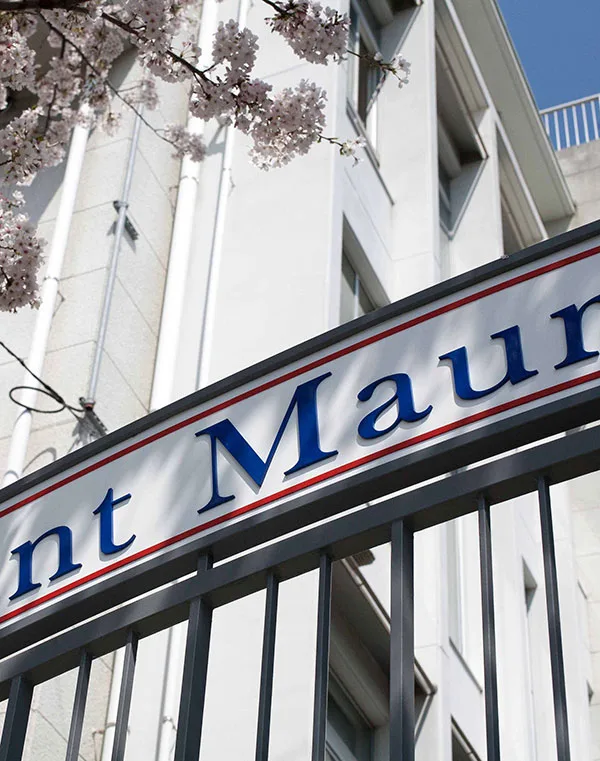
The schools that price at the ceiling are the long-established American and British names plus the two highest-billing IB schools. The American School in Japan in Chofu, founded 1902, runs JPY 3,237,000 at nursery rising to JPY 3,783,000 in grades 9 to 12. Yokohama International School, founded 1924, runs from JPY 2,880,000 in kindergarten to JPY 3,670,000 at grade 12. Saint Maur International School in Yokohama, founded 1872, sits in the same band on published tuition lines, slightly below ASIJ at the senior end.
| School | Area | Curriculum | Top-year (JPY) | Top-year (USD) |
|---|---|---|---|---|
| American School in Japan | Chofu | American, AP | 3,783,000 | 25,346 |
| Yokohama International School | Yokohama | IB | 3,670,000 | 24,589 |
| Nishimachi International School | Minato | American, bilingual | 3,529,000 | 23,644 |
| Tokyo International School | Minato | IB | 3,300,000 | 22,110 |
| K. International School Tokyo | Koto | IB, Edexcel | 3,220,000 | 21,574 |
| Canadian International School Japan | Shinagawa | Canadian, AP | 3,150,000 | 21,105 |
| Horizon Japan International School | Yokohama | IB | 3,140,000 | 21,038 |
| International School of the Sacred Heart | Hiroo | AP, IPC | 3,100,000 | 20,770 |
| The British School in Tokyo | Minato | British, IB | 3,030,000 | 20,301 |
| St. Mary's International School | Setagaya | IB, American | 3,000,000 | 20,100 |
Top-year published annual tuition. USD at JPY 1 = USD 0.0067.
Two patterns inside the table. American-curriculum and IB schools dominate the top half. The British School in Tokyo prices below the American-curriculum cluster despite its size and Minato address, a deliberate positioning point against ASIJ. K International charges its highest annual line in kindergarten (JPY 3,220,000) rather than senior school, an unusual structure that reflects how it bills its IB DP cohort.
Mid tier: JPY 2.0 to 2.8 million
The middle band carries the smaller IB and Canadian-curriculum schools plus a Christian American-curriculum school. Shinagawa International School runs JPY 2,450,000 to 2,775,000. Aoba-Japan International School in Nerima runs JPY 1,908,000 in early years to JPY 2,650,000 in grades 6 to 12, the lowest top-year fee among the mainstream IB-track schools. Seisen International School in Setagaya, an all-girls IB school, runs JPY 2,300,000 to 2,470,000. Christian Academy in Japan in Chofu sits at JPY 2,062,000 to 2,412,000 on an American curriculum with AP.
Global Indian International School Tokyo is the outlier in this band, with JPY 1,050,810 to 2,329,743 across CBSE, Cambridge IGCSE and IB DP tracks. The IB top year prices around USD 15,600; the CBSE primary years closer to USD 7,000.
Value end: JPY 1.3 to 1.9 million
The cheapest mainstream top-year tuition lines in Tokyo are national-system schools serving specific diaspora communities. Deutsche Schule Tokyo Yokohama, founded 1904, runs JPY 1,650,000 to 1,810,000 on the German curriculum through Abitur. Lycée Français International de Tokyo, with 1,500 pupils, runs JPY 1,262,200 to 1,552,300 on the French national curriculum through baccalauréat. In USD these are USD 11,000 to 12,000 and USD 8,500 to 10,400 for the senior year.
These two schools carry some of the largest international enrolments in the city by pupil count and they are not "international" in the IB or American sense. The cohort is largely German or French expatriate plus bilingual Japanese, the language of instruction is the home language with English as a subject, and the destination is mostly back to the home country's university system. For a family whose children will return to a German or French school within a few years, the price point is unmatched and the curricular continuity is the point.
What sits on top of tuition
The published annual tuition is not the whole bill. Tokyo schools charge a combination of three one-off items that recur only if a child changes schools, plus a programme of recurring extras inside each academic year.
Application fee. A non-refundable charge to enter the admissions process. JPY 23,000 to 50,000 (USD 150 to 350). Paid before any decision.
Registration or enrolment fee. Paid once a place is offered and accepted. JPY 300,000 to 1,350,000 across the dataset. Yokohama International's JPY 1,350,000 registration is the highest in the city; Shinagawa International's enrolment fee is JPY 1,000,000; ASIJ, K International, Nishimachi, St. Mary's, Tokyo International and Horizon all sit at JPY 300,000 to 400,000.
Capital or building fee. A separate one-off into the school's facilities programme. JPY 385,000 to 1,525,000. ASIJ's Building Maintenance Fee at JPY 1,525,000 (about USD 10,200) is the largest single one-off line in the dataset. K International's Capital Fee is JPY 700,000; Tokyo International's Development Fee is JPY 900,000; Nishimachi's Building Fund is JPY 825,000; Sacred Heart's Educational and Building Development Fee is JPY 600,000.
Stacked, the one-off entry costs at the senior tier run JPY 1.0 to 1.9 million, around USD 7,000 to 13,000. At schools that re-charge a registration or capital fee per child (most of them), a family with two children pays the full stack twice. The fee schedule is the place to check this; the practice is not consistent across the city.
| School | Application | Registration | Capital / Building | One-off total (JPY) |
|---|---|---|---|---|
| American School in Japan | 50,000 | 300,000 | 1,525,000 | 1,875,000 |
| Yokohama International School | 50,000 | 1,350,000 | 385,000 | 1,785,000 |
| Tokyo International School | 30,000 | 300,000 | 900,000 | 1,230,000 |
| Nishimachi International School | 30,000 | 300,000 | 825,000 | 1,155,000 |
| Shinagawa International School | 30,000 | 1,000,000 | included | 1,030,000 |
| K. International School Tokyo | 30,000 | 300,000 | 700,000 | 1,030,000 |
| Canadian International School Japan | 35,000 | 300,000 | 600,000 | 935,000 |
| International School of the Sacred Heart | 30,000 | 300,000 | 600,000 | 930,000 |
| Horizon Japan International School | 30,000 | 300,000 | 600,000 | 930,000 |
| Aoba-Japan International School | 23,000 | 317,000 | 456,000 | 796,000 |
One-off entry charges, per child unless the school operates a family registration. Some schools also levy annual building maintenance fees in addition to tuition.
A family enrolling two children into the senior years at ASIJ pays one-off entry charges of around JPY 3.75 million on top of two annual tuition lines of JPY 3.78 million each. The combined first-year invoice lands near JPY 11.3 million, about USD 75,000. Year two falls back to tuition only, around JPY 7.5 million or USD 50,000.
What drives the spread
Four things move Tokyo's published fees more than the rest.
The yen. Tuition is set and published in yen, but the parent market that drives premium fees is partly priced in dollars and Singapore dollars. With JPY weak, schools have less currency room to push tuition up at the dollar-equivalent ceiling. Local-currency increases of 3 to 6% a year barely offset a 10% move in the cross-rate.
Real estate. Most international schools sit in Minato, Setagaya, Koto, Shinagawa, Chofu or Yokohama, where institutional land is cheaper than the equivalent Hong Kong, Singapore or Shanghai location, and not in the same league as central London or Geneva. Schools own most of their campuses outright, often on long-tenure land granted decades ago. The land-cost line is smaller than the cross-city equivalent.
Capital structure. The older Tokyo international schools are non-profit or association-owned and have funded their capital projects through building funds and registration fees over decades rather than through debentures or large annual capital levies. The one-off cost is real and stacks at entry; the recurring capital levy line is smaller.
MEXT and the international-school category. Most established international schools in Tokyo are licensed under MEXT's kakushu gakko (miscellaneous school) framework rather than as Article 1 schools. That sits them outside the Japanese local-school tuition framework, in a separate regulatory category where fees are set by the school and its board. Price competition runs within the small set of accredited international schools rather than against the local Japanese system.
Related reading
- Best international schools in Tokyo
- Best British schools in Tokyo
- Best IB schools in Tokyo
- International school fees: a global comparison
- International school fees in Jakarta
FAQs
How much do international schools cost in Tokyo? Top-year annual tuition at Tokyo's senior international schools runs JPY 3.0 to 3.8 million, around USD 20,000 to 25,000 at current rates. Mid-tier IB and Canadian-curriculum schools run JPY 2.0 to 2.8 million. The German school and the French lycée run JPY 1.3 to 1.8 million for the senior year on national-curriculum tracks. One-off entry charges of JPY 1.0 to 1.9 million sit on top.
Why are Tokyo international school fees lower in USD than Shanghai or Singapore? The fees are set in yen, and the yen has depreciated significantly against the dollar over the last decade. Tokyo's senior-year ceiling sits around USD 25,000, against city medians above USD 29,000 in Singapore and Seoul and above USD 46,000 in Shanghai. In local currency, Tokyo fees have crept up 3 to 6% a year. In dollar terms they have fallen.
What is a registration or capital fee, and is it refundable? A one-off charge paid when a child is offered and accepts a place. Registration fees run JPY 300,000 to 1,350,000 across Tokyo schools, capital or building fees a further JPY 385,000 to 1,525,000. Most of these are non-refundable once the place is accepted. Application fees, paid earlier in the process, are universally non-refundable and are not credited against later charges if the family does not enrol.
Do international schools in Tokyo increase fees each year? Yes. Most published schedules step tuition up 3 to 6% in local currency each year, occasionally higher when a school resets fees after a long hold. The dollar-equivalent change can be larger or smaller depending on the cross-rate at the time of invoice.
Are there cheaper international options in Tokyo? The German school and the French lycée publish top-year tuition under JPY 1.85 million on national-curriculum tracks. Indian-curriculum and small bilingual programmes price lower still, with top-year fees from around JPY 1.0 million. These schools serve specific diaspora communities and run in the language of the home country.
Sources
ISG fees database, top-year annual tuition lines for 28 Tokyo international schools with published fee schedules in 2026. USD figures converted at JPY 1 = USD 0.0067, an indicative mid-2026 rate. Local-currency figures are the source of truth; the USD column is for cross-city comparison. A family's specific year-group invoice will differ.