Notes / Kuala Lumpur
International School Admissions in Kuala Lumpur
How KL international school admissions work in 2026: waitlists, year-group bottlenecks, deposits, assessments, and what the top schools really want.
The brief
- Most KL international schools run an August to June year and take the main admissions decisions between October and April. By March the popular year groups start to close.
- The hardest entry points are Year 7, Year 9, Year 12, and the early-years intake at Pre-school and Reception. Year 1 also tightens at the schools with small intake numbers.
- A "waitlist" in KL almost always means a wait pool, not a queue. Schools call families in order of fit, not order of application.
- Securing a place costs real money. Expect a non-refundable application fee of MYR 500 to 2,500, a seat deposit of 10 to 25 percent of annual tuition, and a refundable bond of MYR 5,000 to 15,000 at most British and IB schools.
- KL is not a sibling-priority market in the way Singapore or Hong Kong are. Most schools offer a sibling discount on tuition but no admissions queue-jump.
The KL academic year for international schools runs mid-August to late June, and the big admissions cycle runs October the year before to April of the entry year. Open days, assessments, offers and deposits all happen inside that window.
One exception: Australian International School Malaysia and a few others run a January to November calendar, so their cycle is offset by five months. A move across the two calendars lands mid-year on one side.
The market is crowded. More than 120 international schools operate in and around KL, but demand pressure concentrates on roughly a dozen: Alice Smith, Garden, ISKL, IGB, Mont Kiara, BSKL, Nexus, and Sri KDU at the top. Everywhere else, admissions is open.
The application calendar
For an August 2026 entry, the cycle that produced offers looked like this. The next cycle, for August 2027, will run on the same dates.
| Month | What happens |
|---|---|
| September to October | Open houses. Application portals open at most premium schools. |
| October to December | Applications submitted. Document files built (passport, two years of school reports, references, any prior test results). |
| January to March | Assessments and family interviews. CAT4, MAP, in-house English and maths papers depending on school and year group. |
| February to April | Offers issued. Seat deposits due, usually 14 to 30 days from the offer date. |
| May to July | Student-pass and dependant-pass processing. Uniform fittings. New-family orientation. |
| Mid-August | Term starts. |
For mid-year entry, the same steps compress into four to eight weeks. Premium schools assess and place children year-round if a seat exists, but they will not waive the assessment to fit a relocation deadline. For January entry at the Australian-calendar schools, shift everything forward by five months: applications May to August of the year before, assessments and offers August to October, January start.
Apply early. For Reception or Year 7 at Alice Smith, Garden, ISKL, IGB, BSKL, Mont Kiara, or Nexus, twelve to eighteen months out is the realistic window. The schools say so on their own admissions pages, and the schedule of offers in March and April makes a late application a structural disadvantage.
Year-group bottlenecks
Demand in KL is not evenly distributed. Pressure clusters in a few year groups.
Pre-school and Reception. The first entry point at any British-curriculum school is the tightest of the early years. Parents apply knowing the child will likely stay through to Year 13. Schools fill from the bottom and the queue compounds.
Year 1. At smaller schools that cap intake (IGB, Mont Kiara, Nexus, Sri KDU), Year 1 fills almost as fast as Reception. Children who missed Reception come back for Year 1, alongside newly-arriving families.
Year 7. The hardest year group in KL. Three things converge: families relocating internationally tend to move at the start of secondary; existing students at smaller schools attempt the jump to the bigger names; and top schools cap Year 7 to protect their IGCSE cohorts. Alice Smith runs Year 7 on a wait pool by default. Garden and BSKL fill early. ISKL, on an American structure, sees the same pressure at Grade 6.
Year 9. The second secondary pinch. Year 7 wait-pool families re-apply. IGCSE subject choice starts at the end of Year 9, so schools prefer not to take children mid-IGCSE.
Year 12. Sixth-form entry for the IB Diploma or A Levels is competitive everywhere. Alice Smith and IGB run small Diploma cohorts. ISKL caps grade 11. BSKL and Nexus take a wider range but still assess for subject readiness.
Middle years are easier. Years 4, 5, 8 and 10 turn over the most because expat families come and go. A flexible move targeting those entry points is the most likely to find a place at a popular school.
A concrete current read on Alice Smith: limited places in Years 5 and 6 this year, no places in Years 10, 11 or 13, wait pool at Year 7. For 2026-27, Years 10, 11 and 13 closed outright, limited spaces in Years 5 to 9, Reception through Year 4 open. The same gate-closing pattern at the secondary end repeats across the top British schools.
What "waitlist" really means at the top schools
In KL "waitlist" is rarely a strict queue. Schools call them wait pools. When a place opens the school looks at the pool and picks the child who fits, by age placement, curriculum continuity, English level, gender balance, sibling status. The first family to apply is not the first called.
Alice Smith uses the term "wait pool" explicitly. Assessments are valid for twelve months; an applicant still waiting after that re-assesses. The pool is described as "active" rather than ranked; there is no published queue position.
Mont Kiara International School runs a waitlist on grade levels where capacity is reached, and the school publicly states the list has started forming. Non-refundable application fee MYR 1,700. The market-standard 10 to 25 percent of annual tuition seat-securing deposit applies once an offer is made.
ISKL describes its process as rolling admissions with a placement assessment rather than an entrance exam. No sibling discounts or financial incentives. Enrolment deadlines May 1 for elementary and middle, March 24 for high school. After those dates, applications roll into the following cycle.
Garden International and BSKL both follow the same pattern: apply twelve to eighteen months out for Year 7, Year 9 or Year 12; structured assessment day; offers in spring; deposits within a fixed window.
IGB International is the only school in Malaysia authorised for the full IB continuum (PYP, MYP, DP and CP). The Diploma cohort is small, which makes Year 12 the bottleneck. Earlier year groups turn over more.
KL has no debenture or traded-seat system of the kind used in Hong Kong or Singapore. What looks like a "seat fee" is the refundable building bond, typically MYR 5,000 to MYR 15,000, returned at the end of enrolment less damages or unpaid fees. Capital or development levies of MYR 8,000 to MYR 30,000 exist at some schools and are usually non-refundable.
Assessment and interview practice
Every premium school in KL assesses. The format depends on age.
Early years and Reception. A play-based observation checking developmental readiness, social interaction, language, and willingness to separate from a parent. Parents may be interviewed alongside. Not a test children "fail"; a fit and readiness check.
Primary, Years 1 to 6. Written English and maths papers. From Year 3, CAT4 is common. ISKL adds MAP. School reports from the previous two years are mandatory. EAL screening for children whose first language is not English.
Secondary, Years 7 to 11. Longer English and maths papers, sometimes a science paper, a student interview, often a timed writing sample. CAT4 is standard at most British-curriculum schools. IGCSE-in-progress applicants need predicted grades and current marks.
Sixth form, Years 12 and 13. Academic transcripts, predicted grades, a personal statement, a substantive interview. Subject choice is part of the conversation: schools will not admit a Diploma candidate to subjects they cannot staff, or an A Level candidate to a combination that does not work timetable-wise.
The assessment is also a placement tool. A child who passes the academic gate but scores below year-group English benchmarks may be admitted conditional on an EAL programme, adding MYR 12,000 to MYR 20,000 a year. Schools that learn about a learning difference at application stage can plan support; ones that find out in term one are less well placed to help.
Parent interviews vary. Mont Kiara, Sri KDU and several British schools schedule a formal parent meeting. Others fold it into the assessment day. The questions are similar everywhere: why this school, what the child does outside lessons, what the family expects, what happens after KL.
How the top-tier schools differ on admissions
A short school-by-school read on what is publicly verifiable.
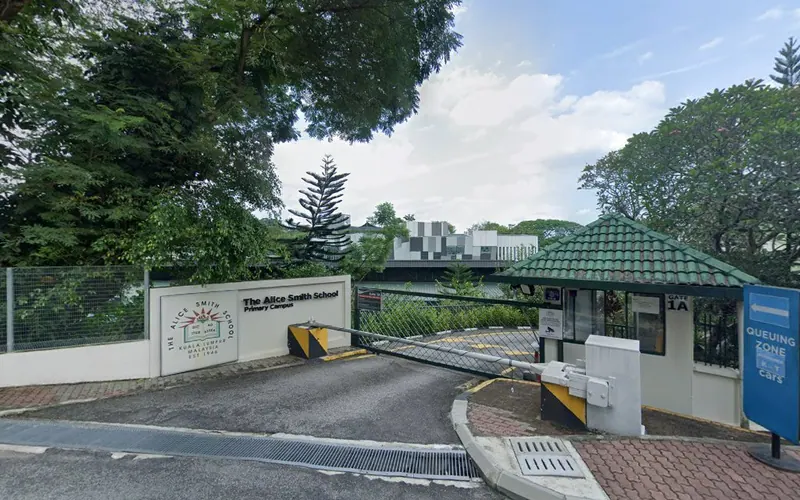
The Alice Smith School. British, 3 to 18, around 1,600 pupils across primary and secondary campuses. Wait pools active at Year 7. Limited spaces in Years 5 to 9 for 2026-27, Years 10, 11 and 13 closed. One of the few KL schools that publishes year-by-year availability.
Garden International School. British, 3 to 18, around 2,200 pupils on a single Mont Kiara campus. The largest British school in Malaysia by enrolment. Reception, Year 7 and Year 12 are the most competitive entry points.
The International School of Kuala Lumpur. American framework with IB Diploma in the sixth form, 3 to 18, around 1,800 pupils on a single Ampang campus. Rolling admissions. Enrolment deadlines May 1 for elementary and middle, March 24 for high school. No sibling discounts. WIDA English screening.
IGB International School. Full IB continuum (PYP, MYP, DP, CP), 3 to 18, around 400 pupils, Sungai Buloh. The Diploma cohort is the smallest among the big-name schools, which makes Year 12 the tightest year group.
Mont'Kiara International School. American framework with IB Diploma, 3 to 18, Mont Kiara. Active waitlist on multiple grade levels for 2026-27. Application fee MYR 1,700, non-refundable.
Nexus International School. British and IB hybrid, 3 to 18, around 650 pupils, Putrajaya. Day and boarding. Year 7, Year 9 and Year 12 are the most competitive. Boarding from Year 6, on its own earlier timeline.
The British International School of Kuala Lumpur. British, 2 to 18, around 1,500 pupils, Petaling Jaya, Nord Anglia operated. Rolling admissions. Offers within 7 to 10 working days of assessment. Year 7 and Year 12 are the pinch points.
Sri KDU International School Kota Damansara. British, 3 to 16. CAT4 entrance test from Year 1, observation session for Early Years. Registration fee MYR 1,000, non-refundable. Late applications reviewed case by case.
How to maximise admission chances
A few things move the needle.
Parallel applications. No central system exists in KL and no penalty for parallel applications. Two or three concurrent is normal for relocating families. A few thousand ringgit in non-refundable application fees is small relative to the cost of arriving with no school place.
Complete files move faster. Passport copies, two years of school reports, references, any prior CAT4 or MAP results, language history. Schools assess what they have.
In-person assessments. Most schools accept remote assessments for overseas applicants, but in-person produces better placement decisions and faster offers.
Honesty on learning needs. Disclosing dyslexia, ADHD, autism spectrum, or any other learning difference at application stage works in the family's favour. The school can plan support and make a conditional offer. Hidden needs that surface in the first term are the cause of most failed placements in KL.
Light contact while waiting. A polite update every six to eight weeks keeps a wait-pool application visible. Weekly contact creates friction. Silence for six months suggests the family has moved on.
Credible second-choice place. A year at a mid-tier school while waiting for Alice Smith, Garden, ISKL or IGB does not derail a child's education. Curriculum alignment is close enough across British, IB and American systems that a within-system transfer is straightforward. Cross-system transfers (British to American mid-year, IB to A Levels mid-course) are harder.
August start over mid-year. Where a relocation has any flexibility, arriving for an August start is materially easier than a January or March mid-year placement. Schools have their intake decided by April; mid-year offers depend on someone else leaving.
Related reading
- Best international schools in Kuala Lumpur
- Best British schools in Kuala Lumpur
- Top 10 international schools in Kuala Lumpur
- Top 5 international schools in Kuala Lumpur
- Entry tests at international schools
- How to choose an international school
- Spotting red flags at an international school
FAQs
When should I apply for an August 2027 start at a top school? Between September 2025 and December 2026, with a preference for the earlier half. Reception, Year 1, Year 7, Year 9 and Year 12 at Alice Smith, Garden, ISKL, IGB, BSKL, Mont Kiara and Nexus should be in the application stream early.
Can I apply from overseas without visiting KL? Yes. Every premium school in KL accepts overseas applications. Assessments can be run remotely, by video interview, or through a partner school in the current city. In-person assessments produce faster decisions where they are possible.
What does a place at a top school cost up front? A non-refundable application fee of MYR 500 to 2,500, a seat-securing deposit of 10 to 25 percent of annual tuition, and at British and IB schools a refundable building bond of MYR 5,000 to 15,000. Some schools also charge a one-off capital levy of MYR 8,000 to MYR 30,000. Total cash out before the first day of term is typically MYR 30,000 to MYR 80,000 at the top tier, not including tuition.
Do siblings get priority? Not in the formal queue-jump sense. Schools may consider sibling status when calling from a wait pool, but published policies do not guarantee it. Sibling tuition discounts of 5 to 15 percent from the second child are common, applying to tuition only. ISKL has stated publicly it offers neither sibling discounts nor sibling priority.
How long from application to offer? Four to eight weeks at most schools, assuming a complete file and an assessment booked within two to three weeks. Faster at BSKL on its 7-to-10-working-day offer policy after assessment. Slower where the year group is full and the application enters a wait pool.
What happens if my child doesn't get into our first choice? Take the second-choice place and ask to stay in the wait pool at the first choice. Families move through KL frequently and places open mid-year. The smoothest transfer points are the start of a new academic year, the end of a key stage, or the end of an exam cycle, not mid-IGCSE or mid-Diploma.
Sources: school admissions pages at alice-smith.edu.my, gardenschool.edu.my, iskl.edu.my, igbis.edu.my, mkis.edu.my, nexus.edu.my, nordangliaeducation.com (BSKL), srikdu.edu.my; the International Schools Database (international-schools-database.com); GL Education on CAT4 and NGRT in Malaysia; published admissions guides for Kuala Lumpur 2026.
Fees and availability change. Verify current figures with each school's admissions office.