Notes / Paris
Best Schools for EAL Support in Paris
Paris EAL in plain terms: which schools run real programmes, why most relocating families need French as Additional Language, and how to read the claims.
The brief
- Paris has a small EAL market compared to Dubai or Singapore. Named EAL departments exist at ISP, ASP, BSP and EABJM; most English-medium schools assume children arrive with working English.
- International School of Paris runs the strongest EAL provision, built around small classes, an IB framework that already differentiates planning, and explicit beginner intake from age 3.
- For most families relocating to France, the language gap is French, not English. The FLE route matters more than EAL once a child is in school and dealing with the city around it.
- EAL at the English-medium schools is pull-out plus push-in, with informal exit. None publishes a WIDA-style framework.
- EABJM screens for French ability at entry from primary upward and is not a soft landing for monolingual English children.
- Social English arrives in 12 to 18 months. Academic English takes 5 to 7 years. Schools promising faster are describing playground fluency.
EAL and FLE are different problems
Paris is not Dubai. The English-medium international schools are small, the cohort is more linguistically homogeneous than the marketing implies, and the city itself runs in French. That changes what an EAL programme has to do, and what most relocating families need.
EAL (English as an Additional Language) is for children learning in English while learning English. They sit in maths, science and humanities in English and need the language and the content at the same time. EAL is the safety net under the curriculum.
FLE (Français Langue Étrangère, or FSL in the Anglophone literature) is the opposite problem. School runs in English; the doctor, the boulangerie, the football club and the neighbours run in French. FLE is the route into the host country, not the route into the curriculum.
Most families relocating to Paris with school-age children need one or both. The bilingual French schools (EABJM, Lennen, EIB campuses) flip the picture, with French as the curriculum language and English layered through. There the child needs FLE to learn at all, and EAL becomes the enrichment.
What good EAL provision looks like
Every Paris school will say it welcomes children from many countries and supports language learners. That is the floor. Five things separate a real programme from reassurance.
A named specialist. Real provision has a named head of EAL with qualifications, not a class teacher who is good with newcomers.
Beginner intake age band. A school that takes complete beginners only at Pre-K is a different proposition from one that takes beginners up to Year 6. Beginner entry into secondary is rare.
A blended model. Pull-out plus push-in inside subject lessons is the working norm. Pull-out only at secondary is a warning. Immersion only is not an EAL programme.
Exit criteria. The strongest schools cite WIDA, CEFR or Cambridge English and a multi-year transition plan. Schools that exit children when "the teacher feels they are coping" are running EAL by gut feel.
Cohort numbers. One EAL teacher across 800 children signals how seriously a school takes the work. The healthier ratio is one specialist per 100 to 150 EAL students.
The strongest EAL provision
Four schools carry named EAL departments at scale. ISP is the strongest. ASP and BSP are solid. EABJM is selective and shaped around its bilingual mission, not around beginners.
International School of Paris
ISP runs Paris's most developed EAL programme. The school is small (around 900 students across three sites in the 16th) and runs the full IB continuum from PYP through MYP to DP. The EAL department takes beginners from age 3 with a structured intake assessment, then supports children through primary and middle school with a mix of pull-out and in-class support that scales down as proficiency develops.
Size matters. Small classes give EAL teachers time to work with both the child and the subject teacher, and the IB framework already requires differentiated planning, so EAL sits inside normal practice rather than bolted on. Parents arriving without English report children integrated within a year and working at grade level by the second.
The caveat is the senior end. EAL into the Diploma is thin, and a child arriving in Year 11 or 12 with limited English will struggle regardless of school. Fees run EUR 25,500 to EUR 39,000.
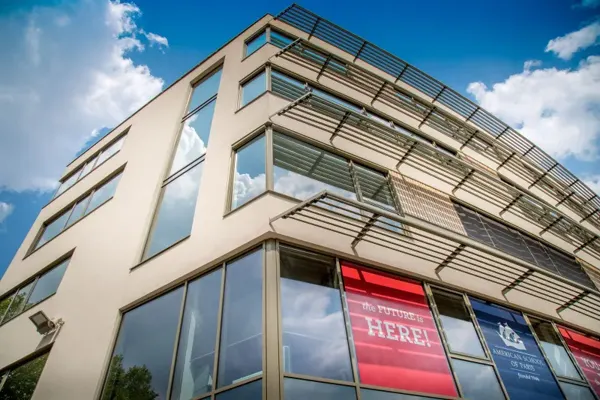
American School of Paris
ASP carries the longer-running EAL department on the English-medium side, built around the American IEP planning tradition. Beginner intake is standard through Grade 5, with case-by-case admission into middle school. Around 65 nationalities sit on the roll, and the cohort is large enough to support both pull-out and embedded specialist work inside lessons.
ASP's strength is the embedded model. EAL specialists co-plan with classroom teachers, and the Student Support Team brings EAL, learning support and counselling into one conversation about each child. Complex profiles are referred into private specialist help alongside school support.
Fees run EUR 25,000 to EUR 41,400, plus a one-time capital assessment of EUR 12,200. EAL is included in tuition.
British School of Paris
BSP in Croissy-sur-Seine runs an English National Curriculum EAL programme: initial assessment, mixed pull-out and push-in through KS1 and KS2, tapering through KS3, with exam accommodations at IGCSE and A Level via the JCQ framework.
The pastoral wrap around new arrivals is real. Music and drama give children a route into the social side of the school before their English is up to academic work. The honest limitation is the bubble. Children at BSP do limited French in practice, and EAL support is geared to English-curriculum continuity for families on a posting rather than a long Paris settlement. Fees run EUR 20,684 to EUR 34,065.
Ecole Jeannine Manuel
EABJM is the flagship of French bilingual education, around 1,600 pupils on the Paris campus, with a competitive admissions test from primary upward that screens for academic potential and French ability.
For admitted families, EABJM runs structured language support for both incoming languages. Children with strong French and limited English are absorbed into the English-strand classes with support. Children with strong English and limited French have a harder path: the French-curriculum spine is non-negotiable. EABJM's results are built on selected, bilingual-by-default children, not on bringing beginners to that bar.
Best read as a bilingual school with serious English alongside, not as an EAL destination. Fees run EUR 10,260 to EUR 32,560.
How to read the claims
Most school websites say "EAL support available" without defining the model, the staffing or the cohort. Assume the floor unless the school offers specifics.
The separating questions are practical. Who leads EAL, what are their qualifications, how many specialist teachers, what fraction of the school is in EAL provision, what framework defines exit, can the school name recently-arrived families who would speak with you. A school that routes everything into a brochure is operating a marketing claim.
At a glance
| School | Curriculum | Ages | Fees range | Notes |
|---|---|---|---|---|
| International School of Paris | IB PYP/MYP/DP | 3-18 | EUR 25,500-39,000 | 16th arr; strongest English-medium EAL |
| American School of Paris | American + IB | 3-18 | EUR 25,000-41,400 | Saint-Cloud; long-established EAL; embedded specialist model |
| British School of Paris | British | 3-18 | EUR 20,684-34,065 | Croissy-sur-Seine; ENC EAL through KS1-3 |
| Ecole Jeannine Manuel | French + IB | 6-18 | EUR 10,260-32,560 | 15th arr; selective bilingual; not a beginner pathway |
| ICS Paris | IB + Cambridge | 2-18 | EUR 20,994-32,976 | 15th arr; smaller EAL footprint; IB continuum |
| Ermitage International | IB + French Bac | 3-18 | EUR 7,500-28,950 | Maisons-Laffitte; warm primary English Section; thin secondary EAL signal |
Fees are 2025-26 ranges as published by each school.
What to watch for
FLE before EAL for most families. For a family settling in Paris rather than passing through on a posting, the language gap that bites first is French. Ask each school what FLE provision runs alongside EAL.
Beginner ceiling by year group. A school that takes beginner English at Pre-K may not take a beginner into Year 5. The admissions test result frames which policy applies to your child.
Pull-out versus immersion at secondary. A school that responds to a Year 8 arrival with limited English by dropping them into mainstream classes and calling that "immersion" is not operating EAL.
Exit speed. Fast exit produces fluent-sounding children who then struggle in upper-school analytical writing. Slow exit, anchored to a framework, is the marker of an honest programme.
Mother tongue at exam level. IB and Cambridge both permit assessment in a candidate's first language for specific subjects.
Fees on top of fees. The four schools above include EAL in tuition. Some smaller bilingual schools charge for separate language support sessions.
Related reading
- Best international schools in Paris
- Best schools for SEN and learning support in Paris
- International school admissions in Paris
- International school fees in Paris
- How to choose an international school
FAQs
My child has no English. Can they start at an English-medium Paris school? At primary, yes, across ASP, ISP, BSP and ICS. Each runs structured intake support from age 3 to roughly age 10. Beginner entry into secondary is harder and depends on the year group and the cohort.
Is EAL charged on top of tuition? At ASP, ISP, BSP and EABJM, EAL is included. Some smaller bilingual primaries charge separately for one-to-one language sessions.
How long until my child can follow lessons in English? Social English arrives in 12 to 18 months for children with age-appropriate cognitive development. Academic English takes 5 to 7 years.
Should we choose a bilingual school instead? If the family is settling in France long term, a bilingual school carries advantages. EABJM, Lennen, EIB and Cours Molière run genuine bilingual programmes. The child still needs FLE support, delivered as core curriculum rather than as a side service.
What about French as Additional Language? ISP and ASP carry the most structured FLE alongside their EAL. BSP runs French as a subject rather than as an immersion route.
Can my child sit IB Diploma in their mother tongue? For Language A subjects, yes, often through the school-supported self-taught route. Plan at subject selection in Year 11.
How do we choose between ISP and ASP for an EAL-dependent child? ISP suits a child who will benefit from a small school and IB continuity. ASP suits a family wanting the American school experience, broader sport and US-oriented college counselling. EAL is robust at both.
Sources
- International School of Paris, American School of Paris, British School of Paris and Ecole Jeannine Manuel published admissions and language support material
- IB Diploma Programme assessment principles and practices (IBO)
- Cambridge English proficiency framework and CEFR alignment guidance
- Independent parent reviews aggregated across the Paris international school directory