Notes / Singapore
Scholarships and Bursaries at Singapore International Schools
What Singapore international schools actually fund: UWCSEA's selection-based UWC scholarship, Dulwich 11+/13+/16+ awards, Tanglin and Hwa Chong programmes.
Comparison table
| School | Programme | Stage | Typical award |
|---|---|---|---|
| UWCSEA Dover | UWC scholarship | IB DP (Yr 11 to 12) | Up to full tuition + boarding |
| UWCSEA East | UWC scholarship | IB DP (Yr 11 to 12) | Up to full tuition |
| Dulwich College Singapore | 11+, 13+, 16+ academic / music / sport / art / all-rounder | Yr 7, Yr 9, Yr 12 | 10 to 50 percent, bursary top-up |
| Tanglin Trust School | Sixth-form academic / music | Yr 12 | Not published, partial |
| Hwa Chong International | IB pre-university academic | Yr 5 (Gr 11) | Partial to full tuition |
| Stamford American | Named awards | Various | Partial |
| Singapore American School | Internal financial aid only | Existing families | Discretionary |
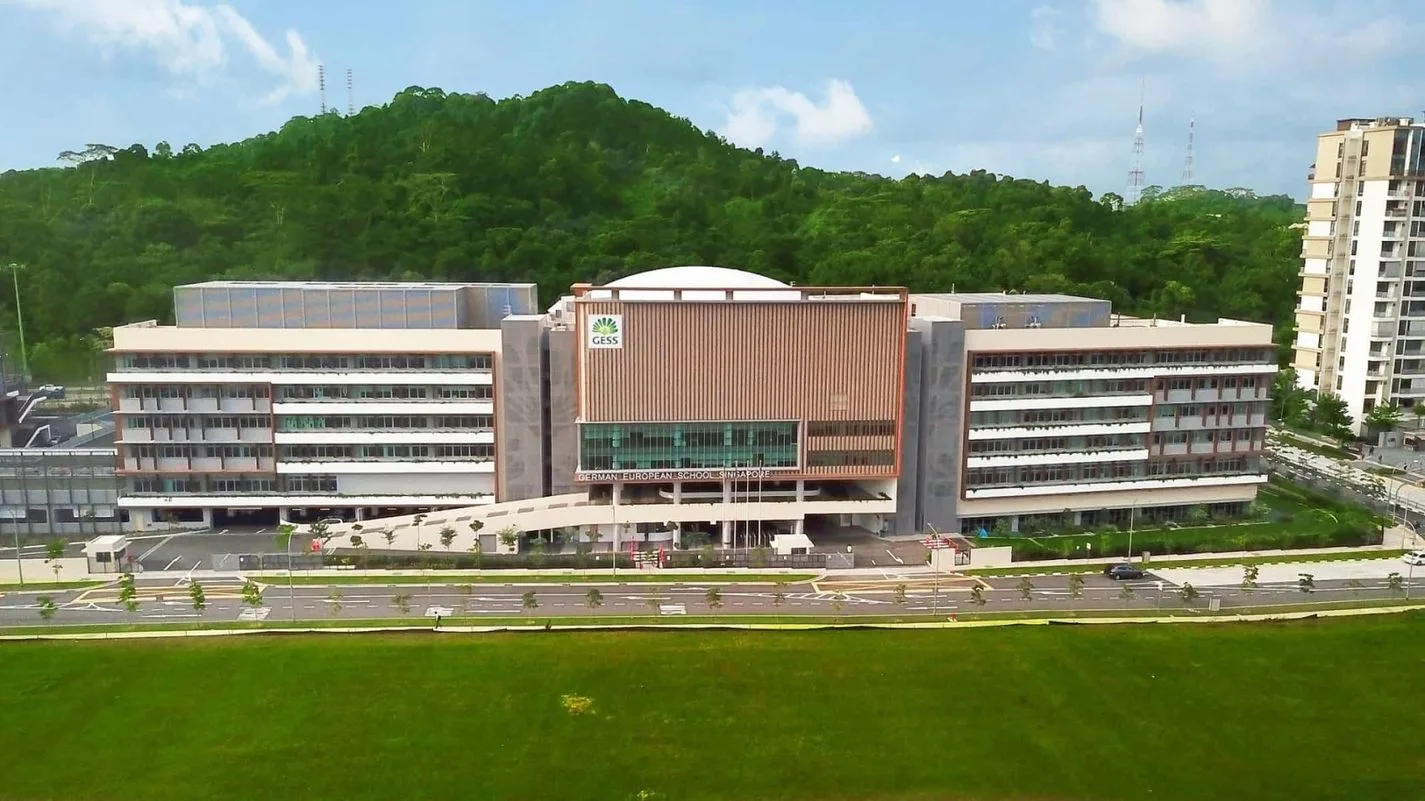
| GESS | Confidential hardship line | Existing families | Discretionary |
| ACS International | Citizen-only awards | Various | Tied to MOE pathway |
Awards as published or known in early 2026. Verify current programmes, deadlines and values directly with each school. Capital, AVA and development levies are typically excluded from scholarship coverage.
The brief
- The UWC scholarship at UWCSEA is the city-defining programme. Fully-funded Grades 11 and 12 places at Dover and East campuses, selected through a national committee. Selection is independent of family income but means-tested at award.
- Dulwich College Singapore is the only school with published entry-point scholarships. 11+, 13+ and 16+ awards for academic, music, sport, art, drama and all-rounder talent. Typical value is 10 to 50 percent of tuition, occasionally higher.
- Tanglin Trust funds narrowly. A small academic-and-music scholarship at sixth form, plus a confidential bursary route. No general entry scholarships at primary or year 7.
- Hwa Chong International offers competitive academic awards for IB pre-university entry. Targeted at strong overseas applicants entering Year 5 (Grade 11 equivalent).
- ACS International and ACS Independent are the citizen route. Both are MOE-affiliated schools where scholarships exist but are scoped to Singapore citizens and PRs. Expat eligibility is effectively zero.
- Most "international schools" in Singapore charge AVA, capital or development levies on top of tuition. Scholarships almost never cover these. A 50 percent scholarship typically still leaves a five-figure annual bill.
- Singapore restricts citizens at international schools. Citizen children need MOE permission to enrol; this constrains who can apply for any scholarship at all.
Singapore · Fees
# Scholarships and Bursaries at Singapore International Schools
Singapore is the second-most expensive expat schooling market after Hong Kong, and fees recover almost all of the cost the schools incur. Genuine scholarships are rare and narrowly targeted. The single defining programme is the UWC scholarship at UWCSEA (United World College of South East Asia), a fully-funded place at Grades 11 and 12 selected through a national committee process. Beyond that, the British model dominates: Dulwich College Singapore runs the only published 11+, 13+ and 16+ entrance awards in the city, and Tanglin Trust runs a small academic and music scholarship at sixth form. American, German, Australian and Canadian schools fund almost nothing.
Fee discounting in Singapore is mostly a sibling line, not a scholarship line: 5 percent off the second child at most schools, sometimes 10 percent off the third, plus an early-payment cut of 1 to 2 percent. Corporate sponsorship by an employer remains the single largest "scholarship" mechanism in the city.
Schools with published programmes
A short list. Most Singapore international schools fund nothing publicly.
UWCSEA (Dover and East). The UWC scholarship: fully-funded entry to Grades 11 and 12 (IB Diploma), selected through the Singapore National Committee of the UWC movement. The award runs through United World Colleges national committees, not the school's own admissions team. A small needs-based bursary line at Grades 11 and 12 is also available to students joining through the standard route.
Dulwich College Singapore. Entry-point scholarships at 11+ (Year 7), 13+ (Year 9) and 16+ (Year 12) across academic, music, sport, art, drama and all-rounder categories. Means-tested bursary top-ups for scholars whose families cannot meet the residual fee. The only premium British school in Singapore with a codified award structure mirroring the home Dulwich Foundation in the UK.
Tanglin Trust School. A small sixth-form scholarship programme (academic and music) and a confidential bursary route handled by the headmaster's office. Award values not published. No general entry scholarships at infant, junior or senior school levels.
Hwa Chong International. Competitive academic scholarships for overseas applicants entering the IB pre-university programme (Years 5 and 6, equivalent to Grades 11 and 12). Tiered, partial to full tuition, tied to entry-test and interview.
Stamford American International School. The Stamford Award and a small set of named scholarships across academic and arts categories. Mostly partial. Monthly instalment plans are also available, which is a payment-spreading mechanism rather than a scholarship.
GESS (German European School Singapore), Singapore American School (SAS). No published external scholarships for new entrants. Each runs a confidential hardship line for existing families.
Australian International, Canadian International, Dover Court, NLCS, Brighton College. No published external scholarship programmes. NLCS and Brighton College have not replicated the entry-point scholarship structure of their UK parent schools.
ACS International and ACS Independent sit outside this list. Both operate under MOE; scholarships exist but are scoped to Singapore citizens and PRs.
UWCSEA scholarship: the deep-dive
UWC scholarships at UWCSEA are structurally different from every other award in the city.
Selection is national-committee driven. Applicants apply through their home country's UWC National Committee (the Singapore National Committee for Singapore-domiciled applicants, the UK National Committee for British applicants, and so on). National committees run their own interviews and shortlist. UWCSEA admissions confirms the place. Selection criteria are set by the UWC movement: leadership, social conscience, academic capability, intercultural orientation, demonstrated commitment to UWC values.
The award covers two years of IB Diploma. Tuition, accommodation where applicable (boarding is offered at Dover for scholarship holders only), meals and most ancillaries. Application fees and capital levies for scholarship holders are usually absorbed.
Means-testing applies at the award stage, not the application stage. Applicants are not filtered by family income on entry. Once shortlisted, the financial position of the family is assessed and the award sized accordingly: fully-funded for families who cannot meet the fee, partial for families who can meet a share.
Scale is small. The Singapore National Committee shortlists in the low double digits each year across both UWCSEA campuses; international applicants compete in their home-country committees' processes for places at any of the 18 UWC schools, of which Dover and East are two.
The fit test is real. Scholarship holders are expected to engage fully with the UWC programme: service, activities, the residential community at Dover for boarders. The award is for students who will use the platform, not a fee discount for academic high-flyers.
Academic scholarships
Dulwich 11+, 13+ and 16+ academic awards are the only published entry-point academic scholarships at a premium British school in Singapore. The 11+ feeds Year 7, the 13+ feeds Year 9, the 16+ feeds Year 12 (IB Diploma entry). Selection: papers in English, mathematics and reasoning, plus interview. Awards typically sit at 10 to 50 percent of tuition; a small number of holders receive higher percentages where supported by a means-tested bursary top-up.
Hwa Chong International's academic scholarships target the IB pre-university intake, Year 5 (Grade 11 equivalent). The school favours overseas applicants from across Asia who have completed O-Level or IGCSE. Awards range from partial to full tuition.
Tanglin's sixth-form academic scholarship is small and competitive, restricted to A-Level and IB entrants at Year 12. Award value is not published.
Stamford's named academic awards include the Stamford Award and a small set of subject-specific scholarships; partial awards are the norm.
The premium American schools fund almost no academic merit awards. SAS, Stamford and Avondale Grammar do not run published external academic scholarship programmes for new entrants. The American model leans on financial aid for existing families rather than competitive entry awards.
Music, sport and all-rounder awards
Outside Dulwich, this segment barely exists in Singapore.
Dulwich College Singapore runs music, sport, art, drama and all-rounder scholarships at 11+, 13+ and 16+. Music covers instrumental and vocal audition; sport weights on competitive performance and team contribution; art and drama run on portfolio and audition; all-rounder combines academic standing with at least two co-curricular strengths.
Tanglin's music scholarship at sixth form mirrors Dulwich's structure on a smaller scale: audition-based, partial award, sustained engagement with school ensembles required.
Stamford American runs a small named arts scholarship aligned to its Juilliard partnership; the Juilliard tie does not translate to substantial fee remission.
No school in Singapore runs a dedicated sports academy with full sports scholarships in the US or UK boarding-school model.
Bursaries: needs-based support
Bursaries in Singapore are confidential, discretionary, and usually granted to current families rather than new entrants.
Dulwich College Singapore layers a means-tested bursary on top of an entry scholarship where the residual fee exceeds family capacity. New families can apply for the bursary alongside the scholarship.
Tanglin Trust handles bursaries through the headmaster's office; criteria and amounts unpublished. Existing families in mid-enrolment hardship are the typical applicants.
UWCSEA runs a small needs-based bursary line for non-scholarship students at Grades 11 and 12, with award sizing tied to family income.
GESS, SAS, Canadian International, Australian International, NLCS, Brighton do not publish bursary programmes externally. Individual hardship cases are handled internally.
The pattern: a bursary is a backstop for an enrolled family, not a route in.
Application timelines
| Programme | Window opens | Decisions |
|---|---|---|
| UWC scholarship (UWCSEA) | September, year before entry | March |
| Dulwich 11+, 13+, 16+ | September to November | January to March |
| Tanglin sixth form scholarship | October to December | February to April |
| Hwa Chong IB scholarship | Rolling; main intake closes February to March | Six to eight weeks after assessment |
| Stamford named scholarships | Rolling, tied to admissions | Six weeks after assessment |
| Bursaries (where available) | Tied to admissions or in-year | Confidential, four to eight weeks |
A family targeting a Singapore international school scholarship should be working 12 to 18 months ahead of intended entry, particularly for UWC and Dulwich. Late applications fail on the window, not on merit.
Singapore citizen restrictions
A constraint that sits over the whole question: Singapore citizens are not free to choose an international school. The Ministry of Education requires Singapore citizen children to attend the national MOE-stream system unless granted explicit permission. The mechanism is the MOE exemption letter, granted in a narrow set of cases: foreign-domiciled returnee families, dual-curriculum continuity for repatriating citizens, specific medical or learning needs the national system cannot meet.
Two consequences follow. Citizen children cannot apply for most international school scholarships. UWCSEA, Dulwich, Tanglin, GESS, Stamford and SAS scholarship programmes presume the applicant is eligible to enrol; for citizens, MOE permission is the gate. ACS International and ACS Independent run their scholarships for citizens only. Both sit inside the MOE system; awards target the national-stream cohort accessed through national admissions, not the international route expat families use.
For an expat family on a Singapore EP or DP visa with non-citizen children, none of this restricts access. For mixed-status households, the MOE exemption is the first call, not the school's scholarship office.
Related reading
- International school fees in Singapore
- Best international schools in Singapore
- International school admissions in Singapore
- Affordable international schools in Singapore
- Cost of living in Singapore
FAQs
What is the most valuable scholarship at a Singapore international school? The UWC scholarship at UWCSEA is the deepest. A full award covers two years of IB Diploma tuition, boarding where applicable, and most ancillary fees. No other Singapore school runs a comparable fully-funded programme.
Can my child apply for a scholarship before we move to Singapore? Yes. UWC awards are designed for overseas applicants applying through their home-country UWC National Committee. Dulwich 11+, 13+ and 16+ also accept overseas applicants; entry papers can be sat at a partner test centre near the family's current home.
Do scholarships cover the capital, AVA or development levies? Usually not. Most awards cover tuition only. Capital levies at Dulwich and Tanglin, AVA (Additional Voluntary Contribution) at Tanglin, and one-off enrolment fees at most schools remain payable. The exceptions are UWC scholarships and Dulwich means-tested top-ups at the highest-tier awards.
How big are sibling discounts in Singapore? Five percent off tuition for the second child is the typical line at Dulwich, Tanglin, Stamford and UWCSEA. A smaller number of schools extend to 10 percent off the third child. Discounts apply to tuition only, not capital, AVA or enrolment.
Why do American schools fund so little compared to British schools? The American school model in Singapore (SAS, Stamford American, Avondale) is built around employer-funded enrolment. The British model imports the UK boarding tradition of competitive entry awards funded from a separate scholarship endowment. The Dulwich Foundation in London has a centuries-old endowment behind its UK awards; the Singapore campus inherits a version of that.
Will a Singapore international school negotiate fees? No. Published fees are set centrally and are not subject to private negotiation. The published scholarship, bursary, sibling and early-payment lines are the entire menu. Most families managing the fee burden do so through employer relocation packages, not school-side discounts.
Sources
- UWCSEA admissions and scholarship documentation, 2026 to 2027.
- UWC International national committee guidance, 2025 to 2026.
- Dulwich College Singapore scholarships and bursaries documentation, 2026 to 2027.
- Tanglin Trust School fees and financial assistance documentation, 2026 to 2027.
- Hwa Chong International scholarship documentation, 2026 intake.
- Stamford American, SAS, GESS published fees and policies, 2026 to 2027.
- Anglo-Chinese Schools International and Independent admissions documentation, 2026.
- Ministry of Education (MOE) Singapore guidance on citizen enrolment at non-MOE schools.
- Inland Revenue Authority of Singapore (IRAS), 9 percent GST on tuition (effective January 2024).
Award values, eligibility and deadlines vary year to year. Verify current figures with each school's admissions office before applying.