Notes / Mumbai
Best Schools for SEN and Learning Support in Mumbai
Where Mumbai's SEN provision is real: Gateway as the specialist anchor, mainstream learning support at DAIS, Aditya Birla, Oberoi and ASB, and what to verify.
The brief
- The Gateway School of Mumbai is the city's specialist anchor: a not-for-profit built around children with learning differences and developmental delays, with occupational, speech and physical therapy integrated into the school day.
- The strongest mainstream programmes sit at DAIS, ASB, Aditya Birla and Oberoi, all running learning support inside the IB framework.
- India's Rights of Persons with Disabilities Act 2016 requires reasonable accommodation in mainstream schools. Enforcement on private international schools is uneven; acceptance remains at the school's discretion.
- Specialist centres (Vidya Sagar, Akanksha programmes, Ummeed Child Development Center) sit outside the school system, running assessment, therapy and early intervention rather than the international curriculum stack.
- No Mumbai international school runs a dedicated SEN unit for high-needs profiles. Families with complex profiles plan around Gateway or a specialist centre, not around a mainstream school's inclusion page.
Mumbai's SEN picture is more uneven than its IB or fee rankings suggest. One school is built from the ground up for neurodiverse learners; four mainstream schools resource learning support meaningfully inside the IB framework; a wider field of specialist centres operates outside the school system entirely.
The legal frame is the Rights of Persons with Disabilities Act 2016, which obliges every school to make reasonable accommodation. In Mumbai's private international sector that translates into self-regulated practice: no equivalent of an EHCP, no inspectorate auditing SEN claims, no published minimum specialist-staffing ratio. Acceptance is at the school's discretion regardless of any assessment a family brings from abroad.
How to read claims about inclusion
Almost every Mumbai international school calls itself inclusive. The variable is what sits behind the word.
Named staff beat policy pages. A school that can name the head of learning support, the educational psychologist and the speech therapist on payroll, and state weekly on-site hours, is operating a programme. A school referring only to "our learning support team" is not.
Ratios reveal scale. How many students currently hold an Individual Education Plan, how many specialists support them, and the typical caseload. Schools experienced in SEN are also clear about where their model works and where it does not; schools without that experience tend to reassure across the whole spectrum.
The strongest mainstream programmes
Dhirubhai Ambani International School
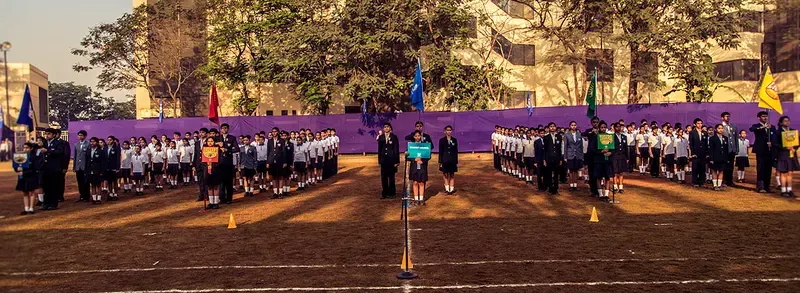
Bandra Kurla Complex. Ages 4 to 18. ICSE, IGCSE, IB DP. CIS and NEASC accredited. Around 2,800 pupils. Founded 2003.
DAIS carries a deep specialist footprint by Mumbai standards: a learning support team, on-site counsellors and a 6:1 student to teacher ratio. Individual Education Plans are used where the child needs one, and board-exam accommodations follow the standard IB and Cambridge frameworks. The model is inclusion within mainstream classes, with pull-out intervention where the plan calls for it. DAIS suits mild and moderate learning differences: dyslexia, ADHD, processing difficulties and language-based needs. The cohort is academically selective and the pace is steady; the school is candid in admissions about what the model can absorb.
American School of Bombay

BKC and Kurla West. Ages 3 to 18. American Common Core plus IB DP plus PYP. CIS and NEASC accredited. Around 1,300 pupils. Founded 1981.
ASB is the default reference for American-style learning support in Mumbai. The school runs a US-framework Student Support Services structure with learning specialists, school psychologists and counsellors on staff, alongside the IB Diploma in senior years. The cohort is the most internationally diverse in Mumbai; many families arrive mid-year with existing psychoeducational assessments and the school absorbs them. Fees are the highest in the city at INR 17 to 31 lakh by grade, with learning support sessions billed on top. ASB works for mild to moderate profiles, including students who would have held an IEP in a US public-school district.
Aditya Birla World Academy
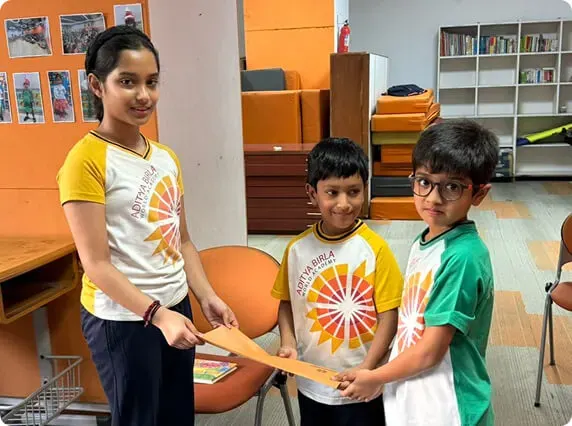
Tardeo, South Mumbai. Ages 2 to 18. ICSE, IGCSE, IB DP, A-Level. CIS accredited. Around 800 pupils. Founded 2008.
ABWA is the South Mumbai flagship of the Aditya Birla Education Trust, chaired by Neerja Birla, whose mental health work shapes the school's pastoral architecture. The counselling team focuses on emotional wellbeing alongside academic support, and the smaller cohort lets specialists know each child. SEN integration is part of standard staffing rather than a bolt-on. Recurring grumbles in parent threads concern teacher turnover, which matters more for SEN than for general academics: continuity is the single biggest variable in whether a learning plan works. ABWA suits mild to moderate profiles.
Oberoi International School
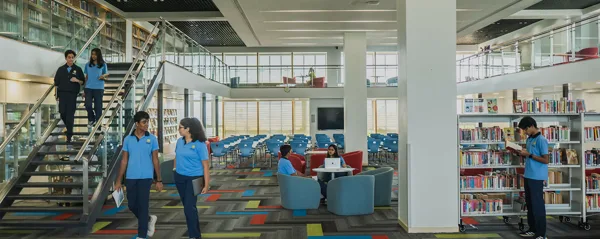
Goregaon East and JVLR. Ages 3 to 18. Full IB continuum. CIS and NEASC accredited. Around 2,900 pupils. Founded 2008.
Oberoi runs the largest IB-only cohort in Mumbai, and the scale supports a learning support team across PYP, MYP and DP. Counselling is integrated and accommodation processes are documented rather than improvised. Senior students in online threads describe the academic pressure as relentless: a fair input for families whose child needs anxiety or executive-function support. Fit turns on temperament more than programme.
Dedicated SEN provision
The Gateway School of Mumbai
Govandi East. Not-for-profit. Cambridge IGCSE and NIOS pathways at middle and senior level. Founded 2012.
Gateway is the school Mumbai families with learning disabilities and developmental differences look for first. It was started by a parent of a neurodiverse child, sits next to the Tata Institute of Social Sciences in Govandi, and is built around occupational therapy, speech therapy, physical therapy, counselling and nutrition, all inside the school day rather than as add-ons. The academic stack moves children through Cambridge IGCSE or NIOS, depending on the right exit point. Class sizes are small, the staffing model is therapy-led, and Gateway has been recognised as a Great Place to Work and one of India's best NGOs to work for, which matters for staff retention. Fees sit high for a not-for-profit because the model is staff-intensive. Families moving children from mainstream schools talk about the relief of being understood. Gateway is the right starting point for moderate to severe learning differences, autism spectrum profiles and complex neurodiverse needs that mainstream IB schools cannot resource at depth.
Specialist centres outside the school system
For profiles that need clinical depth rather than school enrolment, Mumbai's specialist network does work mainstream schools are not built for.
Vidya Sagar runs programmes for cerebral palsy, autism spectrum conditions and multiple disabilities, with therapy-led teaching and family training. Ummeed Child Development Center in Lower Parel provides developmental paediatric assessment, early intervention and therapy across autism, ADHD, language disorders and global developmental delay; it is the assessment provider many mainstream schools refer to before admission. Akanksha Foundation runs schools and after-school programmes that include children with learning differences in low-income communities. An independent network of occupational therapists, speech therapists and educational psychologists across Bandra, Khar and South Mumbai fills the gap where a child needs regular therapy alongside mainstream schooling.
At a glance
| School | Area | SEN profile | Curriculum | Fees range (INR) |
|---|---|---|---|---|
| The Gateway School | Govandi East | Specialist, moderate to severe | IGCSE, NIOS | On enquiry |
| Dhirubhai Ambani | BKC | Mainstream, mild to moderate | ICSE, IGCSE, IB DP | 1.7–10.2 lakh |
| American School of Bombay | BKC, Kurla West | Mainstream, mild to moderate | American, IB DP | 17.7–31 lakh |
| Aditya Birla | Tardeo | Mainstream, mild to moderate | ICSE, IGCSE, IB DP, A-Level | 8.4–18.4 lakh |
| Oberoi International | Goregaon East, JVLR | Mainstream, mild to moderate | Full IB continuum | 5.6–8.9 lakh |
| Ecole Mondiale | Juhu | Mainstream, mild | Full IB, A-Level | 6.9–10.9 lakh |
| JBCN Parel | Parel | Mainstream, mild | Full IB, IGCSE | 0.8–7.75 lakh |
| Ummeed Child Development | Lower Parel | Assessment and therapy | Specialist centre | On enquiry |
SEN profile summarises where each school's model sits, drawn from school documentation and parent signal. Confirm capacity with admissions before enrolling.
What to watch for
A school's inclusion page is a marketing surface. The provision behind it is a staffing and process question.
Who manages the learning plan. Named specialist, qualifications, employment status (full-time school staff or visiting consultant), hours per week on site. A vague answer is itself the answer.
Specialist caseload. A team of four to six specialists for a school of 800 to 1,500 is meaningful. One coordinator across a whole school is not.
What an existing assessment from abroad means for admission. Schools used to processing psychoeducational reports will say how they read them and how they build a new plan around the findings.
Whether learning support is charged on top of tuition. Often yes. External therapy is typically billed separately by the therapist.
Whether the SEN lead will speak with families during admissions. Schools comfortable putting the coordinator in front of parents operate differently from those that keep everything routed through admissions.
Related reading
- Best international schools in Mumbai, the pillar across all curricula
- Best IB schools in Mumbai, the IB market ranked by DP results
- Best schools for university placement in Mumbai, where destinations sit
- International school fees in Mumbai, what the fee bands cover
FAQs
Does the Rights of Persons with Disabilities Act 2016 oblige international schools in Mumbai to accept my child? The Act requires reasonable accommodation and prohibits discrimination in education. In practice, private international schools retain admissions discretion and enforcement on the sector is uneven. Documented diagnosis or IEP is useful evidence rather than a guarantee of a place.
Will an existing IEP or psychoeducational assessment from abroad transfer to a Mumbai school? Not automatically. Schools with structured learning support (ASB, DAIS, Aditya Birla) read existing documentation carefully and use it to build a plan suited to their setting. Schools without that infrastructure may acknowledge the document and revert to their own assessment process.
What is the difference between Gateway and a mainstream school's learning support programme? Gateway is built around children with learning differences: small classes, integrated therapy inside the school day, and a curriculum exit (IGCSE or NIOS) chosen to fit the child. Mainstream schools provide inclusion inside classes designed for the general cohort, with intervention layered on. For moderate to severe profiles the difference is structural.
Which school suits an autism spectrum profile? For a child needing structured therapeutic input alongside academics, Gateway is the appropriate starting point. For higher-functioning profiles who can hold a mainstream timetable with focused support, ASB, DAIS and Aditya Birla each enrol students of this profile; fit depends on the individual child and current staffing.
Is there an inspectorate that audits SEN provision at Mumbai international schools? No. CIS, NEASC and Cambridge accreditation set general expectations about inclusive practice; the Rights of Persons with Disabilities Act 2016 sets a legal floor. None audits staffing ratios or named-specialist hours. Verification is parent-led.
Sources: school websites and admissions documentation; the Rights of Persons with Disabilities Act 2016 (Ministry of Social Justice and Empowerment); CIS and NEASC registers; Ummeed Child Development Center, Gateway School of Mumbai and Vidya Sagar published programme descriptions. Verify staffing, fees and acceptance criteria with each school's admissions office.