Notes / Mumbai
Best Schools for EAL Support in Mumbai
Where Mumbai's EAL provision sits: DAIS, Oberoi, ABWA, ASB and Ecole Mondiale all run named programmes, plus what to verify before enrolling.
The brief
- DAIS, Oberoi, ABWA, ASB and Ecole Mondiale run named EAL departments inside their IB pathways. The rest of the city treats English as the default and leaves children to catch up.
- The demand profile is unusual for India: returning NRIs whose children have lost Hindi or never spoke much English, plus Korean, Japanese and German families moving in on corporate postings.
- Mumbai's English-medium foundation blurs the line: many domestic applicants speak conversational English from age three but need Standard English EAL to handle IB academic writing.
- EAL at IB DP level matters more than EAL in primary: a child with weak academic English at 14 will struggle with Extended Essay, TOK and language A literature regardless of how strong they sound in conversation.
- Two questions sort the field. Is the EAL specialist named, qualified and on payroll, or is it the homeroom teacher with extra reading. And how does the school exit a child from EAL, by assessment or by year group.
Mumbai has more English-medium schooling than almost anywhere in India, which means most children sound fluent on a school visit. The gap shows up later, when academic English has to carry Diploma-level analysis. The schools that take this seriously serve the largest international cohorts in BKC, Goregaon and Juhu, where Japanese, Korean, German and returning NRI families concentrate.
India has no equivalent of the WIDA framework, no inspectorate auditing EAL staffing, and no published proficiency benchmarks for international schools. CIS and NEASC reference language acquisition in general terms; neither audits staffing or hours.
What good EAL provision looks like
EAL is English as an Additional Language, the term most international schools use for children learning in English while still acquiring it. In Mumbai the demand profile splits three ways.
Returning NRI children from Dubai, Singapore or Houston present as fluent and need support focused on academic vocabulary and writing, not basic English. East Asian families, principally Korean and Japanese on corporate postings, concentrate around Oberoi and Ecole Mondiale in Goregaon and Juhu and around ASB and DAIS in BKC; children arrive with school English from Seoul or Tokyo and need structured support to operate at IB pace. Continental European families, mostly German and French, are smaller in number but consistent; literacy in the first language is strong, English is the gap.
The Indian English-medium foundation blurs the picture. A Marathi or Gujarati-speaking child arriving from a domestic English-medium primary will sound fluent at admissions interview but may carry a vocabulary gap of several thousand words against an IB MYP cohort. Schools that distinguish Standard English EAL from Basic Interpersonal Communication Skills plan around the gap. Schools that do not assume the child is fine.
How to read EAL claims
Named staff beat policy pages. A school that can name the head of EAL, the qualifications held (CELTA, DELTA, TESOL Masters), and the on-site hours per week is running a programme. A school referring only to "support from homeroom teachers" is not.
Ratios reveal scale. A team of three to five specialists in a school of 1,500 to 2,000 students is meaningful. One coordinator across an entire school is a title, not a programme.
Exit by assessment, not by year. Schools serious about EAL move children out of support when an internal or external assessment shows they have hit a proficiency level, typically aligned to CEFR B2 or the WIDA Reaching descriptor. Schools that exit children "when they seem ready" are using EAL as orientation, not as language acquisition.
The strongest EAL provision
Dhirubhai Ambani International School
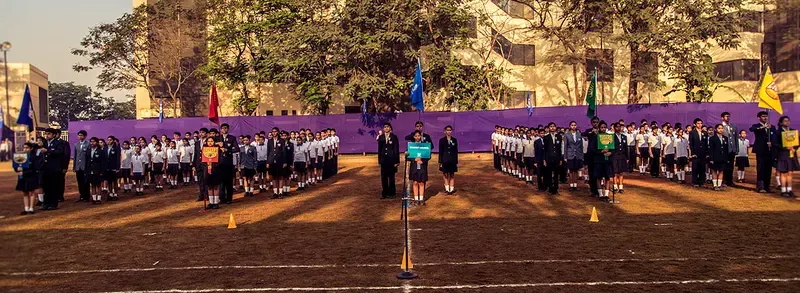
Bandra Kurla Complex. Ages 4 to 18. ICSE, IGCSE, IB DP. CIS and NEASC accredited. Around 2,800 pupils. Founded 2003.
DAIS carries the largest cohort of any Mumbai international school, and the EAL infrastructure scales with it. The school runs dedicated English language support across the primary and middle years, with specialists working alongside homeroom teachers. The IB DP cohort is selective and the entry assessment screens for academic English; children admitted with EAL needs in the senior school are rare and handled case by case. The model suits returning NRI families and East Asian children with school English already rather than beginners arriving with no English. Fees run INR 1.7 to 10.2 lakh by grade.
Oberoi International School
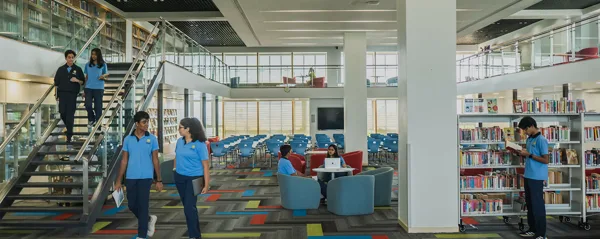
Goregaon East and JVLR. Ages 3 to 18. Full IB continuum. CIS and NEASC accredited. Around 2,900 pupils. Founded 2008.
Oberoi runs the largest IB-only cohort in Mumbai and is the school the Korean community in Goregaon and Powai gravitates to most consistently. EAL support sits inside PYP, MYP and DP, with the senior school particularly used to absorbing students whose conversational English is strong but whose academic writing needs scaffolding for TOK and Extended Essay. Fees sit in the upper-middle band at INR 5.6 to 8.9 lakh, and the DP class of 2025 averaged 35.5 points against a global mean of 30.58. Pace is demanding; an EAL child arriving without solid academic foundations will work harder than at less competitive schools.
Aditya Birla World Academy
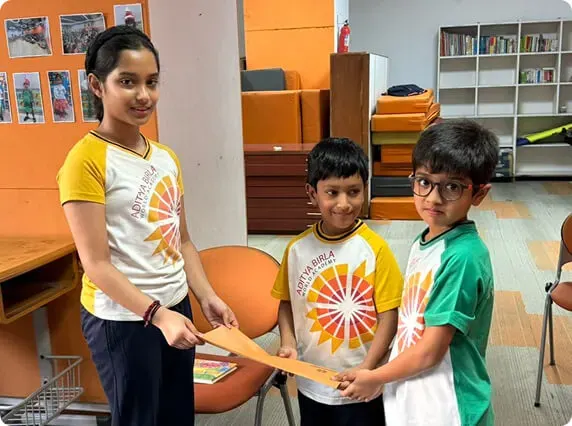
Tardeo, South Mumbai. Ages 2 to 18. ICSE, IGCSE, IB DP, A-Level. CIS accredited. Around 800 pupils. Founded 2008.
ABWA is the South Mumbai option with the smallest cohort of the named-EAL schools, which translates into more individual attention. EAL is integrated with the counselling and learning support team rather than run as a standalone department, which works for families wanting joined-up pastoral and language support. Fees run INR 8.4 to 18.4 lakh. Recurring grumbles in parent threads concern teacher turnover, which matters for EAL continuity: a child's third EAL teacher in two years is not learning at the same rate as the child whose specialist stays.
American School of Bombay
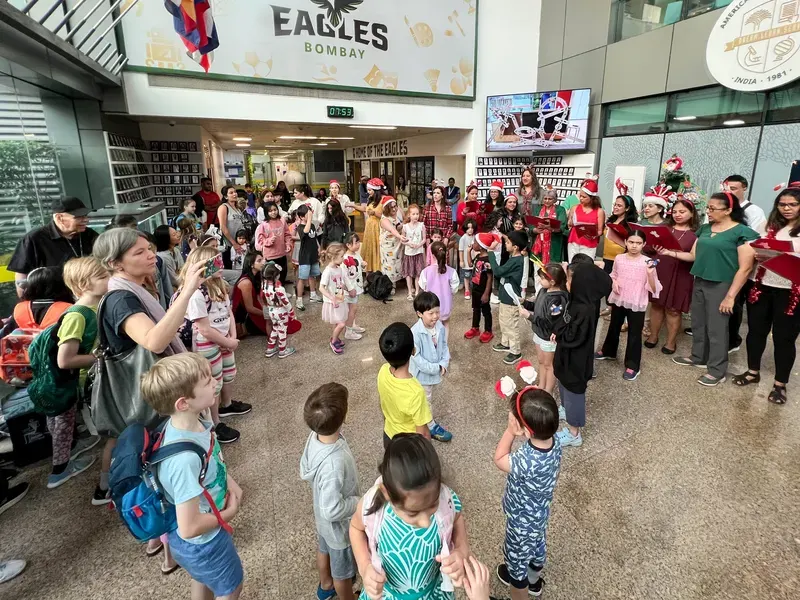
BKC and Kurla West. Ages 3 to 18. American Common Core plus IB DP plus PYP. CIS and NEASC accredited. Around 1,300 pupils. Founded 1981.
ASB has the most internationally diverse cohort in Mumbai, drawing from over fifty nationalities. EAL uses the US Student Support Services structure: learning specialists, school psychologists and EAL coordinators on staff, with assessment frameworks parents from a US, Singapore or Hong Kong school will recognise. The model absorbs mid-year arrivals in a way the IB-only schools find harder, which suits diplomatic and corporate relocations. Fees are the highest in the city at INR 17.7 to 31 lakh by grade.
Ecole Mondiale World School
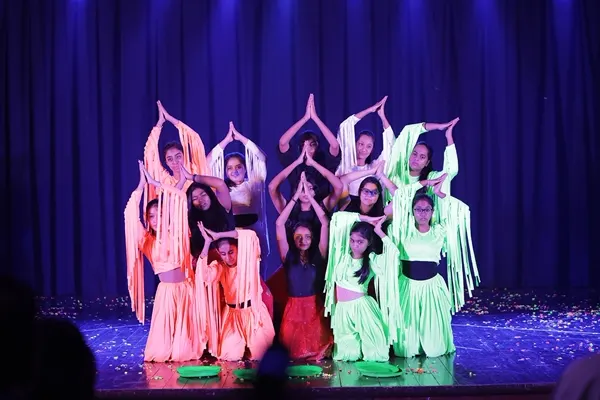
Juhu. Ages 3 to 18. Full IB continuum plus A-Level. CIS and NEASC accredited. Around 600 pupils. Founded 2004.
Ecole Mondiale was Mumbai's first full-continuum IB school and carries a long-standing reputation with bilingual and creative-leaning families. French-speaking families and dual-passport households are an established part of the community, and the school sustains a bilingual house on campus. EAL works alongside French and other first-language support, with the smaller cohort allowing for more individualised plans. The IB Diploma class of 2024 averaged 38 points, the strongest published result in this group. Fees run INR 6.9 to 10.9 lakh.
At a glance
| School | Area | Cohort scale | Curriculum | Fees range (INR) |
|---|---|---|---|---|
| Dhirubhai Ambani | BKC | ~2,800 | ICSE, IGCSE, IB DP | 1.7–10.2 lakh |
| Oberoi International | Goregaon East, JVLR | ~2,900 | Full IB continuum | 5.6–8.9 lakh |
| Aditya Birla | Tardeo | ~800 | ICSE, IGCSE, IB, A-Level | 8.4–18.4 lakh |
| American School of Bombay | BKC, Kurla West | ~1,300 | American, IB | 17.7–31 lakh |
| Ecole Mondiale | Juhu | ~600 | Full IB, A-Level | 6.9–10.9 lakh |
Fees indicative by grade band. EAL charging varies: some schools include support in tuition, others bill a one-off assessment or an ongoing supplement. Confirm at admissions.
What to watch for
Who runs EAL. Named specialist, qualifications, employment status, and hours per week on site. A school that cannot name the lead has answered the question.
Entry assessment. A formal language assessment at admission, ideally aligned to a recognised framework, distinguishes the schools that plan around language from the schools that admit and hope.
Whether EAL is charged on top of tuition. Practice varies. Some schools absorb EAL into core fees; others bill a supplement or a one-off assessment.
Mother-tongue accommodation at DP. A senior-school child whose strongest written language is not English can sometimes sit IB language A in their first language and English as language B. The school should be able to describe how this works before enrolment.
Related reading
- Best international schools in Mumbai, the pillar across all curricula
- Best IB schools in Mumbai, the IB market ranked by DP results
- Best schools for SEN and learning support in Mumbai, where structural support sits alongside EAL
- International school fees in Mumbai, what the fee bands cover
FAQs
My child speaks English at home but it is their second language. Do they need EAL? Possibly. Conversational fluency at home is not the same as academic English at MYP or DP level. A school that distinguishes the two and assesses both at admission is reading the situation correctly.
How long does EAL support typically last in Mumbai? Conversational English is usually solid within 12 to 18 months for a child with regular school exposure. Academic English, the kind needed for Extended Essay, TOK and IB language A literature, takes three to five years.
Will EAL hold my child back in IB Diploma scoring? It depends on the subject mix. A student sitting language A literature in English when English is their third language is at a disadvantage against a peer sitting language A in their mother tongue. The IB framework allows certain language and bilingual diploma routes that mitigate this; the schools above are familiar with the options.
Is EAL provision audited at Mumbai international schools? No. CIS and NEASC accreditation reference language acquisition in general terms; neither audits staffing ratios, qualifications, or exit criteria. Verification is parent-led.
My child speaks fluent English from a Dubai school but no Hindi. Does that count as EAL? Not in the standard sense. The schools above will assess and may exit immediately. A returning-NRI child with strong English and no Indian-board exposure is a different planning conversation, often around ICSE versus pure IB and whether the school requires a second language taught as a near-native subject.
Sources: school websites, IB and Cambridge published programme descriptions, CIS and NEASC registers. EAL staffing levels and exit criteria vary year on year; verify with each school's admissions office before enrolment.