Notes / Tokyo
Best International Schools in Tokyo: The 2026 Guide for Families
Tokyo has a strong international school market, fees that are competitive by Asian standards, and a city that rewards families who take the time to understand it.
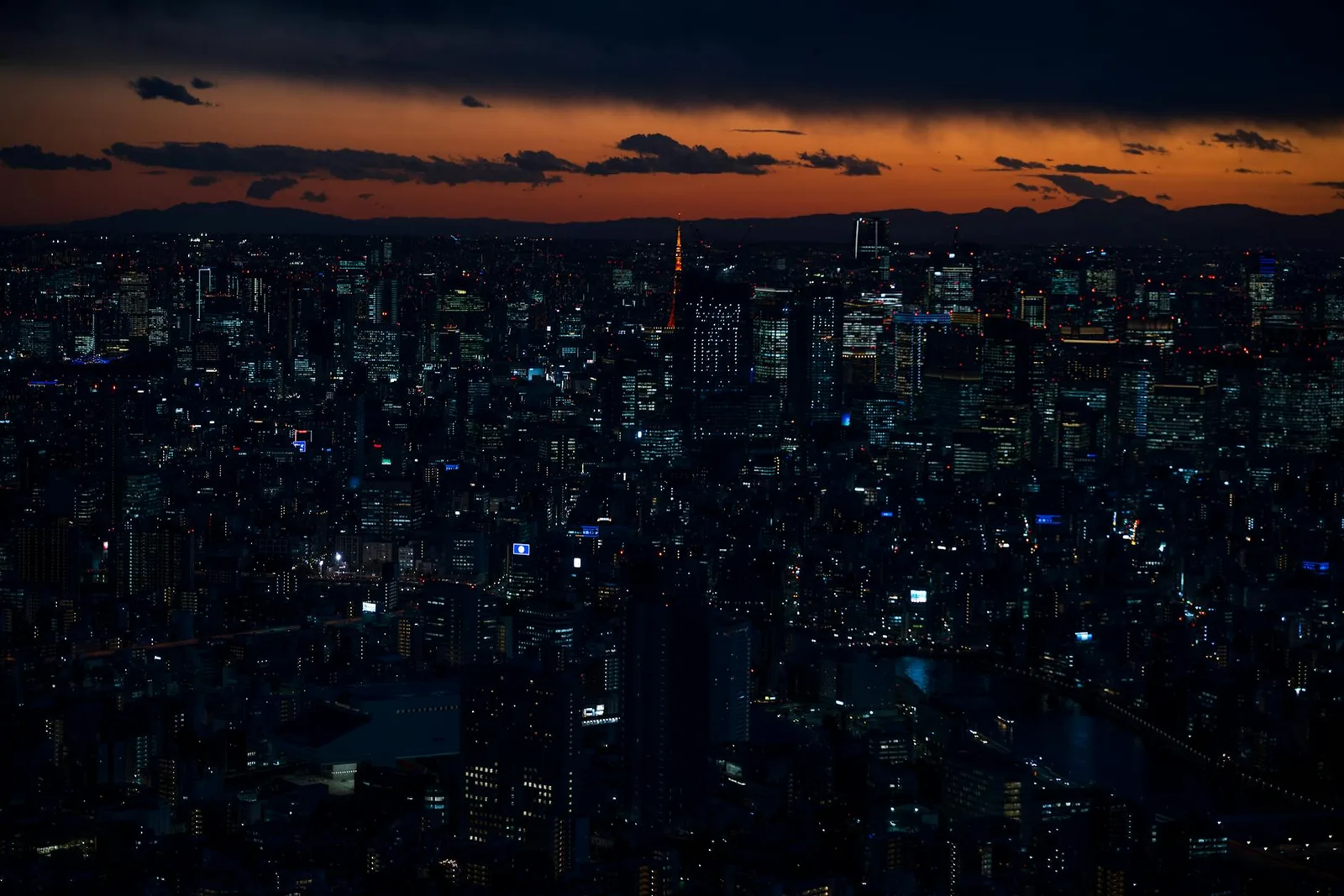
Comparison table
| School | Curriculum | Ages | Fees range (USD) | Notes |
|---|---|---|---|---|
| K. International School Tokyo | IB | 3-18 | 20,333–21,467 | Koto / Kiyosumi-Shirakawa |
| The British School in Tokyo | IB, British | 3-18 | 19,467–20,200 | Minato / Azabudai |
| American School in Japan | American, AP | 3-18 | 21,580–25,220 | Chofu |
| Nishimachi International School | American, Japanese | 5-15 | 23,527 | Minato / Moto-Azabu |
| International School of the Sacred Heart | AP, International | 3-18 | 18,533–20,667 | Hiroo / Minato |
| Tokyo International School | IB | 4-18 | 20,000–22,000 | Minato / Takanawa |
| St. Mary's International School | IB, American | 5-18 | 19,000–20,000 | Setagaya |
| Seisen International School | IB | 3-18 | 15,333–16,467 | Setagaya / Yoga |
| Aoba Japan International School | IB | 2-18 | 12,720–17,667 | Nerima / Hikarigaoka |
| Canadian International School Japan | IB, AP, Canadian | 3-18 | 16,333–21,000 | Shinagawa / Osaki |
| Shinagawa International School | IB | 3-18 | 16,333–18,500 | Shinagawa |
| Global Indian International School Tokyo | IB, Cambridge, Indian | 3-18 | 7,005–15,532 | Edogawa / East Tokyo |
Fees converted to USD at indicative 2026 rates. Verify current figures with each school.
TL;DR
- Tokyo has more than a dozen credible international schools, spanning IB, American, and British curriculum.
- Most international families cluster in the central wards: Minato (Hiroo, Azabu, Roppongi), Shibuya, and Setagaya.
- Fees run roughly USD 13,000-USD 24,000 a year for most schools, meaningfully cheaper than Singapore or Hong Kong at the top end.
- Check for waitlists. Definitely worth making contact as early as you can.
The city
Tokyo is not a hardship post. It is clean, safe, extraordinarily well organised, and the quality of daily life is high by any measure. Public transport is reliable in a way that puts most other cities to shame. Healthcare is good and accessible. The food options are extraordinary. Crime affecting foreign families is essentially nil.
What Tokyo asks of you is engagement. Japanese is not optional for anything beyond a surface-level existence. Administrative life, school communications, medical appointments, dealing with your landlord: all of it runs in Japanese. Schools will connect you with English-speaking services, but outside the main central wards you will need more than a phrase book fairly quickly. Families who invest in language classes in the first six months report a qualitatively different experience.
The international community in Tokyo is not as self-contained as in Singapore or Dubai. The city is large and diffuse, and expat families are spread across it rather than concentrated in a single compound or residential zone. That is broadly a positive: you will have a genuinely Japanese neighbourhood experience if you want one. It does mean the school community becomes an important anchor, more so than in cities where the expat social infrastructure is more visible.
The schools
K. International School Tokyo
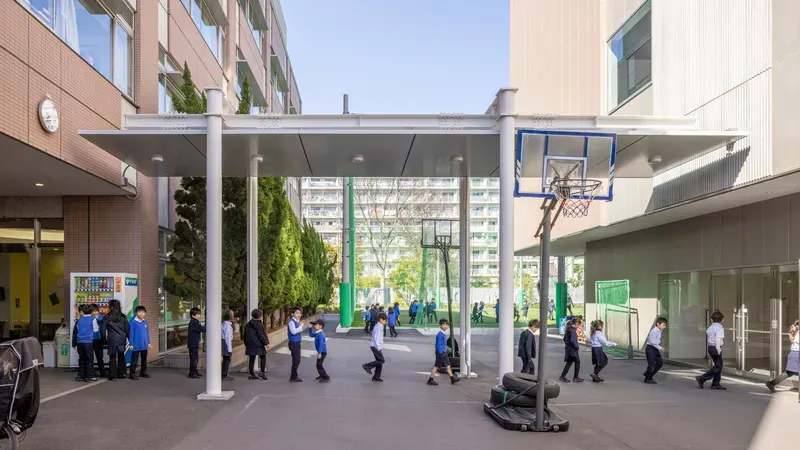
K. International School Tokyo is the school families who prioritise IB academic outcomes above everything else come to. Its 2025 IB Diploma average of 42.0 ranked it fourth globally and third in Asia, continuing a streak: 41.5 in 2024, 41.1 in 2023. That is not a one-year anomaly. It is a consistently elite IB result sustained over several years, at a flat annual fee of USD 19,000 across all year groups.
The school is in Koto ward, specifically Kiyosumi-Shirakawa in east Tokyo, which is a long way from where most international families settle. The campus is more modest than the fee level suggests, though a new building with gym and music rooms was completed around end of 2023. Class sizes are genuinely small and the teaching culture is serious. Families who are here for the IB results and can manage the geography find it a strong fit.
The British School in Tokyo
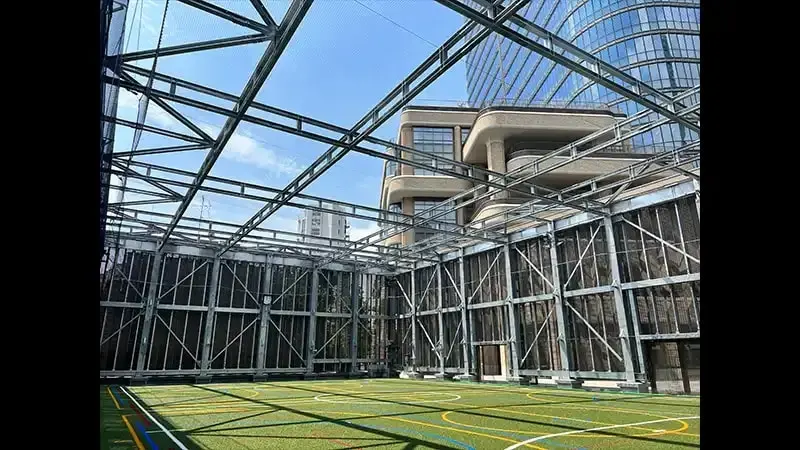
The British School in Tokyo is the largest British school in Japan, with around 1,400 students and, as of August 2023, a brand-new primary campus inside Azabudai Hills in Minato. The location is central and the community feel is recognisably British. It runs the English National Curriculum through to IB Diploma, with A-Levels being phased out after the 2024-2026 cohort.
Fees sit at USD 20,000-USD 21,000 per year, flat across most year groups. Maximum class size is 22. For British families or those who want a through-school British education in a central Tokyo location, it is the natural starting point. Parents who have been through both say the pastoral care is solid and the school feels settled.
American School in Japan
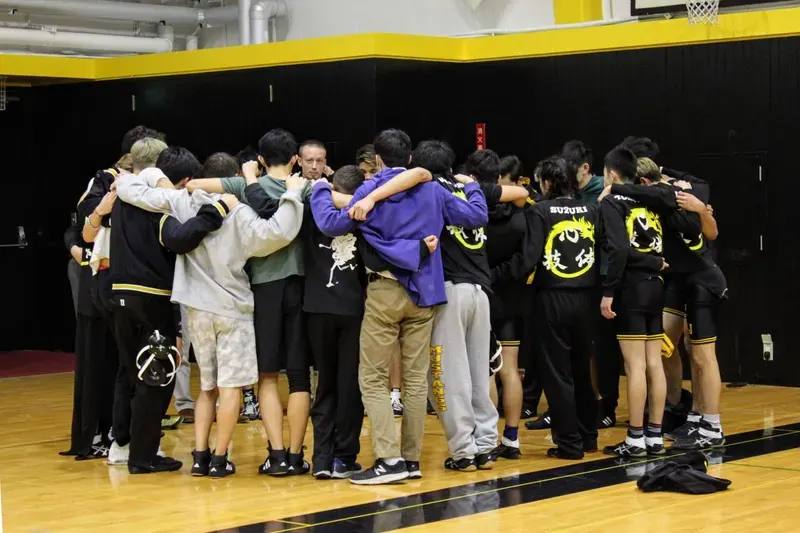
American School in Japan is one of the oldest American schools in Asia, operating since 1902. The main campus is in Chofu, west Tokyo, a significant distance from the central wards. It has a secondary early years campus in Roppongi. Student population is around 1,711 across a full American college-prep programme with Advanced Placement courses and 170-plus co-curriculars.
Fees run USD 20,000-USD 24,000 per year. The school is WASC-accredited and the programme is credible for families heading to US universities or those who want the continuity of the American system. The Chofu location means a bus ride of around 50 minutes from central Tokyo, which is worth factoring into your housing search. Families in Chofu and the western wards find it straightforward; those in Minato or Shibuya use the school bus.
Nishimachi International School
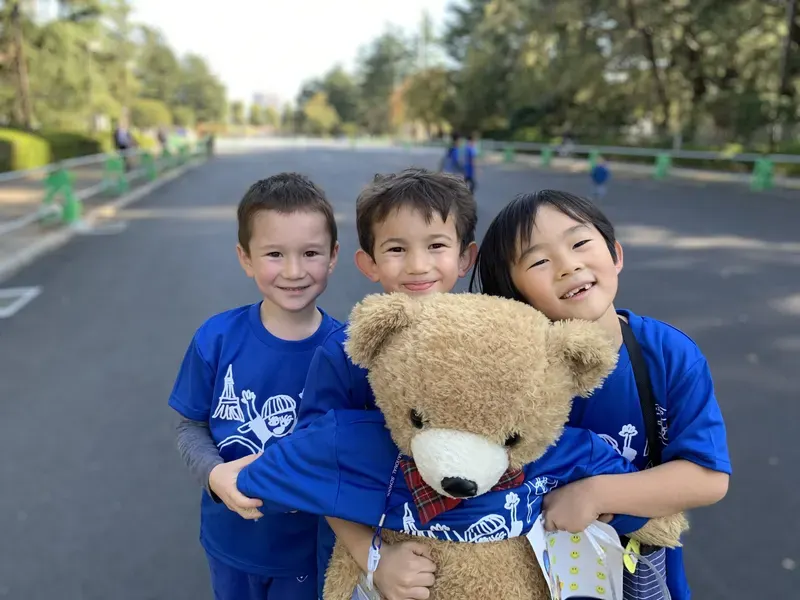
Nishimachi International School is a smaller co-ed school in Moto-Azabu, one of the most central locations in Tokyo, covering Kindergarten through Grade 9. The defining feature is mandatory Japanese: every student studies Japanese daily across nine proficiency levels, from complete beginners to near-native. The result is a school where children leave with real Japanese capability, not just a few phrases.
Annual fees are USD 21,000 across year groups. The school only goes to Grade 9, so families need to plan for the transition to a senior school at 14-15. Most students move to one of the full through-school options. A strong fit if you have young children, you are in Azabu or Hiroo, and the Japanese bilingual thread matters to you.
International School of the Sacred Heart

International School of the Sacred Heart is a Catholic girls school in Hiroo covering pre-school through Grade 12, with around 560 students. It runs AP (22 courses) rather than IB, and the results are strong: 100% of AP scores were 3 or above in 2024, average 4.27 in May 2025. Co-ed for K3-K4, then girls-only from Grade 1.
Fees run USD 17,000-USD 20,000 per year. There is an important admissions condition: at least one parent must be English-speaking, and families without Japanese passports applying below Grade 10 are not accepted. The location in Hiroo is excellent for families in Minato and Shibuya.
Tokyo International School

Tokyo International School is a small, genuinely diverse IB school in Minato, moving to a new campus at Takanawa Gateway in August 2026. Around 360 students from 70-plus nationalities, with a deliberate policy of capping any single nationality to prevent one community from dominating the school culture. That policy produces a more genuinely international classroom than most schools in the city can claim.
Fees are USD 20,000-USD 22,000 per year. Class sizes are capped at 20. The school currently covers PYP and MYP and is expanding to full K-12 IB Diploma. CIS and NEASC accredited. Families say the community is unusually international by Tokyo standards, which is a real draw for those who want their children mixing across many nationalities rather than within a predominantly Anglo-American or Japanese peer group.
St. Mary's International School
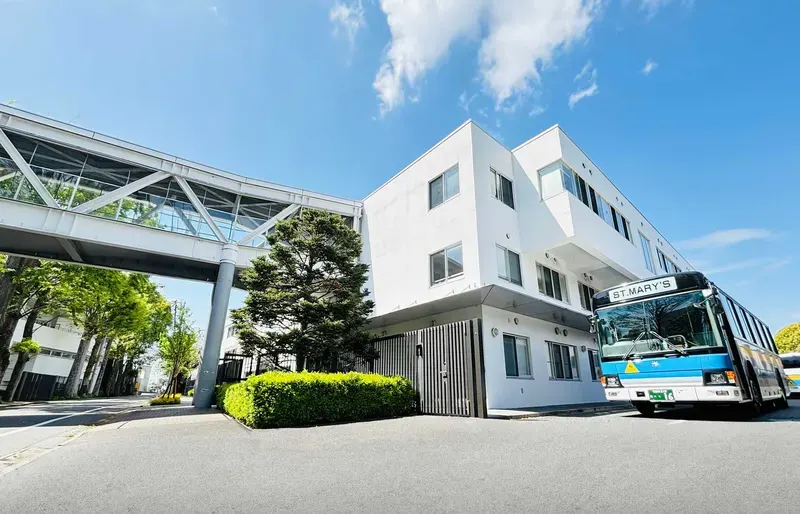
St. Mary's International School is a Catholic boys school in Futako-Tamagawa, Setagaya, with around 1,000 boys from roughly 50 nationalities aged 5-18. It has been running since 1954 and is one of Tokyo's established names. The programme culminates in the IB Diploma, alongside a liberal arts, college-prep curriculum through the school.
Fees are USD 18,000-USD 19,000 per year. The nine-acre campus in Setagaya has strong athletics, debate, and fine arts programmes. For boys-only families with children across the 5-18 age range, it is the most established through-school option outside the central wards.
Seisen International School
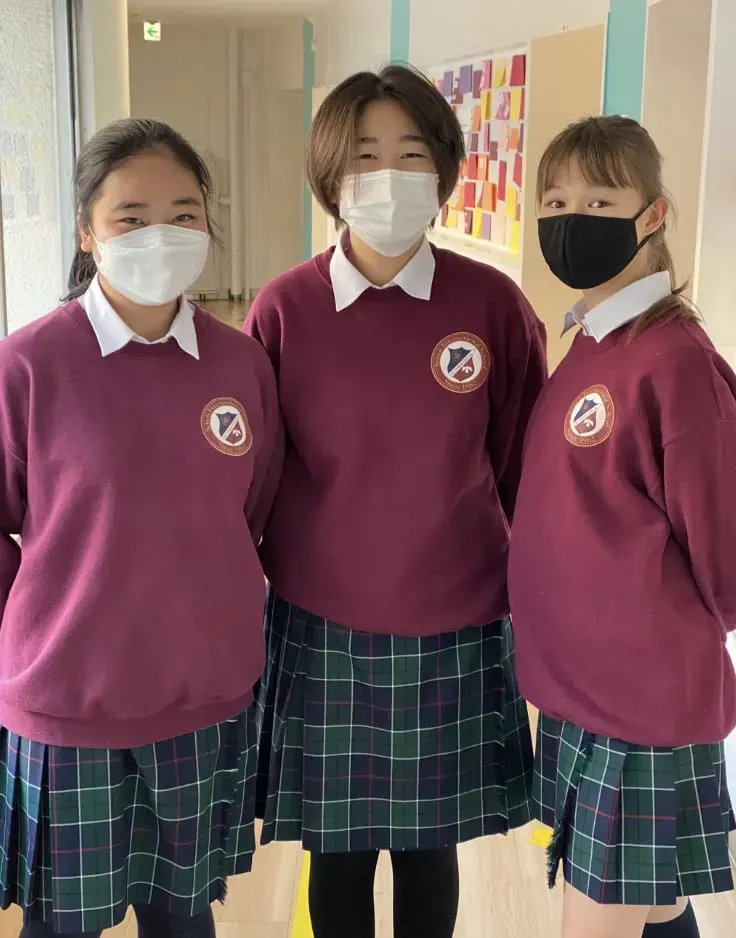
Seisen International School is a Catholic all-girls IB Continuum school in Yoga, Setagaya, covering ages 3-18. It runs Montessori at early years, then PYP, MYP, and IB Diploma through to 18. Japan's first all-girls school to offer the IB Diploma (1986). The 2025 IB average was 35 with a 97.7% pass rate.
Fees run USD 17,000-USD 18,000 per year. The co-ed kindergarten means younger siblings are not excluded. For families with daughters in Setagaya or south-west Tokyo, it is the natural girls-only option and the results are consistent.
Aoba Japan International School

Aoba Japan International School is a full IB Continuum school running since 1976, with three campuses in Hikarigaoka (Nerima), Meguro, and Bunkyo. Around 790 students aged 2-18, from 46 nationalities. Mandatory Japanese across the school is built into the programme, and families who have been here a few years describe it as the strongest bilingual option for families wanting a through-school IB route. CIS and NEASC accredited.
Fees run USD 13,000-USD 18,000 per year, making it one of the more affordable routes to a full IB education in Tokyo. The Hikarigaoka main campus is in Nerima ward, north-west of the city centre, which affects the housing calculation for families considering it.
Canadian International School Japan
Canadian International School Japan runs the British Columbia curriculum with AP in high school, across two Shinagawa campuses: secondary at Osaki, elementary at Nakameguro. Around 600 students aged 3-18, with roughly half holding Japanese nationality. WASC, JCIS, and PEI Canada accredited.
Fees are USD 20,000-USD 21,000 per year. University placements go to Canadian, UK, US, and Japanese institutions. At least one parent must communicate in English. The Shinagawa/Meguro location works well for families in the southern wards and along the Yamanote Line corridor.
Shinagawa International School
Shinagawa International School completed its full IB Continuum authorisation in 2024, the newest school to do so in the city. Three campuses in Shinagawa ward covering early years to Grade 12. Around 250 students from 40-plus nationalities, class sizes 16-21 with a 1:6 teacher-to-student ratio. Japanese nationality capped at 25%.
Fees are USD 15,000-USD 17,000 per year, making it the most affordable full continuum IB option in south Tokyo. The first DP graduating class is June 2026, so there is no extended track record yet at the senior school level. Families choosing it now are doing so on the strength of the early and middle school experience, and the price point.
Global Indian International School Tokyo
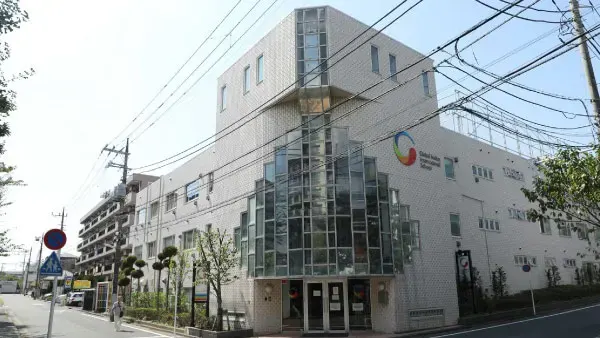
Global Indian International School Tokyo serves around 1,200 students across four campuses in Edogawa, east Tokyo. Multiple curriculum tracks operate under one roof: CBSE, IGCSE, IB Diploma, IB PYP, and Montessori. Part of the Global Schools Foundation. Primarily serves the Indian community in Tokyo.
Fees run USD 7,000-USD 14,000 per year, substantially below the rest of this list, with a 25% sibling discount from the second child. For Indian families wanting CBSE continuity or IGCSE, it is the clear choice. The Edogawa location is a long commute from the central wards.
IB results in context
The global IB Diploma average in 2025 was 30.5. Tokyo's standout school sits far above that.
| School | 2025 IB average |
|---|---|
| K. International School Tokyo | 42.0 |
| Seisen International School | 35.0 |
K. International School Tokyo's result is exceptional in global terms. Seisen is comfortably above the world average. The other IB schools in Tokyo do not publish Diploma averages prominently, and we could not find verified figures in the public domain.
Where people live
Tokyo's international families concentrate in a band of central wards. Where you land depends heavily on the school you choose.
Minato, Hiroo, Azabu, Roppongi
The traditional centre of Tokyo's international community. This is where the embassies are, where international families have always clustered, and where you will find the highest density of English-language infrastructure: international supermarkets, foreign-language medical clinics, foreign-language toddler groups. The British School in Tokyo's new primary campus is in Azabudai Hills. International School of the Sacred Heart and Tokyo International School are both in Minato. Nishimachi is in Moto-Azabu.
A three-bedroom apartment in Hiroo or Minami-Azabu typically rents for JPY 400,000-JPY 700,000 per month (USD 2,600-USD 4,700 at current rates). Central Tokyo apartments are smaller than equivalent rent in other Asian cities. If you are used to a Jakarta or Dubai villa, the adjustment is real. Families with children often end up in slightly further-out areas like Daikanyama or Nakameguro for more space at similar money.
Shibuya and Ebisu
Just north of Hiroo, practical and well-connected. Popular with families who want walkable urban living and easy train access. Rent is broadly similar to Minato. Less of the formal expat-zone feel; more mixed with Japanese residents. Works well for Sacred Heart, Tokyo International School, and Canadian International School Japan (Nakameguro campus is here).
Setagaya
South-west Tokyo, more residential, more space per yen. Yoga and Sangenjaya are the main family areas. St. Mary's and Seisen are both in Setagaya, which is why families with children at those schools land here. Rents are lower than Minato: a three-bedroom in Setagaya runs roughly JPY 280,000-JPY 450,000 per month (USD 1,870-USD 3,000). Commute to central Tokyo is 20-30 minutes by express train.
Chofu and West Tokyo
Primarily relevant for families at American School in Japan. More suburban, more space, considerably lower rents. JPY 200,000-JPY 350,000 per month (USD 1,330-USD 2,330) for a family apartment is reasonable. The trade-off is distance: Chofu is 30-40 minutes from Shibuya on the Keio Line. Families who want the ASIJ programme and are not tied to central Tokyo often find the west a practical and comfortable base.
Edogawa and East Tokyo
Most relevant for families at K. International School Tokyo or Global Indian International School Tokyo. Rents are the lowest in this group: JPY 150,000-JPY 280,000 per month for family apartments. The area is genuinely Japanese in character, less expat infrastructure than the central wards. The Kiyosumi-Shirakawa area around KIST has become more interesting in recent years as Tokyo's creative industries have moved east.
Practical notes
Getting set up: You will need a residence card (zairyu card) issued on arrival at the port of entry. Bank accounts require the residence card plus an address. Finding an apartment often requires a Japanese guarantor or a guarantor service, which most relocation companies can facilitate. Mobile phone contracts, utilities, and school admin all follow from having an address and residence card. The schools' admissions offices are well practised at connecting new families with English-speaking relocation support.
Language: Tokyo has decent English signage in the central wards and at major train stations, and train staff are increasingly confident with basic English queries. Off the beaten track or in dealings with local government, Japanese is required. Most schools will share recommendations for Japanese language schools. Families who take classes in the first year consistently say it was the single most useful thing they did.
Healthcare: English-language medical care is available in central Tokyo through clinics aimed at the international community: International Clinic, Tokyo Medical and Surgical Clinic, and Hiroo Hospital (via its international centre) are the most used. Private health insurance is standard for international families and worth sorting before you arrive.
Cost of living: Tokyo is expensive, but the shape of the expense is different from what some families expect. Eating out can be remarkably cheap, particularly at everyday restaurants and ramen shops. Supermarkets are reasonable for Japanese staples. What is expensive is housing in the central wards, international food products, and childcare for under-3s. A family of four in central Tokyo, running one car (not essential), with private health insurance, should budget JPY 600,000-JPY 900,000 per month (USD 4,000-USD 6,000) before school fees. Families in Setagaya or the western wards can do it for less.
School buses: Most schools run bus services, which helps if your school is not in your immediate neighbourhood. ASIJ's bus from central Tokyo takes around 50 minutes. Build that into your morning and afternoon, or live close to school.
FAQs
Which Tokyo international school has the best IB results? K. International School Tokyo had a 2025 IB Diploma average of 42.0, which ranked it fourth globally. That follows 41.5 in 2024 and 41.1 in 2023. Seisen International School averaged 35 in 2025 with a 97.7% pass rate. Both are well above the global average of 30.5.
Are international school fees in Tokyo expensive compared to other Asian cities? By Asian standards, Tokyo's fees are competitive. Most schools sit in the USD 17,000-USD 22,000 range per year, which compares favourably to Singapore (commonly USD 25,000-USD 40,000 at the top end) and Hong Kong. The relative affordability of school fees versus the high cost of central Tokyo housing is something families often comment on.
Do I need to live near my child's school in Tokyo? More than most cities, yes. Tokyo is vast and the train network, while excellent, does not make a cross-city commute irrelevant. Most schools run bus services that can extend your viable housing radius, and many families in central wards use the school bus for American School in Japan (Chofu) or Aoba (Nerima). That said, having an hour in the car each morning, twice daily, is a different kind of life. Think about it.
How early should I apply to Tokyo international schools? For September 2026 entry, the most popular schools, particularly The British School in Tokyo, American School in Japan, and K. International School Tokyo, can have waiting lists at key entry years. Contact schools before your move is confirmed if you can. Most schools will accept enquiries a year or more in advance. Showing up in Japan and then beginning the application process is the highest-risk approach.
Is Japanese language ability needed for school admission? At most international schools in Tokyo, no. Classes are conducted in English and the schools are set up for students who arrive with no Japanese. Many schools have structured Japanese language programmes built into the curriculum, from beginners upwards. Where Japanese matters is outside the school gates: the wider city, daily administration, and long-term life in Tokyo.
Methodology
The schools covered here were selected on editorial judgement informed by academic outcomes (IB Diploma results and AP scores where published), accreditation status (WASC, CIS, NEASC), reputation among families who have been in Tokyo a few years, curriculum coverage, fee transparency, and the geographic spread required to represent the city fairly. Schools serving the Indian community and the French-speaking community are included where they meet those criteria. Schools without verified fee data or accreditation information were not excluded, but are noted as such in the data file.
Order reflects editorial assessment across the criteria above, not a points score. K. International School Tokyo leads because its IB results are a matter of documented fact. The rest of the ordering reflects a combination of size, reputation, central-Tokyo relevance, and curriculum breadth. Families should weigh these differently depending on their own priorities: curriculum continuity, location, price, academic rigour, bilingual provision, or single-sex preference all pull in different directions. We have tried to be honest about what each school is and is not.
Fees correct as of January 2026. Exchange rate: approximately USD 1 = JPY 150 (January 2026, indicative). We work hard to make every figure, date and description on this page accurate. We don't always get it right. If you spot an error, please tell us. Use the feedback button above or email us directly.