Notes / Seoul
Best International Schools in Seoul: The 2026 Guide for Families
Seoul has a compact but competitive international school market. The top schools produce IB scores well above the world average, fees are high by global standards, and the geography matters more than most families expect.
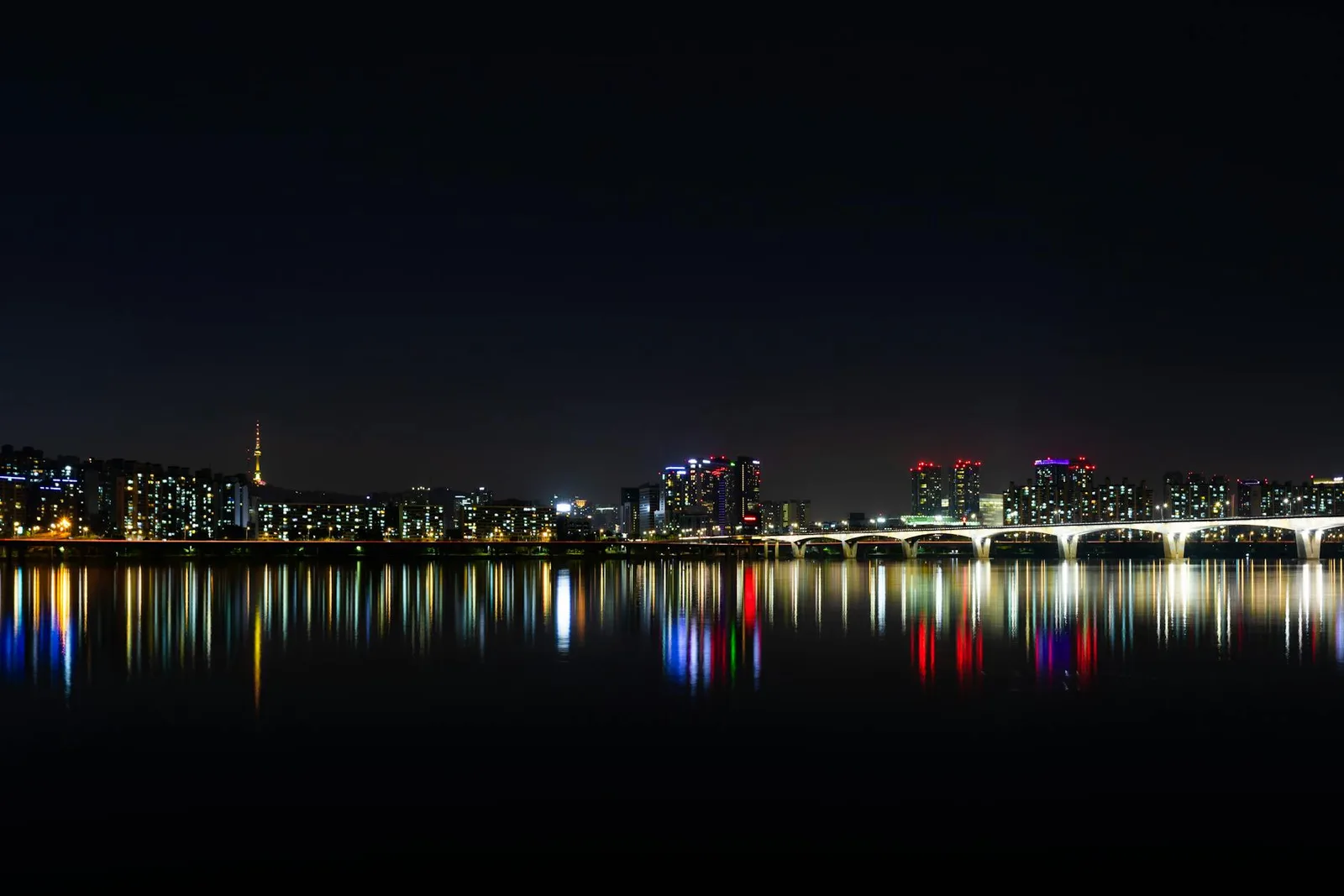
Comparison table
| School | Curriculum | Ages | Fees range (USD) | Notes |
|---|---|---|---|---|
| Dulwich College Seoul | IB, British | 3-18 | 31,308–34,462 | Seocho |
| Seoul Foreign School | IB, British | 2-18 | 22,230–42,672 | Seodaemun |
| Korea International School Seoul Campus | American | 3-11 | 25,903–29,141 | Gangnam |
| Dwight School Seoul | IB | 2-18 | 20,974–27,135 | Mapo |
| Yongsan International School of Seoul | American, AP | 5-18 | 23,198–27,121 | Yongsan |
| Seoul International School | American, AP | 3-18 | 22,163–32,671 | Other Seoul |
| Korea International School Pangyo | American, AP | 3-18 | 25,903–35,516 | Other Seoul |
| Chadwick International | IB | 3-18 | 40,445–47,604 | Songdo |
| Gyeonggi Suwon International School | IB | 3-18 | 19,400–31,042 | Other Seoul |
| Lycee Francais de Seoul | AP, French | 3-18 | 11,354–17,692 | Seocho |
| HCIS Songdo | — | — | Not published | — |
Fees converted to USD at indicative 2026 rates. Verify current figures with each school.
TL;DR
- The IB-track schools are strong. Dulwich College Seoul averaged 36.5 at IB Diploma in 2025, and Seoul Foreign School averaged 36.0 in 2022. Both are well above the global average of 30.5.
- Fees are high. Most of the major English-medium schools run USD 24,000 to USD 44,000 per year. Budget for this before you start shortlisting.
- Geography is a live issue. International schools are scattered across different districts. Families typically pick a school first, then a neighbourhood.
- Entry points at the top schools get competitive at standard transition years. Worth contacting schools as early as you can.
The city
Seoul is a large, well-organised city that is genuinely easy to live in once you're settled. Public transport is excellent and cheap. The food scene is extraordinary. Private healthcare is high quality and not ruinously expensive. Air quality is variable, which some families find more of a factor than others, and summers are humid. None of this is dealbreaking, but it matters before you arrive.
The main practical adjustment is language. Korean is not English-adjacent, and while younger Koreans increasingly speak English, daily life outside the international bubble runs in Korean. Schools, hospitals, and most amenities in the main international neighbourhoods manage fine in English. Beyond that, you'll want some language classes.
Korea's culture has its own rhythms around education, hierarchy, and socialising that families from Western backgrounds notice quickly. The international school community is tight-knit and welcoming, particularly in the main family clusters, and most families find they settle within a few months. The 한강 (Hangang River) parks, the mountain hiking directly accessible from the city, and the general liveability keep most families positively surprised.
The schools
Seoul Foreign School
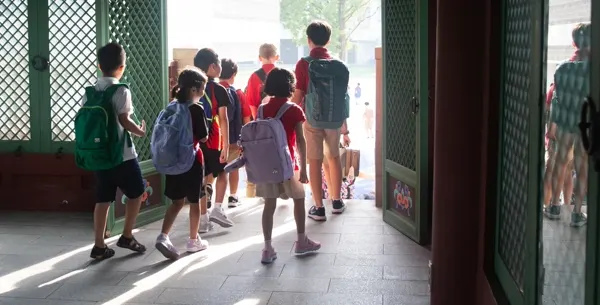
Seoul Foreign School is the oldest international school in Korea, running since 1912, and it has an unusual structure that matters before you apply. The school operates four sections on a 25-acre hilltop campus in Seodaemun: a British School, an Elementary section, a Middle School, and a High School. This gives it considerable breadth, covering both IB and British curriculum routes. The IB Diploma average in 2022 was 36.0 with a 98% pass rate.
Fees run from roughly USD 30,000 for younger years to USD 41,000 for high school. The split fee structure (a Korean Won component and a US Dollar component) reflects the school's history and can seem complex at first. The campus location in Seodaemun, on the north-west side of the city, is less central than some families expect. Families in Mapo and Yonsei University areas find it genuinely convenient. Families based in Gangnam are looking at a real commute.
Dulwich College Seoul
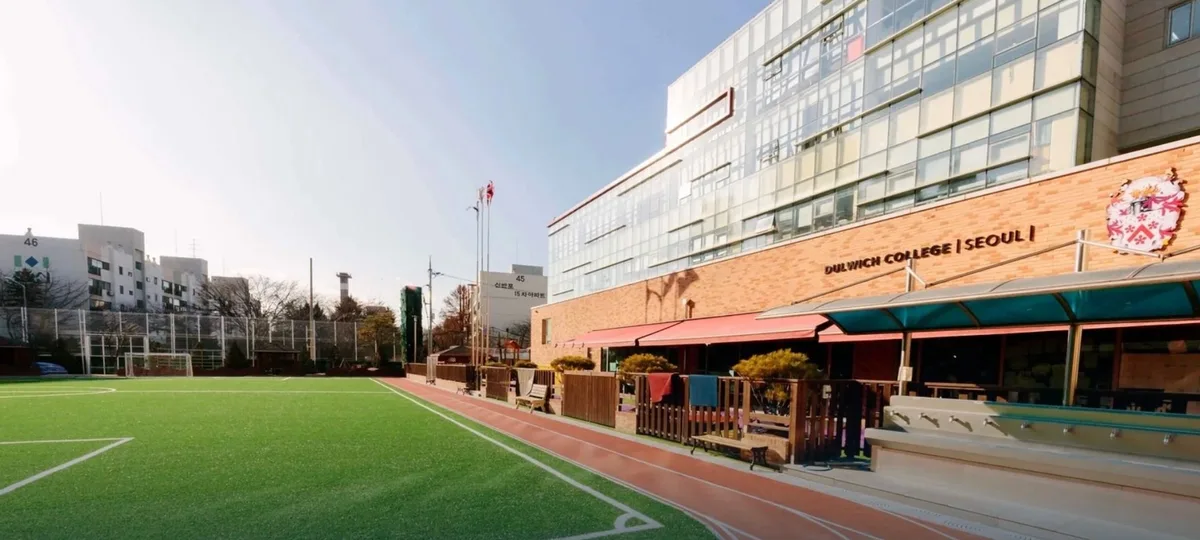
Dulwich College Seoul posted the strongest IB Diploma results of any Seoul school in 2025: an average of 36.5 with a 100% pass rate. It is part of the Dulwich College International network, runs the IB continuum from age 3 through to 18 in Seocho, and has around 700 students from over 40 nationalities. For a school of its size, the results are hard to argue with.
Annual fees for 2025-26 run from KRW 40,700,000 for Kindergarten to KRW 44,800,000 for Year 13 (roughly USD 30,000 to USD 34,000). Seocho is on the south side of the Han River, and the school sits reasonably close to the Gangnam residential belt. Families considering Dulwich alongside Seoul Foreign School are effectively making a location choice as much as a school choice. The campus is compact relative to Seoul Foreign School; the results speak for themselves.
Korea International School Seoul Campus
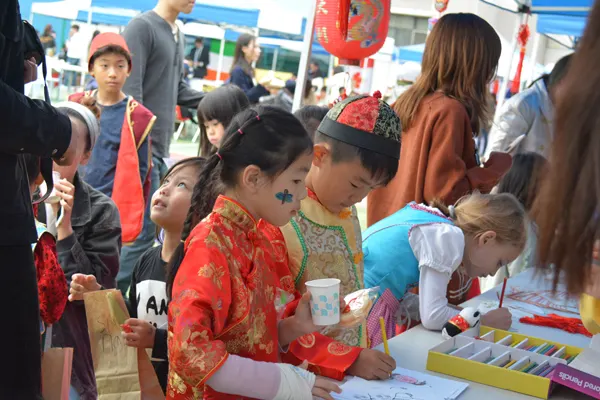
Korea International School Seoul Campus is the younger-years option on the American curriculum path, covering Pre-Kindergarten through Grade 5 in Gangnam's Gaepo-dong. If you're an American-curriculum family with primary-age children based in Gangnam, this is the natural starting point. For families with older children, you'll be looking at the Pangyo campus for continuation.
Fees for 2025-26 combine a Korean Won component (KRW 18,850,000 to KRW 21,090,000) with a US Dollar component (USD 9,270 to USD 10,430), totalling roughly USD 24,000 to USD 28,000 per year. The Gangnam location is central for the south-side residential areas and avoids the cross-river commute that catches some families out.
Dwight School Seoul
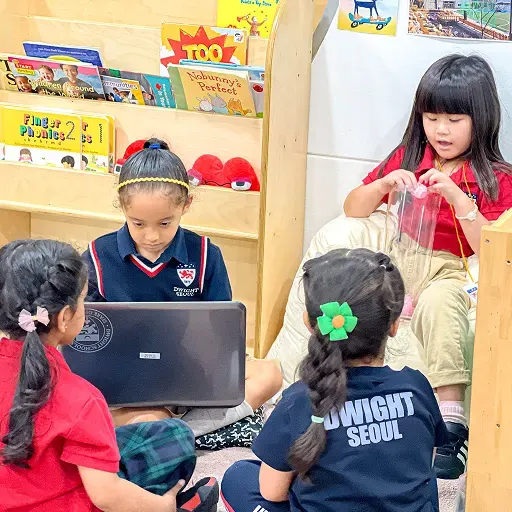
Dwight School Seoul was Seoul's first IB Continuum school and runs all four IB programmes from age 2 through to 18 on a purpose-built campus in Digital Media City, Mapo-gu. The IB Diploma average in 2025 was 34.0 with a 100% pass rate. It is smaller than Seoul Foreign School, with around 540 students, which families who want a less sprawling environment tend to find appealing.
Annual fees for 2025-26 run from KRW 27,300,000 for nursery and early years to KRW 35,300,000 for Grades 1 through 12 (approximately USD 20,000 to USD 26,000). This puts Dwight at the lower end of the Seoul international school fee range, which matters to self-funding families. The Mapo location works well for families in the Digital Media City corridor and parts of central Seoul, though the north-west positioning makes it less convenient for Gangnam-based families.
Yongsan International School of Seoul
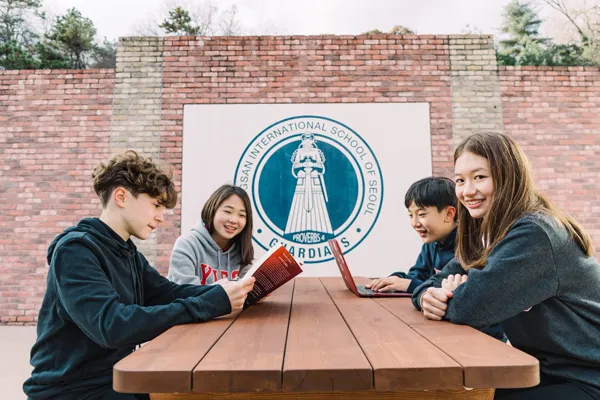
Yongsan International School of Seoul is a Christian-faith school running an American curriculum for around 1,000 students from Kindergarten through Grade 12 in Yongsan. It holds dual WASC and ACSI accreditation. Yongsan's location is genuinely central, close to Itaewon and the main international residential streets in that part of the city, and many families in the US military and US embassy community end up here.
Total annual fees run from roughly KRW 29,600,000 for elementary to KRW 34,700,000 for middle and high school (approximately USD 22,000 to USD 26,000). The faith ethos is genuinely present in school life, which families find either a positive or a filter depending on their background.
Seoul International School
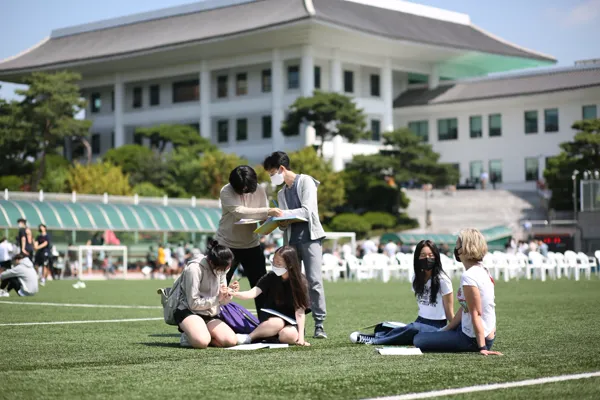
Seoul International School is the oldest secular private international school in South Korea, established in 1973 and now one of the most academically rigorous American-curriculum options in the region. It is located in Seongnam-si in Gyeonggi Province, south of the city proper, rather than within the Seoul city limits. That location point matters practically: the commute from central Seoul or the north-side districts is real, and most families who choose the school live close to it in Bundang or Seongnam.
It runs 23 AP courses and produced strong results in 2025: 48% of AP scores at grade 5 and 33% at grade 4. Fees for 2026-27 run from KRW 27,900,000 for Pre-K to KRW 41,100,000 for Grades 9-12 (roughly USD 21,000 to USD 31,000). For academically driven families comfortable living outside the city centre, this is one of the most academically credentialled American-curriculum options available.
Korea International School Pangyo
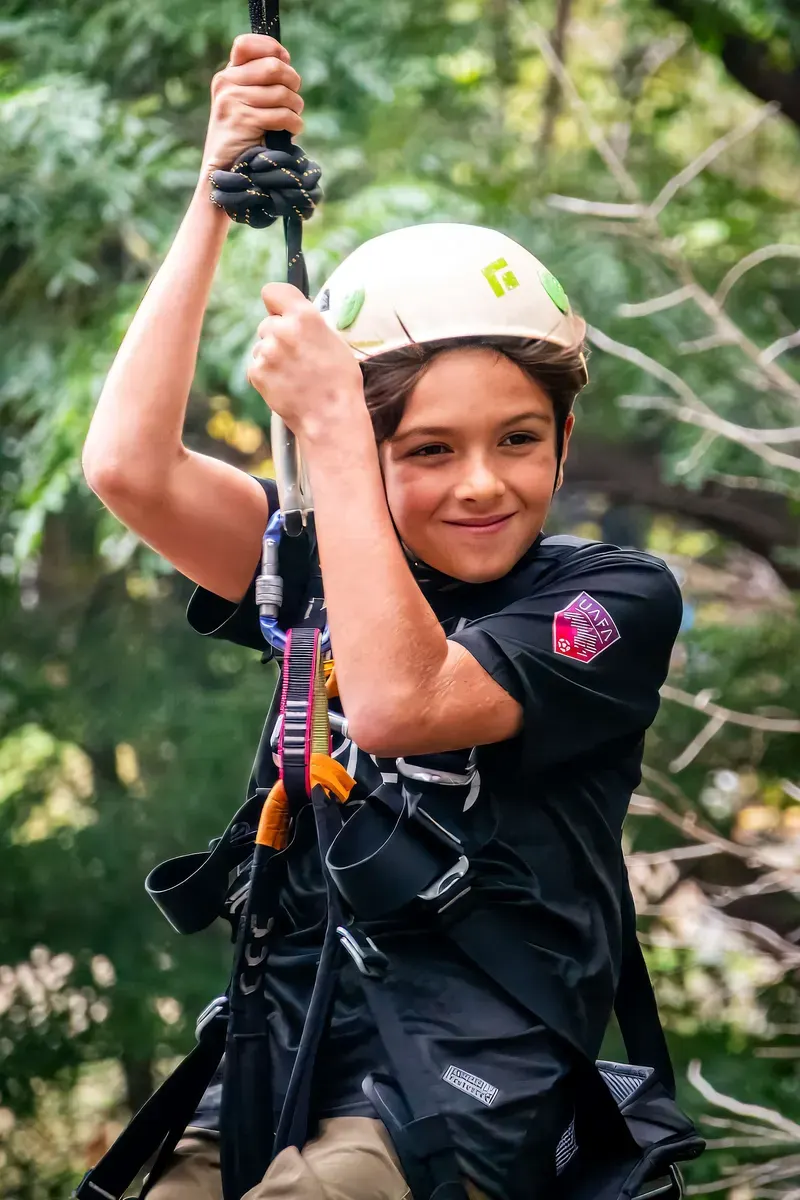
Korea International School Pangyo is the main KIS campus, in Bundang-gu, Seongnam-si, serving around 1,200 students from Pre-Kindergarten through Grade 12. It is the natural continuation school for families who start their younger children at the Seoul Campus in Gangnam. The American college-preparatory curriculum runs with a strong applied learning focus and AP courses across the senior years.
Fees for 2025-26 combine Korean Won and US Dollar components, ranging from KRW 31,400,000 for Pre-K to KRW 42,900,000 for Grades 9-12 (roughly USD 23,000 to USD 32,000). Pangyo is part of the Bundang new town development and has a calm, well-resourced environment. Families living in Bundang and the adjacent tech company corridor use it as their primary option.
Chadwick International
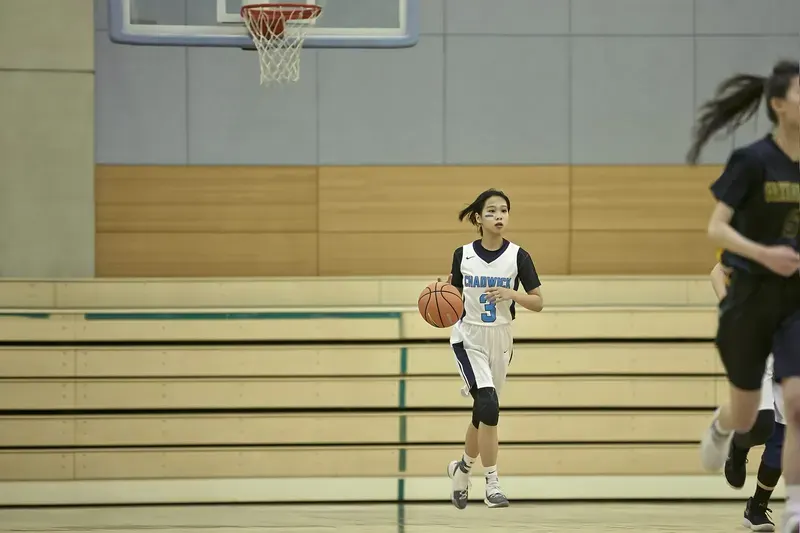
Chadwick International is the outlier on this list in terms of location: it sits in Songdo International Business District in Incheon, around 50 kilometres west of central Seoul. For families posted to the Songdo free economic zone or working near Incheon, it is the obvious choice. For everyone else, the distance means it only works if you're committing to living in Songdo. It is affiliated with Chadwick School in California, runs the full IB continuum for around 800 students, and the campus is well-resourced in a city that was purpose-built for international business.
Fees are the highest of any school on this list. Combined KRW and USD components run from roughly KRW 50,500,000 for the Village School to KRW 59,400,000 for Upper School (approximately USD 37,000 to USD 44,000). If your employer is covering fees and you're based in Songdo, this is a strong option. Self-funding families in central Seoul would be stretching considerably for the commute as well as the fees.
A note on smaller and specialist schools
Several smaller schools serve specific communities. Asia Pacific International School in Nowon-gu is a Christian-ethos American-curriculum school with around 216 students and average class sizes of 15. It's deliberately small and the fees (KRW 33,700,000 to KRW 41,900,000, roughly USD 25,000 to USD 31,000) reflect a more intimate environment. Gyeonggi Suwon International School in Suwon, around 30 kilometres south of central Seoul, offers the full IB continuum at fees from KRW 25,600,000 to KRW 40,700,000 (roughly USD 19,000 to USD 30,000), making it one of the more accessible IB options in the region.
For French-curriculum families, the Lycée Français de Séoul in the Seorae Maeul neighbourhood of Seocho has been running since 1974, is AEFE-accredited, and posted a 100% Baccalauréat pass rate. Fees run from KRW 14,800,000 for primary to KRW 23,000,000 for high school (roughly USD 11,000 to USD 20,000), well below the English-medium schools.
IB results in context
The global IB Diploma average in 2025 was 30.5. Seoul's leading IB schools are comfortably above that. For reference:
| School | IB average | Year |
|---|---|---|
| Dulwich College Seoul | 36.5 | 2025 |
| Seoul Foreign School | 36.0 | 2022 |
| Dwight School Seoul | 34.0 | 2025 |
Dulwich and Seoul Foreign School are among the stronger IB performers in Asia, not just South Korea. The 36+ average puts both schools in a position where IB preparation is genuinely competitive.
Where people live
Seoul is large enough that school geography pulls families to particular districts in ways that are hard to ignore. The city has excellent metro connectivity but traffic is real, and a cross-city school run daily quickly becomes a grind. Most families settle the school question first, then find housing within a reasonable radius.
Gangnam and Seocho
The south side of the Han River is where many families with school-age children end up, and not by accident. KIS Seoul, Dulwich College Seoul (Seocho), and several international school bus routes converge here. Apgujeong, Dogok, and Daechi-dong are the main pockets. Housing is expensive: a family apartment in the main Gangnam residential areas runs KRW 3,500,000 to KRW 8,000,000 per month for something reasonable. International supermarkets, English-speaking medical clinics, and the full expat infrastructure are well-established here. If you're coming in on a corporate package and your school options are on the south side, Gangnam and Seocho are the natural base.
Yongsan and Itaewon
The Yongsan district, including the Itaewon corridor, is where a lot of the English-speaking community has historically concentrated. It is central, well-connected to multiple parts of the city, and has the most overtly international neighbourhood feel in Seoul. Yongsan International School is based here. Housing is varied: the area has everything from modern apartment blocks to older hillside housing, and it is generally less expensive than Gangnam like-for-like. Families who work centrally or want easy access to multiple parts of the city often land here first.
Mapo and Seodaemun
The north-west of the city has a different character. Mapo-gu, particularly around Hongdae and Digital Media City, has become a residential option for families at Dwight School Seoul. Seodaemun is where Seoul Foreign School sits. The area is less specifically oriented to international families than Gangnam or Yongsan, but that can be a plus for families who want to feel more embedded in Korean daily life. Housing costs are noticeably lower than the south side. Families here tend to be self-selecting: they want proximity to a specific school and are less focused on the wider international community infrastructure.
Bundang and Seongnam
If you end up at KIS Pangyo or Seoul International School, Bundang is where most of the school community lives. It is a planned new town, well organised, green, and family-friendly, but it is a genuine suburb rather than a neighbourhood with city-centre character. The commute into central Seoul is 40-50 minutes by metro. Families in Bundang tend to have made a deliberate choice: a calmer environment, more space, and proximity to one of the American-curriculum schools. It does not suit everyone, but families who commit to it are often enthusiastic about it.
Songdo
Songdo is its own category: a purpose-built international business district in Incheon, designed from scratch to house corporate and diplomatic families. If you're posted there, the Chadwick International campus is on your doorstep and the entire district is set up for international family life. If you're not posted there, it is too far from central Seoul to make practical sense as a base for most school options.
Practical notes
Registration: The Alien Registration Card (ARC) is the key document you need on arrival. Everything else follows from it. Non-Korean spouses on dependent visas sometimes find bureaucratic friction; your company HR and a local relocation agent will save time. Start the ARC process immediately on arrival.
Healthcare: Seoul has excellent private hospitals with strong English-language services. Severance Hospital, Samsung Medical Centre, and Asan Medical Centre are all internationally accredited and regularly used by international families. The international clinics at these hospitals handle everything from GP consultations to specialist referrals in English. Private health insurance is standard for international families; employer coverage typically includes this.
Air quality: Fine dust (PM2.5) is a real factor in Seoul, particularly in late winter and spring when dust blows from mainland China. Air purifiers in the home are standard kit, and most international school campuses manage indoor air quality actively. Many families track air quality apps and adjust outdoor plans accordingly. It is more manageable than it can sound from the outside, but it matters.
Cost of living: A family of four in central Seoul, running a car, with private health insurance and reasonable eating out, should budget around KRW 6,000,000 to KRW 9,000,000 per month before school fees. Eating out is a bargain compared with most Western cities. Imported groceries and Western-brand products are significantly more expensive, as in most of Asia.
Language: Korean schools use Korean-language administration. The international schools manage entirely in English, and most medical and government services in the main international districts have English support. Learning some Korean, even at a basic level, makes daily life considerably more pleasant and Koreans generally respond warmly to the effort.
FAQs
Which Seoul international schools have the best IB results? Dulwich College Seoul averaged 36.5 at IB Diploma in 2025, the highest published figure among Seoul international schools. Seoul Foreign School averaged 36.0 in 2022. Dwight School Seoul averaged 34.0 in 2025. All three are well above the global average of 30.5. Published IB data for some schools is not always current; ask admissions teams directly for the most recent cohort results.
Is there a good American curriculum school in Seoul? Several. Korea International School has two campuses: the Seoul Campus in Gangnam for Pre-K through Grade 5, and the main Pangyo campus in Bundang for the full Pre-K through Grade 12 range. Seoul International School in Seongnam is one of the most academically rigorous American-curriculum options in the country, with 23 AP courses. Yongsan International School of Seoul is a well-established option in central Seoul with a Christian ethos.
Do I need to live near the school in Seoul? More than in some cities, yes. Seoul's traffic is real and most international schools are not clustered in one area. Families who choose a school on the south side of the Han River and then rent on the north side typically find themselves spending significant time commuting on school days. Most schools run bus services that cover a reasonable radius, which helps, but the daily school run is worth factoring into your housing decision early. The clear recommendation from families who've done it is to sort school first, neighbourhood second.
How early should I apply to Seoul international schools? For the 2026-27 academic year, the popular entry points at Seoul Foreign School, Dulwich, and KIS are genuinely competitive. Families arriving mid-year should contact schools at least three to four months ahead, and for August/September entry the previous autumn is not too early. Corporate relocation packages often include school placement support; use it.
How do Seoul school fees compare to other Asian cities? Seoul sits at the high end of the Asia range. The major English-medium schools run USD 24,000 to USD 44,000 per year, comparable with Hong Kong and Singapore's top schools rather than cities like Kuala Lumpur or Bangkok. The KRW/USD fee structure (many schools charge a combination of local currency and US dollars) can complicate budgeting. Build in a 10-15% buffer for currency movement if you are budgeting in a currency other than USD or KRW.
Methodology
Schools were selected based on: academic outcomes where published (IB Diploma averages, AP results, Baccalauréat pass rates), accreditation standing (CIS, WASC, ACSI, AEFE), and the consistency with which they appear in shortlists among international families relocating to Seoul. Operational factors including campus quality, head tenure, and parent voice from the Seoul international school community were also considered.
This is an editorial selection, not a complete directory. Schools in Incheon (Chadwick International) and the broader Gyeonggi Province area (Seoul International School, KIS Pangyo, Gyeonggi Suwon International School) are included because families relocating to the Seoul metropolitan region regularly consider them. The article covers the schools a serious shortlisting family would most likely encounter. It does not include every accredited school in South Korea.
IB results reflect the most recent published data available as of January 2026. Where data was not publicly accessible, we have not estimated or sourced from unofficial channels.
Fees correct as of January 2026. KRW/USD exchange rate used for conversions: approximately USD 1 = KRW 1,350 (January 2026, indicative). We work hard to make every figure, date and description on this page accurate. We don't always get it right. If you spot an error, a fee that's changed, a fact that's out of date, something we've got wrong, please tell us. Use the feedback button above or email us directly. We'll check it and update the article.