Notes / Saigon
Best International Schools in Saigon: The 2026 Guide for Families
Ho Chi Minh City has more serious international schools than most families expect. The market has matured fast, the top schools post IB results well above the world average, and the two main residential areas give you a genuine choice of neighbourhood.
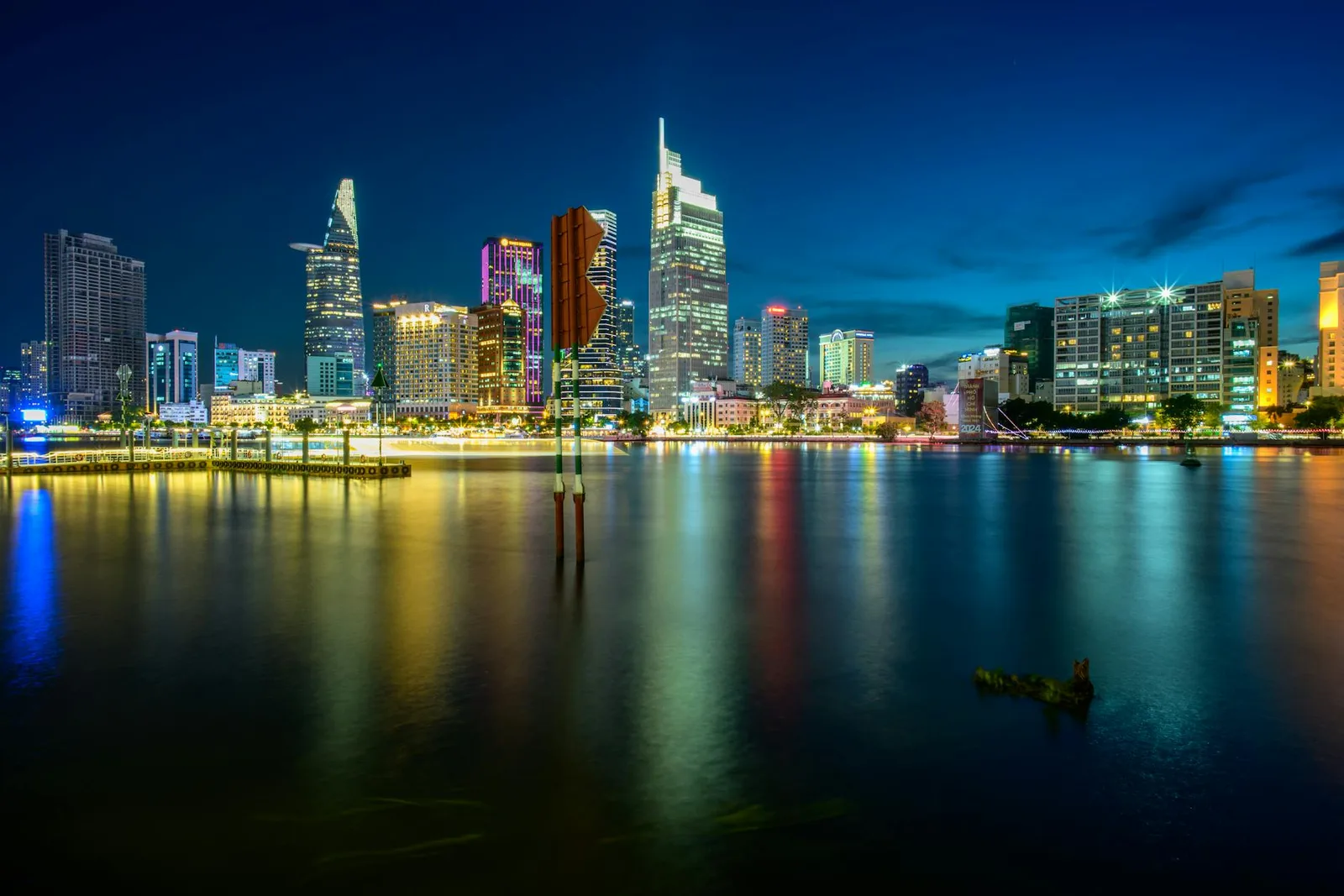
Comparison table
| School | Curriculum | Ages | Fees range (USD) | Notes |
|---|---|---|---|---|
| British International School Ho Chi Minh City | IB, British, Cambridge | 2-18 | 13,417–39,846 | Thao Dien, District 2 |
| International School Ho Chi Minh City | IB | 2-18 | 11,625–39,958 | Thao Dien, District 2 |
| Australian International School Vietnam | IB, British | 1.5-18 | 12,317–35,863 | Thao Dien / District 2 |
| Saigon South International School | IB, American, AP | 3-18 | 22,091–38,523 | Phu My Hung, District 7 |
| European International School Ho Chi Minh City | IB | 2-18 | 11,446–32,150 | Thao Dien / District 2 |
| Renaissance International School Saigon | IB, British, Cambridge | 2-18 | 8,417–35,679 | District 7 / Phu My Hung |
| The Canadian International School Vietnam | IB, AP | 5-18 | 15,286–36,050 | District 7 / Phu My Hung |
| International Schools of North America | IB | 6-18 | 21,440–35,145 | Saigon South / Him Lam |
Fees converted to USD at indicative 2026 rates. Verify current figures with each school.
TL;DR
- The IB dominates. Nearly every serious school runs the IB Diploma or full IB continuum. British IGCSE options exist; American curriculum is a smaller market.
- Two neighbourhoods account for most of the international school stock: Thao Dien / District 2 (north-east of the river) and Phu My Hung / District 7 (south-west). Where you live and where you school are closely linked.
- Fees for the established English-medium schools run roughly USD 11,000 to USD 38,000 a year. The highest fees are at the largest schools; genuine value options exist if you look.
- Check for waitlists at the top schools. Worth contacting schools as early as you can.
The city
Ho Chi Minh City is big, dense, and faster-moving than most cities in the region. Traffic is the defining feature of daily life. A 10-kilometre journey can take 45 minutes at the wrong time of day, which is why families who commit to a school in Thao Dien tend to live in Thao Dien, and families in Phu My Hung rarely commute across the river for school runs.
The city rewards people who lean in. The food culture is excellent, the cost of living for things like eating out, domestic help, and leisure is substantially lower than Singapore or Hong Kong, and the Vietnamese are generally welcoming to international families. English is widely spoken in the areas where international schools are concentrated. Outside those zones it drops off quickly, and Vietnamese bureaucracy runs in Vietnamese regardless.
Healthcare is the main practical concern for families with children. A handful of international hospitals serve the community well (FV Hospital in District 7, Vinmec, and Hạnh Phúc International Hospital are the most commonly used), but for anything complex, families on corporate packages often use Bangkok or Singapore. Private health insurance with medical evacuation cover is not optional in this market.
The visa picture matters. Most international families are on business visas or temporary residence cards. The rules shift, and keeping paperwork current is a recurring task rather than a one-off. Schools generally have experience helping families navigate the practicalities; ask about it during admissions.
The schools
British International School Ho Chi Minh City

British International School Ho Chi Minh City is the largest English-medium school in the city and posts the highest IB Diploma average in Vietnam: 36.4 in 2025, against a world average of 30.6. It runs the British curriculum through IGCSE across three campuses in Thao Dien, then the IB Diploma in the senior years. Around 2,400 students, ages 2 to 18.
The school is part of the Nord Anglia network and carries a UK government inspection rating of Outstanding across all categories. At 97% achieving five A*-C grades at IGCSE and 70% of graduates placing at top-100 universities, the academic output is hard to argue with. Fees run USD 13,000 to USD 38,000 a year depending on year group. The three-campus model works well once your child is settled, but ask about the transition between primary and secondary campuses during admissions.
The school has a strong hold on the corporate-posting market in Thao Dien. Families who have been here a few years say it is a well-run machine: pastoral care is attentive, the community is active, and the sheer size means most co-curricular niches are covered. The flip side of that size is that it can feel less personal in the middle years.
International School Ho Chi Minh City
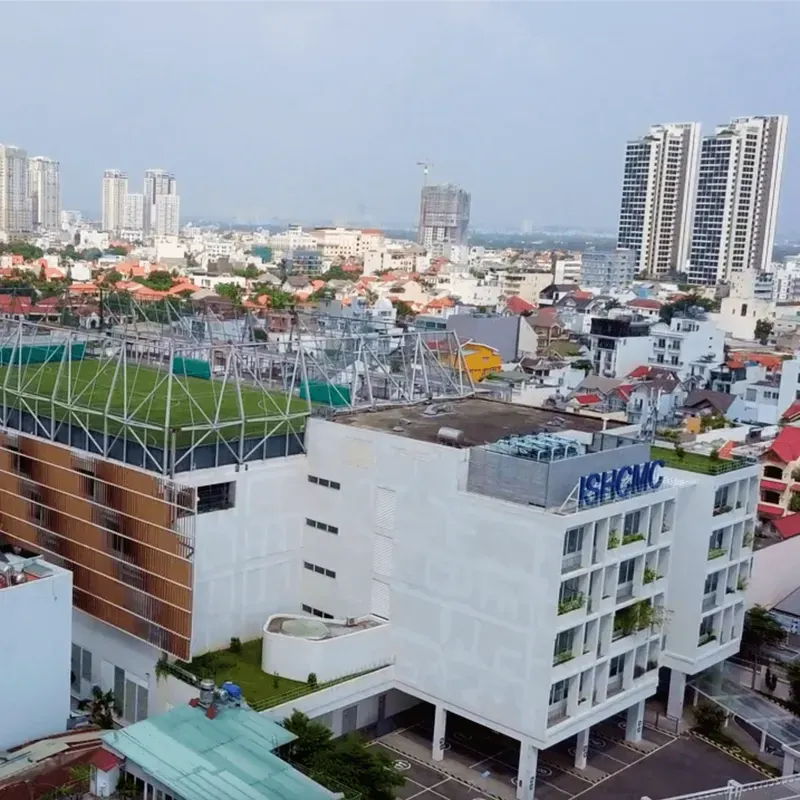
International School Ho Chi Minh City has been operating in Vietnam longer than any other IB school in the country and runs the full PYP, MYP, and DP continuum from age 2 to 18 across two campuses in Thao Dien. Around 1,000 students. The all-inclusive fee model is unusual for Saigon: uniforms, devices, field trips, and after-school activities are bundled into tuition rather than billed separately.
Fees run USD 11,000 to USD 38,000 a year. The all-in pricing makes genuine cost comparisons difficult but also removes the bill-shock that families at other schools sometimes encounter mid-year. For the 2025 graduating class, over USD 56 million in university scholarships were awarded, which reflects both the calibre of college counselling and the academic level of the cohort.
The school is smaller and quieter in feel than BIS. Parents consistently describe it as more community-centred, with staff who tend to stay. If you're choosing between the two Thao Dien anchors, the question is usually whether you want the scale and infrastructure of BIS or the more intimate setup of ISHCMC.
Australian International School Vietnam
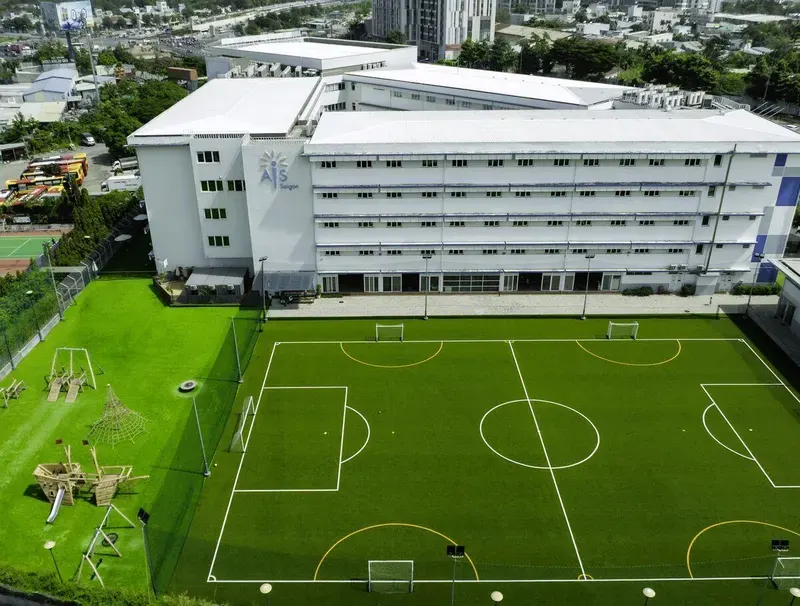
Australian International School Vietnam is the most interesting structural case in the Saigon market. It offers the full IB continuum alongside British curriculum, has a primary campus in Thao Dien and a secondary campus at Thu Thiem, and is the only school in Ho Chi Minh City with boarding. The IB average in 2025 was 34.5, and 77% of the cohort earned the bilingual diploma, which is a genuine credential rather than a marketing claim.
Fees run approximately USD 11,824 to USD 34,428 a year. The dual-campus model means your child changes location at secondary transition, which some families find disruptive and others welcome as a natural step-up. The boarding provision is relevant to families on regional postings who cannot always be in Saigon, and it attracts a genuinely international intake beyond the typical corporate expat population.
The school is part of the Inspired group and tends to attract families who have come from IB schools elsewhere and want curriculum continuity alongside the British Cambridge option in the middle years.
Saigon South International School
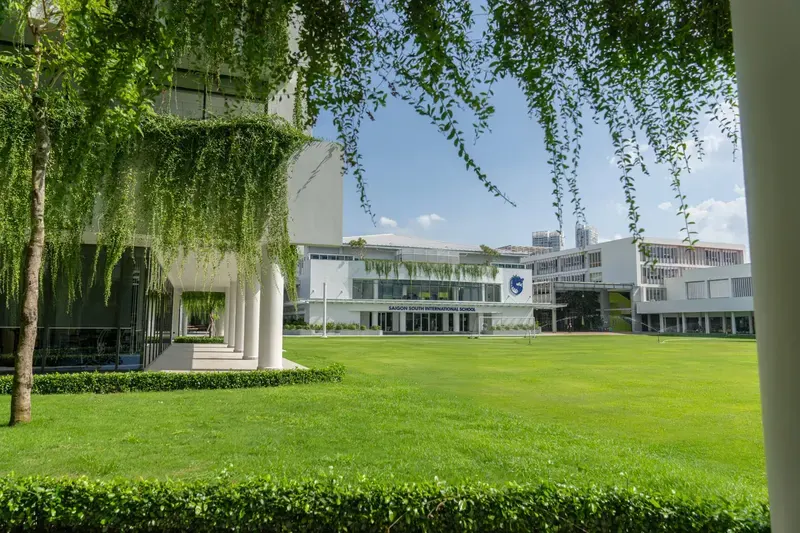
Saigon South International School is the only not-for-profit international school in Ho Chi Minh City. It runs an American curriculum with IB Diploma and AP courses in secondary, and sits on a large campus in Phu My Hung, District 7. Class sizes are capped at 20, and the teacher-to-student ratio of 1:10 is the best of any school of this size in the city.
Fees run USD 21,000 to USD 37,000 a year. The not-for-profit structure means surpluses go back into the school rather than to a parent company, which shows in the facilities and staffing. WASC, CIS, and AAIE accreditation covers all bases. It's the default choice for American families or those targeting US university admissions, and the community around Phu My Hung makes the District 7 location work well.
The school is less well known in the Thao Dien market, which tends to cluster around the British and IB schools on the other side of the river. If you are already living in or near Phu My Hung, it deserves serious consideration.
European International School Ho Chi Minh City
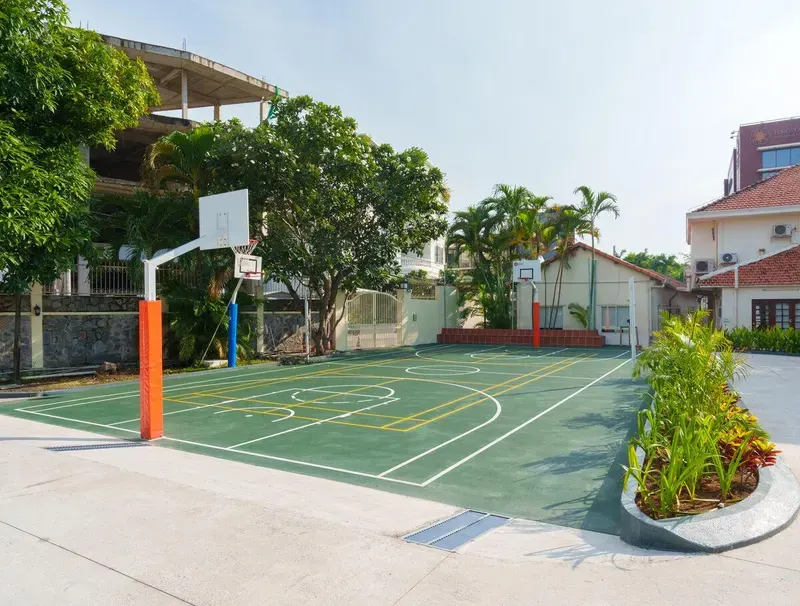
European International School Ho Chi Minh City runs the full IB continuum from age 2 to 18 on a single campus in Thao Dien. Around 450 students. Fees run USD 10,988 to USD 30,864 a year, 20 to 30 per cent below ISHCMC and BIS for comparable year groups, with CIS and WASC accreditation behind the numbers.
The smaller size is the defining characteristic. At around 450 students across 16 year groups, class sizes are genuinely small, teachers know students individually, and the pastoral environment is close-knit. It is one of only five full IB Continuum schools in Vietnam. Families who choose it over the larger Thao Dien schools typically say they wanted a school where their child would not get lost, and that the value-per-dollar case was compelling once they sat down with the fee schedules.
The trade-off is breadth of co-curricular provision: you are not getting the BIS range of sports, arts, and activities. For families prioritising academic depth over campus amenity, that trade-off usually lands in EISHCMC's favour.
Renaissance International School Saigon
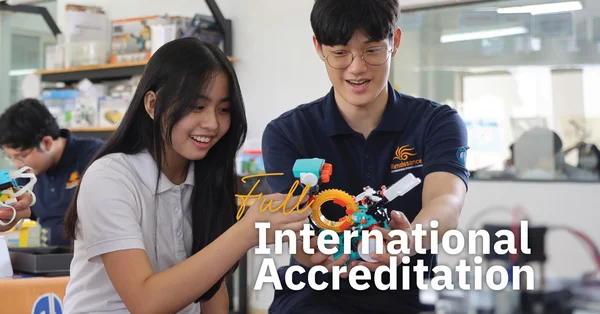
Renaissance International School Saigon covers an unusually broad curriculum range: IB PYP and MYP in the primary and middle years, IGCSE in Years 10 and 11, then IB Diploma. It is the only Round Square school in Vietnam. Around 600 students on a District 7 campus, ages 2 to 18.
Fees run USD 8,080 to USD 34,252 a year. The lower-end figures at the early years make it one of the more accessible entry points in the city for younger children, and the IGCSE plus IB Diploma pathway in the senior years suits families who want Cambridge qualifications before the two-year Diploma push. The Round Square network carries genuine value for students who want international exchange and community service at a meaningful level.
Renaissance sits between the two main residential zones. Families in Phu My Hung use it readily; those in Thao Dien tend to gravitate toward the District 2 cluster unless the curriculum combination is specifically what they are looking for.
The Canadian International School Vietnam
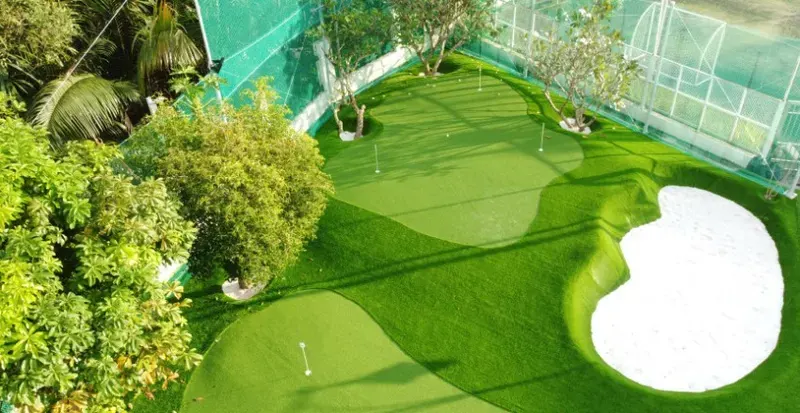
The Canadian International School Vietnam is a Cognia-accredited school in District 7's Phu My Hung area, running an Ontario-based curriculum through secondary with IB Diploma and AP courses at the top end. Around 1,500 students, ages 5 to 18, on a 39,000 sqm campus.
Fees run USD 15,000 to USD 35,000 a year. The Canadian curriculum is less commonly sought in Saigon than IB or British, but the IB Diploma offering and the AP pathway make university access broad. The campus is well-resourced, and the Phu My Hung location puts it in a residential area with a strong international community. For families coming from Canada or those targeting Canadian universities, it offers genuine curriculum continuity that other schools in the city cannot match.
International Schools of North America
International Schools of North America runs the full IB continuum alongside the Vietnamese national curriculum from its Him Lam campus in Saigon South. Around 800 students, ages 6 to 18. WASC accredited, with boarding available for secondary students.
Fees run USD 21,000 to USD 34,000 a year. The combination of IB Continuum, Vietnamese curriculum, and boarding in a single school is unusual and serves a specific need: families with Vietnamese roots, long-term residents who want genuine bilingual education, and those on regional postings who need boarding flexibility. For families purely seeking an international credential, the other options in the city are more straightforward, but for the right family this school does something the others do not.
IB results in context
The global IB Diploma average in 2025 was 30.6. Saigon's leading schools are well above that benchmark.
| School | 2025 IB Diploma average |
|---|---|
| British International School HCMC | 36.4 |
| Australian International School Vietnam | 34.5 |
Source: school-published data for 2025.
ISHCMC does not publish a numeric average but reports 98% of graduates accepted to first-choice universities, which is consistent with strong DP performance. EISHCMC is a full IB Continuum school and publishes accreditation data; DP averages are not prominently published; ask directly.
Where people live
Thao Dien and District 2
Thao Dien is the most established international residential area in Ho Chi Minh City. It sits in District 2 (now formally part of Thu Duc City, though almost nobody calls it that), across the Thu Thiem Bridge from the central districts. The combination of villas, low-rise apartment buildings, international restaurants, and the concentration of international schools makes it the natural landing spot for families arriving on corporate packages. BIS, ISHCMC, EISHCMC, and AIS (primary campus) are all here.
Rents for a family villa in Thao Dien typically run USD 2,000 to USD 5,000 per month depending on size, plot, and condition. Serviced apartments and newer high-rises in the An Khanh area at the Thao Dien end of District 2 run from around USD 1,500. The area has enough cafes, gyms, and supermarkets that some families barely leave it for weeks at a time, which can be a feature or a limitation depending on your perspective.
Traffic out of Thao Dien toward the city centre is predictably bad on Thu Thiem Bridge during rush hour. If one parent is commuting to a central business district office daily, the journey time adds up. Budget 30 to 45 minutes each way on a difficult morning.
Phu My Hung and District 7
Phu My Hung is a planned township in District 7, south-west of the centre. It is more suburban in character than Thao Dien: wider roads, more space, a stronger sense of a self-contained residential community. SSIS, Renaissance, CIS Vietnam, and the German School are here. Rents are generally lower than Thao Dien like-for-like: a four-bedroom house runs USD 1,500 to USD 3,000 a month in the residential estates.
The Korean and Japanese communities are well established in Phu My Hung, and the local infrastructure of schools, medical facilities, and restaurants reflects that. FV Hospital, one of the best international hospitals in the city, is here. Families who have tried both areas often say Phu My Hung feels quieter and more liveable once you adjust to the fact that you are further from the historic city centre.
The cross-river commute between Thao Dien and Phu My Hung is genuine: 30 to 60 minutes depending on time of day. Most families choose a district and school together rather than trying to commute between them.
District 1 and the central districts
Some families, particularly those in finance or professional services, live in central District 1 or the adjacent Binh Thanh district. The lifestyle is more urban, rents for central apartments are often comparable to the suburbs, and the commute to schools in Thao Dien is manageable with a school bus. There are no major international schools in the central districts, so this setup works best if you are using the school bus and do not need to do the school run yourself.
Practical notes
Fees and what's included: Fee structures vary significantly. ISHCMC bundles activities, devices, and uniforms into tuition. Most other schools bill these separately, which adds USD 1,000 to USD 3,000 a year to the headline figure. Ask specifically about the total annual cost before comparing.
Admissions timing: The school year runs August to June, following a Northern Hemisphere academic calendar. Applications for August entry typically open in October and places at the most popular schools fill by February or March. Contact schools before accepting a posting if at all possible.
School buses: All the major schools run extensive bus networks. If you are in a standard international residential area, your child will have a bus option. Journey times of 30 to 45 minutes are common; routes serving more central areas may run longer. The bus solves the school-run problem for most families.
Curriculum continuity: If your child is moving from a British-curriculum school, BIS and AIS give the clearest continuity. If they are in an IB school, ISHCMC, EISHCMC, AIS, and Renaissance all offer the full continuum. American families have SSIS and CIS as the main options. Arriving mid-year is manageable at most of these schools; arriving at the start of a new exam cycle (Year 10 or Year 12) is harder.
FAQs
Which Saigon international school has the best IB results? British International School Ho Chi Minh City posted an IB Diploma average of 36.4 in 2025, the highest in Vietnam and well above the global average of 30.6. Australian International School Vietnam reported 34.5 for the same year. ISHCMC does not publish a numeric average but reports 98% of its 2025 graduates accepted to their first-choice university.
Is there a good American curriculum school in Saigon? Saigon South International School in Phu My Hung is the main American-curriculum option and the only not-for-profit international school in the city. It offers the IB Diploma and AP courses alongside its American core curriculum. The Canadian International School Vietnam in District 7 offers AP alongside its Ontario-based programme. Neither is as large as the British and IB schools in Thao Dien, but both have strong accreditation and long track records.
Do I need to live near the school in Saigon? More than in most cities, yes. The traffic in Ho Chi Minh City makes cross-district commuting genuinely painful during school hours. A family in Thao Dien commuting to a District 7 school is looking at 40 to 60 minutes each way in morning traffic. Most families align their neighbourhood with their school and use the school bus for daily runs. If you arrive before deciding on a school, Thao Dien is the most flexible base: several schools are here or adjacent, and the residential infrastructure is well developed.
How competitive are admissions at the top Saigon schools? BIS and ISHCMC in particular have waiting lists at popular entry points, especially ages 3 to 5 and Year 7. Families on corporate packages with confirmed posting dates can apply several months in advance, which is strongly advisable. Self-arranging families or those arriving without confirmed dates have less leverage. Mid-year places at Year 10 and Year 12 are difficult at all schools due to exam cycle timing.
What are school fees like compared to other cities in the region? Comparable to Bangkok and Kuala Lumpur, and meaningfully below Singapore and Hong Kong at the top end. The USD 11,000 to USD 38,000 range across quality schools is broad enough that most budgets can find an appropriate option. All-inclusive fee models (ISHCMC) and genuinely smaller schools (EISHCMC) provide real alternatives below the headline prices at the largest schools.
Fees correct as of January 2026. We work hard to make every figure, date and description on this page accurate. We don't always get it right. If you spot an error, a fee that's changed, a fact that's out of date, or something we've got wrong, please tell us. Use the feedback button above or email us directly. We'll check it and update the article.
Methodology
This ranking covers the schools that internationally mobile families in Ho Chi Minh City most seriously consider. Selection draws on published academic results (IB Diploma averages, IGCSE pass rates), accreditation and inspection evidence (CIS, WASC, UK government inspectorate), and the general reputation of each school within the international community. Operational factors including class sizes, staff tenure, and campus quality are weighted alongside academic outcomes. Value relative to fees is a factor, particularly where smaller schools deliver comparable results at lower cost.
Schools are ordered by how broadly relevant they are to the widest range of families, not by a points score. Families choosing between a specific pair of schools should research both independently. Fee figures are taken from school-published data and may not reflect the most current pricing, so verify directly.