Notes / Riyadh
Best International Schools in Riyadh: The 2026 Guide for Families
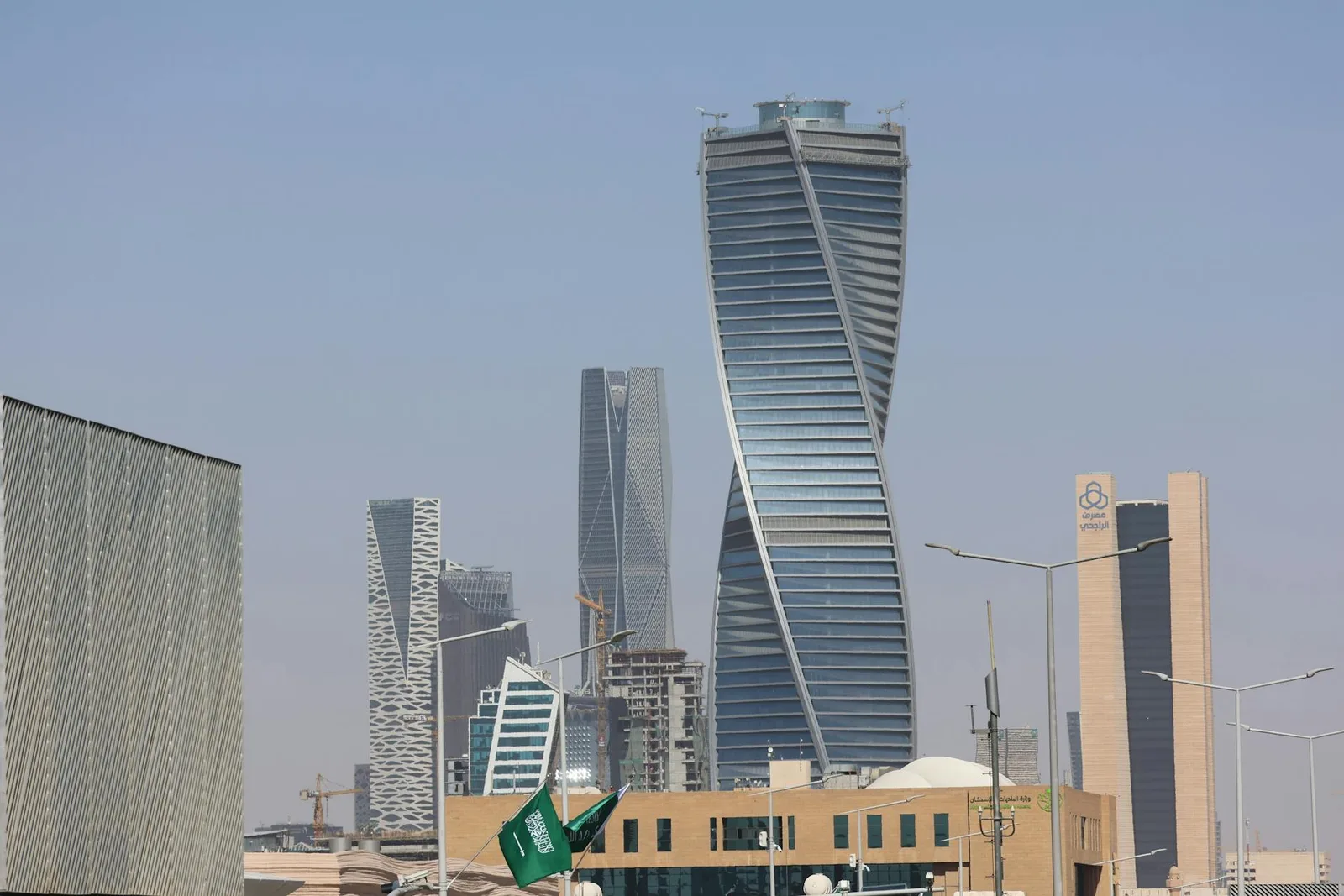
Riyadh's international school market has grown fast. The options are better than most newcomers expect, the fees are broadly comparable to Dubai, and the city, once you know it, is considerably more liveable than its reputation suggests.
Comparison table
| School | Curriculum | Ages | Fees range (USD) | Notes |
|---|---|---|---|---|
| British International School Riyadh | IB, British, Cambridge | 3-18 | 13,092–28,782 | Al Hamra |
| American International School Riyadh | IB, American | 3-18 | 16,844–31,417 | Al Yasmin |
| King Faisal School | IB, American | 3-18 | 13,067–18,000 | Diplomatic Quarter |
| Reigate Grammar School Riyadh | British | 3-18 | 12,098–21,371 | Al Waha |
| Misk Schools | IB, British, Cambridge | 5-18 | 22,667–33,333 | Other Riyadh |
| Downe House Riyadh | British | 3-18 | 14,628–26,005 | Al Aqiq |
| King's College Riyadh | British | 3-13 | 14,076–21,113 | Other Riyadh |
| SEK International School Riyadh | IB | 2-17 | 9,384–21,927 | Al Rabieh |
| Advanced Learning Schools Riyadh | IB | 4-18 | 16,267–20,000 | An Nakheel |
| Beech Hall School Riyadh | IB, American, International | 1-17 | 10,667–25,333 | Al Khuzama |
| Al Faris International School Riyadh | IB, American | 3-18 | 11,200–13,333 | Al Tawun |
Fees converted to USD at indicative 2026 rates. Verify current figures with each school.
TL;DR
- British curriculum schools dominate the market at the top end, with several IB options alongside. The American choice is solid but narrower than in Dubai or Abu Dhabi.
- Fees run SAR 45,000 to SAR 125,000 per year (roughly USD 12,000 to USD 33,000) depending on year group and school. All fees now carry 15% VAT for non-Saudi families at most schools, which adds materially to the bill.
- The Diplomatic Quarter, Al Waha, Al Hamra, and north Riyadh (Al Aqiq, Al Yasmin) are where most international families end up. Traffic is real but more manageable than Jakarta or Bangkok.
- Riyadh is changing quickly. Several new campuses opened in 2021-23 and more are planned.
The city
Riyadh is a modern Gulf city that has changed faster in the past five years than at any point in its recent history. Vision 2030 is real and visible: entertainment venues have opened, social restrictions have eased considerably, and the city is actively positioning itself as a regional hub for international business and families. For families arriving in 2026, the experience is materially different from what it was even in 2019.
The city sprawls. Riyadh covers an enormous area with almost no walkable urban core in the European sense, so a car is not optional, it's the infrastructure. That said, distances between the main residential compounds and the northern school cluster are not as punishing as they look on a map, and traffic, while real, does not dominate daily life in the way it does in some other major cities. The Ring Road and King Fahad Road carry most of the load efficiently outside peak hours.
The climate is the main adjustment. Summers in Riyadh are extreme: 40°C plus for months, with school holidays typically structured around this. The October to April window is genuinely pleasant: dry, sunny, and mild. Most outdoor activity happens in this period, and families who've been here say they quickly build a two-season mindset.
Saudi cultural norms apply. Dress codes in public are now relaxed but context matters, particularly outside the main expat compounds. The Arabic language will improve your life here: not required for daily existence in the international areas, but it opens up the city considerably and is worth pursuing from early on.
The schools
British International School Riyadh
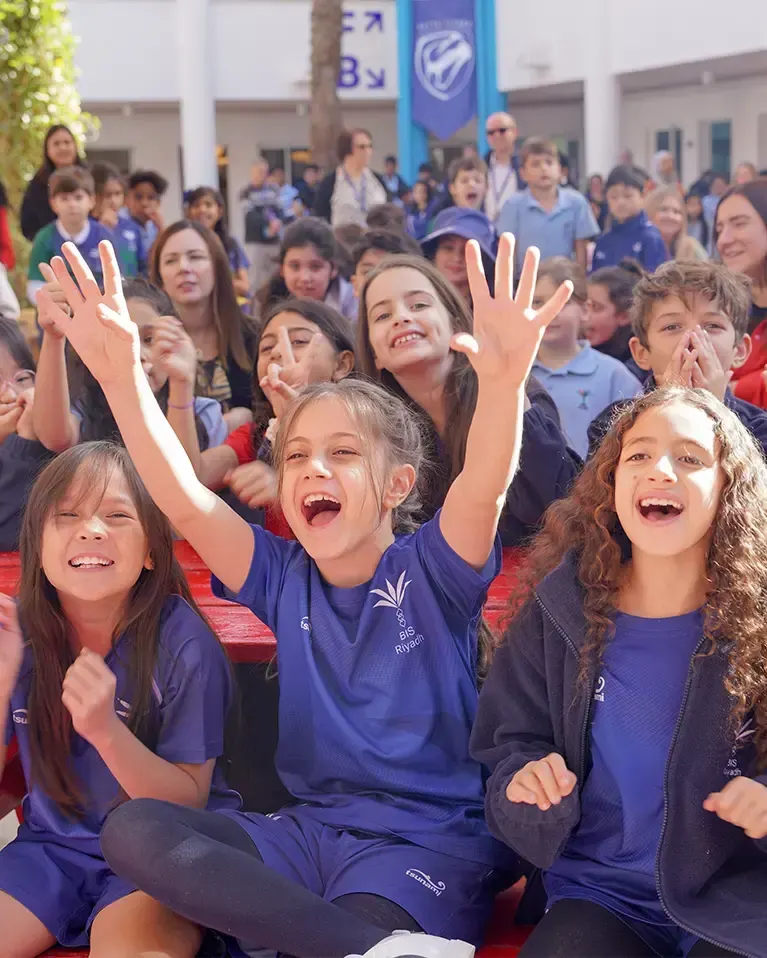
British International School Riyadh is the oldest British school in the city, opened in 1979, and with around 3,000 students across three all-through campuses it's also the largest. It offers the British National Curriculum throughout, with IGCSE, A-Level, and the IB Diploma as sixth-form options. Results are solid: 93% GCSE A-C, 84% A-Level A-C, IB average around 33 points. Parents who've been in Riyadh a few years tend to view it as a reliable, well-established choice; not flashy, but it works.
Fees for 2025-26 run from SAR 49,095 (Foundation 1) to SAR 107,933 (Year 12-13), with 15% VAT already included in these figures. At the upper end that translates to roughly USD 28,000 per year. Three campuses means not all year groups are on the same site, check before you apply, since the logistics matter if you have children at different stages.
American International School Riyadh
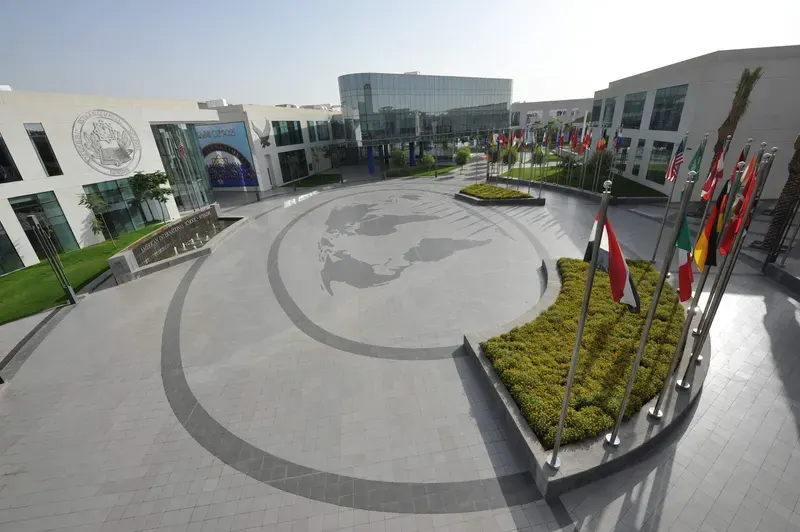
American International School Riyadh is the oldest international school in the city, founded in 1963, and operates from a large purpose-built campus opened in 2014 in the Al Yasmin district. It runs a US curriculum through to Grade 10 and offers the IB Diploma for Grades 11-12, with a 100% IB pass rate. The school community has historically had a strong US diplomatic and corporate feel, though it's broadened considerably over the years.
Annual tuition for 2025-26 runs from SAR 63,164 (Early Years) to SAR 117,812 (Grades 9-12), inclusive of VAT, roughly USD 17,000 to USD 31,000. If your family is tracking to US universities or you're coming from an American-curriculum background, this is the natural starting point. The IB option at Grade 11 provides a credible alternative to A-Levels for UK and international destinations.
King Faisal School
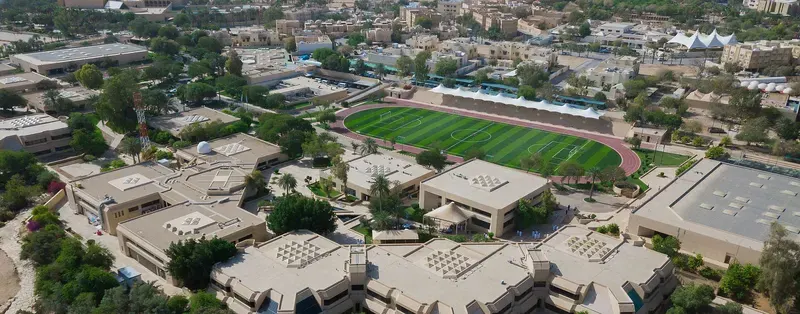
King Faisal School was Saudi Arabia's first full IB continuum school and sits in a large, well-maintained campus in the Diplomatic Quarter. Founded in 1991 by the King Faisal Foundation, it runs IB PYP, MYP, and Diploma with around 2,100 students from Preschool to Grade 12. IB pass rate of 92%. It's one of the more established and stable schools in Riyadh, with a genuinely mixed Saudi and international student body, which matters if you want your children mixing with local families rather than only other international families.
Fees are among the more competitive for a school of this quality: SAR 45,000 (Preschool) to SAR 67,500 (Grades 11-12) for 2025-26, with 15% VAT applicable to non-Saudi families on top. That means effective fees for international families run roughly SAR 51,750 to SAR 77,625 (USD 14,000 to USD 20,700). Strong value relative to the British schools at the top end.
Reigate Grammar School Riyadh
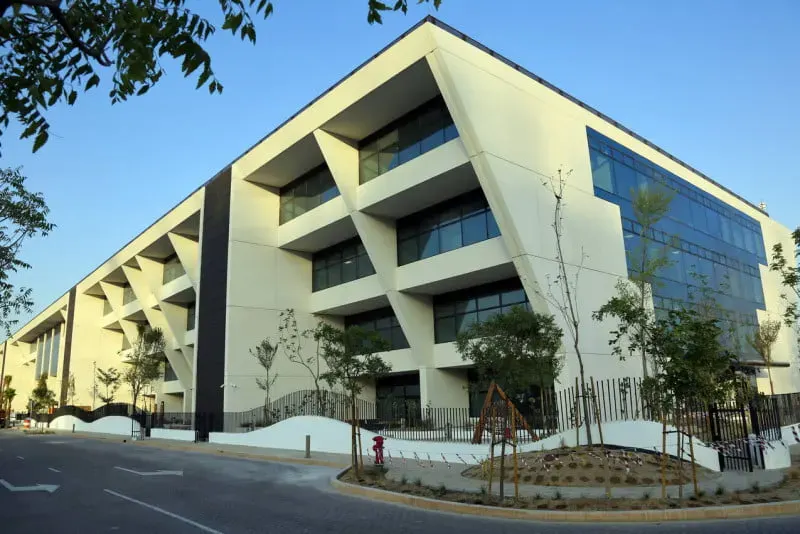
Reigate Grammar School Riyadh operates across two campuses in the Al Waha area (primary at Qurtobah, secondary at Ghirnatah) under a quality assurance partnership with Reigate Grammar School in the UK. The exam results are the best headline figures of any British school in Riyadh: 97% IGCSE A-C, 96% A-Level A-C. The school earned an Outstanding rating from the BSO on its most recent inspection.
Fees for 2026-27 run from SAR 45,368 (Nursery) to SAR 80,143 (Year 13), excluding 15% VAT. Effective fees for international families are SAR 52,173 to SAR 92,165 (approximately USD 14,000 to USD 24,600). Around 1,100 students across both sites. Families specifically targeting top UK universities tend to shortlist this alongside BISR, and the results suggest the comparison is worth making.
Misk Schools
Misk Schools is the most expensive option in Riyadh and a genuinely different kind of school. Backed by the Mohammed bin Salman Foundation and operating from a purpose-built campus at Mohammed Bin Salman Nonprofit City in Irqah, it runs the British curriculum to Year 11 and then IB Diploma, and is explicitly designed around Vision 2030 leadership development. Around 2,000 students from Year 1 to Year 13.
Fees for Years 6-11 are SAR 125,000 per year, approximately USD 33,300, and that's before any extras. It's the most expensive school in the city by a noticeable margin. The school is selective and has a Saudi-heavy student body. Families who end up here tend to be either senior Saudi corporate families or highly senior international executives on corporate packages. Probably not the first port of call for families arriving on a standard relocation package.
Downe House Riyadh
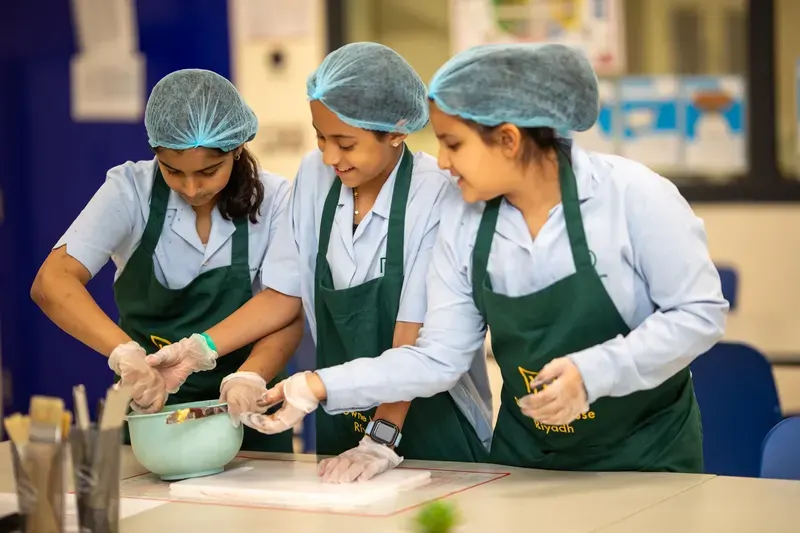
Downe House Riyadh is a Cognita-group school in Al Aqiq with around 600 students. Co-ed from Nursery to Year 4, it becomes girls-only from Year 5 upwards, which is a structural difference from most other international schools in Riyadh and worth planning around if you have sons in secondary school. The girls-only secondary model isn't unusual in the Saudi context, but it may affect your decision if you have mixed-age children who need to be in one school.
A-Level pass rate was 100% in the most recent reported year, with 18% of IGCSE grades at 9 or 8. Fees for 2025-26 run from SAR 54,855 (Nursery) to SAR 97,520 (Year 12-13), plus a one-time enrolment fee of SAR 5,750. The upper secondary fees translate to roughly USD 26,000 per year.
King's College Riyadh
King's College Riyadh opened in August 2021 as the first school under Riyadh's Royal Commission international schools programme, operating from a purpose-built campus in Diriyah. Currently runs from Pre-School to Year 7, expanding upwards over time. This is a newer school still building its reputation and year-group range, which is a consideration if you need secondary provision immediately.
Annual fees for 2025-26 run from SAR 52,784 (Pre-School/Reception, including VAT) to SAR 79,175 (Year 7, including VAT), roughly USD 14,000 to USD 21,100. No capital fee. Families with young children who are likely to stay in Riyadh for several years have reason to consider it, though you'll need a secondary plan when the time comes unless the school has expanded further by then.
SEK International School Riyadh
SEK International School Riyadh is a newer entry, opened in 2021 in Al Rabieh, and currently the smallest school covered here at around 320 students. It's an IB World School offering PYP and MYP, part of the Spanish SEK Education Group. Class sizes average 18 students. Fees for 2025-26 run from SAR 35,190 (Nursery) to SAR 82,225 (Grade 11-12), which makes it one of the more affordable IB options in the city.
The relatively small size means it may suit families who want a less institutional environment, but it also means the IB Diploma programme is only now coming online. Families considering SEK for older children should ask directly about the size of the diploma cohort and the range of subjects available.
Advanced Learning Schools Riyadh
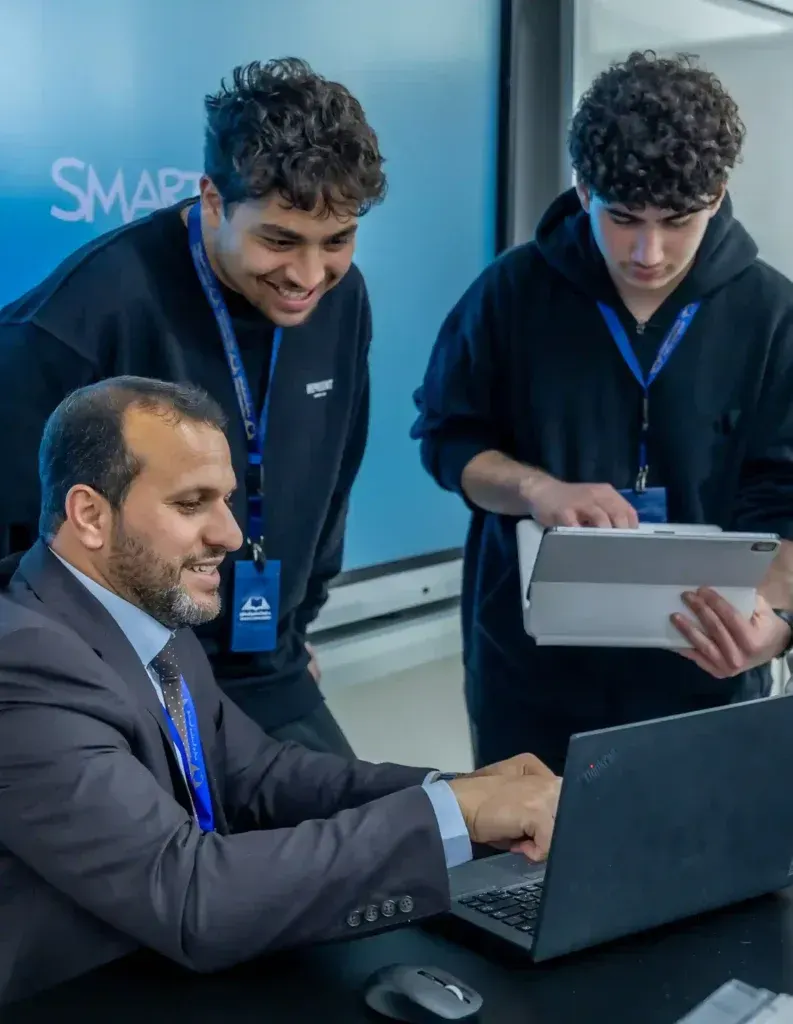
Advanced Learning Schools Riyadh has been an IB World School since 2009 and is CIS-accredited, which puts it among the more established IB options in the city. Around 600 students across three An Nakheel campuses: boys, girls, and a co-ed K-5 site. Fees for 2025-26 run from SAR 61,000 (KG1-2) to SAR 75,000 (Grades 11-12), with a 10% sibling discount and textbooks included, which makes the headline fee more representative of total cost than at schools where books are billed separately.
Beech Hall School Riyadh
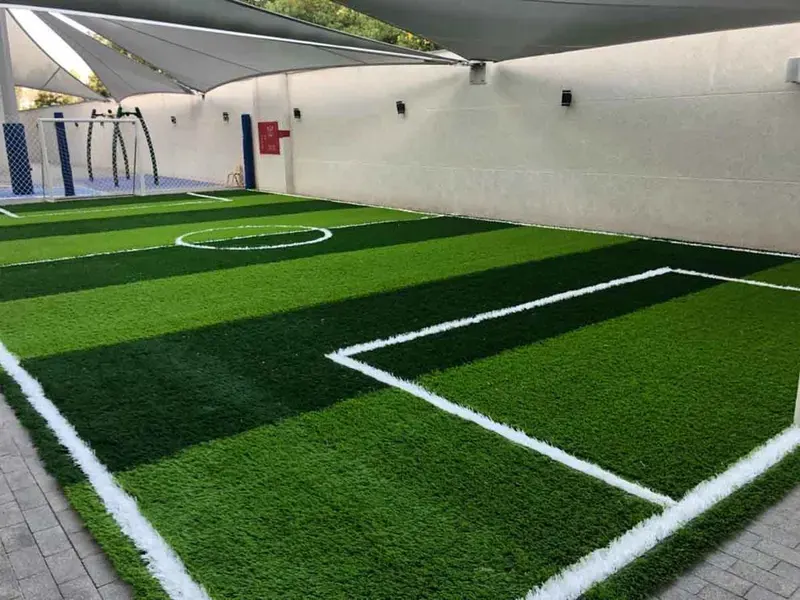
Beech Hall School Riyadh is a Blenheim Schools campus in Al Khuzama offering a mix of IB and American curricula from Nursery through to Grade 11 (with Grade 12 arriving from September 2026). Around 300 students. Fees run from SAR 40,000 (Nursery) to SAR 95,000 (Grade 11). NEASC accreditation is in process. It's a smaller, newer option, positioned below the main British and IB incumbents on price but without the track record. A real option if the larger schools are full or if the smaller community appeals.
Al Faris International School Riyadh
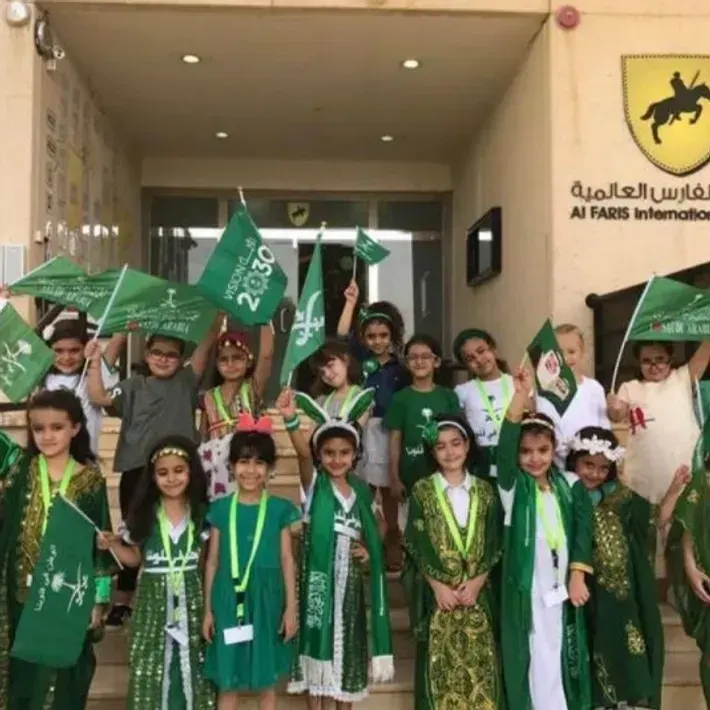
Al Faris International School Riyadh is a full IB continuum school (PYP, MYP, DP) operating since 2004 with Cognia accreditation and around 2,400 students in the Al Tawun district, operating from a new campus as of 2025-26. Fees are among the most competitive for a full IB programme: SAR 42,000 (KG) to SAR 50,000 (Grades 10-12), with a one-time registration fee of SAR 3,000. An older IB Diploma average of 35 points (Class of 2018) suggests academic capability at the top, though that figure is dated and worth pressing on at the admissions stage.
Where people live
Diplomatic Quarter
The Diplomatic Quarter (DQ), in the western part of the city near the National Museum, is where many senior international families and embassy personnel end up. It's a self-contained area: a golf club, swimming pools, running tracks, international restaurants, and a largely secure compound feel. King Faisal School is here, and the Deutsche Internationale Schule is also based in the DQ. If you want a community that feels self-contained, it delivers, though it can also feel isolated from the broader city. Rent is at the premium end.
Al Waha and Ghirnatah
This north-western cluster has grown into one of the more popular residential areas for international families, partly because of Reigate Grammar School's campuses here. A mix of villas and compounds, with newer developments adding facilities. Less Embassy-compound in feel than the DQ, more suburban. Good access to King Fahad Road and the northern parts of the city.
Al Hamra and surrounding areas
Al Hamra, south-east of the DQ, is a more established residential area with several compounds and the main BISR campus nearby. Families at BISR who want a short commute tend to cluster here. The compound infrastructure is solid: tennis courts, pools, international supermarkets on or near most sites.
Al Yasmin and north Riyadh
Al Yasmin, to the north, is where American International School Riyadh sits. It's a newer, more spread-out area with a mix of family villas and compound living, good road connections northwards towards the airport corridor. Families on US government or American corporate packages often gravitate here. Al Aqiq, slightly north of centre, is where Downe House is based.
On compounds vs villas
Riyadh's international families broadly split between compound living and free-standing villas. Compounds offer pool, gym, and community infrastructure, and they're an easier landing for families new to the city. After a year or two, many families who could afford either move to a larger standalone villa for the space and privacy, particularly once they have friends and activities established outside the compound. Neither is wrong; it depends on where you are in the adaptation curve and how much your social life depends on proximity to other families.
Fees in context
The VAT question is the one that catches families out most. Saudi Arabia introduced 15% VAT on education fees in 2020. Most international schools have incorporated this into their published figures, but not all present it the same way: some show fees inclusive of VAT, some exclusive, and the gap is 15% of a very large number. Check carefully before you compare across schools.
The broad fee ranges in 2025-26:
- Entry-level international options (Al Faris, One World, SEK for younger years): SAR 35,000-50,000 per year
- Mid-range established schools (King Faisal, Reigate Grammar, King's College): SAR 45,000-80,000 per year
- Premium British schools (BISR, American International, Downe House): SAR 55,000-117,000 per year
- Flagship tier (Misk Schools): SAR 125,000 per year
Most corporate packages cover school fees in full or in part. Self-funding families should budget on the basis that fees are a significant proportion of total cost-of-living; housing is an additional major expense in Riyadh.
Practical notes
Applying from abroad: Most Riyadh international schools have managed international admissions processes and are used to receiving families before they arrive in-country. Apply early. Popular year groups at BISR, AISR, and Reigate Grammar fill quickly, and mid-year availability is not guaranteed even at less pressured schools. Applying six to nine months ahead of an intended start date is sensible.
Iqama and school registration: Your child's iqama (Saudi residency permit) is required for school registration. The school admissions team will advise on timing, but expect a short period between arrival and having all documents in place. Most schools are experienced in managing this transition.
Term structure: Riyadh international schools broadly follow the British or American academic year, starting late August or September and finishing in June, with the long summer break during the extreme heat. Half-terms, Easter breaks, and national holidays (including Saudi National Day and Founding Day) mean the calendar looks slightly different from what families coming from UK or US schools will expect.
Healthcare: International-standard private hospitals are well-represented in Riyadh. King Faisal Specialist Hospital, Saudi German Hospital, and several SEHA-network facilities are the main options for international families. Most corporate packages include private health cover. Having English-speaking GP access is straightforward in the main international compounds.
The wider city: Riyadh is considerably more accessible than it was five years ago. Cinemas, restaurants, sporting events, and outdoor activities are available in a way they simply weren't before Vision 2030. Families who've lived here through the transition say the social life has improved dramatically. The city isn't Dubai or Singapore in terms of international infrastructure, but it's no longer the isolated posting it once had a reputation for being.
FAQs
Which Riyadh international schools have the strongest exam results? Reigate Grammar School Riyadh has the strongest published headline figures for the British curriculum: 97% IGCSE A-C and 96% A-Level A-C. British International School Riyadh reports 93% GCSE A-C and an IB Diploma average of 33 points. American International School Riyadh has a 100% IB pass rate. King Faisal School's IB pass rate is 92%.
Are there good IB schools in Riyadh? Yes, several. King Faisal School offers the full IB continuum (PYP, MYP, Diploma) and has an established reputation. Advanced Learning Schools is CIS-accredited and has been an IB school since 2009. SEK International School is newer. For IB Diploma specifically, both BISR and American International School offer it as a sixth-form option alongside their primary curricula.
How much do international schools cost in Riyadh? The range is broad. Budget schools start around SAR 35,000 per year for younger children; established mid-range schools run SAR 45,000-80,000; the premium British schools reach SAR 100,000-117,000 at secondary level; and Misk Schools charges SAR 125,000. All fees now carry 15% VAT for non-Saudi families at most schools. Check whether published figures are inclusive or exclusive of VAT before comparing.
Where do most international families live in Riyadh? The main clusters are the Diplomatic Quarter (embassy and senior corporate families), Al Waha and Ghirnatah (north-west, near Reigate Grammar campuses), Al Hamra (central-south, near BISR), and Al Yasmin (north, near American International School Riyadh). Most families live in compounds when they first arrive, then move to free-standing villas once they're settled.
Is Riyadh a good place to raise children? Most families who've spent time here say it's better than they expected. Compound life provides a ready-made community for children, schools are well-resourced, and the social restrictions that defined Saudi Arabia for decades have loosened considerably since 2017. The main adjustments are the climate, the car-dependence, and the pace of daily life being slower than major Western cities. Families who approach it with an open mind tend to have a good experience.
Methodology
This guide covers the international schools most seriously considered by families relocating to Riyadh with English-language education as a priority. Selection was based on academic outcomes where published, accreditation and inspection records, school size and stability, and the general standing of each school among families already in Riyadh. The ranking reflects editorial judgement across these factors, not a points score.
Fee figures are sourced from school websites and published fee schedules for 2025-26 and 2026-27. Saudi Riyal fees are converted to USD at approximately SAR 1 = USD 0.2666 (January 2026). The Riyal is pegged to the USD, so this rate does not fluctuate. VAT treatment varies between schools; figures are noted as inclusive or exclusive where published clearly. Always confirm fee schedules directly with each school before making any financial commitments.
Fees correct as of January 2026. We work hard to make every figure, date and description on this page accurate. We don't always get it right. If you spot an error, please use the feedback button or email us directly.