Notes / Munich
Best International Schools in Munich: The 2026 Guide for Families
Munich has a small but serious international school market. The IB options are well-established, the German bilingual alternatives are worth a real look, and the city itself is one of the most liveable in Europe.
Comparison table
| School | Curriculum | Ages | Fees range (USD) | Notes |
|---|---|---|---|---|
| Munich International School | IB | 4-18 | 14,772–29,982 | Starnberg |
| Bavarian International School | IB | 3-19 | 19,413–25,935 | Haimhausen & Schwabing |
| St. George's, The British International School Munich | IB, British | 2-18 | 16,033–21,250 | Central Munich |
| European School Munich | IB | 4-18 | 4,750–8,908 | Fasangarten & Neuperlach |
| Phorms Bilingual School Munich | IB, German | 2-18 | 5,478–7,772 | Bogenhausen |
| Create Schools | British, Cambridge | 6-18 | 17,974 | Tutzing / Starnberg |
| International School Augsburg | IB, British | 3-18 | 17,152–21,000 | Augsburg / Gersthofen |
Fees converted to USD at indicative 2026 rates. Verify current figures with each school.
TL;DR
- The two main IB schools, Munich International School and Bavarian International School, are both well-regarded and have strong IB Diploma results. St. George's is the British-curriculum option in the city centre.
- Munich International School is 30 kilometres south in Starnberg; Bavarian International School has campuses in Haimhausen (north) and Schwabing (city). Where you live and work should drive the shortlist.
- Fees at the flagship IB schools run EUR 14,000 to EUR 28,000 per year, plus substantial one-time entrance fees.
- Munich also has credible German-bilingual and French-system options that international families overlook. If your child is younger or you plan a long stay, worth including them in the comparison.
The city
Munich is expensive, well-organised, and genuinely pleasant to live in. Housing costs are high by German standards, public transport is excellent, and the city is compact enough that the school run is manageable from most districts. Bavarians take quality of life seriously: the Alps are close, the beer garden culture is real, and the city empties in August.
German is the language of daily life. You can manage in English in an international work environment, but the school application process, the Bürgeramt, the landlord, and the Kindergarten will all require it. A language course within the first six months pays off quickly, particularly if you have children in German-language activities. Many international schools run German lessons throughout, so your child will pick it up faster than you think.
The German public system is academically strong. A small number of international families use German-medium Gymnasium, particularly those on longer postings or with children who arrived young enough to acquire the language. The bilingual schools covered below occupy a middle ground that works well for families who want English-medium instruction but also genuine German integration.
The schools
Munich International School
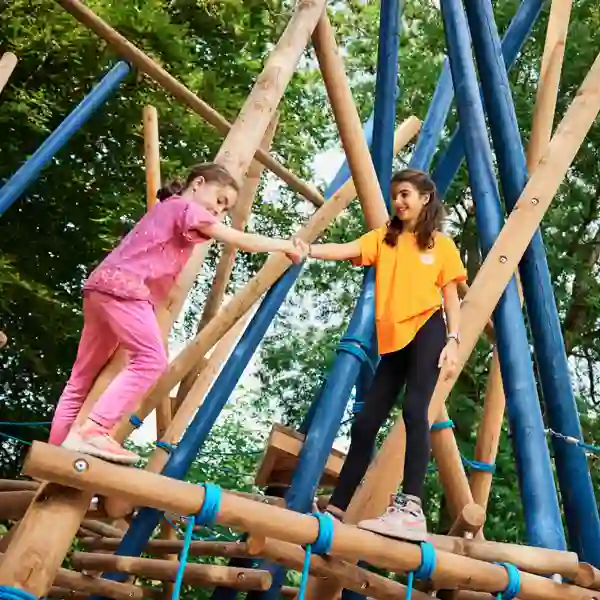
Munich International School is the flagship IB school in the Munich area, and has been since 1966, one of the first IB-authorised schools anywhere in the world. The campus is 55 acres on the edge of Starnberg, 30 kilometres south of the city centre. That distance is the one fact that divides opinion. Families who live in the south of Munich, near Starnberg or along the lake corridor, find it straightforward. Families based in Schwabing, Bogenhausen, or anywhere north of the Isar are looking at 45 minutes to an hour each way. The school runs a bus network, which most families use, but it is a long day for young children.
Academically, Munich International School sits near the top of the IB results tables in Germany. The 2025 IB Diploma average was 35 points, well above the global mean of 30.5, with a 95% pass rate. It takes students from age 4 through to 18, runs the full IB continuum (PYP, MYP, DP), and has around 1,300 students from more than 60 nationalities. It is a non-profit school, governed by a foundation, and that structure matters: there is no owner extracting margin, and the fees go back into the school.
Annual tuition runs from approximately EUR 13,590 for Early Childhood through to EUR 27,583 for Grade 12. A first-year entrance fee of EUR 9,421 applies on top. For a family with two school-age children, the all-in cost over the programme can be substantial. Families who have been through the admissions process say the waitlist pressure at popular entry years (Early Childhood, Grade 6) is real. Contact the school before your assignment is finalised, not after.
Bavarian International School
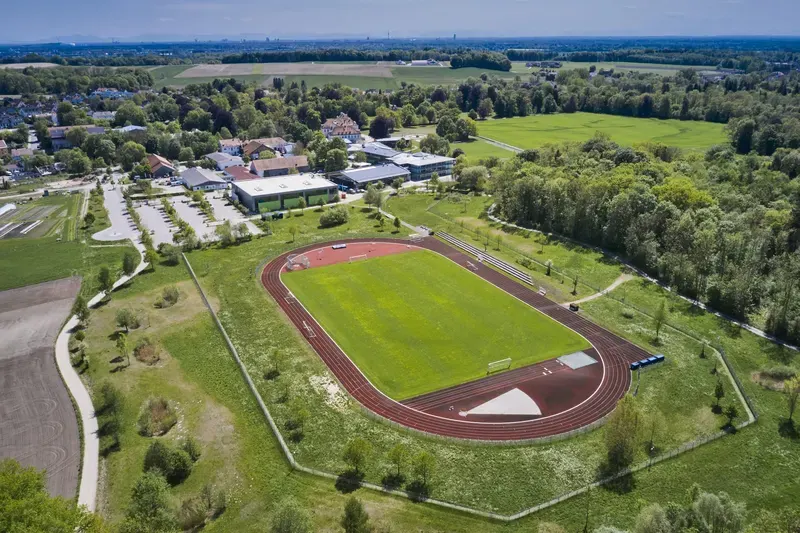
Bavarian International School is the city's other major IB school, with an important structural difference: it is the only school in Germany offering all four IB programmes, from PYP through to the Career-related Programme. The school runs across two campuses, with the main site in Haimhausen, about 25 kilometres north of Munich, and a secondary campus in Schwabing, which is genuinely central. For families living in the northern suburbs or near the Englischer Garten, the Schwabing campus removes the geography problem entirely.
The 2025 IB Diploma average was 34.3. It takes students from age 3 to 19 and has around 1,200 pupils. Annual tuition runs from EUR 17,860 for Early Childhood to EUR 23,860 for Grades 10 to 12, with a one-time entrance fee of EUR 7,770. The school is also non-profit, governed by a foundation, with a similar community-governed feel to Munich International School.
Families who have been at both schools often describe Bavarian International School as slightly smaller in feel and more accessible from within the city. Munich International School carries a stronger name recognition in certain corporate relocation circles, but the academic gap is modest. The real differentiator is geography: which campus is closer to where you will live.
St. George's, The British International School Munich
St. George's is the only English National Curriculum school in Munich, and it sits right in the city on Heidemann Strasse, which is a genuine advantage. It takes children from Pre-Nursery through Year 9 on the British curriculum, then transitions to IGCSE and the IB Diploma for older year groups. The 2025 IB Diploma average was 34 points. School population is around 600, which is meaningfully smaller than the two IB schools above.
Annual fees start at approximately EUR 11,900 for the youngest year groups and rise through IGCSE and IB Sixth Form. For the current full schedule, the school asks you to contact admissions directly, which is worth doing early if you are considering a secondary entry. It is part of the St. George's international network, which has schools in Rome, Switzerland, and elsewhere, and families transferring within that network report a smooth transition.
The British curriculum track (up to Year 9) is a natural fit for families who arrived from a UK education system and may return to it. The IGCSE and IB pathway from Year 10 is solid. Parents who have been through it say the school manages the curriculum transition well.
European School Munich
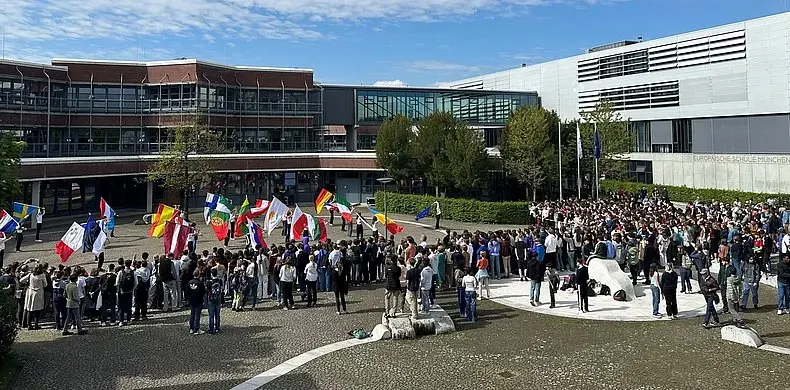
The European School Munich is a state-funded institution operating under EU governance, with seven language sections: English, German, French, Spanish, Dutch, Greek, and Italian. It runs from Kindergarten through to the European Baccalaureate, a qualification recognised for university entry across Europe. Student population is around 2,000.
Fees are modest by Munich standards: EUR 4,458 for Kindergarten to EUR 8,358 for Secondary in 2026/27. The catch is admissions. Priority access goes to employees of EU institutions and the European Patent Office, which is one of Munich's major employers. Private families apply as Category III and space is genuinely limited. If one of you works for the European Patent Office or another EU body, this is a serious option at fees that are a fraction of the IB schools. If you do not, the admissions probability is low enough that it should be a speculative application, not your primary plan.
The curriculum and the European Baccalaureate are well-regarded for university entry in Germany, France, and the UK. The multilingual environment is one of its real strengths.
Phorms Bilingual School Munich
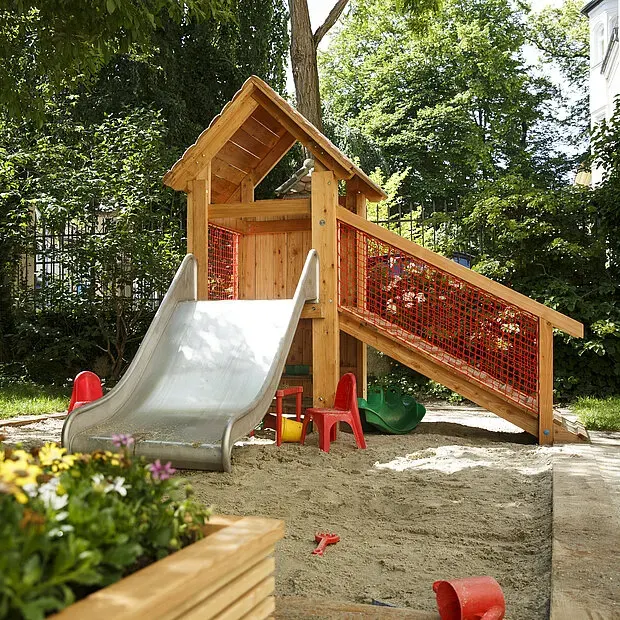
Phorms Munich sits in Bogenhausen, a well-connected residential district east of the Englischer Garten, and takes children from Krippe (age 2) through to the Abitur and IB Diploma. The school runs 60% English and 40% German instruction throughout, and is state-approved as both Grundschule and Gymnasium. Fees are income-based, set individually by household, which is unusual in the international school market and can make it genuinely accessible for families in a wide income range.
It is a sensible option if you want the IB Diploma at the top end but also want genuine German integration throughout the curriculum. The dual-language model means children finish with strong German as well as English, which matters if you plan to stay in Germany long-term or want the German Abitur as an option. The school was founded in 2007 and is part of the larger Phorms group. Contact admissions early; it is popular in Bogenhausen.
Create Schools Munich
Create Schools is small by design. Based in Tutzing, on Lake Starnberg near Munich International School, it takes around 100 students aged 6 to 18 and caps class sizes at 14. It offers Cambridge IGCSE and A-Levels in both English and German. Annual tuition is EUR 16,536 for all year groups, which is lower than the flagship IB schools.
The school day starts at 10am, which suits some family routines and not others. With 47 nationalities in 100 students, the community is genuinely international for its size. For families where smaller classes and more individual attention matter, and who are already based in the Starnberg area, it is a real alternative to Munich International School.
International School Augsburg

International School Augsburg is not in Munich, but it merits a look. It sits in Gersthofen near Augsburg, about 50 to 60 minutes from central Munich by train. It offers Cambridge IGCSE and IB Diploma for around 350 students from 38 nationalities, in a non-profit structure. Annual fees run from EUR 15,780 (ELC and Grades 1 to 5) to EUR 19,320 (Grades 11 to 12), with a one-time School Investment Fee of EUR 5,000 to EUR 7,500 on enrolment.
If you are posted to Augsburg, or to a location in the A8 corridor between Munich and Augsburg, it is a natural first look. For families based in Munich itself, the commute is meaningful, but some families on the west side of Munich use it and find it manageable.
IB results in context
The global IB Diploma average in 2025 was 30.5. Munich's main IB schools are comfortably above that. For reference:
| School | 2025 IB average |
|---|---|
| Munich International School | 35 points |
| St. George's British International School Munich | 34 points |
| Bavarian International School | 34.3 points |
Source: school-published data. The European Baccalaureate at the European School Munich is a separate qualification and not directly comparable to IB results.
Where people live
Munich has several distinct residential areas that international families cluster in, and the choice is closely linked to which school you pick.
Starnberg and the southern lakes
The area around Starnberg and the lakes corridor to the south is where many Munich International School families base themselves. The towns along the Starnberger See and Ammersee have a high concentration of international residents, good transport links into Munich on the S-Bahn, and a quieter, more suburban feel than the city proper. Rents are high: a four-bedroom house near Starnberg runs EUR 3,000 to EUR 5,500 per month, and the nicest properties go quickly. The area is beautiful and the lake access is a genuine quality-of-life asset, but it is not central Munich.
Bogenhausen, Nymphenburg, and Schwabing
These are the main residential districts for families who want to be inside the city. Bogenhausen, east of the Englischer Garten, is popular with international professionals and has good access to both Bavarian International School's Schwabing campus and Phorms. Nymphenburg, to the west, is quiet and residential, close to the palace grounds. Schwabing is more urban and lively, directly adjacent to the Bavarian International School Schwabing campus.
Rents in these districts: a three to four bedroom apartment runs EUR 2,800 to EUR 5,000 per month depending on size and specific location. The city centre is walkable from all three, and the U-Bahn connections are good.
Haimhausen and the northern suburbs
Families using Bavarian International School's main Haimhausen campus often live in the northern suburbs, Unterschleissheim, Oberschleissheim, or along the S1 line. These areas are cheaper than the city centre or the lake corridor and have a more suburban character. The commute into Munich for working parents is manageable on the S-Bahn.
On the commute question
Munich's S-Bahn and U-Bahn are genuinely good, and most schools run bus networks that cover a significant area of the city. That said, the southern geography of Munich International School means that families who choose it and live north of the city are committing their children to a long school bus journey. It is manageable, particularly from the upper years, but a real factor for younger children.
Practical notes
Registration: EU citizens need to register their address (Anmeldung) at the Bürgerbüro within two weeks of arrival. Non-EU citizens need a residence permit in addition. Neither process is complicated but both require an appointment, and appointments book out several weeks in advance. Sort it before you arrive if you can.
Healthcare: Germany's public health system is excellent. International families on German employment contracts are typically enrolled in statutory health insurance (gesetzliche Krankenversicherung) automatically. Those on employer-paid packages often opt for private insurance (private Krankenversicherung), which gives faster access to specialists and more choice of doctor. Both work well; the main difference is speed for non-urgent specialist appointments.
German bureaucracy: Things work here, but they work on German terms. A lot of official communication arrives by post. Tax registration, car registration, and anything involving the Finanzamt requires patience and often a German-speaking accountant or Steuerberater, particularly in the first year.
Cost of living: Munich is expensive by German standards and broadly comparable to London for family living costs. A family of four in a rented property, running one car, with school fees excluded, should budget EUR 4,500 to EUR 6,500 per month for housing, food, transport, and incidentals. School fees are on top, and at the flagship IB schools those fees are substantial.
FAQs
Which Munich international school has the best IB results? Munich International School had the highest published IB Diploma average in 2025 at 35 points, followed by Bavarian International School at 34.3 and St. George's at 34. All three are well above the global average of 30.5. The gap between the schools is narrower than the headline numbers suggest; results in any given year vary with cohort size and composition.
Do I need to live near the school in Munich? More so than in many other cities, yes. Munich International School is 30 kilometres south of the city centre, and the commute from the northern suburbs is long for young children even with the school bus. Bavarian International School's Schwabing campus solves this for families living centrally or in the north. St. George's central location in Heidemann Strasse is accessible from most parts of the city. Where you work and where you live should drive the school shortlist here.
What is the difference between Munich International School and Bavarian International School? Both are IB World Schools, both non-profit, and both deliver strong IB Diploma results. Munich International School has a larger campus, stronger name recognition in some corporate relocation packages, and slightly higher IB results. Bavarian International School offers all four IB programmes and has a genuinely central campus in Schwabing. The meaningful choice for most families comes down to location: if you are south of Munich, Munich International School makes sense. If you are in the city or to the north, Bavarian International School's Schwabing campus is more practical.
Are there affordable international school options in Munich? Affordable is relative in Munich. The European School Munich has fees starting from EUR 4,458 for Kindergarten, but it prioritises EU institution employees and private family places are limited. Phorms Bilingual School uses income-based fees, which can be meaningfully lower than the fixed-fee IB schools. Create Schools in Tutzing has fees of EUR 16,536 across all year groups. For a full IB continuum with strong results at an established school, budget from EUR 17,000 per year upwards.
How early should I apply to Munich's international schools? For Munich International School and Bavarian International School, the popular entry points (Early Childhood, Grade 1, and Grade 6) do carry waiting lists, particularly at Munich International School for the youngest year groups. Apply as soon as your posting is confirmed, not when you arrive. A 12-month lead time is not excessive for primary entry at Munich International School. St. George's tends to have more availability, but early contact is still worth making.
Fees correct as of January 2026. All fees are stated in EUR; conversion to USD uses an approximate rate of USD 1.09 per EUR 1 (January 2026, indicative). We work hard to make every figure, date and description on this page accurate. We don't always get it right. If you spot an error, a fee that's changed, a fact that's out of date, or something we've got wrong, please tell us. Use the feedback button above or email us directly. We'll check it and update the article.
Methodology
This article covers the international and English-medium bilingual schools most families consider when relocating to Munich. Schools were selected based on established English-medium or bilingual programmes, accreditation or IB authorisation, and relevance to the relocating family market. We prioritised schools with published fee schedules and verifiable academic outcomes.
School sections draw on published fee data, IB results where available from school publications, and the general knowledge of Munich's international school circuit. We have not ranked schools by points score: the ordering reflects a mix of enrolment size, name recognition, and geographic spread across the city.
We could not independently verify all fee schedules, and school fees change each year. Confirm current fees directly with each school before making any decisions. IB results vary year on year; figures quoted are for the 2025 cohort unless noted.