Notes / Mumbai
Best International Schools in Mumbai: The 2026 Guide for Families
Mumbai's international school market is compact. There are perhaps a dozen schools worth seriously considering, and the two anchors - Dhirubhai Ambani and Oberoi - set a high bar. Understanding where you'll live shapes almost every other decision.

Comparison table
| School | Curriculum | Ages | Fees range (USD) | Notes |
|---|---|---|---|---|
| Dhirubhai Ambani International School | IB, IGCSE, Indian | 4-18 | 2,036–12,261 | Bandra Kurla Complex |
| Oberoi International School | IB | 3-18 | 6,707–10,659 | Goregaon East |
| American School of Bombay | IB, American | 3-18 | 21,220–37,180 | Bandra Kurla Complex |
| JBCN International School (Parel) | IB, Cambridge, IGCSE | 3-18 | 958–9,281 | South Mumbai |
| Aditya Birla World Academy | IB, British, IGCSE | 2-18 | 10,060–22,036 | South Mumbai |
| Ecole Mondiale World School | IB | 3-18 | 8,263–13,054 | Western Suburbs |
| Ascend International School | IB | 3-18 | 9,581–11,976 | Bandra Kurla Complex |
Fees converted to USD at indicative 2026 rates. Verify current figures with each school.
TL;DR
- The IB dominates Mumbai's international school market. Almost every credible school offers the IB Diploma; several run the full IB continuum from age three.
- Dhirubhai Ambani International School (DAIS) in BKC and Oberoi International School (OIS) in Goregaon East are the reference points. Both have exceptional IB results and are the schools most international families hear about first.
- Most families relocating for work settle in the western suburbs - Bandra West, Juhu, Andheri West. Schools are scattered, but the Andheri-BKC corridor covers a lot of ground.
- Fees vary more than you might expect. DAIS can reach USD 116,000/year for the IB Diploma years on a full package. OIS is considerably cheaper. American School of Bombay sits in the USD 20,000-35,000 range. Several strong schools run USD 8,000-13,000.
- The monsoon (June-September) is worth factoring into your commute thinking.
The city
Mumbai is a genuinely rewarding place to live once you're settled, but settling takes longer than most postings. The city stretches north to south along a peninsula, which means traffic is a structural problem rather than a bad-day problem. A ten-kilometre journey can take an hour during morning rush; the Bandra-Worli Sea Link helps for south Mumbai commutes but doesn't solve the east-west or far-north problems.
The western suburbs - Bandra West, Juhu, Andheri West - are where most families with children from international companies end up. They're lively, well connected by road, and have the best concentration of restaurants, international supermarkets, and social infrastructure. Powai (further east, around Hiranandani) has a different feel: more self-contained, quieter, less urban.
The monsoon is not a metaphor. From June to September, Mumbai gets serious rainfall, and flooding on the Western Express Highway can make a 20-minute school run into a two-hour one. Schools factor this into their calendars and most have contingency days built in, but families new to the city often underestimate the practical impact. If you're choosing between two schools and one involves a longer route that crosses low-lying areas, that matters.
English is widely spoken in the parts of Mumbai international families live and work in, and private healthcare is accessible and generally good at the top end. Apollo Hospitals, Kokilaben Dhirubhai Ambani Hospital, and Lilavati Hospital are the names that come up most. Getting set up - registrations, housing contracts, bank accounts - takes patience. India's bureaucracy is not fast, and almost nothing happens without the right paperwork.
The schools
Dhirubhai Ambani International School
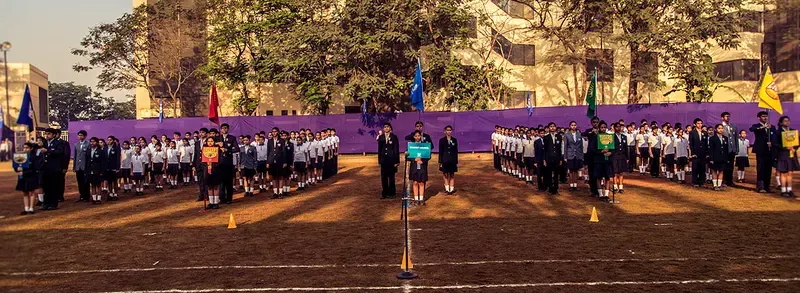
Dhirubhai Ambani International School - known as DAIS - is the school most families hear about first, and for good reason. Its IB Diploma results are extraordinary: it ranked 9th globally in 2025, the only Indian school in the world's top ten. From LKG through Grade 12, it runs ICSE, IGCSE, and IB Diploma across a single campus in Bandra Kurla Complex.
The fees are the headline. At the IB Diploma level, full-package fees can reach USD 116,000/year (approximately INR 97,00,000), which reflects both the school's academic standing and its corporate-relocation client base. Earlier years are considerably cheaper - the fee range starts around USD 2,000 - but the top end is the highest of any school in Mumbai. Families on generous corporate packages will find it unremarkable. Self-funding families should look at the full fee schedule before getting attached.
Admission is competitive and early contact is sensible. The school sits in BKC, which is Mumbai's business district and a central point for international families arriving on corporate assignments. Families living in Bandra West, Andheri, or Powai can all reach it, though commute times vary considerably.
Oberoi International School
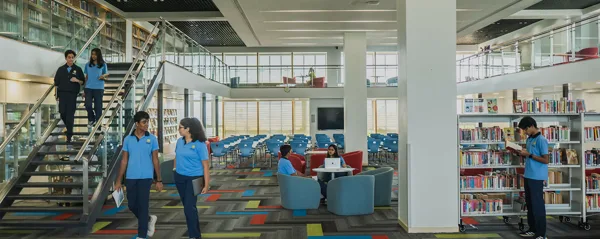
Oberoi International School operates across two campuses - Goregaon East and Jogeshwari East - and offers the full IB continuum from age three. Its IB Diploma average was 35.5 in 2025, against a global average of 30.58, placing it consistently at the top of national rankings. University scholarships awarded to the Class of 2025 totalled USD 8.1 million.
OIS has around 2,906 students from 29 nationalities, which makes it genuinely international in composition rather than primarily a local-family school with an IB label. Fees run roughly USD 7,000-11,000/year (approximately INR 5,85,000-9,20,000), making it one of the stronger value propositions among Mumbai's top schools. Parents say the school has a warm community feel and that the pastoral side is taken seriously.
The Goregaon East location is practical for families in Juhu, Andheri West, and Malad. It is further north than BKC, which suits some families' residential choices and complicates others'. The two-campus model means siblings can sometimes be at different sites; ask about it at admissions.
American School of Bombay

American School of Bombay is the natural landing point for US corporate and diplomatic families. Founded in 1981 and based in BKC, it runs the full IB continuum from Pre-K to Grade 12, accredited by CIS and NEASC, with roughly 1,300 students.
Fees run USD 20,000-35,000/year (approximately INR 16,70,000-29,25,000), which is the mid-to-upper range in the Mumbai context. The school has the feel of an established American community school: the social infrastructure, the calendar, the sports programme, and the pastoral culture all follow that model. For families coming from American schools elsewhere in Asia, it is a smooth transition.
The BKC location is central for the corporate heartland. Families in Bandra West, Santacruz, or the Andheri corridor will find it more manageable than families living further north or in south Mumbai. Bus routes cover much of the western suburbs.
JBCN International School, Parel

JBCN International School's Parel campus ranked No. 2 in India and No. 1-2 in Mumbai and Maharashtra by EducationWorld 2025. It offers IB PYP, Cambridge IGCSE, and IB Diploma to around 700 students, and its Class of 2025 earned over USD 13 million in university scholarships. IGCSE pass rate was 100% in 2025. CIS-accredited, with documented placements at Oxford, Cambridge, MIT, and Stanford.
Fees run USD 5,000-15,000/year (approximately INR 4,15,000-12,50,000), which is meaningfully lower than DAIS and ASB for comparable curriculum scope. Parel is in central-south Mumbai, which suits families living in Worli, Lower Parel, or willing to use the Bandra-Worli Sea Link from the western suburbs. JBCN also has campuses in Oshiwara and Borivali if geography is a constraint.
The school is part of a five-campus Mumbai group, which means a coherent academic culture and leadership structure across sites. Parents describe it as academically driven without feeling pressured, and the university results bear that out.
Aditya Birla World Academy
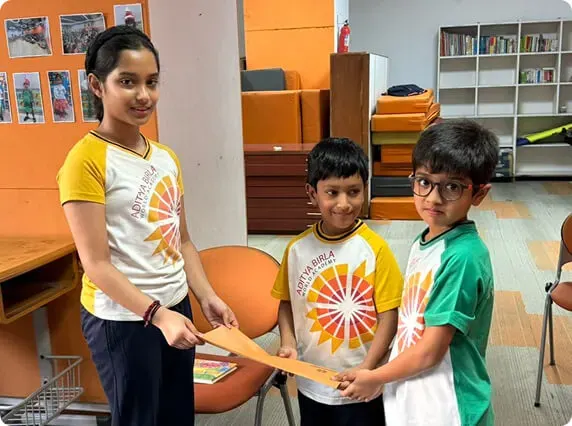
Aditya Birla World Academy in Tardeo, South Mumbai, runs Cambridge Primary, IGCSE, A-Levels, and IB Diploma with a 1:8 teacher-to-student ratio. It has ranked No. 1 in the Times School Survey for international curriculum schools in Mumbai and has been an IB World School since 2010. Around 800 students, aged 2-18.
Fees run USD 10,000-22,000/year (approximately INR 8,35,000-18,35,000). The A-Level offering distinguishes it from most Mumbai schools, which are IB-only or IB-primary. If your child has done IGCSE and is considering A-Levels as an alternative to the IB Diploma, this is one of the few schools in Mumbai where that path is a real option.
Tardeo is in south Mumbai. Families living in the western suburbs should factor in the commute on the Western Express Highway, or the Sea Link route from Bandra. It is not an easy daily journey from Juhu or Andheri. Families already based in south or central Mumbai will find it significantly more convenient.
Ecole Mondiale World School

Ecole Mondiale World School in Juhu was Mumbai's first full IB continuum school, founded in 2004. It runs IB PYP, MYP, and Diploma from Nursery to Grade 12 with around 600 students. Fees run approximately USD 8,000-13,000/year (approximately INR 6,70,000-10,85,000), inclusive of textbooks, uniforms, and pool access.
Juhu is one of the most sought-after residential areas for international families, and the school's location on this stretch of the western suburbs is a practical advantage. Families in Juhu, Vile Parle, and northern Bandra can often avoid the worst of the morning traffic. The school has a genuine community feel and a longer track record than many newer entrants to the market. Its size keeps it manageable in a way that the 2,000-plus-student schools are not.
Ecole Mondiale is not trying to compete with DAIS on IB results tables. It is a considered choice for families who want solid IB education, a local-international mix, and a school community at a human scale.
Ascend International School
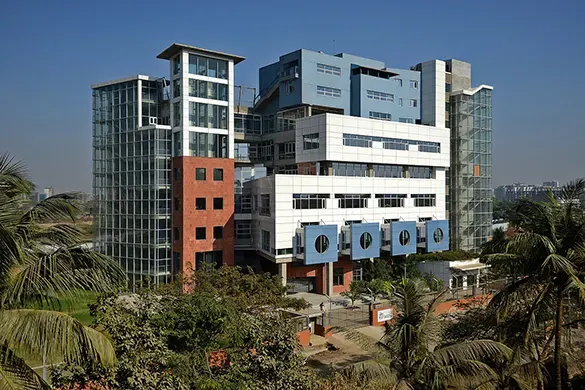
Ascend International School in BKC is one of Mumbai's oldest international schools (founded 1945) and is deliberately small, with around 400 students from Pre-Nursery to Grade 12. It offers the full IB continuum and is ranked jointly 2nd nationally by Cfore among day co-educational international schools in India.
Fees run approximately USD 10,000-12,000/year (approximately INR 8,35,000-10,00,000). The small roll is the defining characteristic. At 400 students across 14 year groups, class sizes are small and the school knows its families well. Parents mention that individual attention is real rather than a brochure claim.
The BKC location is convenient for families on the corporate-package circuit. Ascend tends to attract families who specifically want a smaller school community and are willing to give up some of the facilities and extracurricular breadth that larger schools can offer.
IB results in context
The global IB Diploma average in 2025 was 30.58. Mumbai's leading schools are well above that. For reference:
| School | 2025 IB Diploma |
|---|---|
| Dhirubhai Ambani International School | Top 10 globally (9th worldwide) |
| Oberoi International School | 35.5 |
| Kanakia International School | 2nd in Mumbai (Times Survey) |
| Podar International School | 100% pass rate, 18+ consecutive years |
Source: school-published data and EducationWorld 2025 rankings. IB average figures as reported by schools or ranking bodies; not all schools publish raw averages.
Where people live
Bandra West
The first choice for most families arriving on international packages. Bandra West has good cafes, international restaurants, markets, and a social circuit that international families plug into quickly. Rents are high - a three-bedroom apartment runs INR 1,50,000-3,00,000/month (approximately USD 1,800-3,600) depending on building and exact location. The Hill Road and Pali Hill areas are popular; Carter Road for those wanting a sea-facing option.
From Bandra West, BKC is a 10-15 minute drive in normal traffic, making DAIS, ASB, and Ascend all accessible. OIS in Goregaon East is 30-40 minutes. South Mumbai schools add time.
Juhu
Quieter than Bandra, more spacious, and where many families with slightly larger accommodation budgets end up. Juhu Beach is a genuine outdoor resource. Ecole Mondiale is essentially local for families here. OIS in Goregaon is close. BKC is 30-40 minutes.
Andheri West (north end)
More residential, less fashionable than Bandra or Juhu, but practical for families who want space and lower rents. Andheri West is well connected by the Western Express Highway and the metro. Good for OIS access; BKC is manageable; south Mumbai is a stretch.
Powai
Powai has a different character - more self-contained, centred on the Hiranandani township and the lake. Families who work in eastern Mumbai or Navi Mumbai sometimes prefer it. School options directly in Powai are limited for international curriculum families; DAIS, OIS, and ASB all require a cross-city commute.
South Mumbai
Fort, Colaba, Worli, and surrounds are where some families end up, particularly those connected to financial services firms with offices in Nariman Point. JBCN Parel and Aditya Birla World Academy are the most practical options from here. The western suburbs schools involve a meaningful commute unless you use the Sea Link route, which cuts the Bandra-Worli run to around 20 minutes in good conditions.
On the commute question
Mumbai's traffic is not a minor irritant; it shapes lives. Families who choose a school without factoring in the commute typically revise their opinion within a term. The Bandra-Worli Sea Link is a genuine help for cross-harbour journeys, but most schools run in the northern and central sections of the city where it doesn't directly apply. The metro system is improving and covers some useful routes, but most school runs still involve a car or school bus. Most major schools run bus services covering the western suburbs, which removes the daily problem for children; ask about it specifically.
Practical notes
Getting set up: The Frro (Foreigners Regional Registration Office) registration, PAN card, Aadhaar-related processes, and bank account opening all take time and sometimes several visits. Most corporate relocation agents know the process and are worth using for the first month. Schools are used to helping new international families navigate the paperwork requirements.
Healthcare: Kokilaben Dhirubhai Ambani Hospital in Andheri West and Lilavati Hospital in Bandra are the two hospitals most used by international families in the western suburbs. Apollo in Navi Mumbai is an option for families further east. Private health insurance is essential; public hospitals are not realistic for most international families' needs.
Cost of living: Mumbai is expensive by Indian standards but reasonable by Singapore or Hong Kong standards. A family of four in Bandra West with a car, school fees excluded, should budget roughly USD 4,000-7,000/month including rent. Domestic help is inexpensive and most international families employ household staff.
Monsoon: June to September. Flooding can close roads, waterlog cars, and cancel school. Build buffer time into every appointment during these months. The city does function - Mumbaikars are admirably pragmatic about it - but the first monsoon is a genuine adjustment for families from northern Europe or North America.
Air quality: Mumbai's air quality is better than Delhi's but still elevated by European standards. Families with respiratory concerns should check AQI regularly; most of the top international schools have indoor sports facilities that function as alternatives during high-pollution days.
FAQs
Which Mumbai international schools have the best IB results? DAIS ranked 9th globally for IB Diploma in 2025, the only Indian school in the world's top ten. Oberoi International School averaged 35.5 in 2025 against a global average of 30.58. Both are significantly above the world mean. JBCN Parel and Podar International School both report strong results and university placements, though not all schools publish raw average scores.
Is DAIS worth the fees? It depends on who's paying. Families on generous corporate packages often find it the obvious choice: the results are real, the campus is well resourced, and the university counselling is strong. Self-funding families should look carefully at the full fee schedule before the IB Diploma years and compare it against OIS and JBCN Parel, which offer strong results at a fraction of the cost.
Where do most international families live in Mumbai? Bandra West, Juhu, and Andheri West are the main clusters. Bandra West is the most popular - good social infrastructure, close to BKC, and a well-established international community. Juhu suits families wanting more space. Powai is an option for those working on the eastern side of the city, though school options directly in the area are limited.
How early should I apply? DAIS and OIS are the schools where early contact matters most. Both have more applicants than places for the popular entry years, and families on confirmed relocation packages sometimes contact them before the move is finalised. For other schools, three to six months before your target start date is generally workable, but do not assume spaces at the top schools are available when you land.
Is there a good option for families on a tighter budget? Yes. OIS runs USD 7,000-11,000 with IB Diploma results that rival DAIS. JBCN Parel covers USD 5,000-15,000 with strong results and university scholarships. Ecole Mondiale in Juhu runs USD 8,000-13,000 with a full IB continuum. The market does not require paying top-tier fees to access a genuinely good international education.
Does Mumbai have a good American school? The American School of Bombay in BKC is the established option for US families or those on the American curriculum track. It has been running since 1981, is CIS and NEASC accredited, and offers the full IB continuum alongside an American-style curriculum. It is the natural choice for families coming from American schools elsewhere in Asia.
Fees correct as of May 2026. Exchange rate: approximately INR 83.5 per USD 1 (May 2026, indicative for fee comparisons in text). We work hard to make every figure, date and description on this page accurate. We don't always get it right. If you spot an error - a fee that's changed, a fact that's out of date, something we've got wrong - please tell us. Use the feedback button above or email us directly. We'll check it and update the article.