Notes / Mexico City
Best International Schools in Mexico City: The 2026 Guide for Families
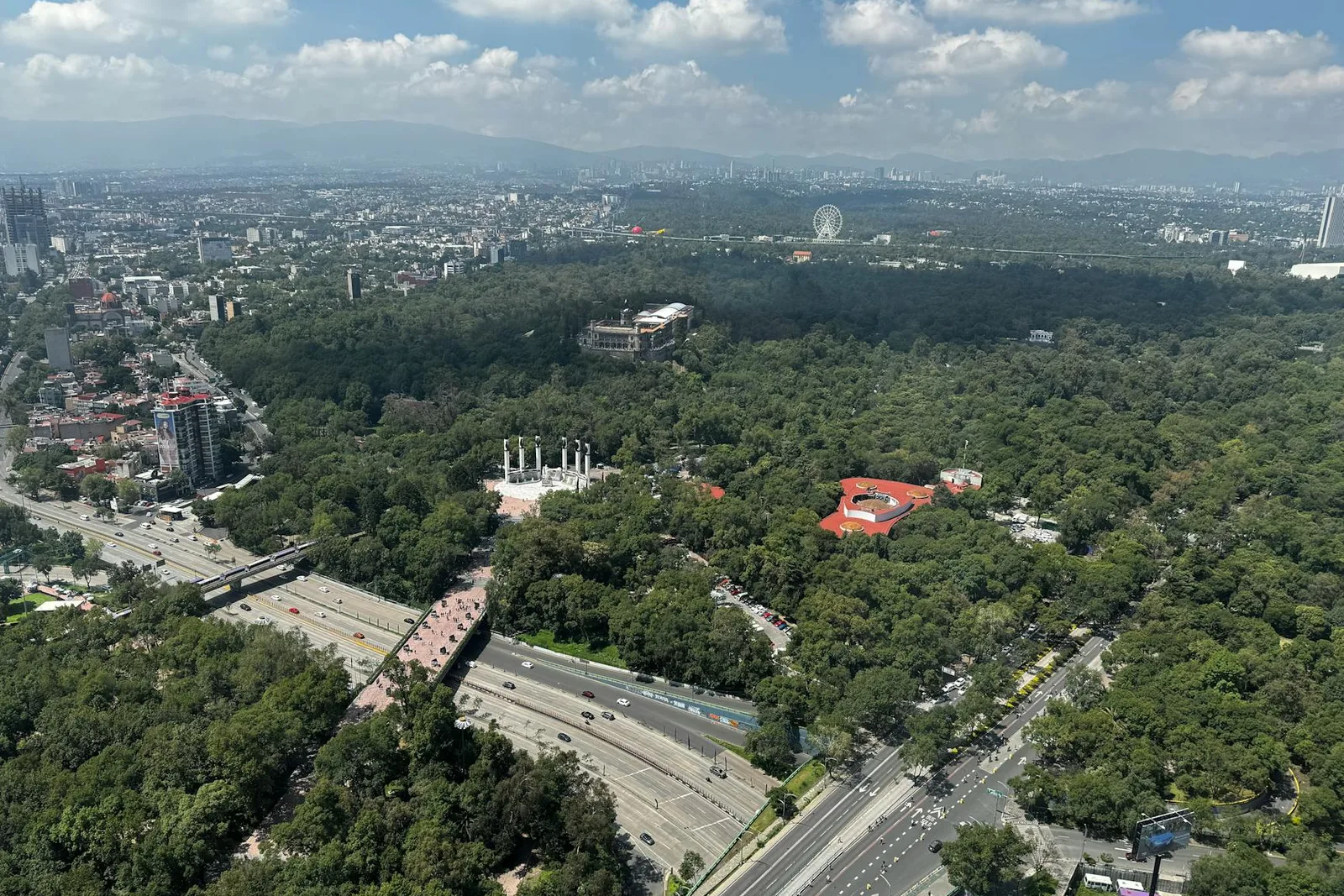
Mexico City has a serious international school market that most families underestimate before they arrive. The options are good, the city is genuinely liveable, and the altitude will surprise you more than the school search will.
Comparison table
| School | Curriculum | Ages | Fees range (USD) | Notes |
|---|---|---|---|---|
| American School Foundation | IB, American | 3-18 | 15,432–19,635 | Álvaro Obregón |
| Greengates School | IB, British, Cambridge | 3-18 | 17,458–27,727 | Naucalpan |
| The Edron Academy | IB, British, Cambridge | 2-18 | Not published | Álvaro Obregón |
| The Wingate School | IB, British, Cambridge | 3-18 | 10,445–18,568 | Huixquilucan |
| Eton School Mexico | IB, American | 2-18 | 12,882–17,741 | Santa Fe |
| Westhill Institute | IB, American | 3-18 | Not published | Polanco & Lomas |
| Churchill School & College | IB, Cambridge | 2-18 | 2,896–14,909 | Álvaro Obregón |
| Peterson Schools | IB, Cambridge, International | 2-18 | 3,329–11,026 | Santa Fe |
Fees converted to USD at indicative 2026 rates. Verify current figures with each school.
TL;DR
- The American School Foundation (ASF) has anchored the international school circuit since 1888 and is still the default choice for US corporate families. Greengates is the established British option. Several strong IB and bilingual schools round out the shortlist.
- Schools cluster in four zones: Santa Fe and Cuajimalpa (west), Interlomas and Huixquilucan (north-west), Naucalpan (north), and the Álvaro Obregón corridor south-west of the city centre. Most families live within 20-30 minutes of their school.
- Fees for genuinely international, English-medium schools run roughly USD 10,000-USD 27,000/year. Strong bilingual schools exist at USD 6,000-USD 14,000.
- The city sits at 2,240 metres. Most families adjust within a few weeks, but factor it in before you land with a newborn or a child with respiratory issues.
- Worth applying before you arrive. The better-known schools at popular entry years tend to have more enquiries than places, particularly at mid-year.
The city
CDMX is one of the largest cities in the world, and it feels like it until you stop trying to navigate it as a single place. Most families on corporate or diplomatic packages end up in a cluster that functions like a small international town within the city. Polanco, Lomas de Chapultepec, Santa Fe, and the Interlomas corridor are the neighbourhoods that come up again and again. They are safe, well-resourced, and have a recognisable international family infrastructure: good supermarkets, private hospitals, English-speaking services, and a social scene that is active from the moment you arrive.
The altitude is real. At 2,240 metres, Mexico City sits higher than most major cities in the world. A week of fatigue, headaches, and breathlessness when you arrive is normal. Most adults adjust within two to four weeks; children sometimes adjust faster. The main long-term concern is air quality during thermal inversions, typically November through February, when pollution builds up in the bowl of the valley. Families with children who have asthma or significant respiratory sensitivities should factor this in. It is not a reason to refuse a posting, but it is a reason to ask your doctor first.
Security in the established international zones is manageable, and most families describe day-to-day life as comfortable. The city has its contradictions, as any large Latin American capital does, and common-sense precautions apply. The families who settle well here tend to be the ones who engage with the city rather than retreat from it.
Spanish is more important here than in Dubai or Singapore. Mexico City is not an anglophone expat posting where English carries you through. The school admin runs in Spanish, the GP runs in Spanish, and most of the daily texture of life is Spanish-first. Schools run Spanish programmes for arriving international children; most manage within a year. But if you or your children arrive with no Spanish at all, budget time and money for language support.
The cultural life is exceptional. Mexico City has more museums than any other city in the world except London and Washington. The food is extraordinary, the social calendar is full, and the city has a warmth and energy that most families come to love. The families who have been here a few years are almost universally glad they came.
The schools
American School Foundation
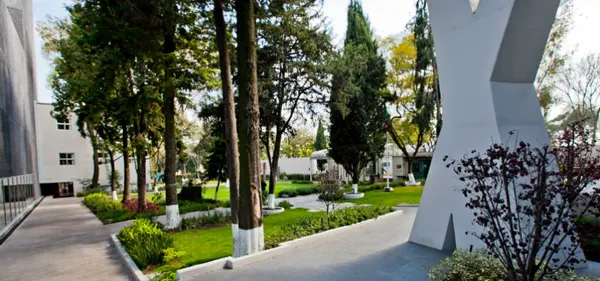
American School Foundation is the anchor of Mexico City's international school circuit. It has been here since 1888, which in international school terms makes it an institution rather than a school. It runs an American independent curriculum alongside the IB Diploma for students aged 3-18, with around 2,900 students across a spread of nationalities. The campus is in Álvaro Obregón, on the western side of the city between the historic centre and Santa Fe.
Annual fees run roughly MXN 262,000-MXN 334,000 per year (approximately USD 15,000-USD 19,000 at mid-2026 exchange rates), which places it mid-range among the English-medium schools. For US families in particular, it has the feel of a home-school-abroad: the calendar, the sports culture, and the parent community are recognisably American. Families planning a return to the US tend to find the academic transition smoother from ASF than from a British or IB-only school.
Its size is both its strength and its caveat. With nearly 3,000 students, it is a large school, and some families find it impersonal. The resources and range of activities that come with that scale are real. The community is well-established and socially active.
Greengates School
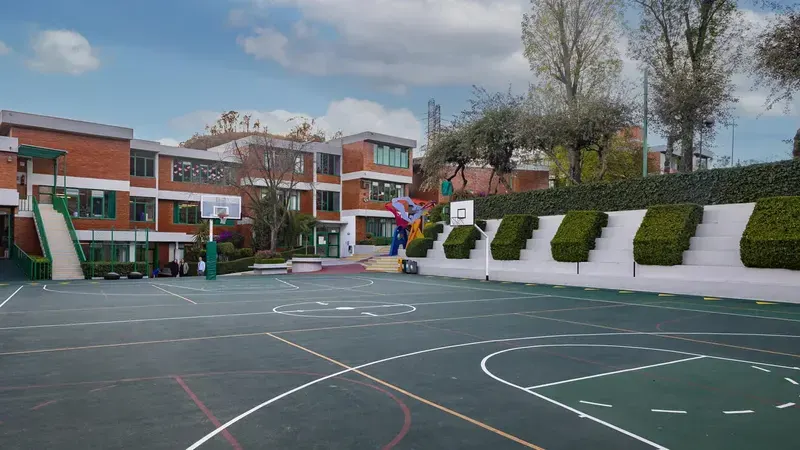
Greengates is the British option, and it does the job well. Now part of Nord Anglia Education, it serves around 1,000 students from over 50 nationalities in Naucalpan, which puts it north of the main Polanco/Lomas cluster but within comfortable distance of most international family neighbourhoods. It runs from IEYC and IPC in primary through IGCSE to IB Diploma in secondary, and requires all students to complete the full IB Diploma rather than offering it as an option. That is an important detail: it suits academically ambitious families heading toward UK, European or global universities, but is not the right fit if you want curriculum flexibility at 16.
IB Diploma pass rates have run at 98-100% in recent years. Fees run from roughly USD 17,000 to USD 27,000/year depending on year group, with sixth form at the higher end. Greengates is where most British-curriculum families in Mexico City end up, and the community is tight-knit. Its location in Naucalpan makes it less convenient for families in Santa Fe than for those in Polanco, Interlomas, or Lomas, but the school runs bus routes across the city.
The Edron Academy
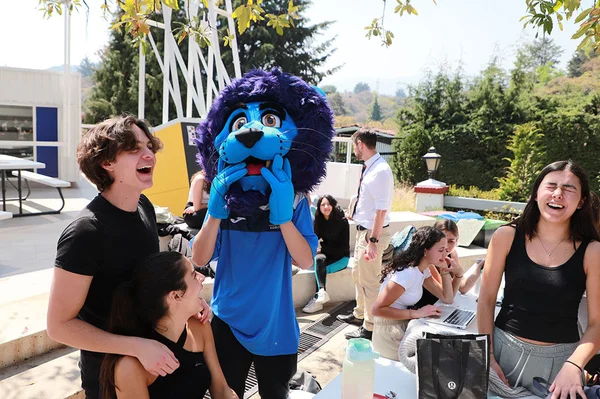
The Edron Academy is the oldest British international school in Mexico City, founded in 1963, and the one most likely to surprise families who come in expecting a standard international school. It runs on a not-for-profit basis, which in the Mexico City school market is genuinely unusual. It follows the UK National Curriculum alongside the Mexican SEP programme from pre-nursery through IB Diploma for around 1,040 students.
It is COBIS-accredited and a BSO-inspected British School Overseas, and has been an IB World School since 1995. The school does not publish fees publicly; you need to contact them directly for current figures. Families who choose Edron tend to be drawn to the independent ethos and the dual UK/Mexican accreditation, which matters if you have any intention of integrating into Mexican as well as international life. In Álvaro Obregón, it sits in a similar zone to ASF.
The Wingate School
The Wingate School is the newer British option, established in 2016 in Huixquilucan as part of the Inspired Education group. It operates on a substantial 40,000+ square metre campus and offers the Cambridge pathway through to IB Diploma for students aged 3-18. It is smaller than Greengates at around 600 students, which families who want a less crowded, more personal environment find appealing.
Fees run from roughly MXN 178,000 for Kindergarten to MXN 316,000 for IB years (approximately USD 10,000-USD 18,000), with one extracurricular activity included from primary onwards. Because it is newer, it does not yet have the track record or community depth of Greengates or Edron, but the facilities are modern and the campus is spacious. A serious option if you are in the Huixquilucan or Interlomas corridor, where the commute to Naucalpan or Álvaro Obregón starts to become a genuine daily cost.
Eton School Mexico
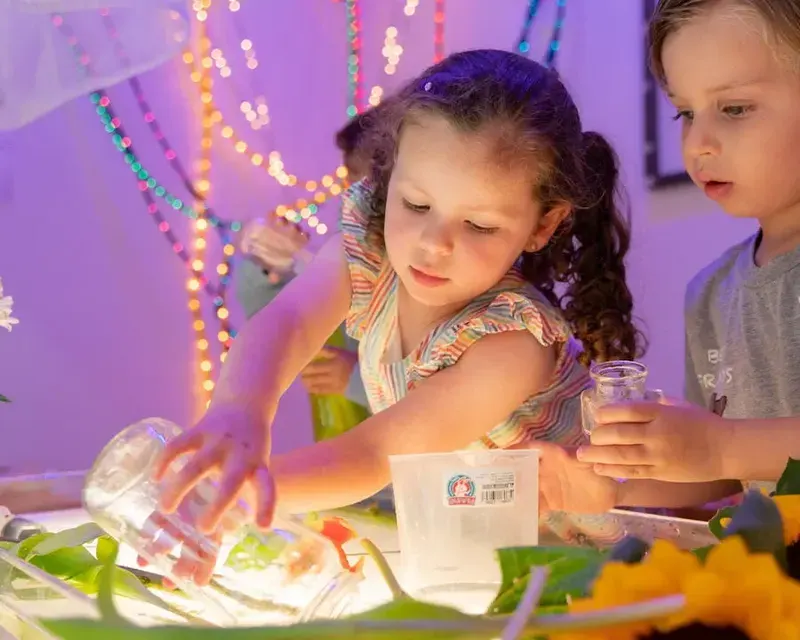
Eton School Mexico is in Santa Fe and is part of Nord Anglia Education, the same group as Greengates. It is bilingual English-Spanish, follows an American-aligned curriculum through to IB Diploma, and serves around 1,200 students from age 2. The Nord Anglia connection brings the collaborative enrichment programmes (with Juilliard, MIT, and UNICEF) that appear across the group's schools worldwide.
Annual fees for 2026-2027 run from MXN 219,000 for Early Childhood to MXN 302,000 for High School (roughly USD 12,000-USD 17,000), with annual enrolment fees on top. The bilingual immersion aspect sets it apart from the purely English-medium schools: children genuinely develop strong Spanish alongside their primary language. Its Santa Fe location works well for families living in that corridor or in Cuajimalpa.
Westhill Institute
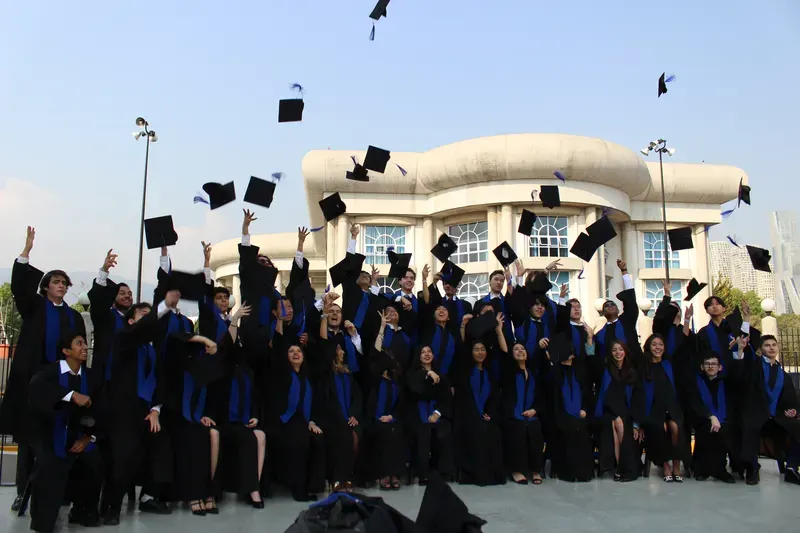
Westhill Institute is in Lomas de Chapultepec, which puts it in one of the most convenient locations for families in the traditional international neighbourhood cluster. It follows an American curriculum with Common Core State Standards, adds IB Diploma in the sixth form, and serves pre-nursery to Grade 12. Around 900 students, broadly international.
Fees are not publicly listed and need to be requested directly from the school. Its location in Lomas is its practical advantage: for families based in Polanco, Lomas or the adjacent areas, Westhill avoids the western commute to Santa Fe or the northern drive to Naucalpan. The school's profile is lower outside the city than ASF or Greengates, but families who've been in Mexico City a few years often cite it as an underrated option for the Lomas zone specifically.
Churchill School and College
Churchill School and College is one of the few schools in Mexico to offer the full IB continuum from Maternal (age 2) through IB Diploma, running the IB PYP, MYP and Diploma alongside Cambridge IGCSE and dual SEP/UNAM accreditation. It is part of The Anglo Mexican Foundation and operates two campuses in Álvaro Obregón and Coyoacán, serving around 1,150 students.
Fees run from approximately USD 6,000 at the youngest year groups to USD 15,000 for IB Diploma years, making it one of the more accessible options among schools with genuine international credentialling. It is a UNESCO Associated School. The IB continuum from the earliest years is the thing most families come for; the dual Mexican/international accreditation is useful if you have any chance of remaining in Mexico long-term.
Peterson Schools
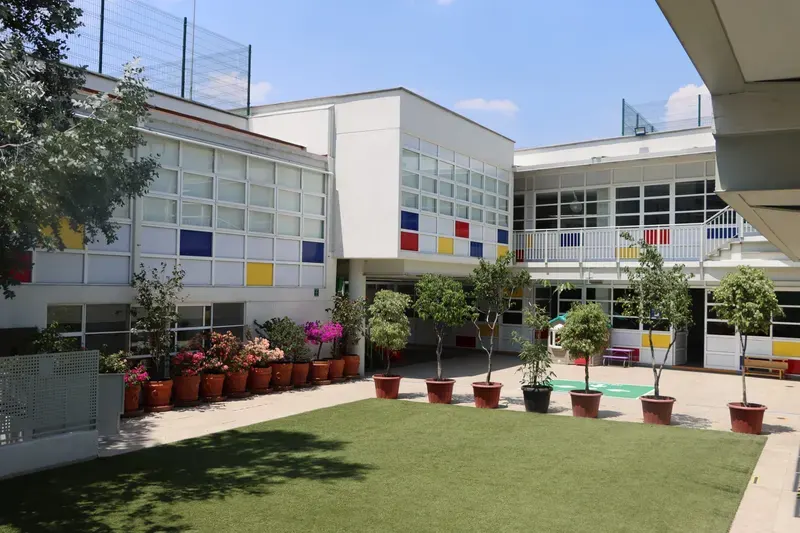
Peterson Schools is not an obvious choice for families arriving fresh from a Singapore or Dubai posting, but it deserves a mention. It is a non-profit institution founded in 1965, operating across four campuses in Cuajimalpa, Lomas, and Pedregal. It runs Montessori through IB Diploma with Cambridge IGCSE at Grades 9-10 in between, which is an unusual combination that suits some families very well.
Around 1,800 students aged 2-18. Fees run roughly USD 6,000-USD 14,000 depending on year group and campus, which is at the lower end of the schools covered here. Families who value the Montessori approach in the early years and want a continuous pathway through to IB often end up here. The Cuajimalpa campus is the main full-school option. If you are self-funding or on a modest package, Peterson deserves a serious look alongside Churchill.
Where people live
The school zones pull people into a few distinct clusters. Unlike some cities, there is not a single dominant expat enclave; the city's size means families spread across several neighbourhoods, each with its own character.
Polanco and Lomas de Chapultepec
The most established international address. Polanco is dense, walkable, expensive, and has everything within reach. Lomas de Chapultepec is greener, quieter, and more residential. Both have good access to Westhill and reasonable access to ASF and Edron via the Periférico. A three-bedroom apartment in Polanco rents from around MXN 35,000-MXN 65,000/month (approximately USD 2,000-USD 3,700). Lomas houses can go considerably higher.
Santa Fe and Cuajimalpa
The western business district, which has expanded rapidly over the last two decades. Heavy with corporate headquarters and the residential developments that follow them. Eton School Mexico is here, and the commute to ASF and Edron is manageable. Families on corporate packages frequently land in Santa Fe because the company offices are there. The area is self-contained but lacks the neighbourhood feel of Polanco or Lomas. Rents are broadly similar to Polanco for equivalent space.
Interlomas and Huixquilucan
The north-west corridor, which has grown considerably as a family zone. More suburban, larger homes relative to price, good access to Wingate in Huixquilucan and Greengates in Naucalpan. Families who want outdoor space and do not need to be in the city centre daily often end up here. The drive to Polanco or Santa Fe can be frustrating at peak hours but is manageable outside of rush hour.
Naucalpan and surrounds
Not primarily a residential choice for international families arriving fresh, but relevant if Greengates is the school. Families already in Mexico City who move schools sometimes settle closer to Naucalpan for the commute. More affordable than Polanco or Santa Fe like-for-like.
On traffic
CDMX traffic is, straightforwardly, a problem. The city is enormous, the roads at peak hour are slow, and the daily school run can easily add 40-60 minutes each way if you are in the wrong part of the city relative to your school. Most families solve this with the school bus rather than driving themselves. If you are considering the commute from, say, Coyoacán or Tlalpan in the south to Greengates in Naucalpan, run the maps at 8am before you commit to the housing.
Practical notes
Setting up: The RFC (Registro Federal de Contribuyentes) and CURP (Clave Única de Registro de Población) are the administrative backbone of life in Mexico. You will need both for bank accounts, school enrolment, and most official processes. Neither is complicated but neither is instant. A relocation agent or the school's admissions office can guide you; many are used to smoothing the path for arriving international families.
Healthcare: Private healthcare in Mexico City is good and affordable by global standards. The main private hospital networks used by international families include Angeles, Médica Sur, and Centro Médico ABC. ABC in particular has a long relationship with the international community and most consultants speak English. Family health insurance from a major international provider is standard; the public IMSS system works but is not set up for English-speaking internationals.
Currency: The Mexican peso has been relatively stable, but the USD/MXN rate does move. School fees are typically quoted in pesos and collected in pesos. If your salary is in USD or GBP, watch the rate when fees are due. Most schools allow annual or semester payment; monthly is less common.
Altitude and health: Give yourself and your children two to four weeks before drawing conclusions about the city. Fatigue, headaches, and disturbed sleep in the first week are normal at 2,240 metres. Stay hydrated. The schools know this and the pastoral teams at most international schools are well-versed in helping new arrivals settle.
Air quality: During the November-February inversion season, some families limit outdoor activity on bad air days. Most schools monitor air quality and follow AQI guidelines for outdoor sports. Ask each school about their air quality protocol before you enrol.
Language: Budget for Spanish lessons from day one. Children at the English-medium schools will pick up Spanish through their peers and the city within the first year. Adults need to invest intentionally. Most residential neighbourhoods in the international zone have language schools or tutors who work with arriving families.
FAQs
What is the best international school in Mexico City? There is no single answer because it depends on your curriculum, your budget, and your location. American School Foundation is the largest and most established English-medium school and suits US families or those heading back to the US. Greengates is the British-curriculum option with strong IB results. For pure IB from the earliest years, look at Churchill School and College and Peterson Schools. Families in Santa Fe tend to gravitate toward Eton School Mexico or ASF; those in Lomas look at Westhill or Edron.
Is Mexico City safe for families? In the established international zones, yes. Polanco, Lomas de Chapultepec, Santa Fe, and Interlomas are all areas where international families live comfortably. The same common-sense precautions you would apply in any large city apply here. Families who have been here a few years consistently describe day-to-day life as comfortable and the city as rewarding. Security varies more by neighbourhood than by city, so the area you live in matters more than the city-level headline.
How do I handle the altitude in Mexico City? Most adults and children adjust within two to four weeks. The first week tends to bring fatigue, mild headaches, and disturbed sleep. Staying well-hydrated helps. If anyone in your family has a significant cardiovascular or respiratory condition, speak to a doctor before the move. Once you are acclimatised, the altitude is simply part of the background.
Are Mexico City international school waitlists long? At popular entry years, the better-known schools tend to have more enquiries than places, particularly at Reception/Kinder, Year 7 equivalent, and IB entry. Contact schools several months before your intended start date. If you are mid-year, places are tighter but not impossible. The situation changes year to year so ask directly rather than assuming a place will or will not be available.
Do children need to speak Spanish to attend an international school in Mexico City? At the English-medium schools, no Spanish is needed for entry. Most schools have EAL and Spanish-language support for arriving international students. That said, your children will learn Spanish quickly through the city and their peers regardless of school policy. Adults will find life considerably easier with even basic Spanish, and fluency genuinely opens up the city. Language support for parents is widely available and worth investing in from the start.
What is the cost of living for an international family in Mexico City? Significantly lower than Singapore, Dubai, or London. A family of four in Polanco or Lomas, with a car, private healthcare, eating out regularly, and a few activities, can expect to spend around USD 4,000-USD 6,500/month before school fees. Domestic help is affordable and very common. Private healthcare for a family runs roughly USD 200-USD 400/month with a reputable international insurer. The overall package is very good value relative to comparable cities.
Fees correct as of May 2026. MXN/USD conversions are indicative at approximately MXN 17.5 per USD 1 (May 2026). We work hard to make every figure, date and description on this page accurate. We don't always get it right. If you spot an error - a fee that's changed, a fact that's out of date, something we've got wrong - please tell us. Use the feedback button above or email us directly. We'll check it and update the article.