Notes / London
Best International Schools in London: The 2026 Guide for Families
London has more international school options than almost any city in the world. The range is genuinely impressive, the results at the top schools are strong, and geography matters far more than most school guides let on.
Comparison table
| School | Curriculum | Ages | Fees range (USD) | Notes |
|---|---|---|---|---|
| The American School in London | American | 4-18 | 50,871–58,770 | St John's Wood |
| Southbank International School | IB | 2-18 | 25,534–58,656 | Kensington, Hampstead & Westminster |
| ACS Hillingdon International School | IB, American | 4-18 | 18,608–44,051 | Hillingdon, West London |
| Halcyon London International School | IB | 11-18 | 51,949–54,319 | Marylebone, Central London |
| Lycee Francais Charles de Gaulle | French | 3-18 | 12,780–26,734 | South Kensington, Central London |
| Ecole Jeannine Manuel - London | IB, British, Cambridge | 3-18 | 31,367–44,567 | Bloomsbury, Central London |
| The German School London | IB, German | 3-18 | 13,823–15,889 | West London |
| Marymount International School London | IB | 11-18 | 50,051–84,797 | Kingston upon Thames, South West London |
| ACS Cobham International School | IB, American | 2-18 | 12,595–87,418 | Cobham, Surrey |
| TASIS England (The American School in England) | IB, American, AP | 3-18 | 19,747–88,165 | Thorpe, Surrey |
Fees converted to USD at indicative 2026 rates. Verify current figures with each school.
TL;DR
- London's international school market is split between genuinely international schools (IB, American, French, German) and UK independent schools. This guide covers the former. If your family is internationally mobile and your children are already in an IB or American curriculum, you will want to stay in that system.
- Geography in London is not a minor detail. The city is vast. A school in Hillingdon or Surrey is a very different daily reality from one in St John's Wood or Marylebone. Worth thinking about where you will live before you shortlist schools.
- Annual fees at the top international schools run from roughly GBP 24,000 for younger year groups to GBP 47,000 for secondary, before extras. The Lycée Français is considerably cheaper. ACS Cobham is the main option with boarding.
- Some schools at key entry points carry long queues. The American School in London is the most prominent example. Worth contacting schools as early as you can.
The city
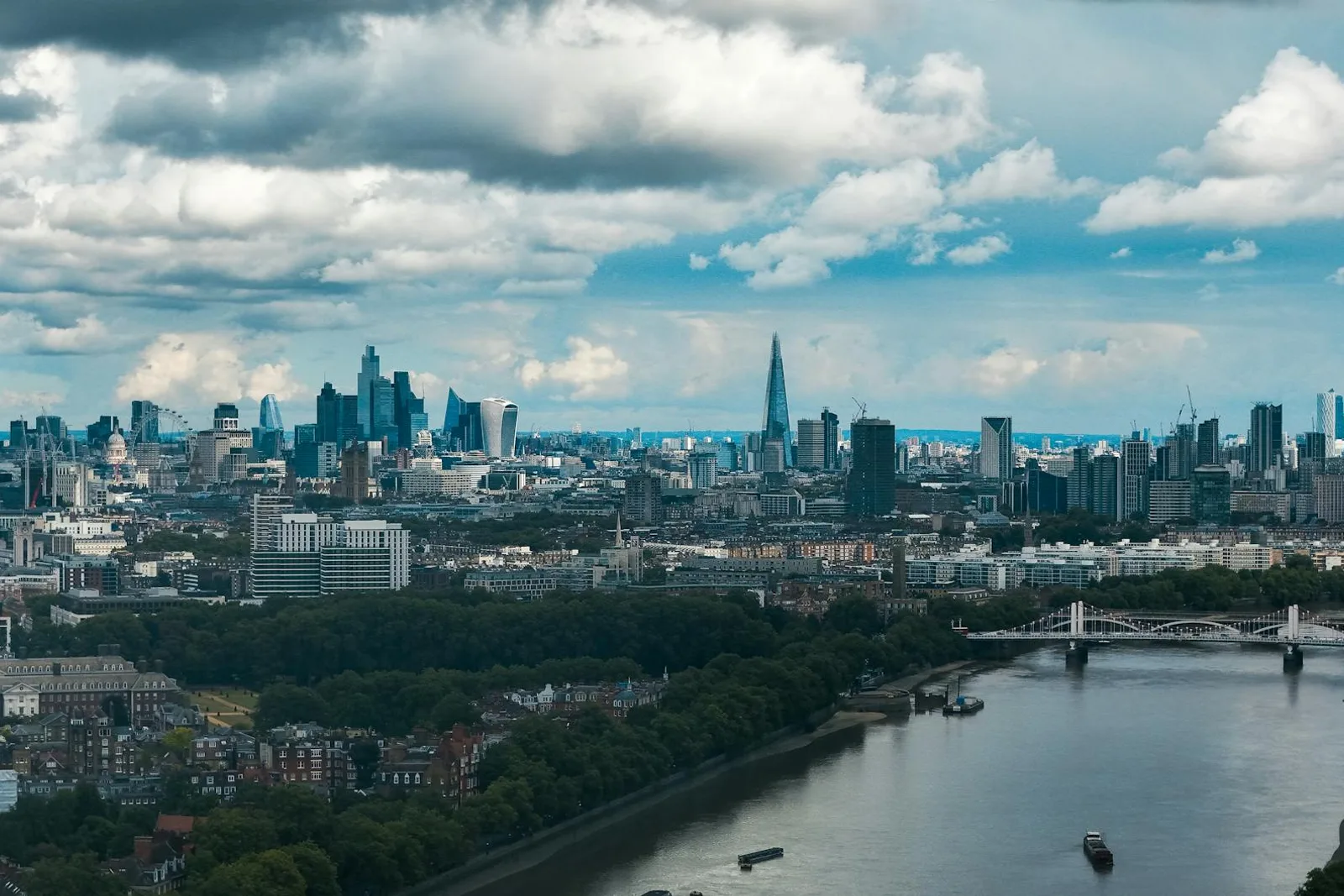
London is one of the most liveable cities in the world and also one of the most logistically demanding. It covers roughly 1,500 square kilometres, traffic in the inner boroughs can be brutal, and a school that looks close on a map can mean 45 minutes each way on a bad morning. The Tube is excellent in central zones and largely irrelevant once you are in the outer suburbs. Understanding the city's geography before you commit to a school is not optional.
Housing costs are high by any measure. A three-bedroom house or flat in the areas most international families gravitate to runs GBP 4,000-GBP 8,000/month to rent. Add school fees and the overall cost of living in London is one of the steepest of any posting on the corporate circuit.
That said, the city delivers: world-class cultural infrastructure, excellent international transport links, a genuinely diverse professional community, and a good healthcare system once you have registered with a GP or arranged private cover. Families who have been here a few years mostly enjoy it, even if the first six months of navigating housing, schools, and commuting can feel relentless.
English is the working language of daily life, but London's international community is enormous. French, German, Dutch, Korean, and Japanese families each have well-established communities and, in most cases, dedicated school options.
The schools
The American School in London

The American School in London is the default first call for American families and for many corporate packages that specify an American curriculum. Around 1,350 students from 70 nationalities study on a single St John's Wood campus in NW8, running the US system from Pre-K through Grade 12. The re-enrolment rate sits at 89%, which tells you most families who get in stay.
Annual fees for 2025-26 run GBP 40,188 (Lower School) to GBP 46,428 (High School) inclusive of VAT. The waitlist at ASL is real and persistent at popular entry points, particularly at Kindergarten and Grade 9. Families on packages that specify ASL need to apply the moment they know they are coming to London. The school does not guarantee places.
St John's Wood is a convenient location: close to the Jubilee line, a short distance from Regent's Park, and within reach of the areas where many international families end up renting. That proximity is one reason the school is oversubscribed.
Southbank International School
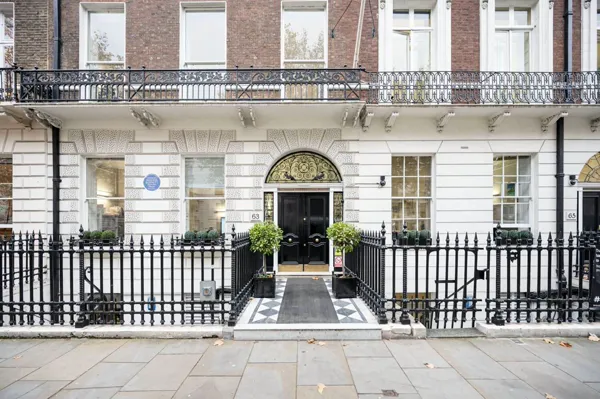
Southbank is the IB option most likely to come up when families arrive in London seeking continuity from IB Primary Years or Middle Years programmes elsewhere. It operates three linked campuses: Kensington (Pembridge Square, W2), Hampstead (Avenue House, NW3), and Westminster (Portland Place, W1W). Around 600 students aged 2-18 study across the three sites.
IB Diploma results are strong: the school averaged 35.4 in 2025 with a 100% pass rate, well above the global average of 30.5. Annual fees run from approximately GBP 20,000 (Early Childhood) to GBP 46,000 (Diploma Programme), with a one-off capital development fee of GBP 3,000 in the first year.
Understand the three-campus model before you apply. Younger children typically start at Kensington, older students move to Westminster. Families living in Hampstead or North London tend to find the Hampstead campus most convenient for the lower years. It is a school that genuinely serves the internationally mobile community: around 80 nationalities across three campuses, and a culture that takes IB seriously rather than treating it as a bolt-on.
ACS Hillingdon International School

ACS Hillingdon sits on an 11-acre campus in Hillingdon, West London, offering IB Diploma, IB Career-related Programme, Advanced Placement, and the American High School Diploma for ages 4-18. Around 600 students attend from 70-plus nationalities.
The 2025 IB Diploma average was 35.4, matching Southbank. Annual tuition runs from GBP 14,700 (Pre-K) to GBP 34,800 (Grade 12), inclusive of VAT, making it one of the better-value options in the London international school market for secondary years. There is an extensive bus network reaching central London, Windsor, and High Wycombe.
The honest caveat is location. Hillingdon is zone 6, roughly 45 minutes from central London by tube on the Piccadilly or Metropolitan line, and further by car in morning traffic. Families who live in Uxbridge, Hayes, or along the A40 corridor find it convenient. Families in Chelsea or Islington do not. Work out your commute before shortlisting this school, not after.
Halcyon London International School

Halcyon is unusual: a not-for-profit IB school (Grades 6-12 only) in Seymour Place, Marylebone, rated Outstanding by Ofsted. Around 190 students from more than 50 nationalities, which means you know your teachers and your teachers know you. The 2023 IB Diploma average was 34.0.
Annual tuition for 2026-27 runs GBP 41,040 (Grades 6-9) to GBP 42,912 (Grades 11-12) inclusive of VAT. Unusually, fees cover daily vegetarian lunch, residential trips, and exam costs, so the headline figure is closer to the all-in figure than at most schools.
It is secondary only, which makes it most relevant for families arriving with children aged 11 and above, or families already in London whose child is moving into the IB Middle Years. The Marylebone location is genuinely central: the school is walkable from Baker Street, Edgware Road, and Marble Arch, which matters when you are coordinating two working parents and no school bus.
Lycée Français Charles de Gaulle
The Lycée is the French government school in London, serving around 3,450 pupils aged 3-18 across five sites: South Kensington, Fulham, Ealing, Clapham, and a bilingual primary in South Kensington. It is by some margin the largest genuinely international school community in London.
Fees are significantly lower than the IB and American schools: GBP 10,096/year for the bilingual primary track up to GBP 21,120 for the GCSE and A-Level years, with a one-time registration fee of GBP 1,800. For French families or for families whose children are French-educated, this is the obvious choice. The South Kensington campus puts it in the heart of London's French community, within reach of the 7th arrondissement in spirit if not in geography.
Families should know it is a French school first and an international school second. The working language is French, the curriculum is the French national curriculum, and integration requires French language competence. That is not a criticism. It is exactly what French corporate families need.
Ecole Jeannine Manuel - London
Ecole Jeannine Manuel opened in Bloomsbury in 2015 as the sister school of the top-ranked French lycée in Paris. Around 700 pupils from 45-plus nationalities, with a bilingual French-English education from age 3 and the choice of IB Diploma, IGCSE, or the French Baccalauréat at the senior end.
Fees for 2025-26 run GBP 24,780 (Nursery) to GBP 35,208 (Year 11, IB track). The school places 16% of pupils on means-tested bursaries averaging two-thirds of full fees, which is unusual in London's international school market. IB results place it in the top 2% of IB schools in the UK, which is a credible claim for a school that is still building its senior cohort.
The Bloomsbury location is central and served by several Tube lines. It is a genuine option for multilingual families who want French-English bilingual education without committing entirely to the French national curriculum, and who are drawn by the academic rigour of the Jeannine Manuel network.
The German School London
The German School in Petersham, Richmond, runs from Nursery through to the German Abitur for around 800 students. It is the main option for German families in London and follows the German curriculum throughout. Abitur-year fees run approximately GBP 27,000/year; primary fees are considerably lower.
Richmond is south-west London, roughly 30-40 minutes from central London via the District line to Richmond or by car via the A316. It is a pleasant part of the city - the school backs onto Petersham Meadows and Richmond Park is nearby - but it is not central, and families based in north or east London should account for that in daily logistics.
Marymount International School London
Marymount is a Catholic girls' day and boarding school in Kingston upon Thames, founded in 1955, offering IB Middle Years Programme and Diploma for ages 11-18. Around 240 students.
The 2025 IB Diploma average of 36.82 with a 100% pass rate is one of the highest of any school in the guide - and places Marymount in the top 2% of IB schools worldwide. Annual fees for 2026-27 run GBP 39,540 (day) to GBP 66,990 (full boarding). Kingston is zone 6 south-west, about 35 minutes from Waterloo, and the school is secondary-only.
It is single-sex - check before you shortlist it. Families who want boarding in or near London, a strong IB result, and a girls-only environment at secondary will find it hard to match. Families who want co-ed or younger year groups should look elsewhere.
ACS Cobham and TASIS England (outer London and Surrey)

Two schools to consider if you need boarding or are open to living in Surrey: ACS Cobham in Cobham and TASIS England in Thorpe. Both offer day and boarding for ages 3-18 on campus settings that would be unreplicable in inner London.
ACS Cobham has around 1,400 students on a 128-acre campus, running the IB continuum and American curriculum, with fees from GBP 9,950 (youngest year groups) to GBP 39,960 (Grade 12 day) and boarding from GBP 56,940 including tuition. The 2023 IB average was 35. It is the largest American/IB school in the region and the school that many US corporate packages default to when families prefer a campus feel over a London commute.
TASIS operates on a 46-acre estate in Thorpe, serving around 650 day and boarding students from 70-plus nationalities. Annual day fees run GBP 15,600 (Pre-K) to GBP 37,170 (Grades 9-12); full boarding with tuition is GBP 69,650. AP pass rate was 94% in the most recent data.
Neither is in London proper: Cobham is about 25 miles south-west of central London, Thorpe about 20 miles west near Staines. Families in these schools tend to live in Surrey rather than in the city. That is either a feature or a dealbreaker depending on what your posting looks like.
IB results in context
The global IB Diploma average in 2025 was 30.5. Several London international schools score well above it.
| School | IB DP average | Year |
|---|---|---|
| Marymount International London | 36.82 | 2025 |
| Southbank International School | 35.4 | 2025 |
| ACS Hillingdon | 35.4 | 2025 |
| Halcyon London International | 34.0 | 2023 |
| International School of London (Chiswick) | 33.0 | 2025 |
| Dwight School London | 33.0 | 2025 |
| ACS Cobham | 35 | 2023 |
Source: school-published data. The American School in London does not publish IB averages; it operates the US curriculum with AP courses.
Where people live
London resists easy clustering in the way that Madrid's La Moraleja or Dubai's Jumeirah do. International families end up in pockets across a wide geography, pulled by school location, housing stock, and transport links.
St John's Wood and Maida Vale
The most concentrated international family zone in inner London, anchored largely by ASL. St John's Wood (NW8) is well connected, has a village feel for an inner London neighbourhood, and has been the default landing spot for American corporate families for decades. Rents reflect this: a three-bedroom flat runs GBP 5,000-GBP 8,000/month. Maida Vale and Little Venice just south are slightly more affordable and are also popular with families choosing Southbank's Westminster campus.
Marylebone and Notting Hill
Marylebone is a natural fit for Halcyon and Southbank Westminster families. It is central, well served by Tube, and has good primary options. Notting Hill (W11) is a long-standing international family neighbourhood, walkable to Southbank Kensington and to a cluster of good UK independent primaries if you are mixing systems. A four-bedroom house in either area rents from GBP 7,000/month upward.
Hampstead and North London
Hampstead NW3 is one of the most sought-after areas for families in London, with good secondary transport to Southbank Hampstead and reasonable links to ASL via the Jubilee line. Housing is expensive and can be limited in supply: a three-bedroom house in Hampstead Village rents from GBP 5,000-GBP 8,000/month. Families who want space and a village feel within the North Circular will find this end of the city more satisfying than the more gridded streets further south.
West London (Chiswick, Kew, Richmond)
West London serves families choosing the International School of London in Chiswick, the German School in Richmond, or ACS Hillingdon as a stretch. Chiswick W4 is popular: good transport (Overground and District line), family-scale housing, and less frenetic than inner London. A three-bedroom house in Chiswick rents roughly GBP 4,000-GBP 6,000/month. Richmond is slightly further out but quieter, and close to Richmond Park. It is the natural base for German School families.
Kensington and Chelsea
South Kensington SW7 is the heartland of London's French community, close to the Lycée's main campus. A dense network of French restaurants, bilingual families, and French-language services makes it the path of least resistance for French corporate arrivals. It is expensive: two-bedroom flats start around GBP 4,500/month, and family-sized properties go well above that. Chelsea is adjacent and draws a mix of nationalities.
South-west London and Surrey
Families choosing Marymount in Kingston, ACS Cobham, or TASIS tend to live in south-west London or Surrey proper. Kingston upon Thames, Wimbledon, Richmond, and the Surrey commuter towns (Esher, Cobham, Weybridge, Guildford) all have established international family communities. Rents in these areas are lower than inner London: a four-bedroom house in Cobham or Weybridge runs GBP 3,500-GBP 6,000/month. The trade-off is that they are not London in any meaningful urban sense, and if one parent needs to commute into the City or Canary Wharf, the journey adds up.
On the commute question
London's school bus networks vary considerably. ASL has a bus service, but many central London international schools do not run extensive routes in the way that suburban schools do. For inner London schools, families tend to rely on Tube, car, or cycling depending on distance. For the outer London and Surrey schools, bus services are more developed and cover a wider geographic footprint. Check the bus provision for any school you are seriously considering before committing to a neighbourhood.
Practical notes
Getting set up: EU nationals no longer have automatic right of residence in the UK after Brexit. EU families arriving for corporate postings will typically need a visa under the Skilled Worker or Global Talent routes. US, Australian, and most other non-UK nationals similarly need a visa unless arriving on an intra-company transfer with employer sponsorship. Check your immigration status before arrival, not on arrival: the visa system is workable but not fast.
Healthcare: The NHS is free at the point of use once you are registered with a GP and pay National Insurance (or if your employer covers this). Many international families also take out private health insurance for faster access to consultants and private hospitals. Bupa, AXA, and Vitality are the main providers. A family policy runs roughly GBP 200-GBP 400/month. Private hospital appointments in London are straightforward to arrange if you have cover.
Schooling the VAT change: The UK government removed the VAT exemption from private school fees from January 2025. Most international schools have built 20% VAT into their published fee tables for 2025-26 onwards. When comparing fees to previous years or to schools in other countries, check whether the figure you are looking at is inclusive or exclusive of VAT.
Cost of living: A family of four in a three-bedroom rental in inner London, running a car, with private health insurance, should budget GBP 7,000-GBP 10,000/month before school fees. Eating out and groceries are expensive by European standards. Utilities and council tax add a meaningful amount on top of rent.
Term dates: London international schools broadly follow the three-term British academic year (September to July). Some American-curriculum schools run a slightly different calendar. Check term dates carefully if you have family travel commitments.
FAQs
What is the difference between an international school and an independent school in London? Independent schools in London - Eton, St Paul's, Dulwich College, and hundreds of others - follow the UK national curriculum and generally serve domestic UK families, even if they have some international students. International schools run foreign or global curricula: the IB, the US system, the French national curriculum, the German Abitur. If your child is already in an IB or American school abroad, you want an international school in London, not an independent school.
Which London international schools have the best IB results? Marymount International School London averaged 36.82 in 2025 with a 100% pass rate, the highest published figure among London international schools. Southbank International and ACS Hillingdon both averaged 35.4. All three are well above the global average of 30.5. ACS Cobham (Surrey) averaged 35 in 2023.
Is there a waiting list for the American School in London? ASL carries a waiting list at several year groups, particularly at entry into Kindergarten and Grade 9. The situation can shift from year to year depending on corporate posting cycles, but families targeting ASL should apply as early as possible. Contacting the admissions office before your relocation decision is confirmed is not too early.
Do I need to live near the school? More than in most cities, yes. London's size and traffic means a school that is 10 miles away in the wrong direction can mean an hour each way. The outer London and Surrey schools typically run bus services that partially mitigate this. Inner London schools generally do not. Research your commute by Tube or car during school run hours before deciding on a neighbourhood.
Are there cheaper international school options in London? The Lycée Français Charles de Gaulle is considerably cheaper than the IB and American schools: primary fees start around GBP 10,000/year, and secondary fees run to GBP 21,000/year. ACS Hillingdon has lower fees than most inner London IB schools. Families who can work with a French curriculum or are open to the outer London location will save significantly.
What about the 20% VAT on school fees? From January 2025, the UK government applies 20% VAT to private school fees. Most international schools now quote fees inclusive of VAT. The effective cost increase relative to pre-2025 was approximately 9-10% for schools that had not already set aside reserves to absorb part of it. When comparing fees, always check whether figures are VAT-inclusive or VAT-exclusive.
Fees correct as of May 2026. Exchange rates and fee data change; we recommend verifying current fees directly with each school. We work hard to make every figure, date and description on this page accurate. We don't always get it right. If you spot an error - a fee that's changed, a fact that's out of date, something we've got wrong - please tell us. Use the feedback button above or email us directly. We'll check it and update the article.