Notes / Lagos
Best International Schools in Lagos: The 2026 Guide for Families
Lagos is not an easy posting. The traffic alone will reshape your daily life. But the international school options are better than most people expect, and families who plan well tend to find a rhythm.
Comparison table
| School | Curriculum | Ages | Fees range (USD) | Notes |
|---|---|---|---|---|
| American International School of Lagos | IB, American | 3-18 | 20,638–35,165 | Victoria Island |
| British International School Lagos | British | 11-18 | 4,667–6,333 | Victoria Island |
| Charterhouse Lagos | British | 5-18 | 7,246–25,362 | Lekki |
| Lekki British School | British, Cambridge, International | 1-18 | 4,667 | Lekki |
| Grange School | British, Cambridge | 2-16 | 3,000–4,333 | Ikeja GRA |
| Greensprings School | IB, British | 1-18 | 1,667–3,667 | Anthony Village |
| St. Saviours School Ikoyi | British | — | 7,089 | Ikoyi |
Fees converted to USD at indicative 2026 rates. Verify current figures with each school.
TL;DR
- The international school market in Lagos is small but credible. The American International School of Lagos (AISL) is the anchor. British-curriculum options have improved significantly in recent years, with Charterhouse Lagos a recent entrant.
- Victoria Island, Ikoyi, and Lekki Phase 1 are where most internationally mobile families live. The island-versus-mainland divide is the defining residential split, and it matters for school commutes more than almost anywhere else.
- Fees run high by African standards: USD 15,000 to USD 32,000 per year for the top international schools. A handful of strong local-international schools exist at a fraction of that.
- Worth applying as early as you can. Capacity at AISL and the better British schools is tight.
The city
Lagos is Nigeria's commercial capital and by some measures the largest city in Africa. It runs on oil, gas, finance, and an increasingly active tech sector. Most internationally mobile families arrive on corporate postings in one of those sectors, or with an NGO or diplomatic mission. The pace is relentless, the entrepreneurial energy is real, and the social life, if you invest in it, is excellent.
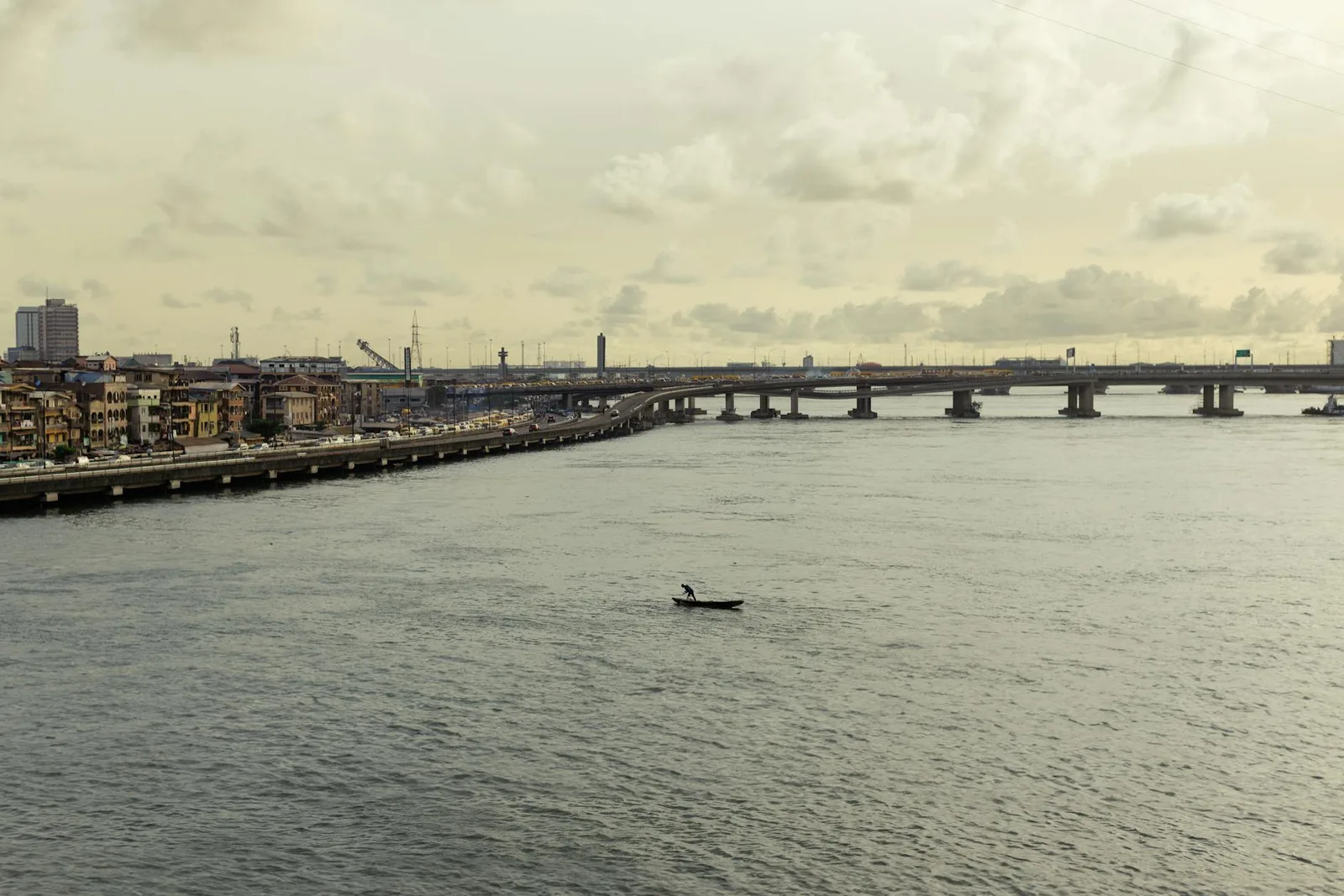
The island-mainland split is the first thing to understand. Lagos Island, Victoria Island (VI), Ikoyi, and Lekki sit on a series of connected islands and peninsulas separated from the mainland by lagoons. The international school cluster, almost without exception, sits on the island side. If you are posted to the mainland, particularly Ikeja GRA, you have options there too, but the main internationally-oriented schools are island-based. Most families on corporate packages end up on the island, and the residential calculus is built around that.
Security is a genuine consideration. Most international families live in gated developments with 24-hour security. Day-to-day movement is safe in the right areas; the risks are mostly opportunistic theft and the occasional armed robbery on deserted roads at night. Your employer's security briefing and the community on the ground are more reliable guides than anything written here.
Power cuts are a fact of life. Every serious home and school runs on generator backup. Schools have robust (sorry, reliable) backup power systems and this will not affect your child's day. At home, factor a generator or inverter system into your housing budget.
The schools
American International School of Lagos
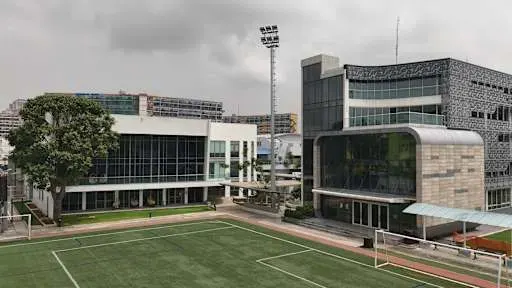
AISL on Victoria Island is the reference point for internationally mobile families in Lagos. It is a small, non-profit, CIS and NEASC-accredited school running the full American curriculum from Early Childhood through Grade 12, with the IB Diploma authorised for Grades 11-12. Around 479 students from 46 nationalities attend. The community skews toward US, European, and multinational corporate families, and it has the feel of an established American school: tight-knit, community-oriented, and set up to handle high turnover without losing continuity.
Fees range from approximately USD 17,638 for Early Childhood to USD 32,165 for High School per year. There is a one-time registration fee of USD 10,000. These are among the highest school fees in sub-Saharan Africa. A significant share of families are on corporate packages that cover fees in full; self-funding at this level is unusual and worth thinking hard about.
Places at AISL are not always easy to secure, particularly at the busiest entry points. Contact the admissions office before your move is confirmed, not after.
British International School Lagos
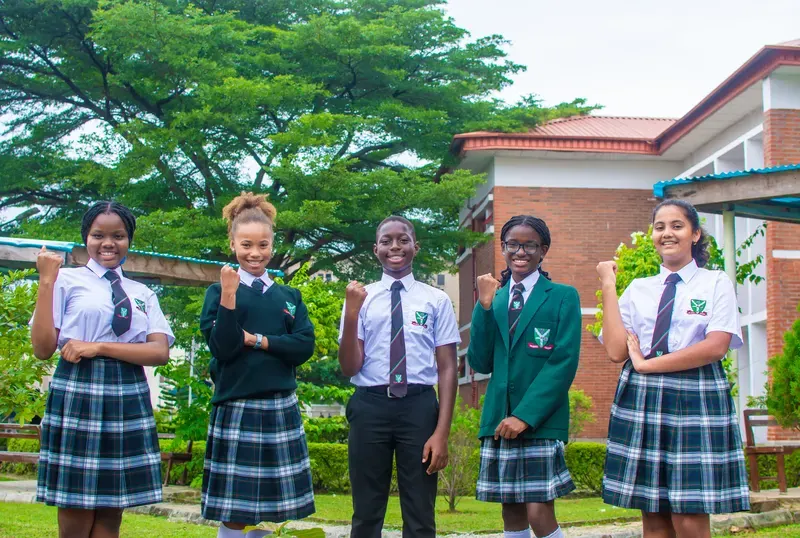
BISL on Victoria Island takes students from Years 7 to 13 through IGCSE and A-Levels. It is COBIS-accredited, runs entirely in English, and sits on a 30-acre campus. With around 225 students, it is genuinely small. That cuts both ways: pastoral care is close and teachers know your child, but the breadth of co-curricular provision and sixth form subject options is more limited than at a large campus school. Families who have come from a large British school in Dubai or Singapore sometimes find the adjustment requires recalibration.
Day fees run approximately USD 17,000 per year. Boarding is available from Year 9 - weekly and full boarding at around USD 30,000. For families arriving mid-contract or with children already in secondary, BISL is often the most straightforward British-curriculum option on the island.
Charterhouse Lagos
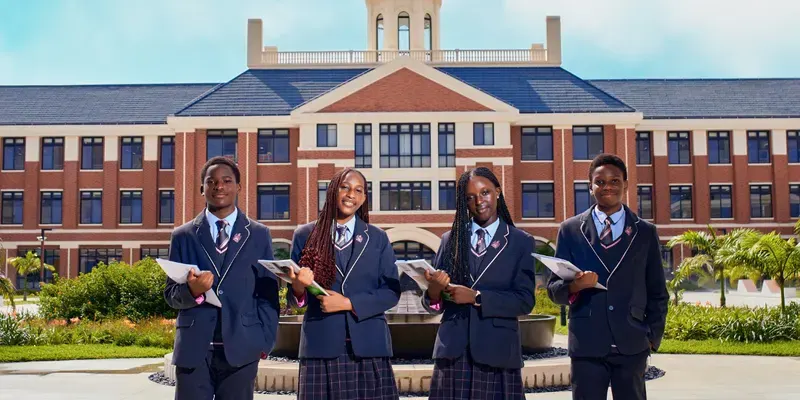
Charterhouse Lagos is the newest entrant and has attracted significant attention. It opened its Primary School in September 2024 and Secondary (Years 7-9) in September 2025 on a purpose-built campus in Ogombo, Eti-Osa, in Lekki. It is affiliated with the 400-year-old Charterhouse in Surrey - the first formal Charterhouse family school to open in Nigeria or West Africa.
The school runs the English National Curriculum through IGCSE, with A-Levels planned from 2026. Founding-student fees run from approximately NGN 16,100,000 for Years 1-2 to NGN 35,000,000 for Years 12-13, which translates to roughly USD 10,000 to USD 22,000 at current rates. Boarding is available for secondary students.
Because it is young, there is limited independent evidence on outcomes yet. Families choosing Charterhouse Lagos are making a bet on the brand, the campus, and the trajectory. The staff recruited for the launch are experienced and the early parent feedback has been positive. Visit before committing, and ask about staffing depth given the school is still building its upper secondary.
Lekki British School
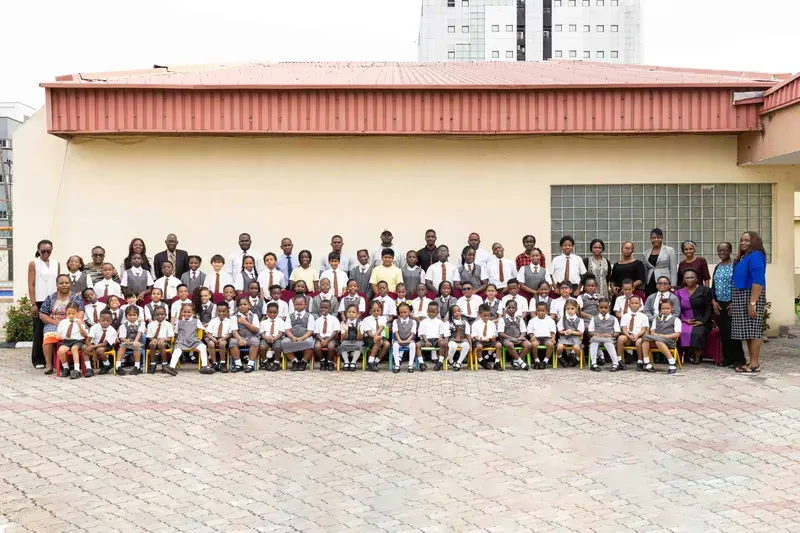
Lekki British School on a 25-acre campus in Lekki Phase 1 claims to be the first British boarding school in Lagos. It takes students from pre-school through Cambridge A-Level across three co-located schools. Around 350 students attend. Fees are not publicly listed and must be requested directly; estimates put day fees at approximately NGN 4-6 million per year.
The school has a long-established community in Lekki and a loyal parent base. It is quieter on the marketing front than some newer schools, which is not necessarily a concern - it has been running since 2000 and has a track record to point to. Families in Lekki Phase 1 often find it a natural practical fit.
Grange School
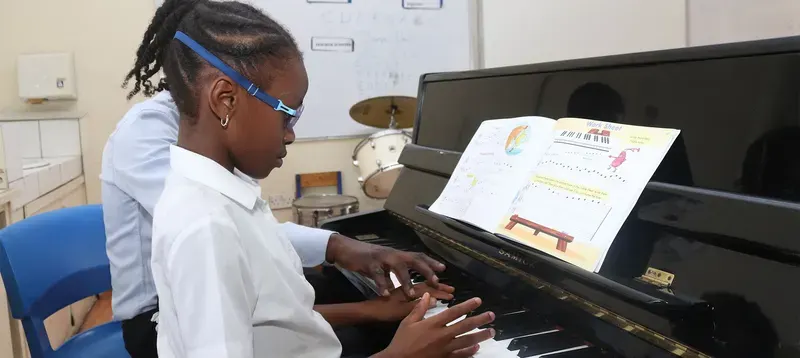
Grange School in Ikeja GRA is Lagos's longest-established British curriculum school, founded in 1958, and it has IGCSE results that hold up well against any school on the island. In 2023, 97.1% of students achieved A-C, and 84.2% A-B. It is COBIS fully accredited since 2023 and runs Nursery through Year 11 for around 750 students.
Fees run approximately NGN 4.5 million per year for day pupils. Weekly and full boarding is available at around NGN 6.5 million. The school runs bus routes serving both island and mainland locations, which matters if you are posted to Ikeja or the mainland corridor.
The obvious caveat is location. If you are living on Victoria Island, Ikoyi, or Lekki, the commute to Ikeja GRA during morning rush is long. Families on the mainland - particularly Ikeja GRA, Magodo, or Maryland - find Grange the most sensible and convenient British option. The results justify the journey regardless of where you live.
Greensprings School
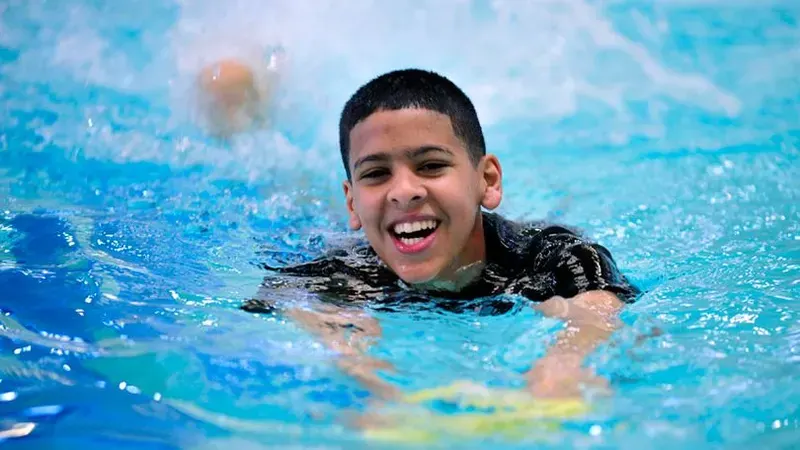
Greensprings is not quite the same category as the schools above. It is large, with three campuses across Anthony Village, Ikoyi, and Lekki serving over 3,600 students from Nursery through IB Diploma. Fees are considerably lower at approximately NGN 2-5 million per year. It is Nigerian-founded and primarily serves the local-international market rather than the corporate-expat posting.
That framing is not a slight. Greensprings has IB Diploma authorisation and a genuinely broad curriculum. Families self-funding internationally, families with children who are already in the Nigerian school system, and families who are integrating rather than passing through often find it a better fit than the more expensive options. The community skews Nigerian rather than mixed-national, which for some families is the whole point.
Where people live
Victoria Island and Oniru
VI is the most international of Lagos's residential areas. Embassies, corporate HQs, international hotels, and the bulk of the international social infrastructure are here. It is the most convenient base for AISL and BISL. The downside is that it is also the most expensive: a three-bedroom serviced apartment in a decent gated estate runs from approximately USD 3,000-6,000 per month, often billed in USD or at a USD-linked NGN rate.
Traffic leaving VI in the morning is aggressive. The Eko Bridge and Carter Bridge connections to the mainland can seize completely. If both your school and your office are on the island, your daily life is manageable. If one is on the mainland, plan for it.
Ikoyi
Ikoyi sits between VI and the mainland connection at Lagos Island and is the address of choice for families who want space and quiet over maximum proximity to the VI hub. Housing runs from detached villas to mid-rise apartments in gated developments. It is slightly calmer than VI, arguably more residential in feel, and well-placed for both AISL and BISL.
Lagos Preparatory and Secondary School on Glover Road, Ikoyi, also sits here - a small, selective British school covering 18 months through IGCSE, with a strong first cohort IGCSE record.
Lekki Phase 1 and Lekki
Lekki has grown significantly over the past decade and is now the residential preference for many families, particularly those with children at Lekki British School or Charterhouse Lagos. It is less central than VI and Ikoyi, and the Lekki-Epe Expressway can be chaotic during rush hour, but the developments here tend to offer more space for comparable money.
Charterhouse Lagos is in Ogombo at the deeper end of the Lekki corridor. Families there should assess the morning commute time honestly before signing a lease.
The mainland
Ikeja GRA is the main family-friendly mainland address. It is quieter than the island, rents are lower, and it is close to the airport, which matters if one parent travels heavily. Grange School and Avi-Cenna International School are both here. The trade-off is the bridge crossing if work or school is on the island - Third Mainland Bridge in the morning rush is not for the faint-hearted.
Practical notes
School transport: Most international schools run bus services. At AISL particularly, the school bus is widely used and covers most of the main family residential areas on the island. If your child is going to be on a long bus route, the journey can add up. Ask the school for actual route times, not just advertised pick-up windows.
Fees in currency: The USD fees at AISL are billed in USD. Many of the NGN-denominated schools have seen fees track the naira depreciation in recent years, which means the USD equivalent of NGN fees has shifted. Build in some flexibility on the currency assumption if your package has a cap.
Healthcare: Private healthcare at the better hospitals (Reddington, Eko Hospital, Lagos Island General) is serviceable for routine care. For anything serious, medical evacuation to South Africa, the UK, or elsewhere is standard on most international packages. Confirm your medical evacuation coverage before you need it.
The community: Lagos has an active and genuinely warm international community. The school social circuit is a significant part of it. AISL in particular has the kind of community infrastructure - events, parent committees, weekend sports - that families miss when they leave. Getting involved early shortens the settling-in period considerably.
School registration timing: For AISL, families who wait until an offer is in hand risk finding places gone. The same applies at BISL and Charterhouse Lagos. The market is tight enough that serious families make contact with schools as soon as a posting is confirmed, sometimes earlier.
FAQs
Which international schools in Lagos are accredited? AISL holds CIS and NEASC accreditation - the two most widely recognised international accreditation bodies. BISL and Grange School are COBIS accredited. Lekki British School has COBIS-affiliated status. Charterhouse Lagos is in the early stages of its accreditation process given its recent opening. Children's International School Lagos holds BSO (British Schools Overseas) accreditation from the UK DfE.
How much do international schools in Lagos cost? At the top end, AISL fees run USD 17,638 to USD 32,165 per year plus a USD 10,000 one-time registration fee. BISL day fees are around USD 17,000; Charterhouse Lagos runs NGN 16,100,000 to NGN 35,000,000 (approximately USD 10,000 to USD 22,000 at current rates). Nigerian-founded international schools such as Greensprings School start considerably lower at NGN 2-5 million per year. Most corporate packages cover school fees in full for AISL-level schools; self-funding families typically look at the mid-range options.
Is it better to live on the island or the mainland? For most internationally mobile families, the island - VI, Ikoyi, or Lekki - is the practical choice. The main international schools and the bulk of international community infrastructure sit there. The mainland, particularly Ikeja GRA, makes sense if your work is there, if your employer's office is north of the bridge, or if you specifically want the Grange School option. The island-mainland crossing in rush hour is long enough that most families do not do it daily by choice.
How early should I apply for international schools in Lagos? For AISL, families who can contact the school six to twelve months before their intended start date are in a much better position than those who wait. The school is small and certain year groups fill quickly. BISL and Charterhouse Lagos have more capacity to absorb mid-year arrivals at present, though this will change as Charterhouse builds its secondary. If your posting is confirmed, contact schools immediately.
Does Lagos have a French school? Yes. The Lycee Francais Louis Pasteur Lagos on Victoria Island is part of the AEFE network and offers the full French national curriculum from Maternelle through Terminale. Fees for 2026-2027 are billed in euros: EUR 6,020 for Nursery through EUR 10,811 for Lycee, plus a EUR 2,000 registration fee. The school reported a 100% Baccalaureat pass rate in 2024. For French-curriculum families, it is the obvious first call.
Fees correct as of May 2026. NGN/USD exchange rates fluctuate; figures here use approximate rates current at time of writing and should be treated as directional. We work hard to make every figure, date and description on this page accurate. We don't always get it right. If you spot an error - a fee that's changed, a fact that's out of date, something we've got wrong - please tell us. Use the feedback button above or email us directly. We'll check it and update the article.