Notes / Kuwait City
Best International Schools in Kuwait City: The 2026 Guide for Families
Kuwait has a small but established international school market, dominated by long-running British and American schools serving a mixed expat and Kuwaiti population. Fees are lower than the Gulf headline cities, the choices are real, and the geography is simple.
Comparison table
| School | Curriculum | Ages | Fees range (USD) | Notes |
|---|---|---|---|---|
| The British School of Kuwait | British | 4-18 | 9,121–16,938 | Salwa |
| American International School of Kuwait | IB, American | 3-18 | 8,632–14,759 | Salmiya |
| American School of Kuwait | American | 3-18 | 10,795–16,909 | Hawalli |
| New English School | British, Cambridge, AP | 3-18 | 5,645–14,430 | Jabriya |
| Kuwait English School | British | 3-18 | 5,792–15,635 | Salwa |
| American Baccalaureate School | American, AP | 3-18 | 7,306–15,912 | Hawalli |
| Al-Bayan International School | American, AP | 4-18 | 7,928–17,176 | Hawalli |
| The Universal American School | American, AP | 3-18 | 6,922–12,879 | Hawalli |
| Lycee Francais de Koweit | French | 3-18 | 6,267–11,476 | Salmiya |
| Kuwait National English School | British, Cambridge | 3-18 | 4,866–15,837 | Hawalli |
| American Creativity Academy (ACA) | IB, American | 3-18 | 7,199–14,710 | Hawalli |
| The English Academy | British, Cambridge | 3-18 | 4,928–12,094 | Hawalli |
| Gulf English School | British, Cambridge | 3-18 | 5,511–12,681 | Salmiya |
Fees converted to USD at indicative 2026 rates. Verify current figures with each school.
TL;DR
- The international school market in Kuwait is smaller and more settled than Dubai or Doha. A handful of long-established British and American schools cover most expat shortlists, with one fully authorised IB continuum school and one large French school.
- Fees are noticeably lower than Dubai or Abu Dhabi. Most established English-medium schools sit between USD 6,000 and USD 17,000 a year, with the American School of Kuwait at the top end.
- Most international schools cluster in a tight band south of central Kuwait City: Hawalli, Salwa, Salmiya, and Jabriya. Families generally live in or near these areas rather than central Kuwait City itself.
- Popular entry years can fill up at the strongest schools, worth contacting admissions early.
The city
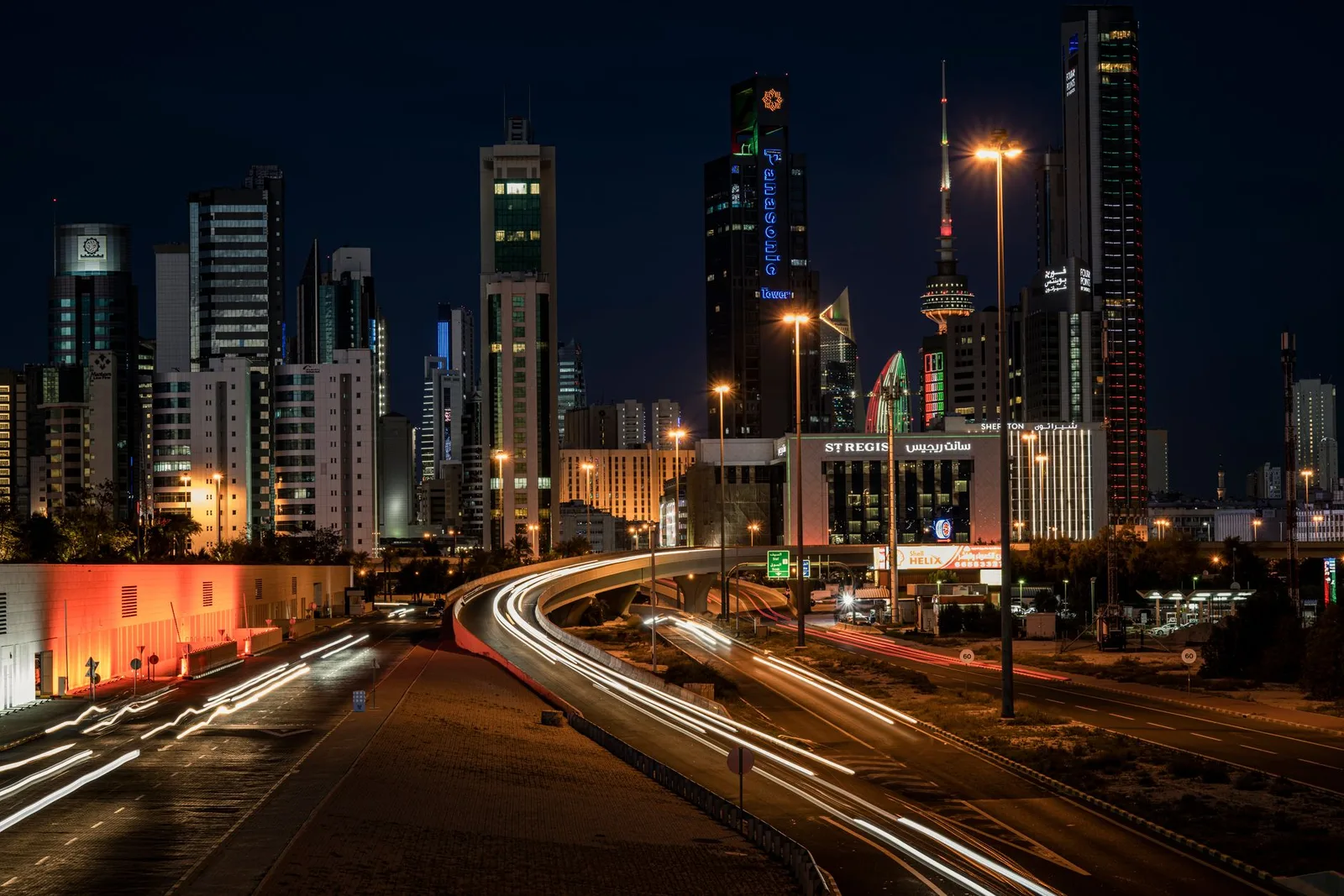
Kuwait City is compact. The expat population is significant but the city does not feel like Dubai or Doha. There is no major leisure-tourism layer, the social scene is quieter, and alcohol is genuinely unavailable. Most international families adapt quickly, and the trade-off is a calmer, more settled rhythm than the bigger Gulf cities.
The international school cluster sits in a narrow strip of suburbs south of the city centre: Salwa, Salmiya, Hawalli, and Jabriya. These are residential, well established, and walkable in pockets. Most expats live within 15 to 25 minutes of their school, and traffic is the main reason to care about that, particularly at school start and finish times.
Arabic is the official language and you will need a small amount of it for daily life, but English is widely understood in shops, hospitals, and customer-facing roles. Bureaucracy is real and slower than the UAE: residency, the Civil ID, and school enrolment paperwork all take longer than you expect. Build that into your timeline.
The schools
The British School of Kuwait

The British School of Kuwait is part of the Nord Anglia network and runs from Reception to Year 13 on a single campus in Salwa. It is the largest British-curriculum school in the country with around 3,000 students from 75-plus nationalities, follows the English National Curriculum, and offers IGCSEs and A-levels at sixth form. Accreditation includes CIS, NEASC, and BSO.
For most British-track families, this is the default starting point. The Nord Anglia affiliation since 2017 brought additional academic and co-curricular infrastructure, and the campus is well resourced. Fees run roughly USD 9,000 to USD 17,000 a year depending on year group, which is well below the Nord Anglia schools in Dubai.
American International School of Kuwait
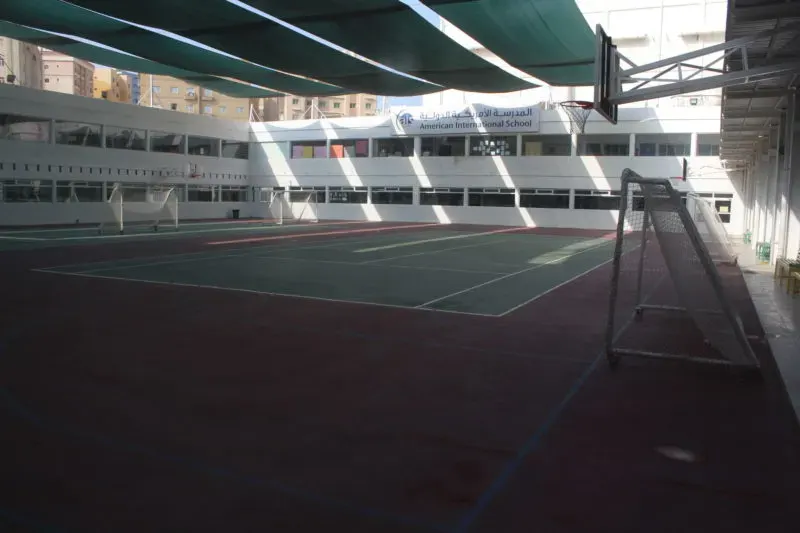
American International School of Kuwait in Salmiya is the only fully authorised IB continuum school in the country, offering the PYP, MYP, and Diploma Programme from KG1 to Grade 12. Around 60% of the student body is Kuwaiti, which gives the school a more local character than some of the other expat-heavy schools and matters if your child is looking for an internationally mixed peer group rather than predominantly Kuwaiti.
If you want full IB continuity from age 5, this is the only realistic option in Kuwait. Fees run roughly USD 9,000 to USD 15,000 a year, which is competitive for a continuum IB school anywhere in the Gulf.
American School of Kuwait
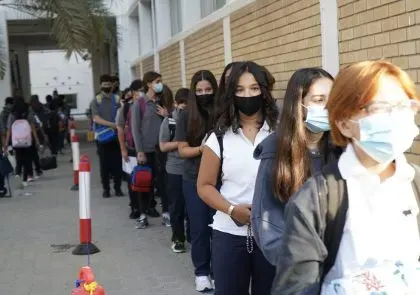
American School of Kuwait was founded in 1964 as Kuwait's first American school and runs Pre-K through Grade 12 across a tri-campus facility in Hawalli. Around 1,800 students from 40-plus nationalities, MSA-accredited since 1971, and a member of NESA. The Advanced Placement programme runs at scale with a reported 88% pass rate, and average SAT scores have historically been in the 1,380-plus range.
This is the school most US families and embassy-linked households gravitate to. The community is recognisably American in feel, the academic record is the strongest among American-curriculum schools in Kuwait, and the alumni network into US universities is well established. Fees run roughly USD 11,000 to USD 17,000, the top end of the Kuwait market.
New English School
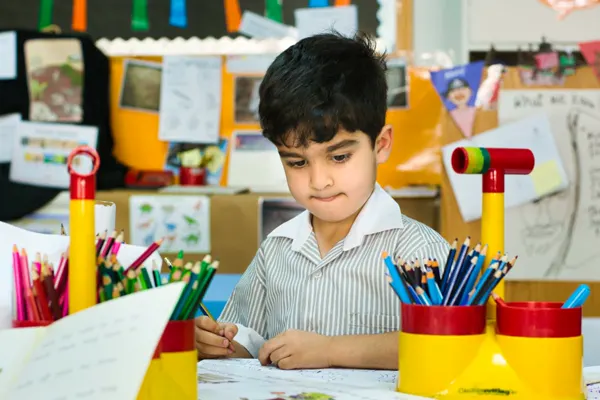
New English School in Jabriya is Kuwait's oldest co-educational private British-curriculum school, founded in 1969. Around 2,000 students from 50-plus nationalities, KG to Year 13, IGCSE and A-level, and an unusually solid academic record by published outcomes: 45% A/A at A-level and 52% A/A at IGCSE in 2025. Accreditation covers BSO, BSME, and CIS, with ECIS membership.
NES sits alongside BSK as a credible British-curriculum choice, and on outcomes its sixth form results are arguably the strongest in the city. Fees run roughly USD 6,000 to USD 14,000, materially below BSK.
Kuwait English School
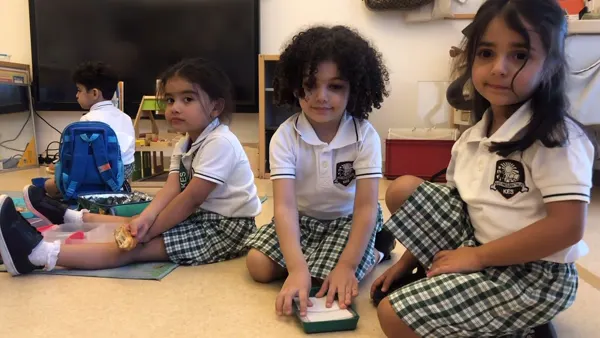
Kuwait English School in Salwa has been running since 1978 and serves around 2,500 students from 60 nationalities across KG to Year 13. British curriculum throughout, with IGCSEs and A-levels, BSME and BSO accreditation, and a dedicated SEN provision called the Green Unit that is unusual for the region. KES was also Kuwait's first Google Reference School, which signals a more intentional approach to digital learning than many of its peers.
A serious option if BSK is full or if the SEN provision matters for your child. Fees run roughly USD 6,000 to USD 16,000.
American Baccalaureate School
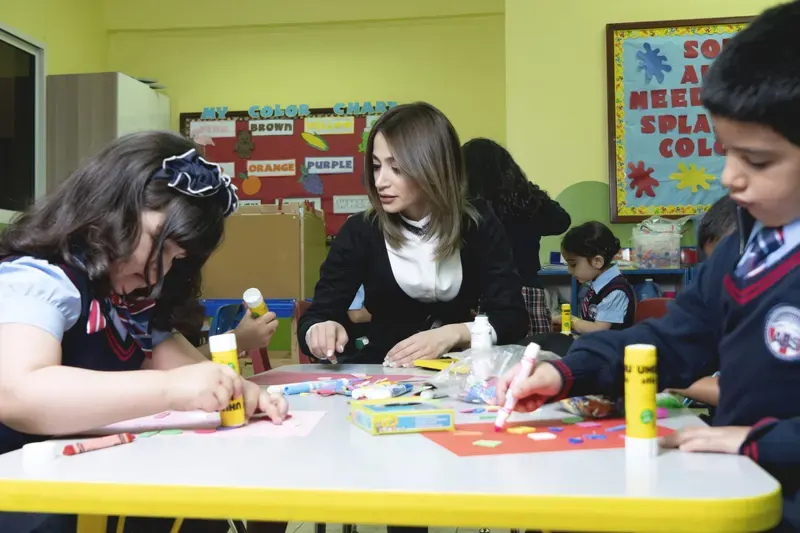
American Baccalaureate School is a non-profit American-curriculum school in Hawalli, founded in 2006 by the former Rector of Kuwait University. The 25,000 square metre campus accommodates around 1,200 students across seven buildings, holds Cognia accreditation, and has invested in specialist robotics, AI, and coding labs alongside an active AP programme.
Less established than ASK but academically credible, with a more contemporary campus and a stronger STEM and computing focus than most of its peers. Fees run roughly USD 7,000 to USD 16,000.
Al-Bayan International School

Al-Bayan International School on Beirut Street in Hawalli is a non-profit American-curriculum school running from KG2 to Grade 12. Around 800 students, inquiry-based and student-centred teaching, with CIS and NEASC accreditation alongside TASS and SSAT membership. Founded in 1993 and rebuilt under its current name in 2017.
Smaller than the headline American schools, with a calmer feel and a focus on personalised teaching. Fees run roughly USD 8,000 to USD 17,000.
The Universal American School
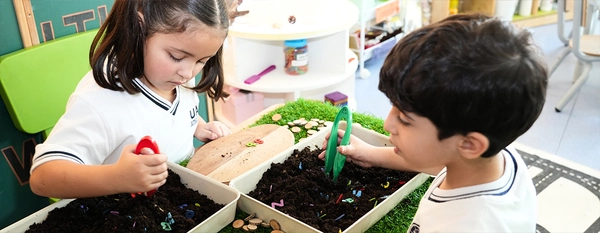
The Universal American School is a non-profit co-educational American-curriculum school in Hawalli, on Mousa Bin Nassir Street, that has been operating since 1975. Around 1,800 students from 60-plus nationalities, Nursery to Grade 12, with CIS and NEASC accreditation. The school requires an entrance examination at all grade levels, a more selective admissions process than many of its peers.
A long-running American option with a broader fee range than ASK. Roughly USD 7,000 to USD 13,000 a year.
Lycee Francais de Koweit
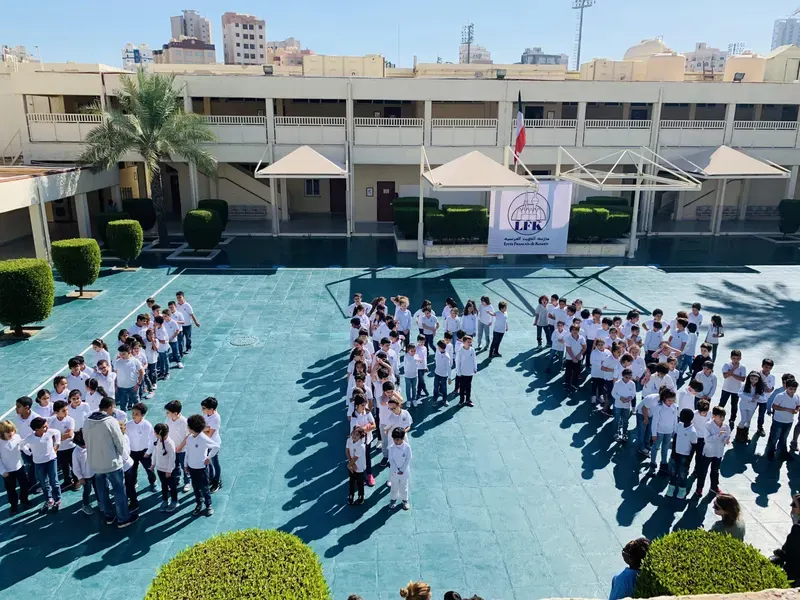
Lycee Francais de Koweit is Kuwait's French national school, founded in 1989 and affiliated with AEFE, the network of around 480 French schools abroad overseen by the French Ministry of Education. Roughly 1,200 students from Maternelle through Terminale, with teaching in French, Arabic, English, and Spanish, and a 100% Baccalaureat pass rate reported in recent years.
The natural choice for French families, francophone households, or anyone planning a return to the French system. Fees run roughly USD 6,000 to USD 12,000 a year, which is notably affordable for a Lycee abroad.
Kuwait National English School
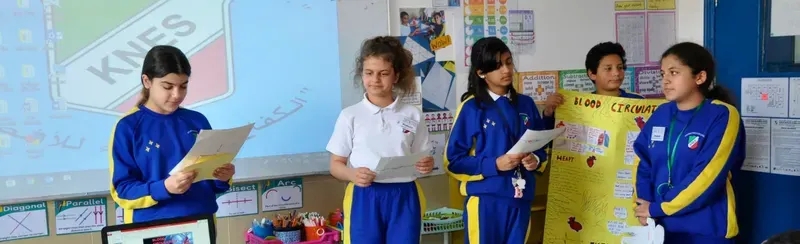
Kuwait National English School in Hawalli is a non-profit British-curriculum school running KG to Year 13, with IGCSEs and A-levels and fees that sit well below the larger international schools. Around 580 students, an Olympic-style indoor swimming pool, and a full-size gymnasium.
A reasonable option if budget is the primary constraint and a smaller school environment is acceptable. Fees run roughly USD 5,000 to USD 15,000.
Where people live
The honest summary is that most expat families with children live in the southern strip running from Salwa through Salmiya and into Hawalli and Jabriya. This is where almost all the international schools are, where the supermarkets and cafes that international families use are concentrated, and where the residential stock is set up for the way expats live.
Salwa
A long-established residential area south of Kuwait City, popular with expat families and home to BSK, KES, and the American Academy for Girls. Quiet streets, a mix of villas and apartments, and good access to Salem Al Mubarak Street for shops and restaurants. Rents for a four-bedroom villa typically run USD 2,500 to USD 4,500 a month depending on age and condition.
Salmiya
The most cosmopolitan of the southern suburbs, denser and more apartment-heavy than Salwa, and home to AIS Kuwait and Lycee Francais. Salem Al Mubarak Street and Marina Mall sit here, which means more retail, restaurants, and walkability than most of the rest of the city. A three-bedroom apartment in a good building runs USD 1,800 to USD 3,500 a month.
Hawalli
Hawalli covers a large area and contains the largest concentration of international schools: ASK, NES (just south in Jabriya), ABS, BIS, UAS, Bayan Bilingual, and Pakistan English School. The neighbourhood mixes older villa stock with apartment buildings, has a more local feel than Salwa or Salmiya, and tends to be more affordable. Hawalli is a big district: streets near Beirut Street and the school cluster differ noticeably from the older parts further north.
Jabriya
Quieter, mostly residential, and home to NES and Kuwait University's Health Sciences campus. Popular with families at NES who want a short school commute. A four-bedroom villa typically runs USD 2,000 to USD 3,500 a month.
A note on commuting
Distances in Kuwait are short by Gulf standards. School-run traffic is real but rarely catastrophic, and most schools run bus services that cover the southern suburbs comprehensively. The exception is if you choose to live north of the city in Salwa Al Sabah or further out in Sabah Al-Salem, where the commute back into the school cluster can stretch to 40 minutes in rush hour. For most families, picking a home within 15 minutes of the school is the simpler answer.
Practical notes
Setting up: Residency in Kuwait is sponsored by an employer or a spouse, and the Civil ID is the document that everything else flows from. Schools will ask for it during enrolment, although many will accept a passport plus proof of incoming residency for an initial offer. Expect the Civil ID process to take a few weeks, sometimes longer.
Healthcare: Private healthcare is widely used by international families, with Dar Al Shifa, Al Salam International Hospital, and the New Mowasat Hospital among the more popular options. Most employers provide private insurance as part of the package. The public system exists and is heavily subsidised but is not where most expats end up.
Cost of living: Kuwait is meaningfully cheaper than Dubai or Doha at the household level. A family of four in a four-bedroom villa, running two cars and eating out a couple of times a week, should budget around USD 4,500 to USD 6,500 a month before school fees. Petrol is famously cheap, utilities are subsidised, and groceries are reasonable, although imported speciality items add up.
Driving: A car is essential. Public transport is limited and not how international families get around. Driving in Kuwait is faster and more aggressive than the UAE, and accident rates are higher. Factor that in before you set foot behind the wheel.
Alcohol and social life: Kuwait is a fully dry country. Alcohol is illegal to import, sell, or consume. The expat social scene works around that with private gatherings, sports clubs, and frequent weekend trips to Dubai or Bahrain. Families with school-age children tend to find the rhythm easier than singles or couples without children, because schools and sports clubs structure a lot of the social calendar.
FAQs
Which Kuwait international schools have the best academic outcomes? On published exam results, New English School reports the strongest A-level and IGCSE outcomes among British-curriculum schools, with 45% A/A at A-level and 52% A/A at IGCSE in 2025. Among American-curriculum schools, American School of Kuwait reports an 88% AP pass rate and average SAT scores above 1,380. American International School of Kuwait is the only fully authorised IB continuum school in the country.
Is there a good IB school in Kuwait? American International School of Kuwait in Salmiya is the only fully authorised IB continuum school, running PYP, MYP, and the Diploma. American Creativity Academy offers the IB Diploma at sixth form alongside its American programme. If full IB continuity from primary matters, AIS is the realistic option.
Do I need to live near the school? It is the easier choice. Distances in Kuwait are short and most schools run bus services across the southern suburbs, but the school cluster is concentrated in Salwa, Salmiya, Hawalli, and Jabriya, and living in or near those neighbourhoods removes a daily friction. Living north of the city or far south of the school belt is workable but adds 30 to 40 minutes to the school run in rush hour.
How early should I apply? Popular entry years at the strongest schools can fill up. Contacting admissions four to six months before your intended start date is sensible, and earlier if you are arriving for the start of the academic year in September. Treat any waiting-list information you read as indicative rather than current and confirm directly with the school.
Are there cheaper international schools in Kuwait that still lead to recognised qualifications? Yes. Kuwait National English School and The English Academy both run the British curriculum through to A-level at fees below the larger schools. Gulf English School in Salmiya also runs the British curriculum at lower fees. Quality and class size will not match BSK or NES, but the qualifications at exit are the same internationally recognised IGCSE and A-level set.
Fees correct as of May 2026. Figures shown are USD equivalents based on fee ranges published by each school in Kuwaiti dinar. Exchange rates fluctuate. We work hard to make every figure, date and description on this page accurate. We don't always get it right. If you spot an error, a fee that's changed, a fact that's out of date, or something we've got wrong, please tell us. Use the feedback button above or email us directly. We'll check it and update the article.