Notes / Johannesburg
Best International Schools in Johannesburg: The 2026 Guide for Families
Johannesburg's school market is more interesting than most arriving families expect. The fees are low by global standards, the IB results at the better schools are genuinely strong, and the northern suburbs cluster means you can live close to school without spending a fortune.
Comparison table
| School | Curriculum | Ages | Fees range (USD) | Notes |
|---|---|---|---|---|
| American International School of Johannesburg | IB, American | 3-18 | 10,344–39,083 | Diepsloot, North Johannesburg |
| Redhill School | IB | 3-18 | 5,440–11,040 | Morningside, Sandton |
| Crawford International Sandton | IB | 3-18 | 7,267–11,772 | Benmore, Sandton |
| St Stithians College | — | 3-18 | 4,141–11,093 | Lyme Park, Randburg/Sandton |
| St John's College Johannesburg | British, Cambridge | 3-18 | 4,838–12,943 | Houghton, Johannesburg |
| Roedean School SA | — | 5-18 | 6,758–12,950 | Parktown, Johannesburg |
| Deutsche Internationale Schule Johannesburg | German | 1-18 | 4,733–6,570 | Parktown, Johannesburg |
Fees converted to USD at indicative 2026 rates. Verify current figures with each school.
TL;DR
- Most of the international schools cluster in the northern suburbs: Sandton, Bryanston, Fourways, and Midrand. If you live north of the M1 you will be within 20 minutes of most shortlisted schools.
- Fees are low relative to Singapore, Dubai, or Hong Kong. The most expensive English-medium option (AISJ at the top end) costs around USD 38,000 a year. Most schools sit between ZAR 100,000 and ZAR 220,000 (roughly USD 5,000-USD 12,000), and the quality at that price point is genuinely good.
- South Africa runs two main examination systems families need to understand: the IB Diploma and the IEB matric. Both are well-regarded internationally. The national curriculum (NSC) is a separate track and is not typically used by international schools.
- Loadshedding (rolling power cuts) has been a real factor for schools in recent years. Stage 2 or higher affects after-school activities, boarding facilities, and sometimes the school day itself. Ask each school about their backup generation capacity.
- The rand's volatility means USD-equivalent fees shift. Fees below are quoted in ZAR first; USD equivalents are indicative.
The city
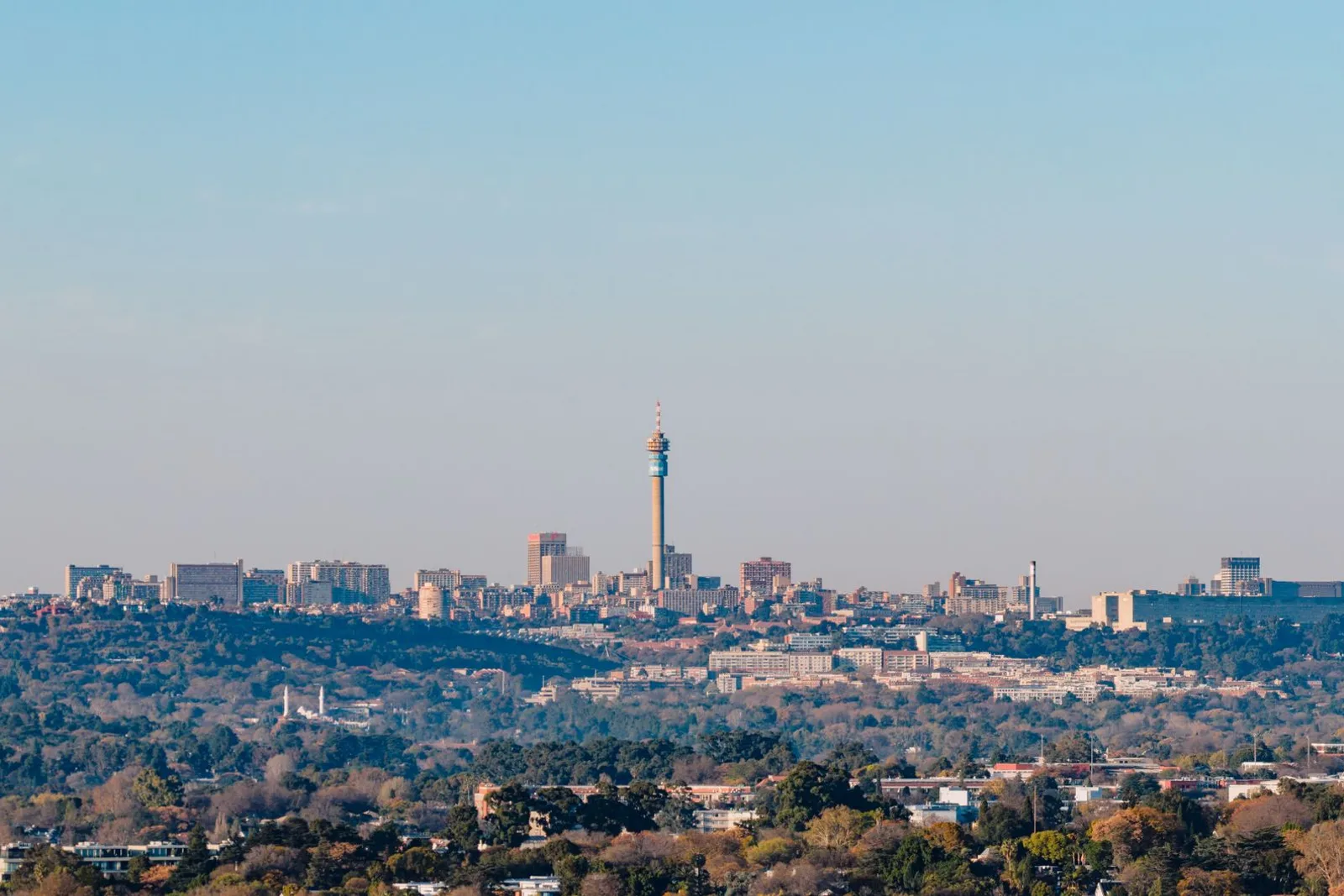
Johannesburg is large, sprawling, and entirely car-dependent outside the northern suburbs. The public transport network is not a realistic option for most international families. That means your school choice and your home choice are more closely linked here than in, say, Madrid or Amsterdam. Getting the location right early matters.
Security is a topic families ask about before almost anything else, and we will be direct. Crime is a real feature of life in Jo'burg, and most families in the international school catchment area live in gated estates or security complexes in the northern suburbs. Schools themselves are typically behind gates with security staff, and the daily school run takes place largely within this ecosystem. Once you are set up in the right area, day-to-day life is more normal than the reputation suggests. Plenty of families do three or four postings here and find it one of the more enjoyable cities they have lived in.
Loadshedding is the other thing to understand before you arrive. Eskom, the state electricity utility, has spent years running scheduled rolling blackouts to manage a capacity shortfall. The situation improved materially in 2024-25, but families and schools have adapted by investing in solar, generators, and battery backup. When evaluating schools, ask directly about backup power and what happens to the school day during a Stage 4 or Stage 6 event.
The climate is exceptional: Johannesburg sits at altitude, which keeps summers cooler and the air dryer than coastal cities. Cold, clear winters. No coast, but the Highveld has its own appeal.
South Africa's education system produces two parallel qualifications that international families encounter: the IEB National Senior Certificate and the IB Diploma. The IEB is South Africa's independent schools examination board, academically rigorous and well-regarded by UK, Australian, and US universities. The IB Diploma runs on the international standard everyone in the IB system knows. Several schools here offer both, which gives families some flexibility as they finalise university ambitions in sixth form.
The schools
American International School of Johannesburg
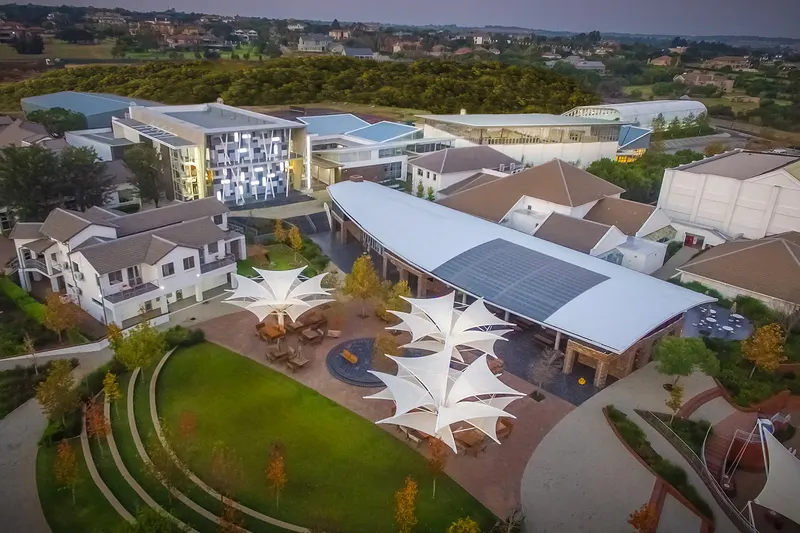
AISJ is the US-embassy-affiliated school in Diepsloot, north of the city, and the main destination for American families and those targeting US universities from Johannesburg. It runs Pre-K through Grade 12 on the American curriculum, with the IB Diploma available at Grades 11-12 alongside the American system. The IB average in 2025 was 33.0, roughly two and a half points above the world mean. Around 771 students from over 50 nationalities attend.
AISJ is the most expensive option on the list in USD terms once you factor in the full range. Fees for 2025-26 run from ZAR 186,200 (Pre-K, approximately USD 10,000) to ZAR 703,494 for Grades 11-12 (approximately USD 38,000). A one-time capital fee of ZAR 209,475 (approximately USD 11,500) applies to new students. The gap between this and everything else on the list is significant. Factor it in before you shortlist.
The Diepsloot location is in the north of the city, but it is further out than most of the Sandton cluster. Families living in Sandton, Bryanston, or Fourways are looking at 20-35 minutes depending on traffic and where exactly you live.
Redhill School
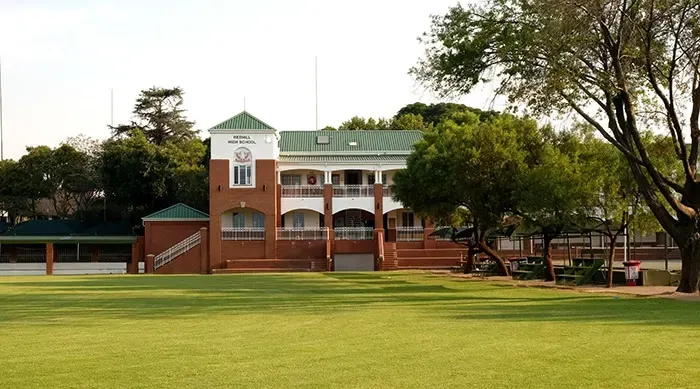
Redhill in Morningside, Sandton, is the school that comes up most in conversations among families who have been in Jo'burg a few years. It runs the IB Middle Years Programme and IB Diploma alongside IEB matric, on a large campus with around 1,500 students from 30+ nationalities. The IB Diploma average in 2025 was 34.0, four points above the world mean and the strongest result among the schools on this list. IEB matric results in 2025 ranked Redhill as the top South African private school in that system.
Fees are the other thing that makes Redhill stand out. They run from ZAR 96,900 for KG1 (approximately USD 5,300) to ZAR 196,650 for Grade 12 IB (approximately USD 10,700). That is a fraction of the comparable cost in Singapore or Dubai for a school producing similar IB scores. Families on corporate packages often arrive expecting to spend significantly more and are genuinely surprised.
The Morningside location puts it in the heart of the Sandton catchment, well placed for families living in Sandton, Bryanston, or Hyde Park.
Crawford International Sandton
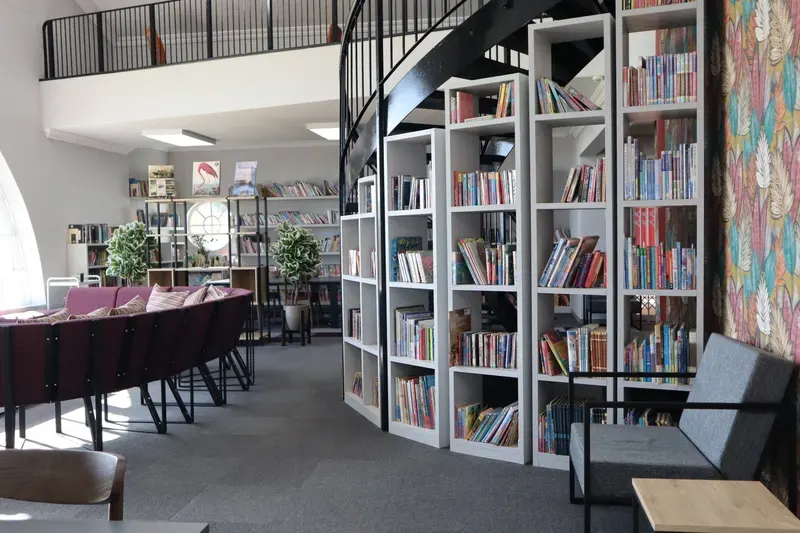
Crawford International Sandton is part of the JSE-listed ADvTECH group and operates as one of the larger co-educational schools in the Sandton area, with around 2,800 students. The Preparatory school (Grades 1-7) is authorised for the IB Primary Years Programme; the College (Grades 8-12) prepares students for IEB matric.
All-inclusive fees for 2026 start at ZAR 130,800 for Grade 1 (approximately USD 7,100) and reach ZAR 211,900 for Grade 12 (approximately USD 11,600), with a one-time enrolment fee of ZAR 12,000. The school is large by local standards, which gives it breadth of co-curricular activity and more social flexibility at entry, though ask about class sizes at the upper secondary level.
The Benmore, Sandton location is central to the northern suburbs cluster, which is one of its practical advantages.
St Stithians College
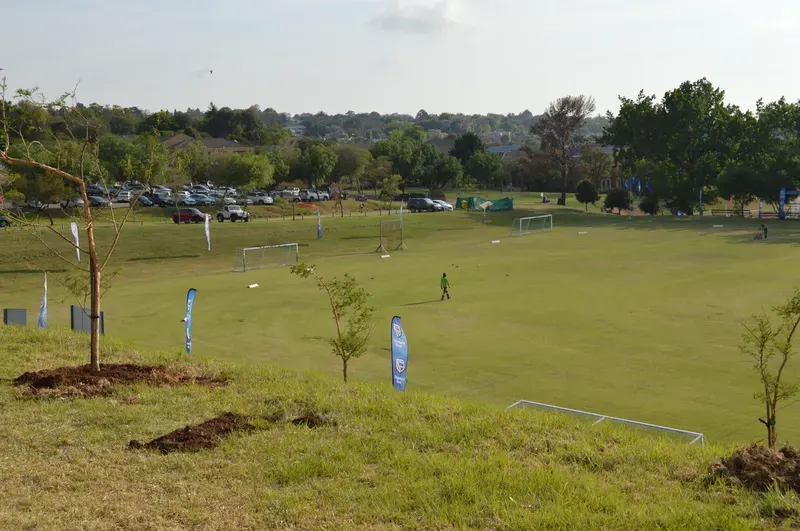
St Stithians in Lyme Park, on the Randburg-Sandton border, is a Methodist co-educational school structured as a college of seven schools on a 100-hectare campus, with around 2,600 students. It runs the IEB matric exclusively. In 2025, the 264 matric candidates achieved a 100% pass rate and 814 subject distinctions. The bachelor degree pass rate was 98.9%.
Fees run from ZAR 74,540 for the youngest year groups (approximately USD 4,100) to ZAR 199,680 for high school (approximately USD 10,900), with boarding available for boys from Grade 8. The boarding offer is one of the few real options for boys in the northern suburbs if you need it, and the campus facilities reflect the scale of the school.
St Stithians draws a strong South African professional and business family base alongside the international community, which gives it a different social character from the more transient international schools. Some families see that as a feature.
St John's College Johannesburg
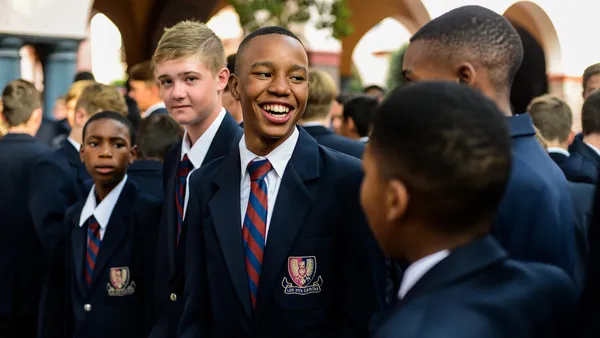
St John's College in Houghton is an independent Anglican boys' school offering both British curriculum (IGCSE and Cambridge A-Levels) and IEB matric, with around 1,500 students including 240 boarders. A-Level A*/A grades in 2025 ran at 33%. IEB bachelor degree pass rate was 90%.
Fees for 2026 run from ZAR 87,076 for Bridge Nursery (approximately USD 4,700) to ZAR 232,974 for Grades 8-12 (approximately USD 12,700). It is one of the few schools in Johannesburg offering Cambridge A-Levels as a genuine sixth form pathway, which is relevant if your child is heading to UK universities and wants the A-Level route specifically. Boarding from Grade 8 is available.
Houghton is south-east of Sandton, which means it sits outside the main northern suburb cluster. For families in Bryanston or Fourways, the commute adds up. For families in Rosebank, Hyde Park, or closer to the CBD, it makes more geographic sense.
Roedean School SA
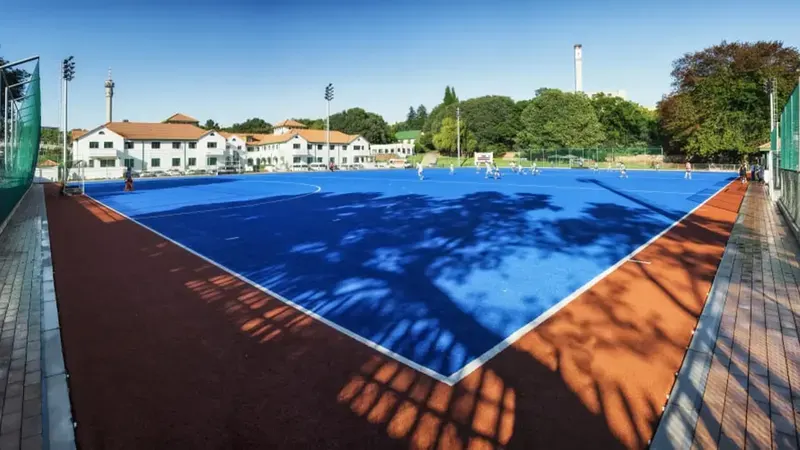
Roedean School SA in Parktown is one of the most established IEB girls' schools in the country, serving around 800 students from Grade 0 to Matric as a boarding and day school. In 2025, 73 matric candidates achieved a 100% bachelor's pass rate and 307 distinctions, with 37 students achieving A averages. The school has the institutional weight that comes from over a century of operation in this city.
Day fees for 2026 run from ZAR 121,638 for Grade 0 (approximately USD 6,600) to ZAR 233,104 for Grades 10-12 (approximately USD 12,700). Weekly boarding adds ZAR 143,994; termly boarding ZAR 179,991.
Parktown is in the inner city and sits further south than most of the northern suburbs cluster. Families in Sandton typically consider it for girls whose academic profile is a strong fit, rather than as a default first choice based on proximity.
Deutsche Internationale Schule Johannesburg
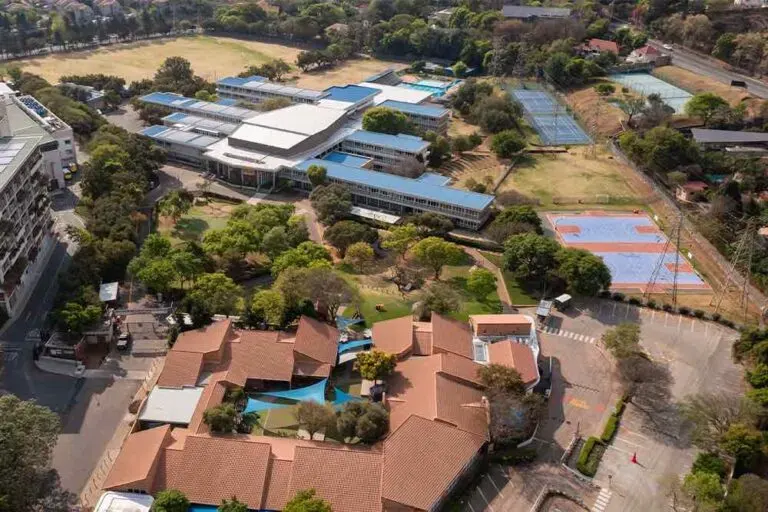
DSJ in Parktown is one of Africa's largest German international schools, established in 1890 and operating in a bilingual German-English environment. It offers both the German Abitur and the IEB National Senior Certificate to around 1,000 students from 36+ nationalities. It is the natural school for German families and for others who want a genuine bilingual environment with European curriculum rigour.
Fees for 2026 are the most affordable on this list: ZAR 88,980 for Regentropfchen (ages 1-3, approximately USD 4,800) to ZAR 118,260 for Senior High School (approximately USD 6,400). For German-speaking families or those comfortable with a German-medium environment from the lower years, it is very strong value.
The Parktown location places it south of the main Sandton cluster. The school is accustomed to serving a geographically spread community and runs buses from several northern suburbs.
IB results in context
The global IB Diploma average in 2025 was 30.5. Both the IB-offering schools on this list sit meaningfully above that:
| School | 2025 IB average |
|---|---|
| Redhill School | 34.0 |
| American International School of Johannesburg | 33.0 |
Both figures beat the world mean by two and a half points or more, which puts Johannesburg's leading IB schools in solid company globally. The IB cohort sizes at both schools are relatively small, which means results can move year to year. The directional picture is consistently strong.
For schools offering IEB matric rather than IB Diploma, the metric to look at is the bachelor degree pass rate (the proportion of students eligible for university). St Stithians (98.9%), Roedean (100%), and St John's (90%) all produced strong results in 2025.
Where people live
The school geography pulls families north, and most international families end up in one of three zones.
Sandton, Bryanston, and Hyde Park
The core. Sandton is the financial district and the social centre of the expat and business community. Bryanston is residential and spacious, with large plots, estate living, and good access to most northern suburbs schools. Hyde Park sits between the two and is slightly more urban in character.
Rents in this area vary substantially by security estate. A four-bedroom family house in a Bryanston estate runs ZAR 35,000-ZAR 65,000/month (approximately USD 1,900-USD 3,500). Sandton apartment living is slightly cheaper; larger homes on standalone plots are more expensive. Most families in this area have a domestic worker and a garden service as standard, which is conventional here at this income level and reflected in the way life is set up.
Redhill, Crawford Sandton, and the Lycée Jules Verne are all directly accessible from this base. AISJ is a 25-30 minute drive further north.
Fourways and Kyalami
Further north, more suburban, and increasingly popular with families who want newer estate living and more space. The Fourways area has expanded substantially in the last decade and has good schools nearby, including HeronBridge College and Crawford campuses. The Kyalami area attracts families who want a semi-rural feel without being too far from the city.
Rents are lower than Sandton like-for-like. A four-bedroom estate house in Fourways typically runs ZAR 25,000-ZAR 45,000/month (approximately USD 1,400-USD 2,500). The trade-off is that Fourways is further from the Sandton social centre and from schools like St John's or Roedean in Parktown.
Waterfall, Midrand
The newer corridor between Johannesburg and Pretoria. Waterfall Estate in Midrand is purpose-built, well-secured, and increasingly used by families on corporate postings, partly because it sits between the two cities and reduces commute time for parents working in either. Reddam House Waterfall is on the estate, which is a significant practical advantage.
Rents in Waterfall Estate are mid-range: ZAR 30,000-ZAR 55,000/month (approximately USD 1,600-USD 3,000) for a family home. The estate itself is very self-contained, which families either find reassuring or find limiting, depending on what they want from daily life.
On security and estate living
Most families in the international school catchment area live in secured developments rather than on open streets. This is not optional, really; it is how this part of the city is set up. The range runs from large gated residential estates (the most comprehensive security infrastructure, clubhouse, shared garden, pool) to security complexes in suburbs like Bryanston and Morningside (electric fencing, guard at gate, camera coverage). The former offer more space and more security theatre; the latter offer location convenience and often lower rents. Both are normal. Both have families who find them comfortable.
The school security context is similar: schools operate with gated access, security guards, and camera coverage as standard. Children do not walk to school here; the school run is by car or by school bus.
Practical notes
Loadshedding and backup power: The situation improved considerably through 2024-25, but families and schools have adapted by investing in solar, generators, and battery backup. When evaluating schools, ask directly about generation capacity and what the school's protocol is during higher-stage loadshedding. Some schools can run a full day; others adjust timetables. Get clarity before you commit.
The rand: The South African rand fluctuates significantly against hard currencies. USD-equivalent fees here are indicative based on a mid-2026 rate; by the time you arrive, fees in ZAR will be the same and the USD number may differ. If you are on a ZAR salary, this is irrelevant. If you are on a hard currency package, it works in your favour most of the time.
IEB versus IB: Several schools offer both tracks, and the choice matters for university. UK universities accept the IEB well; US universities are more familiar with the IB. If your child is 13 or older when you arrive and has a clear geography for university, think about which examination system aligns better before you commit to a school. If they are younger, both tracks are fine to start and you can revisit later.
Healthcare: Private healthcare in Johannesburg is good and well-established. Discovery Health is the dominant private insurer; Mediclinic and Netcare are the main private hospital groups with facilities throughout the northern suburbs. Most corporate packages include private health coverage. If you are self-arranging, budget for a Discovery Health plan.
Cost of living: A family of four in the northern suburbs, running a car, with a domestic worker and garden service, and eating out occasionally, should budget ZAR 80,000-ZAR 120,000/month (approximately USD 4,400-USD 6,600) before school fees. Groceries, restaurants, and entertainment are significantly cheaper than in London, Dubai, or Singapore.
FAQs
Which Johannesburg international schools have the best IB results? Redhill School in Morningside averaged 34.0 at IB Diploma in 2025, which is three and a half points above the world average of 30.5. The American International School of Johannesburg averaged 33.0. Both results put them comfortably above the global mean and in solid standing compared with international schools in more expensive cities.
Is there a good American school in Johannesburg? AISJ (the American International School of Johannesburg) in Diepsloot is the established option, US-embassy-affiliated and accredited. It runs the American curriculum Pre-K through Grade 12, with IB Diploma available in the senior years. It is the natural choice for US families or those targeting US universities, though it is the most expensive school on this list by some distance.
What is the IEB and is it accepted by international universities? The IEB (Independent Examinations Board) is South Africa's private school examination system, used by most of the country's leading independent schools. It produces the National Senior Certificate at Matric level and is well-regarded by UK, Australian, and South African universities. US universities are generally less familiar with it; families targeting US universities may prefer schools offering the IB Diploma. Check directly with target universities if your child is nearing the senior years.
Do I need to live in the northern suburbs to access the best schools? For most families on this list, yes. The schools cluster in the north: Sandton, Bryanston, Morningside, Fourways, and Midrand. Schools further south (St John's in Houghton, Roedean and DSJ in Parktown) are accessible from the southern parts of the northern suburbs, but a Fourways-to-Houghton school run in morning traffic is 40-50 minutes. There is no real equivalent of a metro or train network that changes the calculation. Live close to your shortlisted school.
How does loadshedding affect schools? During higher-stage loadshedding, schools without adequate backup generation can lose power for several hours at a time. Most of the established schools have invested in generator or solar capacity since 2022-23, and the situation has improved as Eskom's own generation improved in 2024-25. That said, ask each school directly about their backup capacity and what their protocol is if you want certainty before you commit.
Are school fees lower in Johannesburg than other cities? Substantially. The most expensive English-medium international school (AISJ at the top of range) costs roughly USD 38,000 for the oldest year groups, which is at the lower end of equivalent schools in Singapore or Dubai. Most schools on this list sit between USD 5,000 and USD 13,000. For families on hard-currency packages, Johannesburg represents genuinely good value for quality schooling.
Fees correct as of May 2026. ZAR/USD equivalents are indicative based on an approximate rate of ZAR 18.3:USD 1. Exchange rates move and the ZAR figure is the one to rely on. We work hard to make every figure, date and description on this page accurate. We don't always get it right. If you spot an error, a fee that's changed, a fact that's out of date, or something we've got wrong, please tell us. Use the feedback button above or email us directly. We'll check it and update the article.