Notes / Jakarta
The Best International Schools in Jakarta for Secondary Age Students
Choosing a secondary school in Jakarta is a high-stakes decision. Here's how the top options compare on results, pathways and university outcomes.
Comparison table
| School | Curriculum | Ages | Fees range (USD) | Notes |
|---|---|---|---|---|
| North Jakarta Intercultural School | IB | 3–18 | 4,255–15,905 | North Jakarta |
| Gandhi Memorial International School | IB, Cambridge, IGCSE | 3–18 | 4,393–9,509 | Central Jakarta |
| British School Jakarta | IB, British | 2–18 | 8,919–31,564 | Greater Jakarta |
| Binus School Simprug | IB, Cambridge | 2–18 | 4,707–12,338 | South Jakarta |
| Jakarta Intercultural School | IB, AP | 3–18 | 18,119–54,755 | South Jakarta |
| Australian Independent School Jakarta | IB, Australian | 3–18 | 5,975–26,308 | South Jakarta |
| ACG School Jakarta | IB, IGCSE | 3–17 | 9,391–22,326 | South Jakarta |
| The Independent School of Jakarta | British, IGCSE | 2-18 | 8,827–30,011 | South Jakarta |
| Nord Anglia School Jakarta | British, International | 18 months–12 | 6,911–20,874 | South Jakarta |
Fees converted to USD at indicative 2026 rates. Verify current figures with each school.
TL;DR
- JIS is the strongest secondary school in Jakarta, the only school offering both AP and IB Diploma, with WASC accreditation and the broadest co-curricular programme in the city
- BSJ runs a distinctive British pathway: English National Curriculum through IGCSE, then IB Diploma in Sixth Form, with strong results and experienced UK-qualified staff
- AIS offers the IB Diploma after an Australian curriculum pathway, with particularly strong pastoral care and learning support
- The mid-tier schools, ACG, Binus Simprug, NJIS and GMIS, all offer credible IB Diploma programmes at significantly lower fees
- ISJ has secondary year groups rolling out year by year, with a dedicated senior campus opening in 2028 taking pupils through to A-Levels. One to watch, and already a partial secondary option from Year 7 onwards
The Schools
| School | Secondary Fees (USD) | Exit Qualifications | Curriculum Pathway | Location |
|---|---|---|---|---|
| JIS | $35,685–$35,916 | AP + IB Diploma | American → AP/IB DP | Pondok Indah |
| BSJ | $30,735–$32,910 | Cambridge IGCSE + IB Diploma | ENC → IGCSE → IB DP | Bintaro |
| AIS | $25,628–$26,308 | IB Diploma | Australian → IB DP | Pejaten |
| ACG | $24,398–$24,673 | IB Diploma | NZ + IB MYP → IB DP | Jababeka / South Jakarta |
| NJIS | ~$16,000–$18,000 | IB Diploma | IB MYP → IB DP | Kelapa Gading |
| Binus Simprug | ~$15,000 | IB Diploma | IB MYP → IB DP | Simprug |
| GMIS | ~$10,000 | IB Diploma + Cambridge IGCSE/A Levels | IB MYP + Cambridge → IB DP/CP | Kemayoran |
Fees correct as of February 2026. Exchange rate: IDR 16,826 = $1 USD. All top-tier fees from verified 2025–26 fee schedules. Binus, NJIS and GMIS from third-party sources, verify directly with admissions.
The Secondary Decision
Three things change at secondary that do not apply in the same way at primary.
Exit qualifications define the pathway. A child sitting Cambridge IGCSEs at BSJ is on a different academic track from a child taking IB MYP at Binus Simprug or AP courses at JIS. All three can reach top universities, but the routes diverge, and switching pathways at 15 or 16 is harder than switching schools at 8.
University counselling matters. The quality of a school's university guidance, the experience of the counsellors, the institutional relationships, the track record with specific university systems, becomes a genuine differentiator at secondary. A school that places students into Ivy League, Oxbridge, Russell Group and Go8 universities year after year has built something that takes decades to develop.
Subject breadth narrows. At IGCSE, students typically take 8–10 subjects. At IB Diploma, six. At A Level, three or four. The school's ability to offer a wide range of subjects, and to staff them with experienced teachers, depends on scale and resources. Smaller schools may not offer the combination your child needs.
The Top Tier
JIS - Jakarta Intercultural School
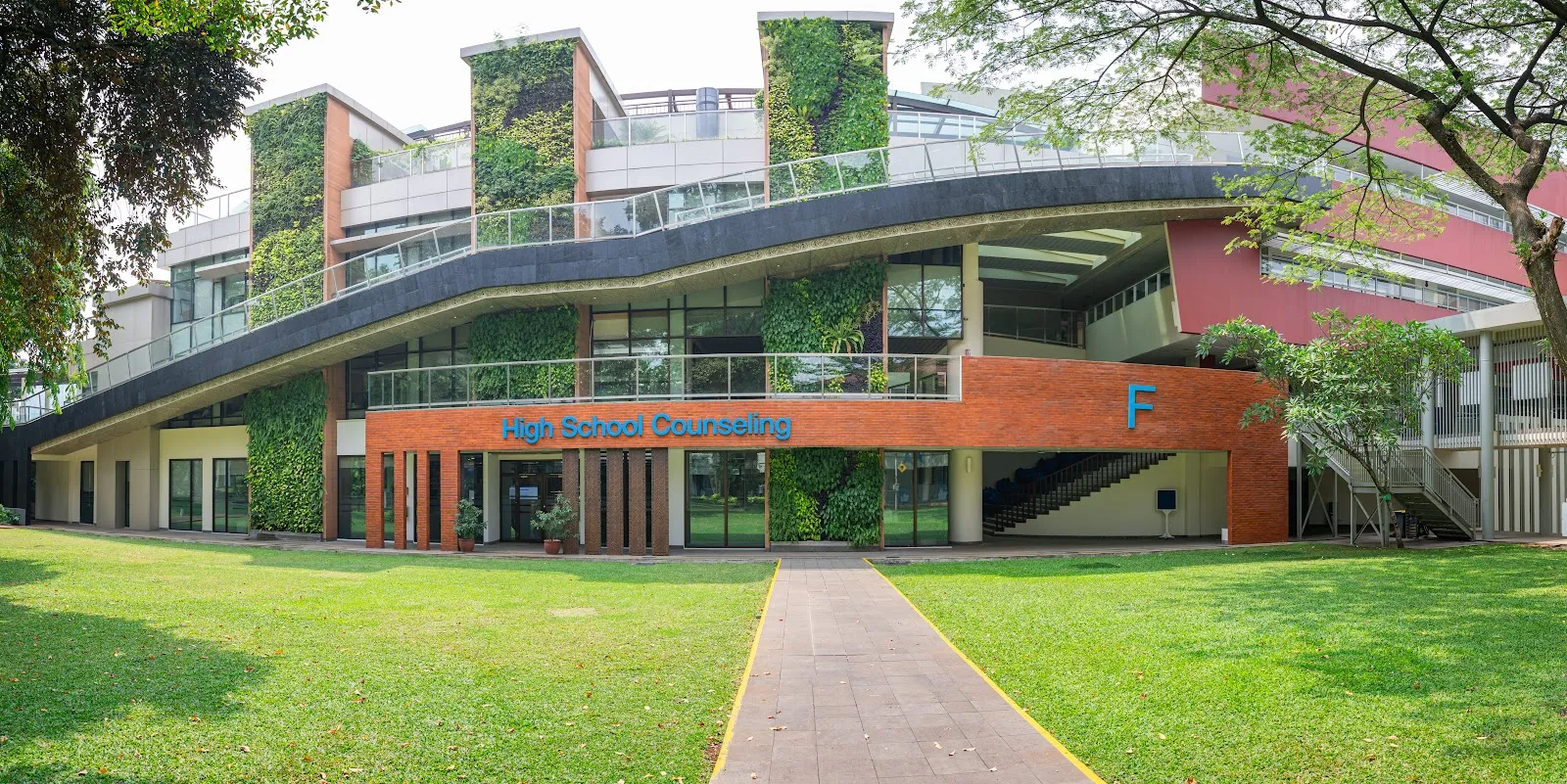
JIS is Jakarta's largest and most internationally diverse school, 2,500+ students from over 70 nationalities, and its secondary programme is the broadest in the city. JIS is the only school in Jakarta offering both AP (Advanced Placement) and the IB Diploma. Students choose their pathway in Grades 11–12: full IB Diploma, a selection of AP courses, or a combination of both.
This dual pathway model is unusual internationally. It means a student with a clear strength in STEM can load AP courses in those subjects while taking IB for breadth, or a student who thrives on the IB's structured approach can commit fully to the Diploma. The flexibility is a genuine advantage that no other Jakarta school offers.
JIS is WASC-accredited and produces US-compatible transcripts. College counselling is well-resourced, and JIS graduates go to American, British, Australian and Asian universities. The campus in Pondok Indah has the strongest co-curricular programme in the city, sport, arts, service, and competitive academic programmes. JIS charges $35,685 at Middle School (Grades 6–8) and $35,916 at High School (Grades 9–12). Elementary fees start at $31,367, the fee escalation from primary to secondary is more gradual at JIS than at BSJ, but the total is higher at every level.
Secondary fees: $35,685–$35,916/year Exit qualifications: AP, IB Diploma, JIS High School Diploma Accreditation: CIS, WASC
BSJ - British School Jakarta
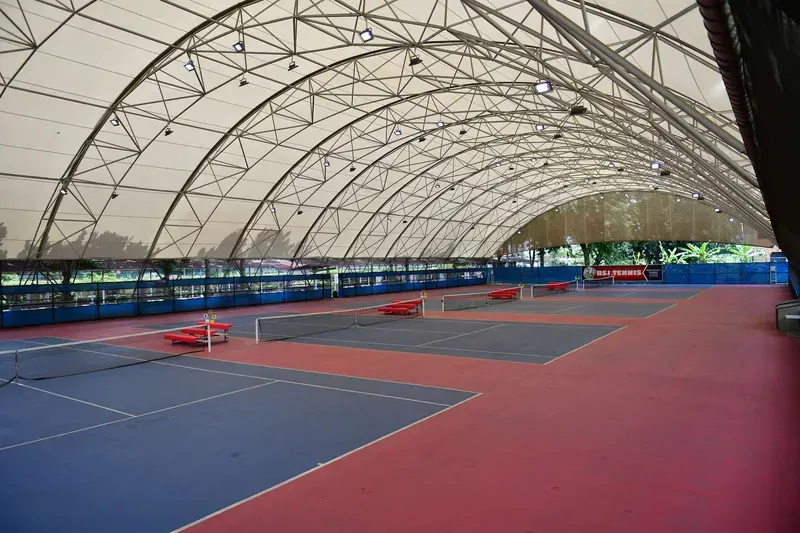
BSJ runs the English National Curriculum through Key Stages 3 and 4, with students sitting Cambridge IGCSEs at Year 11. In Sixth Form (Years 12–13), BSJ switches to the IB Diploma, a deliberate hybrid model that combines British subject rigour in the middle years with the breadth of IB at 16+.
This pathway produces students who arrive at the Diploma well prepared for independent study. The IGCSE-to-IB transition is managed carefully, and BSJ's Sixth Form has built a strong track record. Staff are predominantly UK-qualified. The Bintaro campus is one of the best-resourced school environments in the country.
BSJ is a non-profit trust with five decades of history. Sixth Form fees sit at $32,910 per year (Years 12–13). Secondary fees range from $30,735 (Years 7–9) to $31,948 (Years 10–11). The school attracts a mix of British, European and international families, with a significant Indonesian cohort.
For families who want British academic culture, structured subjects, clear progression, IGCSE credentials, leading into the IB Diploma, BSJ is the strongest option in Jakarta. For more on the IGCSE-to-IB pathway and how it compares to a pure IB route, read our IB vs A-Levels guide.
Secondary fees: $30,735–$32,910/year Exit qualifications: Cambridge IGCSE, IB Diploma Accreditation: CIS, BSO
AIS - Australian Independent School Jakarta
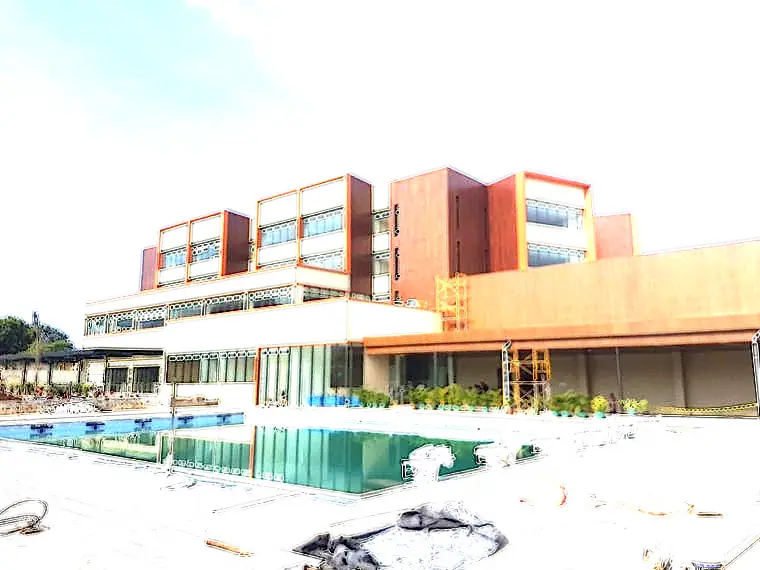
AIS runs the Australian National Curriculum from Foundation to Year 10, then switches to the IB Diploma for Years 11–12. Secondary fees are $25,628 at Years 7–10 and $26,308 at Years 11–12, putting AIS below BSJ and JIS but firmly in the top bracket.
AIS is well-regarded for pastoral care. The learning support programme is the most detailed and transparent in Jakarta, with a separately published fee schedule for EAL and specialist support. For families with children who need additional support at secondary level, AIS takes this more seriously than most. The campus is in Pejaten, South Jakarta. AIS runs a calendar year (January–December) rather than August–June.
Ask about IB Diploma results and university destinations directly. AIS does not publish them online, but the data exists and admissions will share it.
Secondary fees: $25,628–$26,308/year Exit qualifications: IB Diploma Accreditation: CIS, NEASC
The Mid Tier
The top-tier schools sit in a different bracket from the schools below, in fees, in facilities, and in the breadth of programme they can offer. The schools in this section are credible secondary options at a lower price point. Some deliver impressive results. All involve trade-offs in subject range, co-curricular breadth, campus facilities, or university counselling depth.
ACG - ACG School Jakarta

ACG runs the full IB continuum, PYP, MYP and Diploma Programme, alongside a New Zealand curriculum framework. At secondary level, fees are $24,398–$24,673 per year (tuition plus compulsory development fee). ACG sits closer to the top tier than the mid tier on price, but the school's profile and scale place it between the two. It benefits from a coherent IB pathway from primary through secondary. The school draws a mix of expat and Indonesian families.
Secondary fees: $24,398–$24,673/year Exit qualifications: IB Diploma
Binus Simprug
Binus Simprug runs the full IB continuum (PYP, MYP, DP) and has published an IB Diploma average score of 34 points with a 95% pass rate, both above global averages. The student body is majority Indonesian. At approximately $15,000 per year at the high end, this is the strongest IB value proposition in Jakarta.
For families who want a credible IB Diploma pathway and cannot stretch to JIS or BSJ fees, Binus Simprug is the first name to investigate. The peer group is predominantly Indonesian and the school culture reflects that, for some families a positive, for others a consideration.
Secondary fees: ~$15,000/year (estimated) Exit qualifications: IB Diploma Published IB average: 34 points, 95% pass rate
NJIS - North Jakarta Intercultural School

NJIS sits in Kelapa Gading and runs the full IB continuum. For families based in North Jakarta, geography narrows the choice significantly, NJIS is one of very few credible international schools in that part of the city. Fees are in the $16,000–$18,000 range at Diploma level. The school is WASC-accredited, making it the only North Jakarta school with American accreditation.
NJIS is much smaller than the South Jakarta options, approximately 266 students from 16 nationalities. Smaller schools offer closer teacher-student relationships but also narrower subject options and a smaller peer group.
Secondary fees: ~$16,000–$18,000/year (estimated) Exit qualifications: IB Diploma, NJIS Diploma Accreditation: WASC
GMIS - Gandhi Memorial Intercontinental School
GMIS holds the broadest qualification portfolio in Jakarta, IB PYP, MYP, Diploma Programme, Career-related Programme (CP), and Cambridge IGCSEs and A Levels. IB-authorised since 1996, its track record is the longest of any Jakarta school. The student body is diverse, over 50 nationalities, with significant Indian, Korean, Chinese and Indonesian communities.
At approximately $10,000 per year at Diploma level, GMIS is the most affordable route to an IB Diploma or A Levels in Jakarta. The CP option is unusual and worth investigating for students who want a vocational pathway alongside IB. Campus is in Kemayoran, Central Jakarta.
Secondary fees: ~$10,000/year (estimated) Exit qualifications: IB Diploma, IB CP, Cambridge IGCSE, Cambridge A Levels
Exit Qualifications Compared
| Qualification | Available at | Structure | Best suited for |
|---|---|---|---|
| IB Diploma | JIS, BSJ, AIS, ACG, Binus, NJIS, GMIS | 6 subjects + core (TOK, EE, CAS). Graded /45. | Students who thrive on breadth and structured independent work |
| AP | JIS only | Subject-by-subject exams. Choose as many as you want. | Students with clear subject strengths or targeting US universities |
| Cambridge IGCSE | BSJ, GMIS | 8–10 subjects at 14–16. Globally recognised. | The standard British exit at 16, strong preparation for IB or A Levels |
| Cambridge A Levels | GMIS only | 3–4 subjects in depth at 16–18. | Students who know their direction and want depth over breadth |
| IB CP | GMIS only | Vocational focus with IB core components. | Students pursuing career-oriented pathways |
Every school in the top tier offers the IB Diploma. The difference is what sits underneath it. BSJ builds on IGCSE, a British pathway that develops subject-specific rigour before the Diploma's breadth. JIS offers AP as an alternative or supplement. AIS runs an Australian framework through Year 10. The IB Diploma is the same qualification everywhere, but the preparation for it differs. For a deeper comparison, read our IB vs A-Levels guide.
University Pathways from Jakarta
Jakarta's top international schools send graduates to universities across the US, UK, Australia, Canada, Asia and Europe. The IB Diploma is recognised globally. AP opens doors to American universities. Cambridge IGCSEs and A Levels are the standard currency for UK and Commonwealth admissions.
The school's track record matters as much as the qualification. JIS and BSJ have decades of institutional relationships with admissions offices at major universities. Their counsellors know the systems, the deadlines, and the expectations. The mid-tier schools are building these relationships, but the depth is not equivalent, ask about specific university placements when you visit.
For families targeting US universities specifically, JIS is the only Jakarta school producing US-compatible transcripts with AP scores and WASC accreditation. Other schools can get students into American colleges, the IB Diploma is well understood by US admissions, but the pathway is most direct at JIS. For UK universities, BSJ's IGCSE-to-IB pathway is the closest to what British admissions offices expect.
For more on where Jakarta school graduates end up, see our guides on university destinations and university placement data.
ISJ - The One to Watch
ISJ (The Independent School of Jakarta) is a British independent school currently teaching through to Year 8, with secondary year groups opening one at a time as the original cohort moves up. A dedicated senior campus, 300 metres from the junior site in Pondok Indah, opens in 2028 and takes pupils through to A-Levels.
ISJ's primary programme has a strong reputation, a British independent school character with staff who know every child, strong pastoral care, and an extracurricular range that belies its size. The school is targeting an optimal enrolment of around 500 pupils. Current fees run to $28,809 at Year 8.
When the senior campus opens in 2028, ISJ will be the first school in Jakarta to offer a full British pathway from Early Years through to 18 without switching to IB at Sixth Form. For families who want a complete British independent school experience, ISJ is worth tracking closely. The current campus is already running secondary year by year as the rollout reaches them.
Ready to explore?
FAQs
Which Jakarta school is best for US university admissions? JIS. It is WASC-accredited, produces US-compatible transcripts, offers AP courses, and has experienced college counsellors with strong institutional relationships at American universities. Other Jakarta IB schools can get students into US colleges, the IB Diploma is well understood, but the process is most direct at JIS.
Can my child switch from a British school to an IB school at secondary? Yes, and BSJ's model does this internally, British pathway through IGCSE, then IB Diploma at 16. Moving from another British school (or from BSJ) into a pure IB school like AIS or ACG at 16 is also possible, though the transition from IGCSE to IB requires adjustment. The academic content is manageable; the assessment style is different.
Why isn't NAS on this list? NAS Jakarta currently runs to Year 7. It does not offer secondary exit qualifications. Families at NAS will need to move their children to another school for Years 8–13. This is a significant consideration when choosing NAS for primary, plan the transition early.
Is the IB Diploma harder than A Levels? Different, not harder. The IB requires six subjects plus the core (TOK, Extended Essay, CAS), it guarantees breadth. A Levels allow three or four subjects studied in greater depth. The workload feels different: IB is broader and more structured, A Levels more focused. Strong students succeed in both. Read our IB vs A-Levels comparison for the full breakdown.
How do I compare IB results between schools? Most Jakarta schools do not publish IB Diploma results publicly. Binus Simprug is an exception (average 34, 95% pass rate). Ask schools directly for their average score, pass rate and score distribution. Compare against the global average, approximately 30 points with a 79% pass rate in 2024. See our IB Results guide for more context.
Should I choose a school based on its exit qualification or its overall programme? Both matter, but at secondary level the exit qualification carries more weight. A strong IB Diploma from any of the schools listed here will be recognised by universities worldwide. The differences lie in the preparation, what the school does at 11–16 to build the skills and knowledge students need at 16–18, and in the quality of university counselling.
Fees correct as of February 2026. Exchange rate: IDR 16,826 = $1 USD. We work hard to make every figure, date and description on this page accurate. We don't always get it right. If you spot an error, a fee that's changed, a fact that's out of date, something we've got wrong, please tell us. Use the feedback button above or email us directly. We'll check it and update the article.