Notes / Hanoi
Best International Schools in Hanoi: The 2026 Guide for Families
Hanoi's international school market is smaller and less fragmented than Ho Chi Minh City's. There are perhaps half a dozen schools genuinely worth shortlisting, which actually makes the decision easier than it sounds.

Comparison table
| School | Curriculum | Ages | Fees range (USD) | Notes |
|---|---|---|---|---|
| British International School Hanoi | IB, British, Cambridge | 2-18 | 14,296–40,425 | Long Bien |
| United Nations International School Hanoi | IB | 3-18 | 18,188–41,531 | Tay Ho |
| International School ParkCity Hanoi | British, Cambridge, International | 3-18 | 9,696–31,699 | Ha Dong |
| Hanoi International School | IB | 4-18 | 17,433–31,958 | Hoan Kiem |
| Concordia International School Hanoi | American, AP | 4-18 | 20,701–36,355 | Dong Anh |
| Dwight School Hanoi | IB | 3-17 | 14,288–39,783 | Hoang Mai |
Fees converted to USD at indicative 2026 rates. Verify current figures with each school.
TL;DR
- BIS Hanoi and UNIS are the two established names at the top of the market. Both have genuine track records and IB results above the world average. Everything else is a step down in either scale, reputation, or both.
- Most international families live in Tay Ho (West Lake), which is also where UNIS sits. BIS is in Vinhomes Riverside in Long Bien, across the river. The commute between the two is manageable by Hanoi standards.
- Fees range from roughly USD 14,000 to USD 40,000 per year for the top schools. That is meaningfully cheaper than Bangkok or Singapore.
- Air quality in winter is worth factoring into your thinking. Hanoi has some of the worst particulate pollution in South-East Asia from November through February.
- The market is small. Waitlists at BIS and UNIS are real, particularly for primary-age entry. Worth contacting schools as early as you can.
The city
Hanoi is genuinely liveable once you are set up. It is smaller and slower than Ho Chi Minh City, with more of a neighbourhood feel in Tay Ho. The food is exceptional, the cost of living is low by any international measure, and the expat community is tight-knit enough that you will meet families from your children's schools at the same restaurants and coffee shops every week.
The traffic is significant but rarely as paralysing as in HCMC. Most families manage without needing to own a car, relying on ride-hailing apps and school buses. That said, rush-hour crossings between the Long Bien side and Tay Ho add real time to a commute, so think carefully about school location alongside where you plan to live.
Air quality is the thing no one mentions in a relocation package but every family notices. Winter months bring heavy haze from a combination of coal burning, agricultural burning north of the city, and atmospheric conditions. Schools have indoor air filtration; some families invest in home units too. If you or your children have respiratory conditions, research this before committing to Hanoi over another posting.
Vietnamese is not required to get by day-to-day in the expat areas, but life is considerably easier once you have the basics. Tay Ho has enough English-language infrastructure that you can function without it, but admin outside that bubble, particularly anything involving landlords or local services, is much smoother with a Vietnamese speaker on hand.
The schools
British International School Hanoi
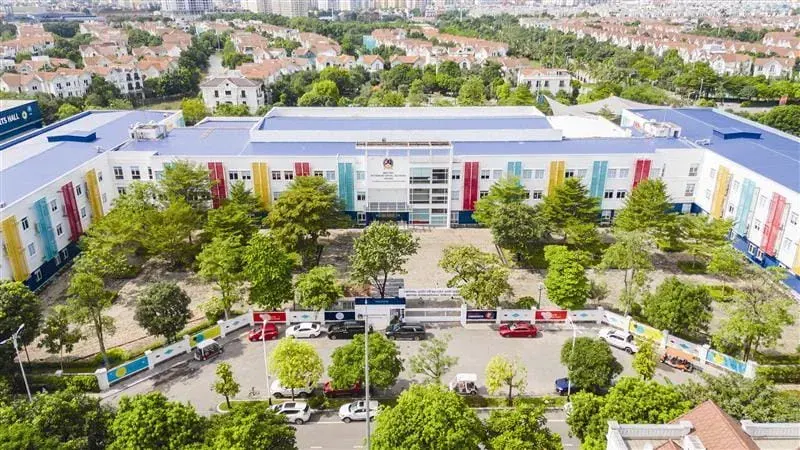
British International School Hanoi sits in Vinhomes Riverside, a gated residential estate in Long Bien on the east bank of the Red River. It is a Nord Anglia school, which gives it curriculum consistency and network resources that a standalone school would not have. It runs British curriculum from Foundation 1 through to Year 13, finishing with IB Diploma rather than A-Levels. The 2025 cohort averaged 33.24 on the IB Diploma, with a 100% pass rate.
Fees for 2026-27 run from VND 343,100,000 (approximately USD 14,000) for Foundation 1 to VND 970,200,000 (approximately USD 39,000) for Year 13. That is a wide range, so check the year group your child is entering carefully. The school is accredited by both CIS and WASC, which matters for families who may be moving on to another international posting in a few years.
Around 900 students attend, spread across a wide age range, which means it has genuine critical mass without feeling enormous. Parents tend to describe BIS as well organised and settled. The Long Bien location is a real consideration if you plan to live in Tay Ho: it is a 20-to-30-minute drive in normal conditions, but the bridge crossings can extend that during peak hours. The school bus network covers most of the main residential areas.
United Nations International School Hanoi
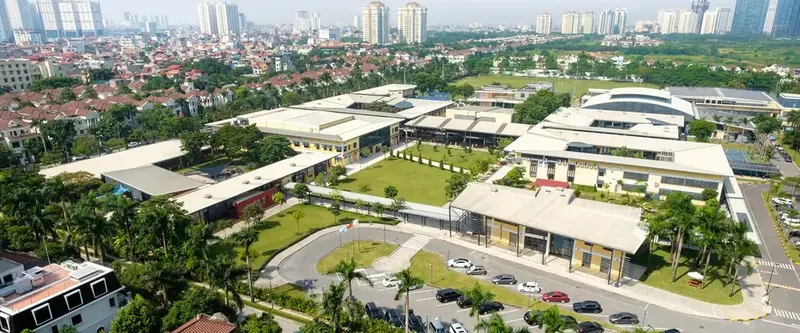
UNIS Hanoi is the other school families shortlist first, and for many it is the first choice. It is a not-for-profit IB World School inside the Ciputra compound in Tay Ho, one of only two UN-affiliated schools in the world. It has been here since 1988, which gives it an institutional depth that newer schools simply cannot match.
The school runs the full IB continuum from Early Years through to IB Diploma, entirely in English. Published IB results from 2021 showed a 100% pass rate with 40% of students scoring 40 or above, which is exceptional. More recent results are not published as a composite figure, so ask admissions directly. Annual fees for 2026-27 run from USD 17,460 for Early Years to USD 39,870 for Grades 11 and 12.
Roughly 1,100 students from over 60 nationalities attend. The community is genuinely international in a way that some schools only claim. The Ciputra location in Tay Ho is an advantage for the majority of families: if you are living in the area, it is an easy ten-minute school run. The not-for-profit structure means surpluses are reinvested rather than paid out, which families who have been at for-profit schools elsewhere tend to notice in how the school approaches facilities and staffing decisions.
Demand typically outstrips supply at primary entry, so contact the admissions team well before your expected arrival date.
International School ParkCity Hanoi

ISPH is the third school that comes up on shortlists, particularly for families based in or near the Ha Dong area to the south-west of the city centre. It opened in 2019 within the ParkCity Hanoi residential development, offering British curriculum with Cambridge IGCSE and A-Levels from Nursery through Year 13.
The 2025 A-Level results were strong: 68% of grades at A or A, and 93% at A or A-B. Those are the kind of numbers that warrant attention, and they hold up against schools with decades more operating history. With around 350 students it is a considerably smaller school than BIS or UNIS. That suits some families, and it means fees are at a lower level too: from around VND 232,714,000 (approximately USD 9,000) at Nursery to VND 760,770,000 (approximately USD 30,000) for Year 13.
The honest caveat is that as a relatively young school, ISPH has less of a track record across a full secondary cohort than the older schools. Families who have been there report a close-knit community and responsive management, which are real advantages. If you are living west of the city in the new urban districts around My Dinh or Ha Dong, the location genuinely works in a way that BIS or UNIS cannot match.
Hanoi International School
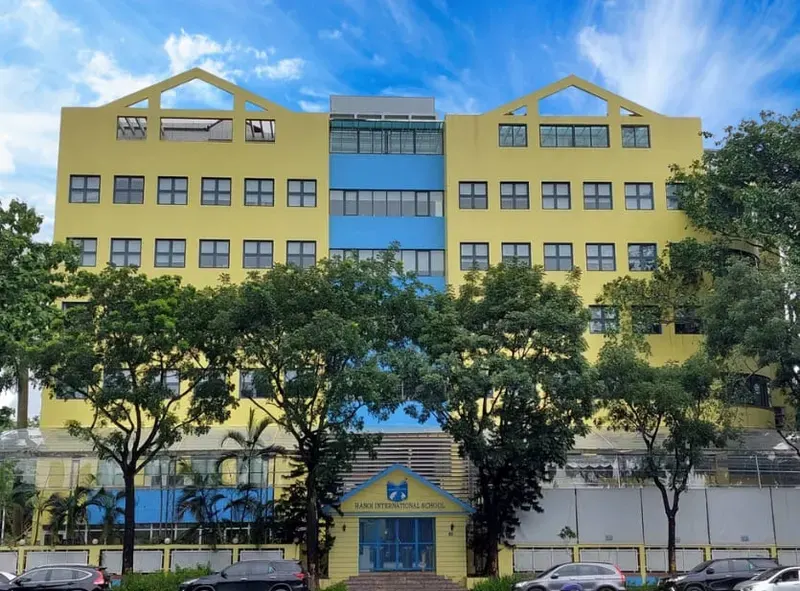
HIS has been running since 1996 in Ba Dinh, near the embassy district in the city centre. It is an IB World School offering PYP, MYP, and IB Diploma to around 300 students. The central location is its clearest advantage: families who work in the Ba Dinh diplomatic zone or live in the older central districts will find a commute that other schools cannot offer.
Fees for 2025-26 run from VND 418,400,000 for Kindergarten to VND 767,000,000 for Grades 11 and 12 (approximately USD 17,000 to USD 31,000). It is priced in the same bracket as the larger schools despite the smaller scale, which means the comparison comes down to location and fit rather than value. Parents who choose HIS tend to do so because the inner-city setting suits their family's life in Hanoi, or because UNIS did not have availability.
Concordia International School Hanoi
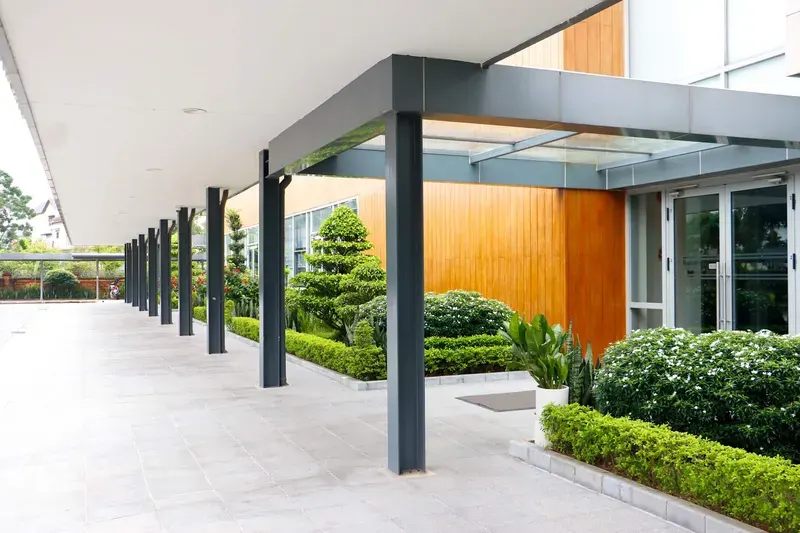
Concordia is the American curriculum option in Hanoi, running from Pre-school through Grade 12 on a golf resort campus in Dong Anh, north of the city. WASC-accredited, with AP courses in the upper years and ties to US college-access programmes. Around 555 students attend, with fees from approximately VND 497,000,000 to VND 873,000,000 per year (approximately USD 20,000 to USD 35,000).
The Dong Anh location is its main limitation for most families. If you are based in Tay Ho or further south, you are looking at a substantial commute. It makes most sense for families specifically targeting US college entry or those who have come from an American curriculum system and want continuity.
Dwight School Hanoi
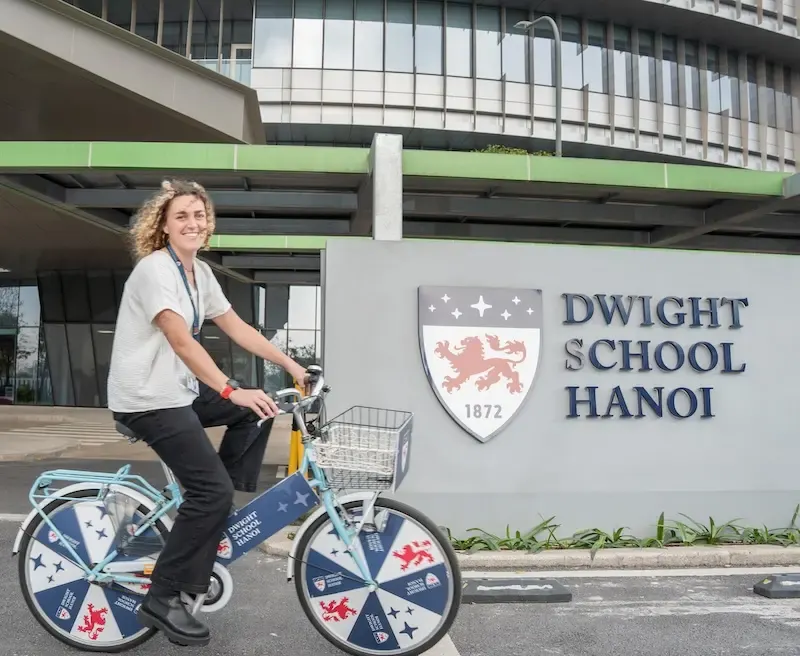
Dwight Hanoi is the newest serious entry in this market, having opened in August 2024 at The Manor Central Park in Hoang Mai. It runs the full IB continuum (PYP, MYP, and IB Diploma) as part of the Dwight Schools global network. With around 200 students in its first year of full operation, it is still building its reputation and cohort. Fees run from VND 342,900,000 to VND 954,800,000 per year (approximately USD 14,000 to USD 38,000).
For families who need the IB continuum and live in the southern or south-eastern parts of Hanoi, Dwight matters. Hoang Mai is not where most international families end up, but if your housing is in that direction, the commute to BIS or UNIS is considerable. Dwight fills a genuine gap. It is too early to have meaningful exam data, and the track record is naturally thin, so families should factor that in.
IB results in context
The global IB Diploma average in 2024 was 30.24. Both BIS and UNIS sit above it.
| School | IB average | Notes |
|---|---|---|
| UNIS Hanoi | 40% scored 40+ (2021) | More recent figures on request |
| British International School Hanoi | 33.24 (2025) | 100% pass rate |
ISPH publishes A-Level results rather than IB: 68% A or A* in 2025. On either metric, the top schools in Hanoi are performing at a level families moving from strong international school markets elsewhere would recognise.
Where people live
Tay Ho (West Lake)
This is where the majority of international families settle. The area around West Lake, particularly the streets between the lake and the embassies, has a density of international restaurants, bars, supermarkets, and services that makes day-to-day life very easy. Housing ranges from lakeside villas to modern apartments in low-rise compounds, and while it is the most expensive part of the city for rentals, prices are still well below Singapore or Hong Kong equivalents. UNIS is inside the Ciputra compound here, which makes the school run for Tay Ho families genuinely straightforward.
Long Bien and Vinhomes Riverside
BIS is located within the Vinhomes Riverside estate in Long Bien, east of the Red River. The estate is a self-contained gated community with its own amenities, and a growing number of families choose to live here specifically to be within the BIS catchment. Rental prices are generally lower than Tay Ho, and the quality of the housing stock is high. The trade-off is that Long Bien sits east of the river, which adds time to journeys into the city centre or towards Tay Ho. If your workplace is in the Long Bien or Gia Lam area, it works well. If you are commuting west into the city daily, factor in the bridges.
Cau Giay and My Dinh
The western corridors of the city, further from the historic core, have seen significant development over the past decade. Cau Giay is closer to the centre, My Dinh is further out but has good motorway access. Families who live in these areas tend to choose ISPH at ParkCity or, if they can manage the commute, UNIS. The housing here tends to be newer high-rise apartment stock, and it is noticeably cheaper than Tay Ho while still having reasonable amenities.
On the commute question
Hanoi is not Bangkok, where a five-kilometre journey can take an hour. But it is not straightforward either. The key chokepoints are the bridge crossings over the Red River, which are the only route between the Long Bien side and the rest of the city. During school drop-off hours, these can extend a 15-minute journey to 40 minutes. Most families use the school bus for children rather than managing the daily drive themselves, and that is worth factoring into your planning before you decide on accommodation.
Practical notes
Settling in: Hanoi requires a temporary residence registration, which your employer or landlord should handle. Most international schools will guide you through what documentation your children need. The city administration is not as digital or English-friendly as some Asian capitals, so having a Vietnamese-speaking helper or HR contact for the first few weeks is worth it.
Healthcare: FV Hospital (via their Hanoi affiliate clinics), the French Hospital, and the Hanoi Family Medical Practice are the three options most used by international families for English-language medical care. Private health insurance is essential; the public system is not set up for non-Vietnamese speakers.
Air quality: Schools have HEPA filtration and will monitor air quality index (AQI) to determine outdoor recess. Most families who stay more than one winter invest in home air purifiers for bedrooms. The worst months are typically November through February. This is not a reason to avoid Hanoi; it is simply something to know before you arrive.
Cost of living: Outside school fees, Hanoi is very affordable. A family of four living comfortably in Tay Ho, with domestic help, eating out regularly, and running a car, might spend USD 3,000 to USD 5,000 per month before school fees. Groceries, utilities, and dining are all substantially cheaper than Singapore or Bangkok.
Currency: The Vietnamese dong (VND) is the local currency. At time of writing, USD 1 buys approximately VND 25,000, but fees are increasingly quoted in both currencies and the more useful figure for international families is the USD equivalent.
FAQs
Which is better, BIS or UNIS Hanoi? Both are strong schools with genuine track records, and families from both are happy with their choice. UNIS has the longer history, the not-for-profit structure, and the Tay Ho location that suits the majority of international families. BIS has the Nord Anglia network behind it, published IB results from 2025, and the Vinhomes Riverside campus which suits families based in Long Bien. If you live in Tay Ho and can get into UNIS, it is the more natural first choice. If you are in Long Bien or do not have availability at UNIS, BIS is a very solid option.
How early should I apply to Hanoi international schools? Earlier than you think. UNIS in particular tends to have limited availability at primary entry years, and families who apply after confirming a move date often find they are on a waiting list. Six months' lead time is a reasonable minimum at BIS or UNIS; more is better. Concordia and ISPH tend to have more flexibility, but do not assume availability without checking.
Are there cheaper international schools in Hanoi with recognised qualifications? Yes. ISPH offers British curriculum with Cambridge A-Levels from around USD 9,000 per year, and its 2025 A-Level results were strong. HIS offers the IB Diploma from around USD 17,000 per year. At the lower end, British Vietnamese International School (BVIS) at Royal City offers a bilingual British curriculum from around USD 10,000, and the Lycee Francais Alexandre Yersin offers the French Baccalaureat from USD 6,000 to USD 8,000 per year - the most affordable fully accredited option in the market. These are different school communities and different curricular journeys, but the qualifications are internationally recognised.
Is Hanoi a good posting for families? Generally yes, with a few caveats. The food and the cost of living are major positives. The community in Tay Ho is warm and established, and children settle in relatively quickly. The air quality in winter is a legitimate concern for families with young children or respiratory conditions, and it is something to research rather than discover on arrival. Hanoi is also a smaller international community than HCMC, which some families find refreshing and others find limiting. Most families who do a posting here rate it well.
Do Hanoi international schools follow the British academic year? BIS, UNIS, ISPH, and HIS all follow a Northern Hemisphere academic year running from August through June, broadly aligned with the British or international school calendar. This differs from the Vietnamese national school year. Concordia follows the US academic year, also August through June.
Fees correct as of May 2026. Exchange rate: approximately USD 1 = VND 25,000 (indicative for fee comparisons in text). We work hard to make every figure, date and description on this page accurate. We don't always get it right. If you spot an error - a fee that's changed, a fact that's out of date, something we've got wrong - please tell us. Use the feedback button above or email us directly. We'll check it and update the article.