Notes / Chiang Mai
Best International Schools in Chiang Mai: The 2026 Guide for Families
Chiang Mai's international school market is small by design. Three schools account for almost every family in the city who wants a recognised international curriculum and a clear path to university.
Comparison table
| School | Curriculum | Ages | Fees range (USD) | Notes |
|---|---|---|---|---|
| Prem Tinsulanonda International School | IB | 3-18 | 11,400–22,286 | Mae Rim |
| Chiang Mai International School | American, AP | 3-18 | 9,297–15,789 | Old City & Nimman |
| Lanna International School | British | 2-18 | 11,811–22,954 | Hang Dong |
Fees converted to USD at indicative 2026 rates. Verify current figures with each school.
TL;DR
- Three schools dominate the international market: Prem (IB boarding, Mae Rim), CMIS (American, city centre), and Lanna (British, Hang Dong). Geography is the main differentiator.
- Fees run from around THB 325,000 to THB 803,000 per year depending on school and year group. That is roughly USD 9,500 to USD 24,000 at current rates.
- Burning season (roughly February to April) brings smoke and poor air quality across the city. Prem's mountain location is noticeably better than the valley during the worst weeks; that matters before you commit.
- Chiang Mai is a small market. Places at the top three schools are available if you plan ahead, but do not assume you can walk in after arrival.
The city
Chiang Mai works well for families. It is manageable in size, significantly cheaper than Bangkok, and has a genuine international community built around the university, the NGO sector, and a long-standing population of families on corporate packages and those who have simply chosen to stay. Daily life is easy. Traffic exists but it is not Bangkok traffic.
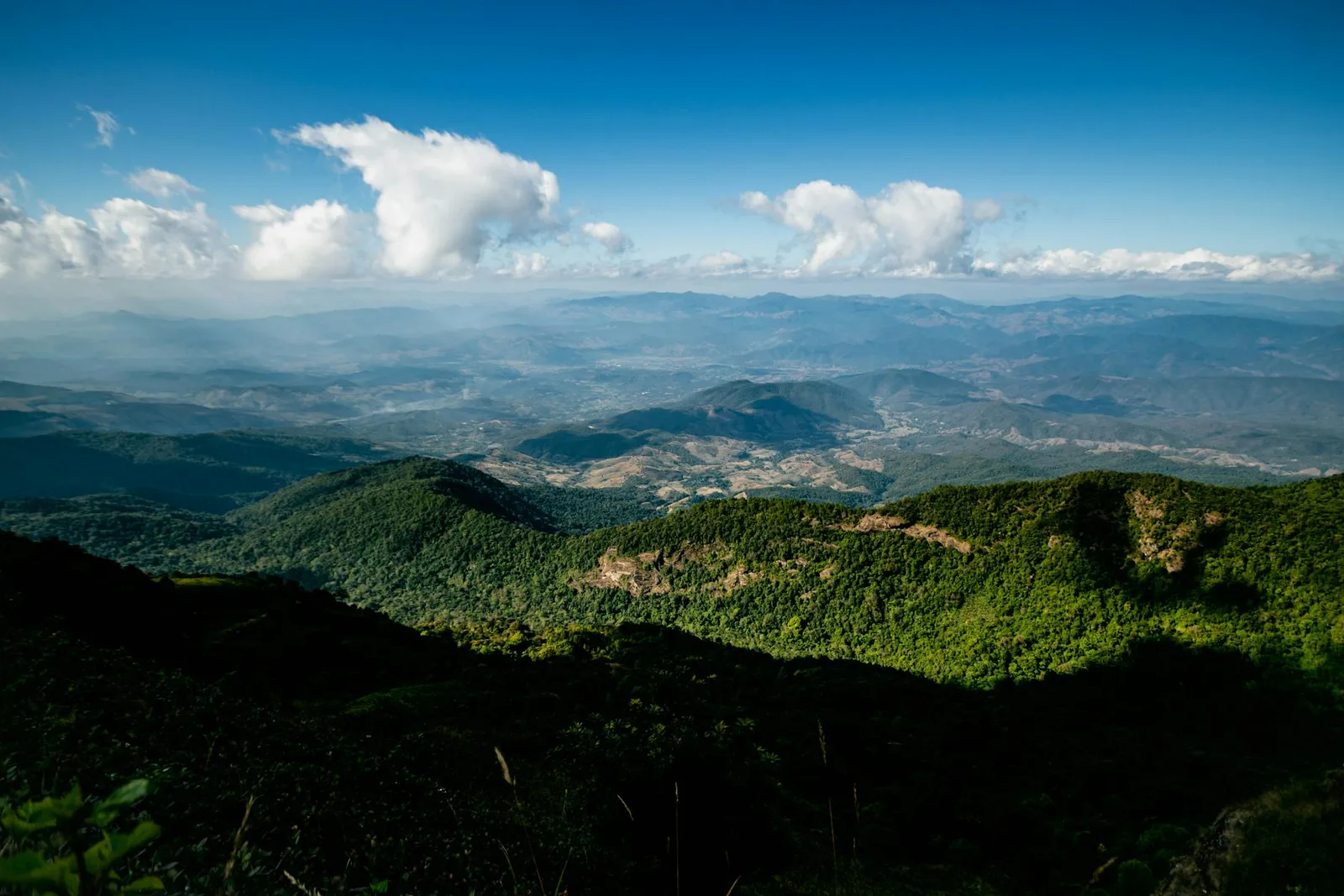
The thing Chiang Mai does not advertise heavily is air quality. From roughly February to April, farmers and landowners in the surrounding hills and across the border in Myanmar burn their fields. The smoke collects in the valley. In a bad year, AQI readings above 200 are not unusual. Schools keep children indoors during the worst days; some families with respiratory conditions leave for a few weeks. It is not a reason to rule Chiang Mai out, but it is a reason to understand the geography of your school before you commit. Prem's campus in Mae Rim, up in the hills, sits above the worst of the smoke on many days. CMIS and Lanna, in the valley, do not have that advantage.
Thai is not a barrier to daily life for international families. Most services, schools, and medical care are available in English in the areas where international families tend to settle. That said, learning some Thai makes life considerably more pleasant and is not especially difficult at a conversational level.
The climate outside burning season is excellent. From roughly November to January, Chiang Mai is cool, clear, and one of the more pleasant places to be in South-East Asia.
The schools
Prem Tinsulanonda International School
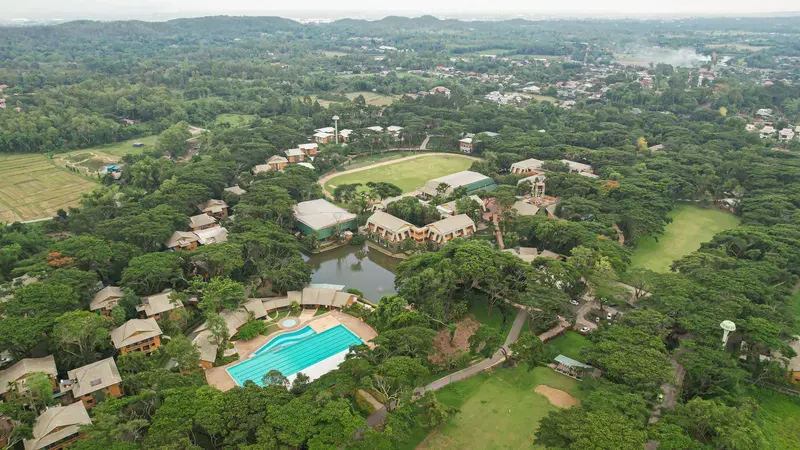
Prem Tinsulanonda International School is the only school in Chiang Mai offering all four IB programmes: PYP, MYP, Diploma, and Career-related. The 100-acre campus sits in Mae Rim, roughly 20 kilometres north of the city, at a higher elevation than the valley floor. It has boarding from around age 11 upwards, which is genuinely rare in northern Thailand. The boarding community is mixed: some local Thai students, some children of families based elsewhere in Thailand or abroad, and a proportion of day students who live in Mae Rim or make the drive from the city.
Fees for 2025-2026 run from THB 399,000 (Early Years) to THB 780,000 (Grades 9-12), plus a one-time Foundation Fee of THB 130,000. At current rates that is roughly USD 11,500 to USD 22,500 per year. Boarding costs are on top and vary by age group.
The Mae Rim location cuts both ways. During burning season, being higher up in the hills is a real advantage - the campus sits above the smoke layer on many bad valley days, which matters if you have a child with asthma or any respiratory sensitivity. The counter is the commute: if you are living in Nimman or the city centre, you are looking at 30-40 minutes each way. Most day families who choose Prem end up moving to Mae Rim or the immediate surrounding area.
Families who have spent time in the IB system elsewhere and want seamless continuity tend to land here. The school has the feel of an international community school in a way that the other two Chiang Mai schools do not quite replicate, partly because of the boarding element and partly because the curriculum draws a more globally mobile student population.
Chiang Mai International School
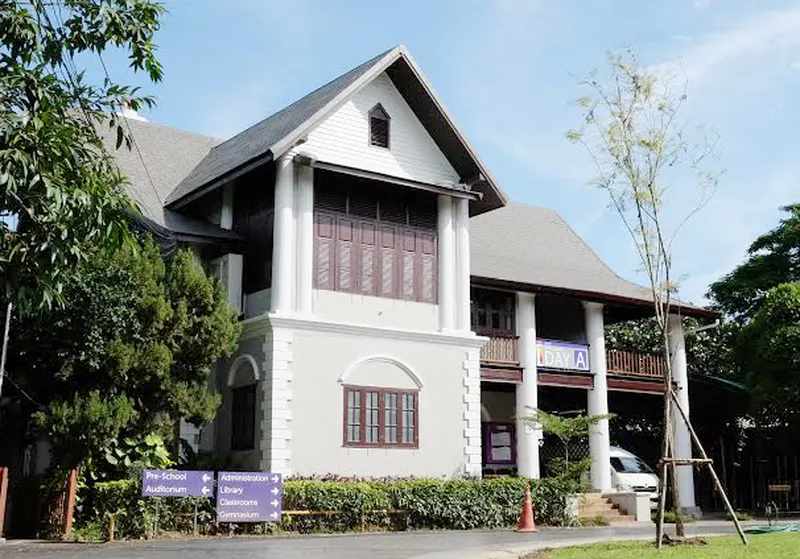
Chiang Mai International School has been running since 1954, which makes it the oldest international school in the city by some distance. It sits near the Kad Suan Kaew area, effectively in the city centre. The curriculum is American, running through to Advanced Placement in the older year groups. It is accredited by WASC and EARCOS, the standard American-pathway accreditations.
Fees for 2025-2026 run from THB 325,400 (Preschool 3-4) to THB 552,600 (Grades 9-12), plus a one-time enrolment fee of THB 100,000. That is roughly USD 9,500 to USD 16,000 per year in tuition.
The city centre location is the main practical advantage: if you are living in Nimman, the Old City area, or anywhere within a reasonable distance of the moat, CMIS is the most straightforward option logistically. Families on corporate packages who are housed centrally tend to end up here simply because the commute is easy.
The school is smaller than Lanna and does not have the campus facilities of Prem. What it does have is consistency, a long track record, and a close-knit community feel that parents who have been here a few years mention repeatedly. It is also the natural choice if you are targeting US universities and want AP credits on the transcript.
Lanna International School
Lanna International School is the British-curriculum option, teaching Cambridge IGCSE and A-Levels from Early Years through Year 13. The campus is in Hang Dong, south-west of the city, roughly 15 kilometres from the old moat. With around 978 students it is the largest of the three main schools.
Fees for 2025-2026 run from THB 413,400 (Early Years) to THB 803,400 (Years 12-13), plus a one-time registration fee of THB 90,000. That is roughly USD 12,000 to USD 23,500 per year.
Hang Dong has become the main residential cluster for international families in Chiang Mai over the past decade, in large part because of Lanna's presence there. Most families choosing Lanna end up living in the Hang Dong or Baan Waen area, which works well as a self-contained expat neighbourhood with its own shops, restaurants, and services. The commute to the city centre for work is manageable - 20 to 30 minutes depending on traffic and exactly where in Hang Dong you are.
The A-Level pathway is the main draw for British families or those heading to UK universities. Lanna is the only school of the three with a full A-Level programme leading directly to UK-style university applications, and it is the obvious choice if UCAS is the goal. Parents say the school community is active and well-organised, and the Hang Dong location means most children can walk or cycle to school if you are renting nearby.
The wider market
Beyond the three main schools, there are several smaller options if the primary three do not work for your family.
Panyaden International School in Namprae (Hang Dong) is a bilingual British and IB school with a strong sustainability and Buddhist-values ethos. Fees are lower than the main three, running from THB 303,000 to THB 571,000 per year. Families who are drawn to a smaller, more values-led environment mention it often. The IB Diploma is available in Years 12-13.
American Pacific International School runs IB across two campuses, with a city primary site and a residential campus in the Samoeng hills for Grades 5-12. It was the first internationally accredited boarding school in Chiang Mai and day fees run from THB 229,100 to THB 499,800 per year, which is among the lower price points for a full IB offering in the city.
Grace International School in Hang Dong is an ACSI-accredited Christian school running a US-aligned K-12 curriculum. Fees are among the most affordable at any accredited school in Chiang Mai, running from THB 294,500 to THB 361,000 per year. It is mission-oriented and the community reflects that; it suits families who are specifically looking for that environment.
Singapore International School Chiangmai in the city centre opened in 2017 and offers a trilingual (English, Chinese, Thai) programme alongside Cambridge qualifications. Fees run THB 324,300 to THB 564,300 per year.
Where people live
Chiang Mai does not have the sprawling residential zones of Bangkok or Dubai. The international family population is concentrated in a few areas, and school geography is the main driver.
Hang Dong and Baan Waen
The largest cluster of international families is here, south-west of the city, built largely around Lanna's campus. Baan Waen in particular has a well-established community, with a range of rental properties from townhouses at around THB 15,000-25,000/month to detached houses with gardens at THB 35,000-60,000/month. There are several supermarkets, international restaurants, and services that have grown up around the international school population. If you are sending children to Lanna or Panyaden, this is where you will most likely end up.
Nimman and the Old City area
The more urban choice, centred on the Nimmanhaemin Road area and the historic Old City near the moat. Better for families choosing CMIS given the school's central location. Apartments and condos are plentiful and relatively affordable; a two-bedroom apartment in a decent building runs around THB 20,000-35,000/month. The area is cosmopolitan, walkable, and has good international food options. Less green and residential than Hang Dong, but convenient if one or both parents are working in or near the city centre.
Mae Rim
The northern option, primarily for families choosing Prem. Mae Rim is rural and spread out; there is no concentrated international community in the way Hang Dong has one. Properties tend to be larger and cheaper than the city options - detached houses with land at THB 20,000-40,000/month are common. The trade is that you are 20-40 minutes from the city for anything beyond the school run. Families here tend to be self-contained and to have chosen the location deliberately.
On the commute question
Chiang Mai's traffic is light by South-East Asian standards. Cross-city journeys of 30 minutes are feasible at most times of day. The exception is peak school run hours around major road junctions, but this is manageable. If you are choosing between Hang Dong and the city centre as a base, neither commits you to a punishing daily commute to the other. That said, the drive from Nimman to Mae Rim and back, twice a day, is 40 minutes each way. Families who do it tend to move to Mae Rim.
Practical notes
Air quality: Burning season runs roughly February to April, peaking in March. The AQI in Chiang Mai valley regularly exceeds 150 during this period and in a bad year can hit 300 or above. Schools typically keep children indoors and cancel outdoor activities on the worst days. If you or your children have respiratory conditions, factor this into both your school choice and where in the city you choose to live. Investing in good air purifiers for your home is standard practice for families who have been here a while.
Healthcare: Chiang Mai Ram Hospital and Bangkok Hospital Chiang Mai are the main private options with English-speaking staff. Both are well regarded. For serious conditions, Bangkok is a two-hour flight or twelve-hour drive; most longer-term residents have a plan for that.
Cost of living: A family of four renting a house in Hang Dong, running one car, with private health insurance, should budget around THB 80,000-120,000/month (roughly USD 2,300-3,500) before school fees. Chiang Mai is materially cheaper than Bangkok, and Bangkok is cheaper than Singapore or Hong Kong.
Visas and work permits: Thailand's visa and work permit system has specific requirements for foreign nationals, and the rules change periodically. This is worth taking seriously before you arrive. Many families use a local relocation agent or immigration lawyer to get set up correctly, which avoids the risk of paperwork problems later.
School calendars: Prem and CMIS run a broadly US-aligned academic year, starting in August. Lanna follows a UK-aligned calendar, starting in September. This matters if you are arriving mid-year or have children at different schools with different term structures.
FAQs
Which Chiang Mai international school has the best results? Published IB Diploma results for Chiang Mai are not consistently available in public league table form, so direct comparisons are difficult. Prem publishes IB data on its website and as an established four-programme IB school with a focused international cohort, results have historically been strong. CMIS publishes AP and SAT data on its site. We recommend asking each school directly for current outcomes data and university destination lists.
Do I need to live near the school in Chiang Mai? More so than in cities with good school bus networks. Chiang Mai's school bus provision varies, and the geography of the three main schools is genuinely spread out: Mae Rim (Prem), central (CMIS), and Hang Dong (Lanna) are each in a different part of the city. Most families who have been here a while live within 15-20 minutes of their chosen school. Cross-city daily commutes are possible but tend to drive relocation decisions fairly quickly.
Is Chiang Mai suitable for families with young children? Broadly yes. The city is safe, affordable, and has good international healthcare. The main practical considerations are air quality during burning season and the relatively small international school market compared to Bangkok. Families relocating from larger cities sometimes find the social circle smaller than expected, but most settle well.
How does Prem compare to the city schools for day students? Prem's campus and facilities are a step above the other two for day students, and the IB four-programme offering is unique in Chiang Mai. The trade is geography: it is the furthest school from the city centre and the least convenient for families living in Nimman or Hang Dong. Most day families at Prem are based in Mae Rim or close enough to make a 20-minute drive work.
Are places available at the main Chiang Mai international schools? Chiang Mai is not a high-pressure admissions market in the way Bangkok or Singapore can be. Places are generally available with reasonable notice, particularly outside the standard August entry point. That said, popular year groups at all three main schools can fill, and waiting until after you arrive is not the safest approach. Contact schools a few months before your intended start date. Boarding availability at Prem is worth checking early if that is relevant to you.
Is the burning season bad enough to affect school choice? For most families, it is a factor rather than a deciding issue. The worst weeks are February to April; schools handle it and life continues. For families with children with asthma or other respiratory conditions, Prem's Mae Rim location is worth specifically considering, as the campus sits at higher elevation and is measurably less affected on many bad air days. For city-based schools, good indoor air filtration is the standard mitigation.
Fees correct as of 2025-2026 school year as published by the schools. Exchange rate: approximately USD 1 = THB 34.5 (May 2026, indicative for fee comparisons in text). We work hard to make every figure, date and description on this page accurate. We don't always get it right. If you spot an error - a fee that's changed, a fact that's out of date, something we've got wrong - please tell us. Use the feedback button above or email us directly. We'll check it and update the article.