Notes / Cairo
Best International Schools in Cairo: The 2026 Guide for Families
Cairo's international school market is larger and more varied than most families expect. The top schools are genuinely strong, fees are lower than almost anywhere else in the region, and the city rewards families who do their research before they arrive.
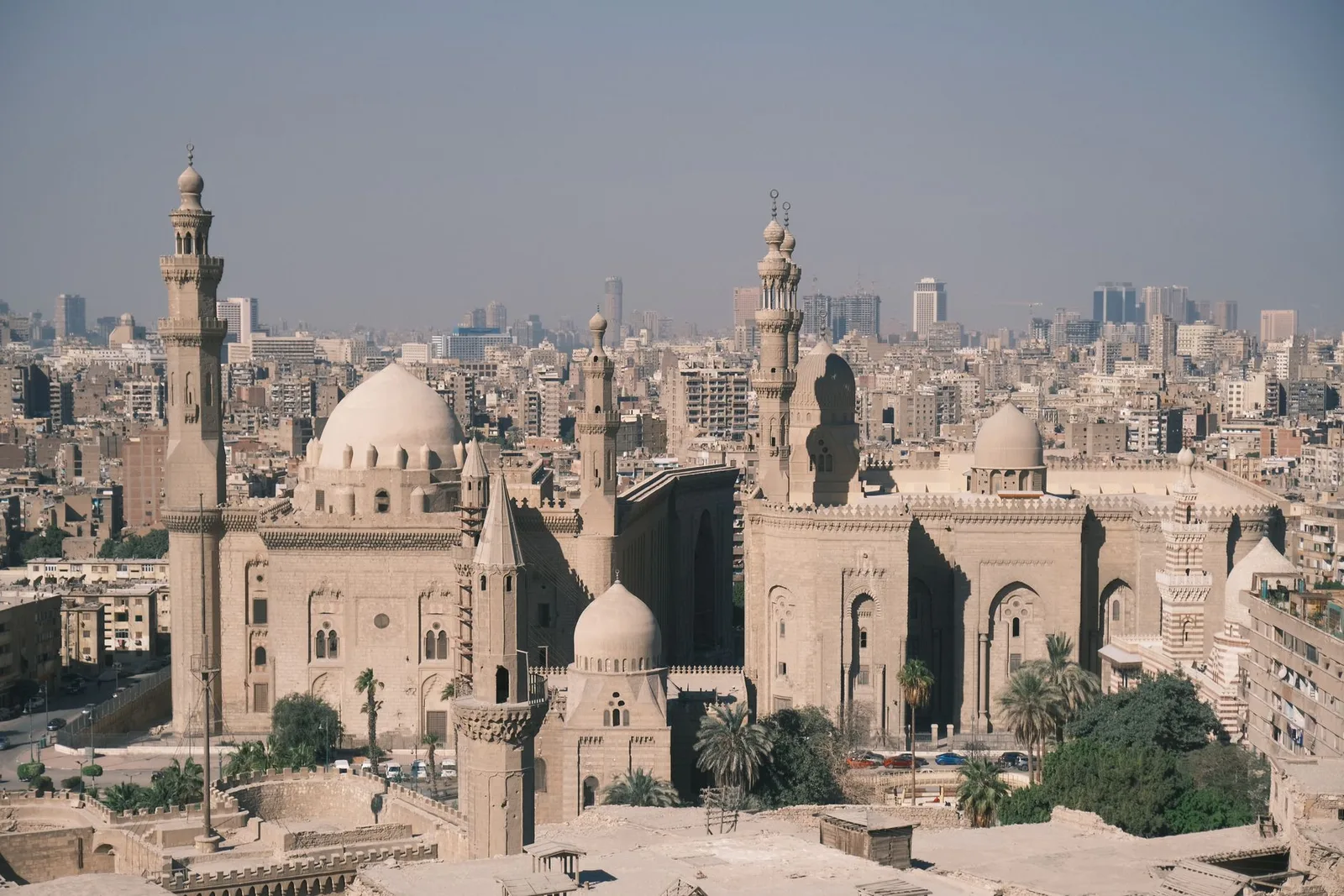
Comparison table
| School | Curriculum | Ages | Fees range (USD) | Notes |
|---|---|---|---|---|
| Cairo American College | IB, American, AP | 3-18 | 9,770–29,046 | Maadi |
| The British International School, Cairo | IB, British | 3-18 | 8,867–23,183 | Beverly Hills / 6th of October |
| New Cairo British International School | IB, British, Cambridge | 3-18 | 10,619–19,449 | New Cairo |
| Malvern College Egypt | IB, British, Cambridge | 2-18 | 2,600–4,891 | New Cairo |
| El Alsson British and American International Schools | IB, British, American | 3-18 | 4,360–7,046 | Beverly Hills / 6th of October |
| Cairo English School | IB, British, Cambridge | 3-18 | 2,500–3,820 | New Cairo |
| Maadi British International School | British | 2-18 | 8,149–19,682 | Maadi |
Fees converted to USD at indicative 2026 rates. Verify current figures with each school.
TL;DR
- British curriculum dominates the international school market, but credible IB and American options exist. Fee levels are low by regional standards, though the gap between the top schools and the broader market is significant.
- The city splits into two main clusters. Maadi and Heliopolis are the older, more central areas where many international families have historically settled. New Cairo (the 5th Settlement and surroundings) is where most newer campuses are, and where a lot of corporate packages now land families.
- Fees at the genuinely international schools run roughly USD 9,000-USD 28,000/year at the top end. Several decent schools sit well below that, invoiced in Egyptian pounds, which means the real cost in USD has shifted sharply over recent years as the currency has moved.
- Where you live relative to your child's school is not a minor consideration.
The city
Cairo is a big, loud, occasionally overwhelming city of roughly 20 million people, and it does not soften itself for new arrivals. Infrastructure is patchy - the electricity cuts, the internet is inconsistent outside the newer compounds, and the traffic is unlike anything most families will have experienced. Getting a driving licence, setting up a bank account, and navigating residency paperwork all take longer than they should. None of this is unsurvivable, but it does mean the first few months can feel like hard work.
On the other side of that: Cairo is genuinely interesting, historically extraordinary, and much cheaper to live in than Dubai, Singapore, or London. A well-paid family on a corporate package lives very comfortably. Domestic help is affordable and widely available. The social scene for international families is strong - particularly in Maadi and the New Cairo compounds - and the school communities tend to be tightly knit in a way that helps new arrivals feel settled quickly.
Security has been a concern in the past and should be understood before you arrive, but Cairo has a large international community and the school areas - Maadi, New Cairo, 6th of October - are calm. Most families living here for any length of time say the day-to-day feels safer than they expected.
Arabic will make your life easier, but you can function entirely in English in the school neighbourhoods. Most of the admin around international schools, gated compounds, and healthcare runs in English.
The schools
Cairo American College
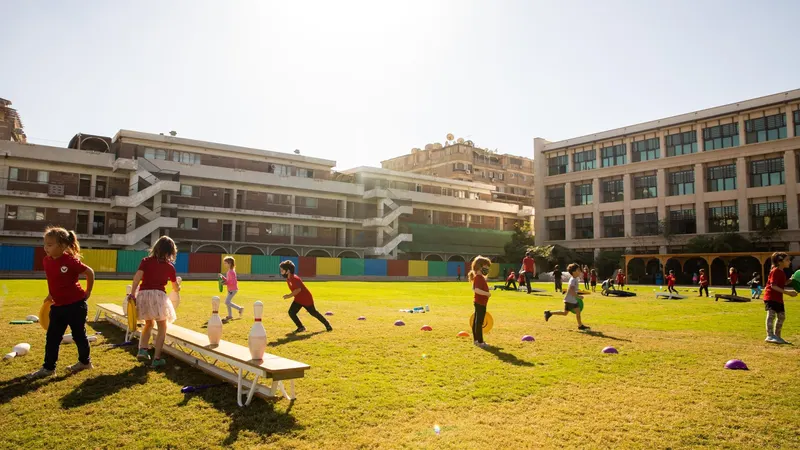
Cairo American College is the natural first call for American families and those targeting US universities. Non-profit, founded in 1945, and based in Maadi, it runs the IB Primary Years Programme through to the IB Diploma alongside an American Diploma pathway. Around 970 students from 58+ nationalities, which means it genuinely feels international rather than dominated by one cohort.
IB Diploma average has sat around 35 points in recent years - well above the global average of around 30.5. University placement into top US colleges runs at 90-95% of graduates, which parents say is one of the best-kept realities of the school. Fees run from USD 9,200 for Pre-K to approximately USD 27,350-28,600 for high school, invoiced in USD, with a one-time registration fee of around USD 14,000. For families on corporate packages with school fees covered, it is often the first school off the list.
Being in Maadi makes this convenient for families who live there, less so if you are in New Cairo or Heliopolis. The school is small enough that teachers know children individually. Class sizes are a real differentiator here.
The British International School, Cairo
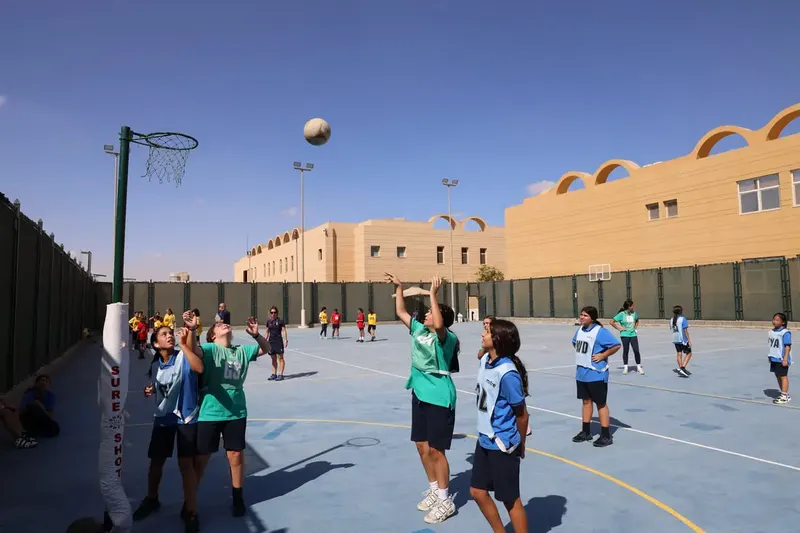
The British International School, Cairo sits in the Beverly Hills district near the 6th of October exit, which is inconveniently far from the main expat clusters if you live in Maadi or New Cairo. That said, families who make the geography work tend to stay. Around 1,100 students, IGCSE and IB Diploma, British through and through.
Fees for 2025-26 run from GBP 6,420/year at Foundation Stage through to GBP 16,785/year for Sixth Form, plus a one-off admission fee of GBP 4,500-5,275. In USD terms that puts it in the USD 8,000-USD 21,000 range at current rates. The school was founded in 1976 and has a long track record with the diplomatic and British corporate community.
The location question is the one to resolve early. Families living near 6th of October City or in the compounds along that corridor - including parts of Sheikh Zayed and Juhayna Square - find it manageable. For anyone else, the commute in Cairo's ring-road traffic is a genuine daily commitment.
New Cairo British International School
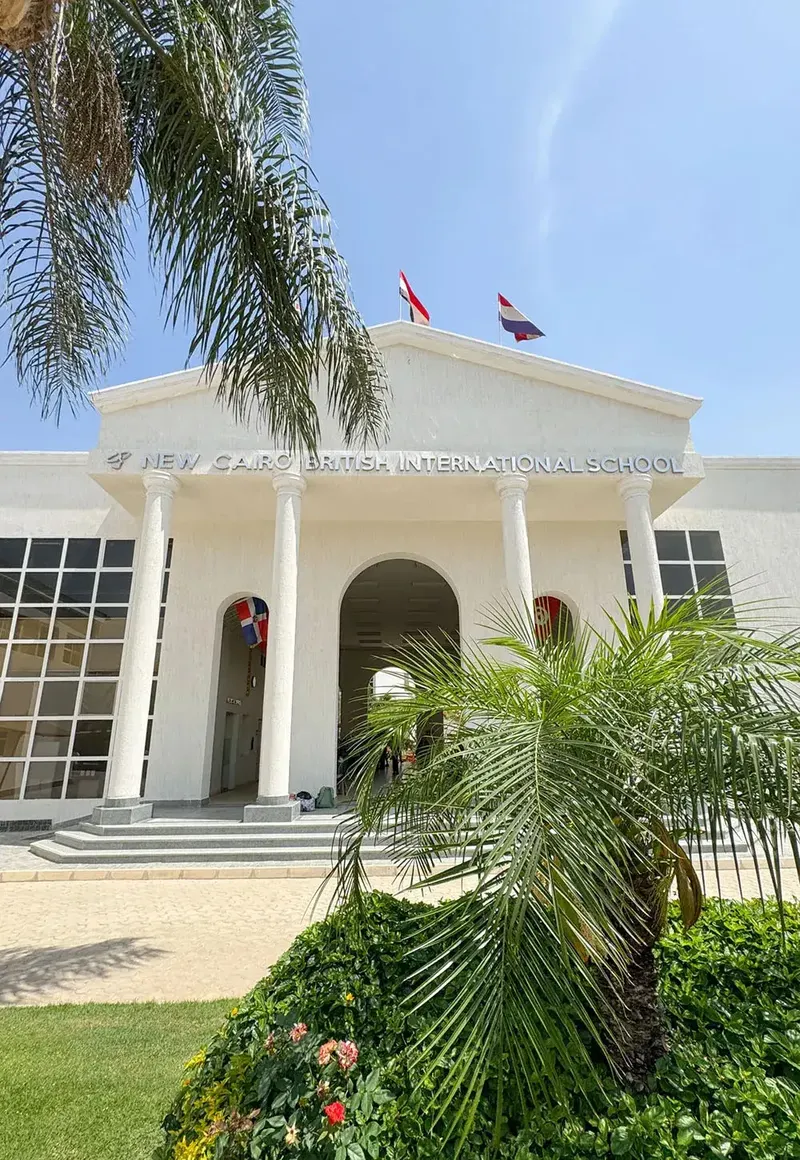
New Cairo British International School is where a lot of British families on corporate packages end up, particularly those landing in the 5th Settlement. Non-profit, originally founded in 1978 as Heliopolis British International School, now relocated and rebranded, with around 730 students from 60+ nationalities.
Results are strong. IB Diploma average of 33 in 2025, IGCSE 9-7 at 36% and 9-4 at 89% - respectable numbers for a school of this size. It runs the full sequence: IB PYP, IGCSE, A-Level, and IB Diploma. Fees are invoiced in Egyptian pounds at the Central Bank rate (making the USD equivalent variable) but the published GBP figure runs from GBP 7,688 at Nursery to GBP 14,081 for Years 12-13, plus a one-time GBP 7,500 registration charge.
The school community is tight. Families who've been in Cairo a few years say it has more of a community feel than some of the larger schools, partly because of the size and partly because new families tend to arrive together in September and go through the settling-in period together.
Malvern College Egypt

Malvern College Egypt is in the Kattameya Investment Zone in New Cairo, close to the South Ring Road, and is the only Cairo school operating under a formal partnership with a UK independent school. Around 850 students from Early Years through to Sixth Form, following the English National Curriculum with IGCSE, A-Level, and IB Diploma exit options.
Fees are invoiced in EGP and currently run from approximately EGP 130,000 to EGP 244,560/year. At current exchange rates that puts annual fees in roughly the USD 2,600-5,000 range, which makes it considerably cheaper than CAC or BISC in USD terms. The Malvern brand matters to some families and not at all to others. What it does bring is a particular culture around boarding-school style discipline, co-curricular expectations, and pastoral structure - which is either exactly what you want or slightly more formal than you need.
The school opened in 2016, so it does not have the decades-deep alumni network that CAC or the British schools carry. Parents say the teaching quality is good and the campus well-equipped, but it is still building its senior reputation in Cairo's school circuit.
El Alsson British and American International Schools
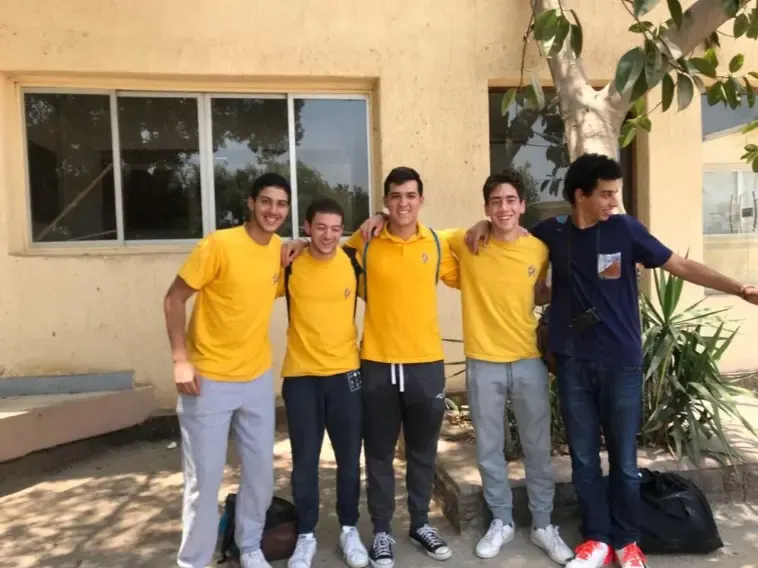
El Alsson is one of Cairo's more unusual options. Established in 1982, it runs two separate sections - a British track (Foundation Stage through A-Level) and an American track (Pre-K through Grade 12 with AP and IB Diploma options) - on a single campus near the 6th of October exit. Around 1,400 students across both sections.
Fees for 2025-26 run from EGP 217,990 to EGP 352,305/year in the British section, roughly USD 4,300-7,000 at current rates. The dual-curriculum structure means it attracts families who want flexibility on which pathway their children take, and the campus location suits families in Sheikh Zayed, Juhayna, or 6th of October City. Like BISC, the distance from Maadi and New Cairo is the thing to factor in.
The community is notably mixed. You will find Egyptian-American families, British passport holders, and families from across the Arab world. Parents say this breadth is part of what makes it feel different from the more insular all-international schools.
Cairo English School

Cairo English School is part of the ESOL Education network and sits on a purpose-built campus in Mirage City, New Cairo. Around 1,675 students, Cambridge IGCSE, A-Level, and IB Diploma. Annual tuition for 2024-25 runs from EGP 125,000 (FS1) to EGP 191,000 (Years 7-12), which at current rates is roughly USD 2,500-3,800/year.
That fee level is the main draw. For families funding school fees themselves rather than on corporate packages, Cairo English School offers a genuine British-curriculum education at a fraction of what you'd pay at CAC or NCBIS. The campus is large and the facilities good. The student body is predominantly Egyptian families choosing an international education rather than families relocating from abroad, which changes the feel of the school community compared to the more internationally transient schools.
Worth looking at seriously if you are self-funding and the fee level at the top-tier schools is a stretch. The academic outcomes are solid even if the school does not carry the same profile as BISC or CAC on an international circuit.
Maadi British International School
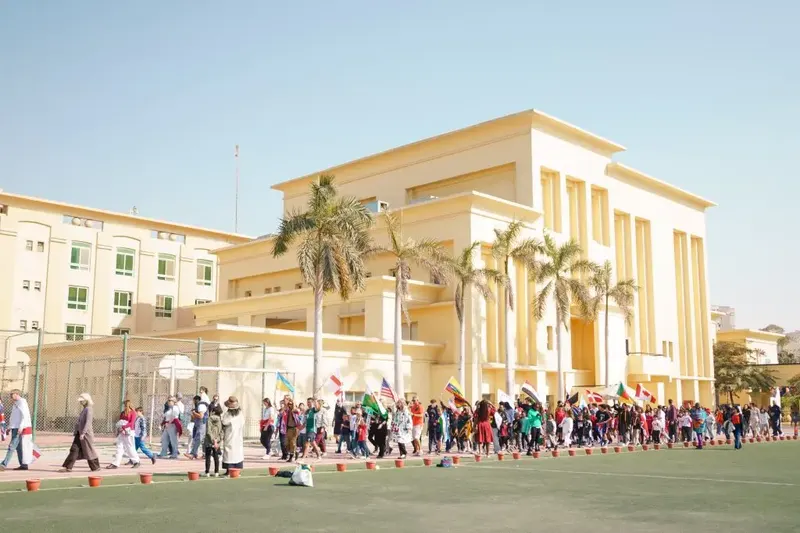
Maadi British International School is small - around 350 students - and operates under the patronage of the British Ambassador. It is genuinely non-profit, founded in 1984, and sits in the heart of Maadi itself, which makes it the most convenient option for families living in that neighbourhood.
GCSE grades 9-7 reached 40% in 2025, A-Level A*/A at 29% - reasonable for a small school, though it is not the school for families placing a premium on results above all else. Fees run from GBP 5,900 (Pre-Foundation) to GBP 14,250/year (Years 10-13), invoiced in sterling, plus a one-off non-refundable registration fee of GBP 5,750.
The size means teachers know children well, and parents say the pastoral side is strong. It works particularly well for families whose children have had a more turbulent relocation - the school can absorb a mid-year arrival and settle a child in a way that larger campuses sometimes cannot. For a Maadi-based family who wants a small British school, this is the option to look at first.
Where people live
Maadi
Maadi is the classic international family neighbourhood in Cairo, and it earns that reputation. Tree-lined streets, lower-rise architecture (by Cairo standards), good supermarkets, walkable restaurant strips along Road 9, and a strong sense of community among families who have been here a while. The American and British Embassies are close by, which means a long-established expat infrastructure.
Housing is predominantly villas and older apartment blocks. A family villa in Maadi runs EGP 60,000-150,000/month (roughly USD 1,200-3,000 at current rates), lower than equivalent property in the New Cairo compounds. The traffic into central Cairo is heavy in the morning rush but manageable compared to the ring-road routes. CAC and Maadi British International School are both here, which simplifies the school run considerably.
The trade-off is that Maadi is older Cairo. The streets can flood in the rare winter rains, the infrastructure is not as new as the 5th Settlement compounds, and some families find it quieter than they expected after years of New Cairo compound social life.
New Cairo and the 5th Settlement
New Cairo is where most newer corporate arrivals land, and the compound infrastructure is the reason. Gated developments - Mivida, Cairo Festival City, Palm Hills, Hyde Park - with pools, gyms, playgrounds, and a level of maintenance that the older city does not offer. The compounds attract families from all over the world on serious corporate packages, and the social scene is active and international.
The schools clustered here - NCBIS, Malvern College Egypt, Cairo English School, and several others - are all accessible without the ring-road drama. That is a genuine daily quality-of-life consideration. A school run in New Cairo can take 10-15 minutes. The same drive across Cairo in the morning peak can take 45-60.
The downsides: New Cairo feels suburban and spread out. You need a car for almost everything. The compound life can feel insular if you are interested in Cairo proper, and the older city's culture and energy - the Nile, the museum, Old Cairo - requires an intentional trip rather than being around the corner.
Heliopolis and Nasr City
Heliopolis is the historic international neighbourhood to the north-east, close to Cairo International Airport. Architecture is genuinely beautiful in parts - wide leafy boulevards built during the early 20th century. A different feel from Maadi or the compounds: more urban, more Egyptian in texture, closer to central Cairo on the metro.
Families here are often in the city for the long term rather than on short corporate postings. The school commute to New Cairo schools requires the ring road or the outerbelt, which in rush hour is serious. Families in Heliopolis tend to favour schools in the area or east of the city rather than the 5th Settlement cluster.
Zamalek
Zamalek, the island in the Nile, is where you end up if you want to be in central Cairo proper. Embassies, international clubs, the Gezira Sporting Club. Apartment living rather than villas. Culturally rich and genuinely central, but the commute to either the Maadi schools or the New Cairo cluster is a daily commitment. Most families who choose Zamalek are senior corporate or diplomatic, often with drivers, and have factored the commute in from the start.
On the commute question
Cairo traffic is not like traffic in other cities. The ring road can be completely stationary at 7:30am. Families underestimate this at their peril. If you are choosing between a school 20 minutes away on a good day and one 45 minutes away on a good day, the difference in lived experience is not 25 minutes - it is closer to the difference between a manageable routine and a grinding one. Most international schools run bus services that cover the main residential areas, which is worth factoring into your decision.
Fees and the currency question
Egypt has had significant currency devaluation over recent years. Schools that invoice in EGP have become very cheap in USD terms for families paid in dollars or sterling. Schools that invoice in USD or sterling have held their price in hard currency terms.
The practical effect is a widening gap. Cairo American College, at USD 9,000-28,000, is at regional norms for a top American school. Maadi British International School and NCBIS, invoicing in GBP, are in the GBP 6,000-14,000 range per year. EGP-denominated schools like Cairo English School or GEMS British School Al Rehab are currently equivalent to well under USD 5,000/year.
The risk with the cheaper EGP-denominated schools is not quality - several are good schools - but predictability. If the EGP weakens further, the cost stays low. If the currency stabilises or strengthens, that gap narrows. Families on USD packages who want to preserve optionality sometimes prefer GBP or USD-invoiced schools precisely because the fee is not subject to Egyptian monetary policy.
Registration fees and one-time admission charges add meaningfully to first-year costs. Budget them in: GBP 5,750-7,500 at the British schools, USD 14,000 at CAC. They are not refundable if you leave early.
Practical notes
Residency and work permits: Egypt's bureaucracy is real and slower than most new arrivals expect. Work permits for employed foreigners typically take several weeks, and residency registration requires a landlord who is willing to cooperate with the paperwork. A relocation company is not a luxury here; it is close to a necessity for the first month.
Healthcare: Good private hospitals exist - As-Salam International, Dar Al Fouad, and Cleopatra Hospital are the names most families use - but standards vary across facilities. Medical evacuation insurance is standard on most corporate packages for a reason. English-speaking doctors are available in the main private hospitals, though not universal.
Driving: You will need a car for almost any meaningful daily routine outside the immediate walkable zones of Maadi and Zamalek. An international driving licence works initially; a local licence requires a formal exchange process. Hire a driver if the budget allows - it is affordable and makes Cairo significantly less stressful.
Schools and the academic calendar: Most international schools in Cairo follow a September-June calendar. Some US-curriculum schools adjust slightly for American holidays. There is no single school inspection body for international schools in Egypt comparable to KHDA in Dubai or the UK Ofsted framework, so quality assurance rests largely on accreditation bodies (New England Association, Council of International Schools, CIS) and word of mouth among families on the circuit.
Air quality: Cairo's air quality is poor, particularly in winter when temperature inversions trap pollution. This is not a reason not to go, but families with children who have respiratory conditions should factor it in and discuss it with their GP before deciding.
FAQs
Which international schools in Cairo have the best academic results? Cairo American College has historically produced the strongest IB results, with a Diploma average around 35 against a global average of approximately 30.5. New Cairo British International School reported a 33 IB Diploma average in 2025 with IGCSE 9-4 at 89%. The British International School, Cairo (BISC) has a long track record at IGCSE through A-Level though it does not publish IB scores prominently. Both CAC and NCBIS sit clearly above the international average on available data.
How do international school fees in Cairo compare to other cities? Cairo is among the cheapest major international school markets in the Middle East and Africa. CAC at up to USD 28,000/year is the most expensive school covered here and would be mid-range in Dubai or Singapore. EGP-denominated schools are currently well under USD 5,000/year for a full secondary education. Even the GBP-invoiced British schools come in below equivalent UK-partnership schools in Dubai or Hong Kong.
Is Maadi or New Cairo better for international families? It depends on what you want. Maadi is established, has a genuine neighbourhood feel, and suits families who want to be in "real" Cairo rather than a compound. New Cairo has newer facilities, excellent gated compounds, and most of the school options in one cluster, which simplifies daily logistics significantly. Corporate packages that include a housing budget and school fees increasingly point families toward New Cairo; longer-term residents who return for second or third postings often end up back in Maadi.
How competitive is admissions at the top Cairo international schools? Admissions at CAC and BISC can be tight, particularly at standard entry points - Reception, Year 7, and IB entry. Contact schools three to six months before your intended start date rather than assuming a place will be available on arrival. NCBIS and Malvern College Egypt tend to have more flexibility, particularly for September starts. Some families on corporate packages contact schools before the relocation decision is confirmed - that is not unusual and schools are used to it.
What should I know about international schools in Cairo that the websites don't say? The currency split between USD, GBP, and EGP-invoiced schools is the most important financial factor that often goes unnoticed at first. Community cohesion varies significantly between schools - the smaller British schools and CAC have strong community cultures; the larger EGP-tier schools are more day-school oriented with less of the international-circuit feel. And the commute question is genuinely important: Cairo traffic deserves to be treated as a hard constraint, not a soft one, when you are choosing where to live.
Fees correct as of May 2026. Exchange rates are indicative: EGP/USD has moved significantly in recent years and the USD equivalents for EGP-denominated fees will change. We work hard to make every figure, date and description on this page accurate. We don't always get it right. If you spot an error - a fee that's changed, a fact that's out of date, something we've got wrong - please tell us. Use the feedback button above or email us directly. We'll check it and update the article.