Notes / Amsterdam
Best International Schools in Amsterdam: The 2026 Guide for Families
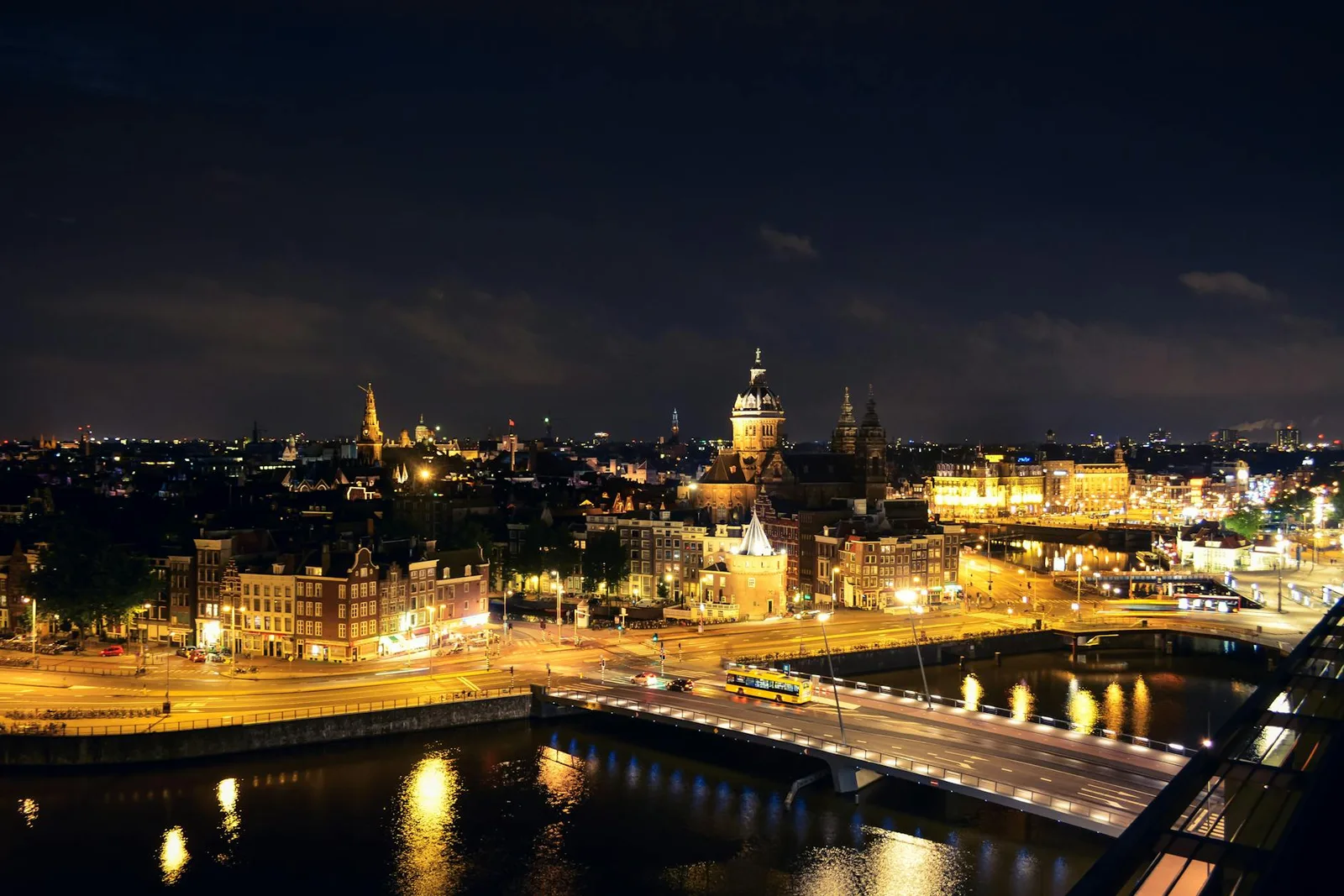
Amsterdam has a small but distinctive international school market. There is a clear top tier, two strong second-tier options, and a uniquely Dutch tier of subsidised international schools that no other major European city offers.
Comparison table
| School | Curriculum | Ages | Fees range (USD) | Notes |
|---|---|---|---|---|
| International School of Amsterdam | IB | 2-18 | 23,848–34,234 | Amstelveen |
| The British School of Amsterdam | British | 3-18 | 20,380–23,808 | Amsterdam West |
| Amity International School Amsterdam | IB | 3-18 | 22,000–28,255 | Amstelveen |
| Amsterdam International Community School | IB | 4-18 | 6,549–9,965 | Amsterdam South |
| International French School Amsterdam | French | 2-18 | 12,467–17,098 | Amsterdam South |
| Lycee Francais Vincent van Gogh Amsterdam | French | 3-11 | 8,250 | Amsterdam South |
| The Japanese School of Amsterdam | Japanese | 6-16 | 5,087 | Amsterdam West |
| Amstelland International School | Cambridge, International | 4-11 | 5,876 | Amstelveen |
| Optimist International School | British, International | 4-11 | 6,065 | Other Amsterdam |
| De Nieuwe Internationale School van Esprit (DENISE) | IB, Dutch | 4-18 | Not published | Amsterdam West |
Fees converted to USD at indicative 2026 rates. Verify current figures with each school.
TL;DR
- The top of the market is the International School of Amsterdam (IB, in Amstelveen), The British School of Amsterdam (British curriculum, in the city) and Amity International School Amsterdam (IB, in Amstelveen).
- The Netherlands runs a tier of government-subsidised "Dutch International" schools open to expat families. Amsterdam International Community School is the standout, with full IB at fees that look mistyped next to private schools.
- Most international families live in Amstelveen (Amstelveen-Buitenveldert axis) or in Amsterdam South (Oud-Zuid, Buitenveldert, Rivierenbuurt). Amstelveen is the obvious choice if your priority is the school and a calm family setup. Oud-Zuid wins if you want city life with the school run still manageable.
- Fees at the private international schools run roughly EUR 18,000 to EUR 31,500 per year. Subsidised international schools sit at EUR 5,400 to EUR 9,200.
- Popular entry years at the International School of Amsterdam and Amity carry waitlists for several intake points. Worth contacting the school as early as you can.
The city
Amsterdam is a small, dense, walkable city. The metropolitan area is around 1.2 million people, the centre is compact enough to cycle across in 20 minutes, and the airport is 15 minutes from most of the international family neighbourhoods. After Singapore or London, the scale takes adjustment. After Geneva or Zurich, it feels lively.
English is widely spoken, more so than in any other non-English-speaking European capital. You can run a full life in Amsterdam without much Dutch. That said, for anything involving the municipality (registration, BSN, gemeente paperwork), some Dutch makes life easier, and most international families pick up the basics within a year.
The city has a real expat infrastructure: international schools, English-speaking GPs, established relocation agents, dual-career hubs. It is not Dubai or Singapore where everything is built around the expat, but it is closer to that end of the spectrum than Madrid or Paris. The downside is housing. The Amsterdam rental market is tight, expensive, and biased toward fast movers. Most families end up paying more than they planned.
The Netherlands also operates a 30% ruling for qualifying skilled migrants, which is the single biggest financial factor for many families relocating here. The rules have tightened in recent years (the duration is shorter, the salary threshold higher), so check the current position with your tax adviser before assuming you qualify.
The schools
International School of Amsterdam
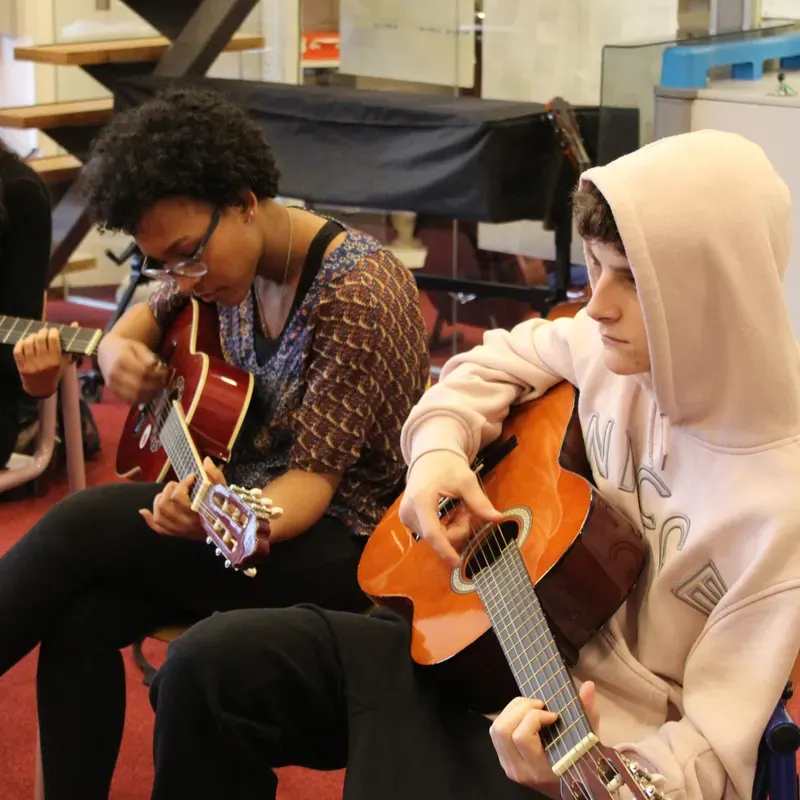
The International School of Amsterdam is the established flagship of the city's private international tier. Founded in 1964, it was the first school in the world to offer all three IB programmes (PYP, MYP and Diploma) and remains a non-profit. It sits in Amstelveen, just south of the city, on a single 14-hectare campus serving around 1,300 students aged 2 to 18. Around 60 nationalities are represented.
Academic results are strong. The 2025 IB Diploma average was 35, against a global average of 30.5, with a 99% pass rate. The school has the institutional weight that comes with 60 years of operation: an established alumni network, deep university counselling, and a community that retains families across multiple postings.
Fees for 2025/26 run from approximately EUR 21,940 (Nursery) to EUR 31,495 (Grade 11-12). There is a EUR 3,245 annual capital fee on top, plus enrolment costs. In USD terms that is roughly USD 24,000 to USD 34,000.
This is the default first call for many families with corporate packages, particularly those moving on multi-year postings or already in the IB system.
The British School of Amsterdam
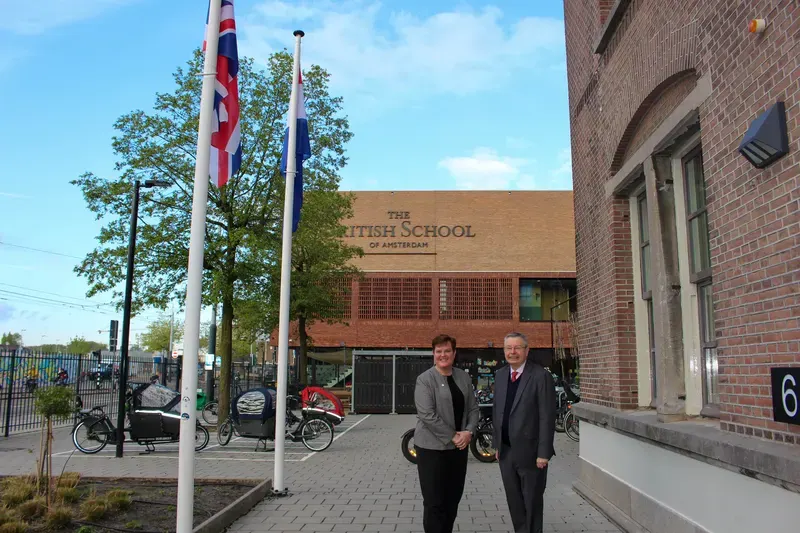
The British School of Amsterdam is the obvious choice for families wanting a British education. Founded in 1978, non-profit, and one of relatively few schools in the Netherlands offering IGCSE and A-Levels through to age 18. It runs from age 3 to 18 with around 1,000 students across two campuses in Amsterdam West.
A-Level pass rates in 2025 were 100%, with 56% of GCSE entries graded 9-7. The school has a recognisably British feel: house systems, school uniform, the language of "Years" rather than "Grades". For families heading to UK universities or moving between British schools across postings, the continuity matters.
Fees for 2025/26 range from approximately EUR 18,750 (Nursery) to EUR 21,903 (Years 7-13, including the exam supplement). That is roughly USD 20,000 to USD 24,000, noticeably below the International School of Amsterdam at the senior end.
The location in Amsterdam West means it is the most accessible private international school for families living in central Amsterdam who want to avoid the daily run out to Amstelveen.
Amity International School Amsterdam

Amity International School Amsterdam is the most credible alternative to the International School of Amsterdam in Amstelveen. It opened in 2018, runs the full IB continuum from Early Years through the Diploma Programme, and added IGCSE in 2025. Around 410 students at present, which makes it materially smaller than the International School of Amsterdam: small classes, a more visible faculty, and a less established but tighter community.
Because it is newer, the long-run IB results record is shorter, but the school's growth and the Amity network's broader profile have made it a serious option for families who want IB but cannot get a place at the International School of Amsterdam, or who specifically prefer a smaller campus.
Fees for 2025/26 range from approximately EUR 20,240 (Early Years) to EUR 25,995 (Diploma Programme), or roughly USD 22,000 to USD 28,000. Modestly below the International School of Amsterdam at the top end.
Amsterdam International Community School

Amsterdam International Community School (AICS) is the largest international school in the Netherlands, with around 2,400 students across multiple campuses. It is the headline example of a Dutch-subsidised international school: government-funded, open to international families on temporary contracts, and offered at fees that are roughly a fifth to a quarter of the private alternatives.
It runs all four IB programmes (PYP, MYP, DP, CP) from age 4 to 18. The 2025 IB Diploma pass rate was 93%. The campuses are spread across South Amsterdam (with additional sites in Amstelveen and South-East), and quality and class composition vary somewhat by campus.
Fees for 2025/26 run from EUR 6,025 (Primary Group 1-5) to EUR 9,168 (DP2/CP2). That is roughly USD 7,000 to USD 10,000 per year. There is a EUR 200 registration fee and a EUR 500 refundable deposit.
The catch is eligibility. AICS, like other Dutch International schools, is intended for families on temporary international postings; you generally need to demonstrate that the family is in the Netherlands for a defined and limited period, not permanently settled. The published criteria can be read as somewhat flexible, but the schools take eligibility seriously and verify it. Worth raising with the admissions office early if there is any ambiguity in your circumstances.
For eligible families, AICS is one of the most cost-efficient routes to a full IB education in any major European capital.
International French School Amsterdam
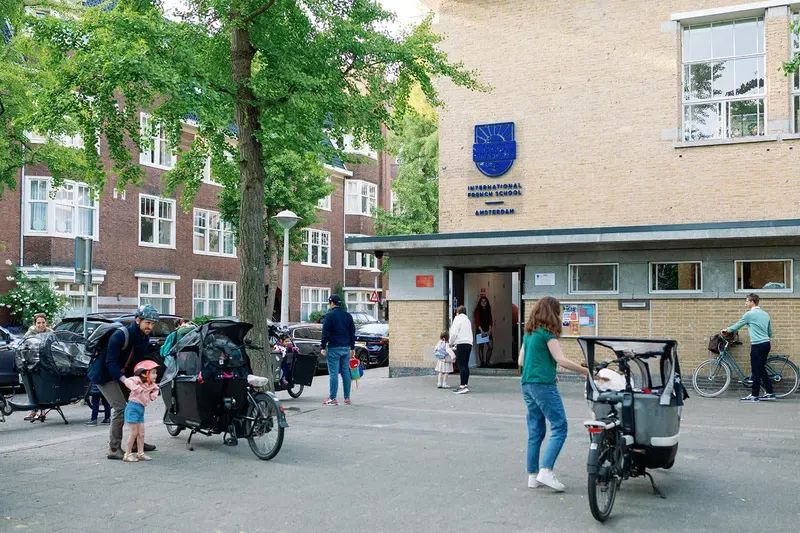
International French School Amsterdam is an AEFE-accredited bilingual French-English school in Oud-Zuid, founded in 2021 and part of the Globeducate network. It is small (around 350 students) and runs from age 2 to 18, with the bilingual French International Baccalaureate (BFI) on offer at senior level.
For families targeting the French system, or French-English bilingual children, this is the natural choice in central Amsterdam. The Lycee Francais Vincent van Gogh (in De Pijp, primary only) is the alternative for younger children if the French national curriculum without the English bilingual element is the priority.
Fees for 2025/26 run from approximately EUR 11,470 (Nursery and Elementary) to EUR 15,730 (TPS preschool), with a EUR 1,500 first enrolment fee and a EUR 400 annual registration fee. In USD terms, roughly USD 13,000 to USD 17,000.
Lycee Francais Vincent van Gogh Amsterdam
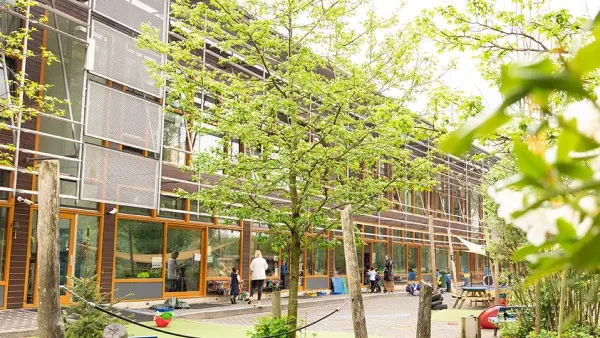
Lycee Francais Vincent van Gogh Amsterdam is the directly-managed French national curriculum primary in De Pijp (Amsterdam South). Run by the French Ministry of Education, it follows the standard French programme from PS to CM2 (ages 3 to 11). Annual fees for 2025/26 are EUR 7,590 (flat rate), with a EUR 350 first registration fee. It is the right call if you want the French system in its purest form for primary years, with the secondary route typically being the International French School Amsterdam, the Lycee Francais Erasmus in The Hague, or relocation back to a Lycee in France.
Japanese School of Amsterdam

The Japanese School of Amsterdam covers Grades 1 to 9 in Amsterdam West, following the Japanese national curriculum. It is the natural choice for Japanese corporate families on temporary postings to the Netherlands. All-in fees for 2025/26 are approximately EUR 7,020, including the mandatory school bus.
The Dutch International tier
The Netherlands runs a network of government-subsidised "Dutch International Primary Education" (DIPS) and "Dutch International Secondary Education" (DISO) schools. These are state-funded Dutch schools with a separate international stream for children of internationally mobile families. The eligibility test typically requires evidence of a temporary posting, intent to leave, or an internationally mobile parent's role.
The schools that fall into this category around Amsterdam include:
- Amsterdam International Community School, covered above.
- Amstelland International School in Amstelveen, primary only (ages 4-11), running the International Primary Curriculum and Cambridge English. Fees for 2025/26 are EUR 5,406 per year, flat rate.
- Optimist International School in Hoofddorp (about 20 minutes from Amsterdam Zuid), primary only, with a secondary programme opening August 2026. Fees are EUR 5,580 per year.
- De Nieuwe Internationale School van Esprit (DENISE) in Amsterdam Nieuw-West. Fully publicly funded with no tuition. The catch is that children must reach functional Dutch proficiency before entry, typically requiring a year at a Dutch language school first. Most genuinely international families do not go this route.
If you qualify, these schools are the single biggest cost lever in Amsterdam international education. A family with two children at AICS pays around EUR 15,000 to 18,000 per year against EUR 50,000 to 60,000 at the International School of Amsterdam.
Where people live
Amsterdam international family geography is more concentrated than in larger cities. The two main clusters are Amstelveen and Amsterdam South.
Amstelveen
Amstelveen is a separate municipality directly south of Amsterdam, technically not part of the city. It is the established expat residential cluster: greener, calmer, with single-family houses and gardens that are scarce inside Amsterdam itself. Amstelveen-Buitenveldert is the prime stretch.
The International School of Amsterdam, Amity, and Amstelland are all in Amstelveen, which is a meaningful pull factor. So is the international supermarket scene and the established expat community.
Rents for a four-bedroom family house in Amstelveen typically run EUR 3,500 to EUR 6,000 per month, with prime stock at the higher end. Apartments closer to the metro start lower. The trade-off is that Amstelveen is suburban: quieter than the city, less interesting in the evening, and dependent on the metro line 51 (and a car or bike) for access into Amsterdam proper.
Amsterdam South: Oud-Zuid, Buitenveldert, Rivierenbuurt
The southern districts of Amsterdam itself are the other main cluster. Oud-Zuid (Old South) is the most prestigious: large period flats, the Vondelpark, Museumkwartier, an established international community. Buitenveldert is just south of the A10 ring road, more residential, more 1960s-1970s housing, and closer to Amstelveen and the International School of Amsterdam. Rivierenbuurt is the inner version of southern Amsterdam: well-located apartments rather than houses, popular with expat families who want to be in the city.
A three-bedroom apartment in Oud-Zuid runs EUR 3,500 to EUR 6,500 per month. Houses are scarcer and pricier. Buitenveldert is materially cheaper for the same size, particularly for apartments. AICS has its main campus here, the British School is a 15-minute cycle north-west, and the International School of Amsterdam is reachable by car or bus in 15 to 20 minutes.
Amsterdam Centre and Canal Ring
A small number of families take central Amsterdam (the canal ring, Jordaan, Centrum) for the lifestyle. Houses are tall and narrow, family flats are smaller than the equivalent in Oud-Zuid, and the school commute is longer. It works well for families with one teenager at the British School or for parents who prioritise city life and accept a longer school run.
The Hague and commuter belt
Some international families end up in The Hague (Den Haag) or the commuter belt between Amsterdam and Utrecht. The Hague has its own substantial international school cluster (the British School in the Netherlands, the American School of The Hague, the European School), so if your role can be based there or split, look there too. The intercity train from Amsterdam Centraal to The Hague is around 50 minutes.
On the commute question
Amsterdam is small enough that cross-city commutes are manageable, but the city is not designed for cars. Cycling is the dominant mode for school runs within central Amsterdam. The metro and tram networks cover the southern side well, including Amstelveen via line 51. Most international schools run bus services from the main residential clusters. If your priority is the International School of Amsterdam or Amity, living in Amstelveen makes daily life easier but is not essential; many families at both schools live in Oud-Zuid or Buitenveldert.
Practical notes
Getting set up: The BSN (Burgerservicenummer) is the equivalent of an NIE or social security number and is the gateway to almost everything. You get it by registering at the gemeente (municipality) within five days of arrival. Healthcare insurance is mandatory for most residents and must be arranged within four months of registration.
Healthcare: The Netherlands has a private health insurance model. Premiums for adults run around EUR 130 to EUR 180 per month per adult; children are covered free. Most international families take a basic policy plus an additional package for dental and physiotherapy. English-speaking GPs are widely available in Amstelveen, Oud-Zuid and Centrum.
Cost of living: A family of four in Amstelveen or Oud-Zuid with private health insurance, running a car, and eating out occasionally should budget around EUR 5,500 to EUR 8,000 per month before school fees, with rent the dominant variable. Eating out is more expensive than Madrid or Lisbon, less than London or Zurich.
Transport: The OV-chipkaart (or contactless card) covers all public transport. A monthly subscription for unlimited travel within Amsterdam runs around EUR 100. Cycling is the default for most daily trips. Many international families do not own a car at all; those that do tend to live in Amstelveen or use it mainly for weekends.
The 30% ruling: Qualifying skilled migrants can have 30% of their gross salary paid tax-free for up to five years (the duration was reduced from eight to five in 2024, with further phased reductions). This is the single largest financial planning lever for relocating families. Your employer or tax adviser should run the numbers before you finalise package terms.
FAQs
Which Amsterdam international schools have the best results? The International School of Amsterdam scored 35 at the 2025 IB Diploma against a global average of 30.5, with a 99% pass rate. The British School of Amsterdam reported a 100% A-Level pass rate in 2025 with 56% of GCSE entries at grades 9-7. AICS reported a 93% IB Diploma pass rate in 2025. Amity is newer and the long-term track record is shorter.
Is there an American school in Amsterdam? There is no dedicated American-curriculum school in Amsterdam itself. The nearest credible option is the American School of The Hague in Wassenaar, around 50 to 60 minutes by train from Amsterdam Centraal. American families in Amsterdam typically end up at the International School of Amsterdam or Amity, both of which run IB rather than the US system.
Can my family qualify for the subsidised Dutch International schools? Eligibility for AICS, Amstelland, Optimist and similar schools is based on the family being on a temporary international posting rather than a permanent move to the Netherlands. Indicators include an internationally mobile parent's contract, a defined posting duration, or a prior history of international moves. The schools verify eligibility and the criteria can be read with some flexibility. Raise it with admissions early if your circumstances are not clear-cut.
Do I need to live in Amstelveen for the International School of Amsterdam? Not at all. Many families at the International School of Amsterdam and Amity live in Oud-Zuid or Buitenveldert, both of which are 15 to 20 minutes from the campus by car or school bus. Amstelveen makes the daily run easier and is the more established expat residential area, but it is a lifestyle choice rather than a logistical necessity.
How early should I apply? Popular entry years (Early Years, Year 1/Grade 1, Year 7, and IB Diploma at Year 12) carry waitlists at the International School of Amsterdam and Amity for some intake points. Treat published availability as indicative rather than guaranteed and contact admissions as soon as your move is confirmed, ideally three to six months ahead. AICS, given its scale, has more flexibility but still operates waitlists at peak entry points.
Are there cheaper alternatives that still lead to recognised qualifications? Yes. AICS offers the full IB continuum at EUR 6,000 to EUR 9,200 per year for eligible families. Amstelland and Optimist cover the primary years at around EUR 5,400 to EUR 5,600 per year. These are the most cost-efficient routes to internationally recognised qualifications in Amsterdam for families that qualify.
Fees correct as of May 2026. Exchange rate: approximately USD 1.10 per EUR 1 (2 May 2026, indicative for fee comparisons in text). We work hard to make every figure, date and description on this page accurate. We don't always get it right. If you spot an error, a fee that's changed, a fact that's out of date, something we've got wrong, please tell us. Use the feedback button above or email us directly. We'll check it and update the article.